

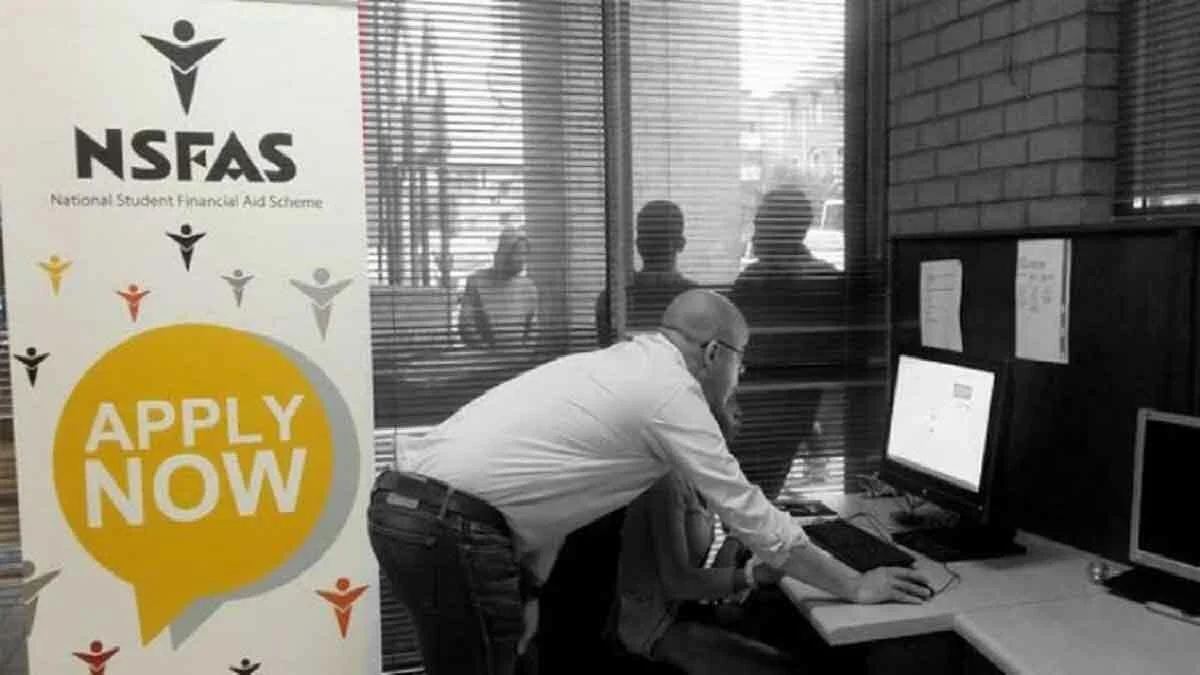
The National Student Financial Aid Scheme (NSFAS) is a critical government initiative designed to provide financial assistance to students from low-income households in South Africa. This scheme plays a pivotal role in enabling access to higher education for many who would otherwise be unable to afford it. Understanding how NSFAS operates, who qualifies, and the application process is essential for prospective students aiming to further their studies at public universities or TVET colleges. This guide will break down the complexities of NSFAS, offering a clear path for those seeking financial aid for their educational journey.
Understanding NSFAS: What It Is and Who It Serves
NSFAS, the National Student Financial Aid Scheme, is a government-funded entity that offers bursaries and financial aid to students who meet specific criteria. Its primary objective is to ensure that financial constraints do not prevent deserving individuals from pursuing tertiary education. The scheme supports students enrolled in public universities, universities of technology, and Technical and Vocational Education and Training (TVET) colleges across South Africa.
The financial assistance provided by NSFAS extends beyond just tuition fees. It typically covers a comprehensive range of educational expenses, including registration fees, accommodation, transport, and essential learning materials like books. This holistic approach aims to alleviate the financial burden on students and their families, allowing them to focus on their academic pursuits.
Eligibility Criteria for NSFAS Funding
To qualify for NSFAS funding, prospective students must meet several key requirements. The most significant criterion relates to the applicant’s household income. For the majority of applicants, the combined gross annual household income must be R350,000 or less. This threshold is designed to target students from financially disadvantaged backgrounds.
However, there is a special provision for students with disabilities. For these individuals, the combined gross annual household income threshold is increased to R600,000. This adjustment acknowledges the potential additional financial needs that students with disabilities may face.
Beyond income, applicants must also be South African citizens. While NSFAS primarily supports undergraduate studies, it’s important for applicants to be aware of the specific admission requirements for the institutions and courses they wish to enroll in. For students receiving SASSA grants, there is a streamlined process, as they are often automatically approved for NSFAS funding, simplifying their application.
NSFAS Application Periods: Timing is Everything
Applying for NSFAS funding requires careful attention to application periods, which vary depending on the type of institution and the course structure. Missing these deadlines can mean missing out on funding for that academic year.
University Applications
For students intending to study at public universities, the application period for NSFAS funding typically opens in the final quarter of the calendar year. For instance, applications for the 2027 academic year would generally commence around September and close a couple of months later. It is crucial for aspiring university students to monitor official NSFAS announcements for the exact dates.
TVET College Applications
The application timelines for TVET colleges are more varied, as they are linked to the specific course structures, whether they are full-year, trimester, or semester-based. It is essential to apply for funding during the correct period for the specific course intake.
- Trimester 2: Applications for courses starting in the second trimester usually open in early May and close in mid-May.
- Semester 2: For courses commencing in the second semester, NSFAS applications typically open in early July and close in mid-July.
- Occupational Programmes (Second Intake): A growing focus on occupational programmes means there are often second intakes for the latter half of the year. Applications for these programmes usually open in early July and close in mid-July.
- Trimester 3: Applications for courses beginning in the third trimester generally open in early September and close in mid-September.
It is vital to remember that NSFAS applications are not transferable between different periods. If a student applies for funding for one intake but decides to start their studies at a different time, they will need to submit a new application during the relevant period.
The NSFAS Application Process: A Step-by-Step Guide
The NSFAS application process has been simplified in recent years, with a strong emphasis on online submissions. The primary platform for applications is the myNSFAS student portal.
Creating a myNSFAS Account
Before you can apply, you need to create an account on the myNSFAS portal. This is a straightforward process that requires basic personal information.
- Visit the myNSFAS Portal: Navigate to the official NSFAS website and find the link to the myNSFAS portal.
- Register: Click on the registration or create account option. You will likely need to provide your South African ID number and a valid cellphone number.
- Set Up Credentials: Follow the prompts to set a password and complete your profile.
Completing the Online Application
Once your myNSFAS account is active, you can proceed with the application:
- Log In: Access your myNSFAS account using your registered credentials.
- Navigate to ‘APPLY’: Locate and click on the ‘APPLY’ tab or section within the portal.
- Fill in Personal Details: Accurately complete all required sections of the application form. This includes providing your ID number, cellphone number, and email address.
- Upload Supporting Documents: While the process has been simplified, you may still be required to upload certain documents. These can include a certified copy of your South African ID or birth certificate. In some cases, proof of financial eligibility might be requested.
- Submit Application: Review all the information you have entered for accuracy and then submit your application before the closing date.
Alternative Application Methods
In addition to the online portal, NSFAS applications can sometimes be submitted via a dedicated NSFAS app, which can be downloaded from app stores. This offers another convenient way to apply, especially for those who prefer mobile applications.
Required Supporting Documents for NSFAS Applications
The NSFAS application process has been streamlined to reduce the documentary burden on applicants. However, certain documents may still be necessary. It’s advisable to have these ready to ensure a smooth application.
- Identification: A certified copy of your South African ID document or birth certificate is often required.
- Contact Information: A working cellphone number and a current email address are essential for communication.
- Proof of Financial Eligibility: While not always needed upfront, you might be asked for documents that prove your household income. This could include payslips, employment letters, or tax returns for household members. If you are a SASSA grant recipient, this often serves as proof of financial need.
- Consent Forms: You may need to provide consent for NSFAS to verify your financial information with relevant authorities like SARS.
- Dependant Information: If applicable, details or IDs of your spouse or parents/guardians might be requested.
It is important to submit all required documents accurately and before the application deadline. The NSFAS website and portal will provide the most up-to-date list of required documents for the specific application cycle.
What NSFAS Funding Covers
NSFAS provides comprehensive financial support that aims to cover the majority of a student’s higher education costs. This financial aid package is designed to enable students to fully engage with their studies without the constant worry of financial shortfalls.
- Tuition Fees: The cost of your chosen course at a public university or TVET college is covered.
- Registration Fees: Initial registration costs are also included in the funding.
- Accommodation: For students who need to live away from home, NSFAS provides an allowance for accommodation, whether it’s in university residences or private accommodation.
- Transport: A portion of the costs associated with traveling to and from the institution is covered.
- Living Expenses: NSFAS also allocates funds for meals and other daily living expenses.
- Learning Materials: An allowance is provided to purchase textbooks and other necessary study materials.
The specific amounts for these allowances can vary based on the institution and whether the student is studying at a university or a TVET college, and whether they are living at home or away. Detailed information on these allowances is available on the NSFAS website.
NSFAS Funding Requirements: Beyond Income
While household income is a primary determinant for NSFAS eligibility, other factors also play a role in the assessment process. NSFAS uses the information provided in your application, along with your academic performance, to make funding decisions.
- Academic Performance: While not always a strict requirement for the initial application, maintaining satisfactory academic progress is crucial for continued NSFAS funding in subsequent years. Students are generally expected to pass a certain number of modules to remain eligible.
- Institution Type: NSFAS funding is specifically for public higher education institutions. This includes all public universities and TVET colleges in South Africa. Private institutions are generally not funded by NSFAS.
- Citizenship: As mentioned, applicants must be South African citizens.
NSFAS conducts checks to verify the financial information provided by applicants. It is imperative to be truthful about your household income and financial circumstances. Providing false information can lead to the retraction of funding and potential disqualification from future NSFAS support.
NSFAS as a Bursary, Not a Loan
A significant change in NSFAS policy is its classification as a bursary scheme rather than a loan. In previous years, NSFAS operated as a loan system, requiring students to repay the financial aid once they graduated and secured employment. However, since 2018, NSFAS funding for qualifying students has been converted into a bursary.
This means that the financial aid provided by NSFAS does not need to be repaid. This policy shift has been instrumental in making higher education more accessible and less burdensome for students from low-income backgrounds, removing the long-term financial obligation that often deterred individuals from pursuing tertiary studies.
Financial Aid Allocation: NSFAS Budget and Reach
The South African government demonstrates its commitment to accessible education through substantial financial allocations to NSFAS. For the 2026 academic year, the government has allocated over R51 billion to the National Student Financial Aid Scheme. This significant budget underscores the scheme’s importance in supporting the nation’s youth.
This substantial funding enables NSFAS to support a vast number of students annually. In the 2026 academic year, the scheme is projected to fund more than one million students across public universities and TVET colleges. This includes a significant number of first-time funded students, approximately 626,935, and continuing funded students, around 427,144.
NSFAS stands as the largest provider of financial aid for tertiary students in South Africa, playing an indispensable role in empowering over a million young people each year to access and complete their higher education.
Checking Your NSFAS Application Status
After submitting your NSFAS application, it is natural to want to track its progress. The myNSFAS student portal is the primary tool for checking your application status.
- Log In to myNSFAS: Access your account on the official NSFAS portal.
- Navigate to Application Status: Look for a section dedicated to tracking your application or checking your status.
- View Updates: The portal will display the current status of your application, which could range from ‘Pending’ to ‘Approved’ or ‘Rejected,’ along with reasons if applicable.
If you encounter difficulties tracking your funding progress online or have specific queries about your application, you can also contact NSFAS directly. The NSFAS toll-free number is 0800 067 327. Be prepared to confirm your identity when you call, as they will need to verify your details before providing information about your NSFAS status.
Frequently Asked Questions About NSFAS
1. Who qualifies for NSFAS funding?
NSFAS funding is primarily for South African citizens who are studying or intend to study at public universities or TVET colleges. Applicants must come from a family with a combined gross household income of less than R350,000 per year (R600,000 for students with disabilities). They must also meet the specific admission criteria of the institution they wish to attend. Applications typically open towards the end of the year.
2. How do I apply for NSFAS?
Applications are submitted online via the NSFAS official website. You will need to create an account on the myNSFAS portal, complete the NSFAS application form, and upload any required supporting documents.
3. What does NSFAS support cover?
NSFAS provides coverage for a range of student necessities, including tuition fees, registration fees, accommodation, meals, transport, and learning materials.
4. Is NSFAS a loan or a bursary?
Since 2018, NSFAS has been converted into a bursary scheme for qualifying students, meaning it does not need to be repaid. Prior to that, it functioned as a loan system.
5. How do I check my NSFAS application status?
You can check your NSFAS application status by logging into your account on the NSFAS website (myNSFAS portal). Once logged in, you will be able to see your NSFAS status updates.
6. What documents do I need to apply for NSFAS?
Typically, you’ll need a copy of your ID or birth certificate, consent forms, and proof of income or social grant/pension receipts if applicable. Parents’ or guardians’ IDs and proof of income are also often required. The exact requirements can vary, so check the NSFAS website for the most current list.
7. Can I apply for NSFAS if I’m already a university student?
Yes, students already enrolled at a university or TVET college can apply for NSFAS funding, provided they meet all the qualifying criteria and apply within the designated application periods.
8. Does NSFAS fund postgraduate studies?
NSFAS funding is generally intended for undergraduate courses. It typically does not cover postgraduate studies.
Conclusion
The National Student Financial Aid Scheme (NSFAS) serves as a vital lifeline for countless South African students, breaking down financial barriers to higher education. By understanding the eligibility requirements, application timelines, and the comprehensive support NSFAS offers, prospective students can navigate the process with confidence. The shift to a bursary model has further solidified NSFAS’s role in empowering individuals from disadvantaged backgrounds to achieve their academic and career aspirations without the burden of student debt. Staying informed about application periods and requirements through official NSFAS channels is key to securing this invaluable financial assistance.

Conversation
0 Comments