

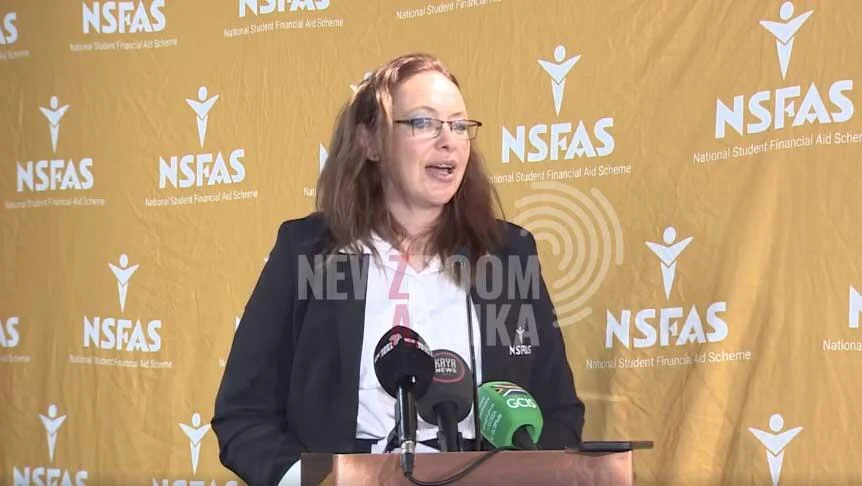
The National Student Financial Aid Scheme (NSFAS) has been a cornerstone of higher education access in South Africa for decades, aiming to provide financial support to students from low-income backgrounds. However, the organization has frequently been in the spotlight, not always for its successes, but often for its administrative challenges and leadership instability. In late 2025, this instability reached a new peak with the sudden resignation of its Board Chairperson, Dr. Karen Stander. Her departure, after only eight months in the role, sent ripples through the higher education sector, highlighting deep-seated issues within NSFAS.
Dr. Stander’s resignation was not a quiet exit; it was accompanied by a strong statement citing a “toxic and unbearable” work environment, characterized by claims of racism, bullying, and even threats to her family’s safety. This dramatic announcement brought renewed attention to the systemic weaknesses plaguing NSFAS, issues that have long hampered its ability to effectively serve its beneficiaries. The situation underscored the urgent need for a thorough examination of NSFAS’s governance, operational efficiency, and the overall culture within its leadership structures. As South Africa approaches the 2026 academic year, the stability and effectiveness of NSFAS remain critical for thousands of students relying on its support.
The Unfolding of Dr. Stander’s Resignation
Dr. Karen Stander’s tenure as NSFAS Board Chairperson, which began earlier in 2025, was marked by an initial sense of optimism and commitment. Appointed by former Higher Education Minister Dr. Nobuhle Nkabane, Dr. Stander had expressed the honor and privilege of taking up the position. However, this initial enthusiasm soon gave way to a starkly different reality. Her resignation letter, addressed to Higher Education Minister Buti Manamela, painted a grim picture of the internal dynamics at NSFAS.
She described an environment that had become “toxic and unbearable,” making it impossible to continue serving in good conscience. The core of her concerns, as articulated in her statement, revolved around issues of governance and accountability. Dr. Stander emphasized that her resignation was not a personal attack but an act of conscience, driven by a desire to uphold integrity and the values of the organization. She believed that stepping aside was necessary to allow for new leadership that could rebuild trust and foster better cohesion within the board.
Her communication with the Department of Higher Education, she stated, was always aimed at promoting transparency, not targeting individuals. This suggests a belief on her part that certain systemic issues were being overlooked or deliberately ignored, necessitating her direct engagement with the department. The claims of racism, bullying, and threats to her family’s safety, if substantiated, point to a deeply troubling organizational culture that extends beyond mere administrative inefficiencies.
Systemic Weaknesses and Operational Risks
Beyond the immediate interpersonal conflicts, Dr. Stander had repeatedly raised alarms about more profound systemic weaknesses within NSFAS. Her warnings focused on significant issues within the organization’s information and communication systems. She highlighted fragmented structures and inadequate cybersecurity practices, identifying these as serious operational risks. These technical shortcomings, coupled with what she described as poor leadership alignment and a culture of blame, had evidently undermined the scheme’s overall effectiveness.
The NSFAS system is complex, involving the disbursement of billions of rands annually to support students pursuing higher education. Any disruption or inefficiency in its operations can have devastating consequences for students, potentially leading to academic setbacks or even dropping out of their studies. The fragmented structures she mentioned could imply a lack of integration between different departments or systems, leading to data inconsistencies, payment delays, and difficulties in tracking student progress.
Furthermore, poor cybersecurity practices are a major concern for any organization handling sensitive personal and financial data. In the context of NSFAS, a breach could expose students to identity theft and financial fraud. The risks are amplified by the sheer volume of data processed and the vulnerability of young adults to such threats. Dr. Stander’s foresight in identifying these risks before they potentially manifest as major crises underscores the importance of her concerns.
A History of Administrative Instability
Dr. Stander’s resignation is not an isolated incident but rather the latest chapter in a long history of administrative instability at NSFAS. The organization has consistently faced criticism for its operational inefficiencies and leadership turnover. This pattern of instability has had a tangible impact on the very students NSFAS is meant to serve, leading to delayed student payments and administrative chaos.
The research data indicates that NSFAS has, in the past, resorted to appointing an Administrator to run the organization. This measure bypasses normal governance procedures and grants the relevant Minister more direct control. While such interventions might be intended to bring swift order, they also signal a deeper failure in the established governance structures and a lack of confidence in the existing leadership. The frequent turnover in executive positions further exacerbates this instability, preventing the development of consistent strategies and long-term planning.
This recurring cycle of leadership changes and administrative interventions creates an environment of uncertainty. For students, this means a constant worry about whether their funding will be processed on time, whether their allowances will be disbursed, and whether the system will function reliably. This uncertainty can significantly detract from their academic focus, adding an unnecessary layer of stress to their educational journey. The scheme’s mandate is to support students from disadvantaged backgrounds, who are often the most vulnerable to these disruptions.
The Impact on Student Funding for 2026
The timing of Dr. Stander’s resignation is particularly concerning, given that student funding applications for the 2026 academic year were already underway. The Department of Higher Education and Training now faces the urgent task of not only finding a replacement for the Board Chairperson but also stabilizing NSFAS and restoring public trust. This is a significant challenge, especially as the organization grapples with ongoing issues related to funding and disbursement.
The article notes that NSFAS has been struggling to secure sufficient funding for the current year’s qualifying students. This financial strain is often exacerbated by the poor economic environment in the country, which leads to an increase in the number of students qualifying for NSFAS funding. This creates a double bind: more students need support, but the available resources may not be adequate. Dr. Stander herself had spoken in March about how the poor economic climate meant more students were qualifying for NSFAS funding, even as the organization warned of insufficient funds.
This situation creates a precarious outlook for prospective students applying for 2026. They face the uncertainty of whether their applications will be processed efficiently, whether sufficient funds will be available, and whether the administrative machinery will be in place to support them throughout their studies. The leadership vacuum at the board level only adds to this uncertainty, potentially delaying crucial decisions regarding funding allocations and operational strategies for the upcoming academic year.
Broader Implications for Higher Education Access
The issues at NSFAS have far-reaching implications for broader access to higher education in South Africa. For many students, NSFAS is the only viable pathway to tertiary education. When the scheme falters, it directly impacts social mobility and the nation’s ability to develop a skilled workforce. The promise of equal opportunity through education is undermined when the very system designed to facilitate it is mired in controversy and inefficiency.
The claims of racism and bullying within the board, as cited by Dr. Stander, are particularly damaging. They suggest that the challenges at NSFAS are not merely logistical but also deeply rooted in issues of equity and workplace conduct. Addressing these issues requires more than just administrative reforms; it necessitates a fundamental shift in organizational culture and a commitment to fostering an inclusive and respectful environment for all staff and stakeholders.
Moreover, the constant leadership changes and administrative instability can erode public trust in NSFAS and, by extension, in the government’s commitment to education. This can discourage potential donors, partners, and even internal stakeholders from investing their energy and resources into improving the scheme. Restoring confidence will require a sustained period of stable leadership, transparent governance, and demonstrable improvements in service delivery.
The Path Forward: Rebuilding Trust and Efficiency
The resignation of Dr. Karen Stander serves as a critical juncture for NSFAS. It presents an opportunity to confront the deep-seated problems and implement meaningful reforms. The Department of Higher Education and Training must prioritize the appointment of a new Board Chairperson who possesses not only strong leadership qualities but also a deep commitment to ethical governance and a clear vision for the organization’s future.
Beyond leadership, a comprehensive review of NSFAS’s governance structures, operational processes, and technological infrastructure is essential. This review should be conducted with a view to identifying and rectifying systemic weaknesses, enhancing cybersecurity, and ensuring greater transparency and accountability. The fragmented systems need to be integrated, and outdated processes must be modernized to meet the demands of a growing student population and an evolving educational landscape.
Addressing the alleged issues of racism and bullying requires a dedicated effort to foster a culture of respect, inclusivity, and accountability. This may involve implementing robust anti-discrimination policies, providing diversity and inclusion training, and establishing clear mechanisms for reporting and addressing grievances. Creating a safe and supportive work environment is not only a matter of ethical responsibility but also a prerequisite for effective leadership and operational success.
Finally, NSFAS must work diligently to secure adequate funding for current and future students. This involves proactive engagement with the National Treasury, exploring diverse funding streams, and ensuring efficient allocation and disbursement of funds. Clear and consistent communication with students, institutions, and the public about funding availability, application processes, and timelines is also vital for managing expectations and building trust.
The challenges facing NSFAS are significant, but they are not insurmountable. By taking decisive action to address governance issues, improve operational efficiency, and foster a positive organizational culture, NSFAS can move closer to fulfilling its crucial mandate of enabling access to higher education for all deserving South African students. The stability and effectiveness of NSFAS are paramount for the future of countless young individuals and for the broader socio-economic development of the nation.
Conclusion
Dr. Karen Stander’s resignation as NSFAS Board Chairperson in late 2025 marked a critical moment, exposing the persistent administrative instability and deep-seated issues within the National Student Financial Aid Scheme. Her courageous stance, citing a toxic work environment, racism, bullying, and threats to her family, brought renewed attention to the systemic weaknesses that have long plagued the organization. These challenges, ranging from fragmented information systems and poor cybersecurity to leadership misalignment and a culture of blame, have consistently hindered NSFAS’s ability to effectively disburse funds and support students.
The recurring pattern of leadership turnover and the past reliance on administrators highlight a fundamental governance deficit. This instability directly impacts the thousands of students who depend on NSFAS for their tertiary education, creating uncertainty and stress that can jeopardize their academic futures. As the application window for 2026 funding opens, the Department of Higher Education and Training faces the urgent task of stabilizing NSFAS, appointing new leadership, and restoring public trust.
Moving forward, a comprehensive overhaul of NSFAS is imperative. This includes strengthening governance structures, modernizing technological infrastructure, and fostering an inclusive and accountable organizational culture. Addressing the allegations of racism and bullying requires a commitment to ethical conduct and a safe working environment. Ultimately, the effectiveness of NSFAS is not just about financial aid; it is about ensuring equitable access to higher education and empowering South Africa’s youth for a brighter future. The path to stability and efficiency is challenging, but it is essential for the continued promise of educational opportunity for all.


Conversation
0 Comments