

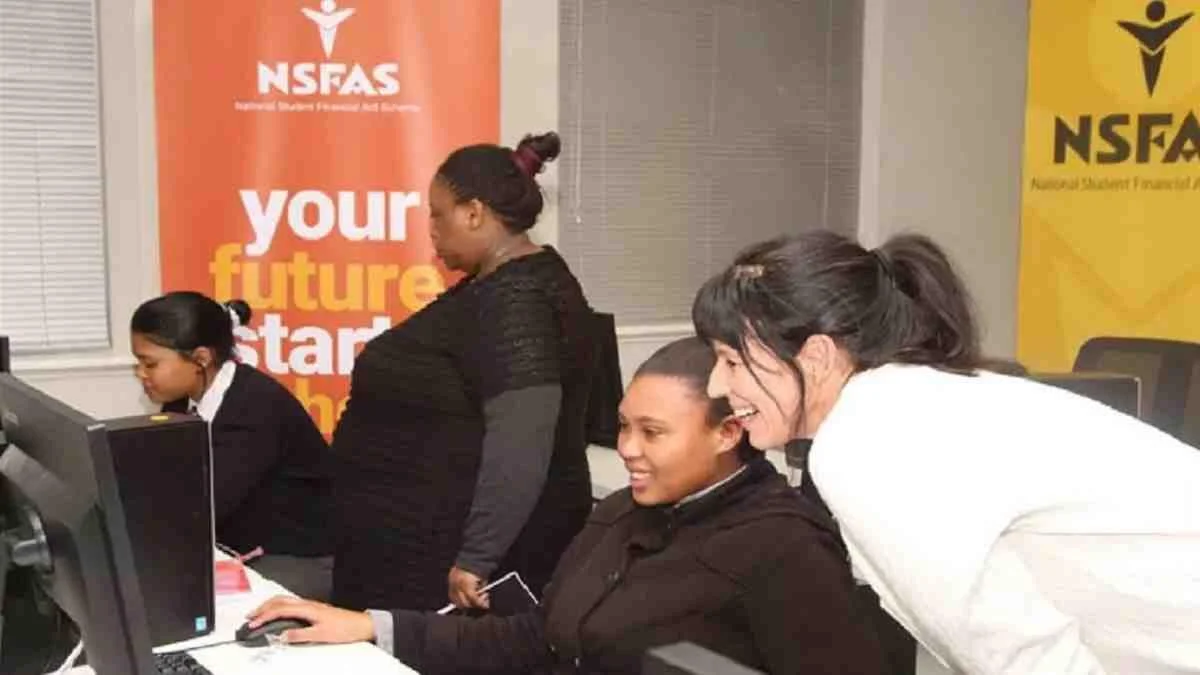
The National Student Financial Aid Scheme (NSFAS) plays a critical role in South Africa’s educational landscape, providing vital financial support to thousands of students who might otherwise be unable to pursue higher education. For many, applying for NSFAS is a gateway to achieving their academic and career aspirations. However, the application process can sometimes be confusing, with various status updates appearing on the myNSFAS portal. One such status that applicants might encounter is “Awaiting Academic Eligibility.” Understanding what this status signifies is crucial for navigating the NSFAS application journey effectively.
This status indicates that NSFAS is currently in the process of verifying whether an applicant meets the necessary academic requirements to qualify for funding. It’s a standard part of the evaluation process, ensuring that aid is directed towards students who demonstrate the potential to succeed in their chosen fields of study. Beyond simply checking past academic performance, NSFAS also uses this stage to assess the applicant’s eligibility in relation to specific funding rules, such as the N+ Rule. This rule is designed to ensure that students are making timely progress towards completing their qualifications, thereby promoting efficient use of financial aid resources.
Understanding the NSFAS Application Process
The NSFAS application process is designed to be thorough, ensuring that funds are allocated appropriately. After an applicant submits their details, the system moves through several stages of verification. These stages include confirming personal information, verifying household income, and, critically, assessing academic standing. The “Awaiting Academic Eligibility” status falls within this academic verification phase. It’s a period where NSFAS interfaces with educational institutions to confirm the applicant’s academic history and their current standing.
Applicants are strongly encouraged to monitor their NSFAS status regularly. This proactive approach allows them to stay informed about the progress of their application and to respond promptly if any additional information or action is required from their end. The myNSFAS portal serves as the central hub for these updates, providing a transparent view of where an application stands.
What ‘Awaiting Academic Eligibility’ Means
When your NSFAS status reads ‘Awaiting Academic Eligibility,’ it means that the National Student Financial Aid Scheme is actively reviewing your academic qualifications and performance to determine if you meet their criteria for receiving financial assistance. This is a critical step in the application process, as academic performance is a key factor in NSFAS eligibility.
During this phase, NSFAS is not just looking at your most recent academic results. They are also assessing your overall academic journey, particularly in relation to the N+ Rule. This rule is a significant aspect of NSFAS funding policy and directly impacts a student’s continued eligibility.
The N+ Rule Explained
The N+ Rule is a policy implemented by NSFAS to ensure that students complete their qualifications within a reasonable timeframe. It applies to all students who receive financial aid from NSFAS, regardless of whether they were funded in previous years or at different institutions.
Here’s a breakdown of the N+ Rule:
- ‘N’: This represents the minimum number of years officially allocated to complete a specific qualification. This is often referred to as the “record time” for a course. For example, a three-year degree program has an ‘N’ of 3.
- ‘+1’: This signifies one additional year that a student is allowed beyond the ‘N’ years to complete the same qualification. This extra year is intended to provide a buffer for unforeseen circumstances or academic challenges.
Therefore, the maximum duration for which a student can receive NSFAS funding for a particular qualification is N+1 years. For a three-year degree, this means a student can be funded for a maximum of four years.
Important Clarification on the N+ Rule:
NSFAS has made it clear that the N+1 rule considers all years a student has been registered for tertiary study at any public university or TVET college in South Africa. This means that even if you were not funded by NSFAS in previous years, those years of study still count towards your N+1 limit. For instance, if you completed one year of a degree at a university without NSFAS funding and then applied for NSFAS in your second year, that first year would be counted against your N+1 allowance. This policy aims to prevent students from taking excessively long to complete their studies while being supported by public funds.
How to Check Your NSFAS Status
Keeping track of your NSFAS application status is straightforward and can be done through the myNSFAS student portal. This portal is your primary point of access for all information related to your application and funding.
Follow these steps to check your NSFAS status:
- Login to the myNSFAS Portal: Navigate to the official NSFAS website and locate the myNSFAS student portal.
- Enter Credentials: Use your registered username and password to log in. If you have forgotten your password, there are usually options to reset it.
- Track Funding Progress: Once logged in, find and click on the option that says “Track Your Funding Progress” or a similar phrase. This will display the current status of your NSFAS application.
Regularly checking your status ensures you are aware of any updates, such as the ‘Awaiting Academic Eligibility’ status, and can take necessary actions promptly.
What Happens After ‘Awaiting Academic Eligibility’?
Once NSFAS has completed its evaluation of your academic eligibility, your status will be updated. If you meet all the academic requirements and are compliant with the N+ Rule, your status will likely change to something like ‘Provisionally Funded’ or ‘Funded,’ indicating that your application is progressing positively.
However, if your academic record or N+ Rule compliance raises concerns, your status might reflect this. For example, if you have exceeded the N+1 years for a qualification, NSFAS may indicate that you are not eligible based on this rule. In such cases, it is important to understand the specific reason for the ineligibility and explore any available appeal processes.
Potential Outcomes and Next Steps
1. Eligibility Confirmed:
If your academic eligibility is confirmed and you meet all other NSFAS criteria, your status will be updated to reflect that you are provisionally or fully funded. This is the desired outcome, and you will typically receive further communication regarding the disbursement of funds and any specific conditions of your funding.
2. Further Information Required:
Occasionally, NSFAS may require additional academic documentation or clarification. If this is the case, your status might indicate that further information is needed, and you will be prompted to provide it through the portal or via email. Promptly submitting any requested documents is crucial to avoid delays.
3. Ineligibility Due to Academic Reasons:
If your academic record does not meet NSFAS standards, or if you have exceeded the N+1 rule, your status might indicate ineligibility. This can be a difficult outcome, but it’s important to understand the exact reason. NSFAS usually provides a brief explanation for the decision.
4. Appeal Process:
If you believe there has been an error in the assessment of your academic eligibility, or if you have extenuating circumstances that led to academic challenges, you may have the option to appeal the decision. The NSFAS portal or their official communication channels will provide information on how to initiate an appeal, including deadlines and required documentation. Appeals often require a detailed explanation and supporting evidence, such as medical reports or letters from academic advisors.
The Importance of Academic Progress
The ‘Awaiting Academic Eligibility’ status underscores the importance NSFAS places on academic progress and timely completion of studies. For students, this means not only focusing on achieving good grades but also being mindful of the duration of their studies.
- Maintain Good Academic Standing: Consistently performing well in your courses is the most direct way to meet NSFAS academic requirements. Universities and TVET colleges often have their own minimum academic performance standards that NSFAS also considers.
- Understand Your Qualification Structure: Be aware of the official duration of your chosen qualification and plan your academic path accordingly. This includes understanding credit requirements and course sequencing.
- Monitor Your Study Duration: Keep a close eye on how many years you have been registered for tertiary study. If you are nearing the end of your N+1 period, it is advisable to consult with your institution’s financial aid office and NSFAS directly to understand your options.
- Communicate with Your Institution: If you are facing academic difficulties, reach out to your university or TVET college’s academic support services or student counseling. They can offer guidance and resources that might help you improve your academic performance.
NSFAS and Academic Performance Benchmarks
NSFAS funding is not solely based on financial need; it also requires students to demonstrate academic potential and progress. While the exact benchmarks can vary slightly year to year and between institutions, NSFAS generally expects students to meet certain academic performance standards to remain eligible for funding.
- Minimum Pass Rate: Typically, NSFAS requires students to pass a certain percentage of their registered modules each academic year. This is often around 50% of the modules taken.
- Progression Requirements: Universities and TVET colleges have their own progression rules, which dictate whether a student can advance to the next academic year. NSFAS funding is usually contingent on meeting these institutional progression requirements.
- First-Time Entering Students (FTEN): For students entering higher education for the first time, the academic eligibility criteria might be slightly different, focusing more on matriculation results and the potential to succeed. However, once enrolled, they must meet ongoing academic performance standards.
The ‘Awaiting Academic Eligibility’ status is a signal that NSFAS is verifying these benchmarks against your academic record. It’s a proactive measure to ensure that financial aid is supporting students who are actively working towards completing their qualifications.
Navigating Challenges with Academic Eligibility
Encountering the ‘Awaiting Academic Eligibility’ status can be a source of anxiety for applicants. However, it’s important to approach it with a clear understanding of the process and potential outcomes.
If you are concerned about your academic eligibility:
- Review Your Academic Record: Access your official academic transcripts from your previous studies. This will give you a clear picture of your performance and the duration of your studies.
- Consult Your Institution’s Financial Aid Office: The financial aid advisors at your university or TVET college are invaluable resources. They can help you interpret your academic record in the context of NSFAS requirements, explain the N+ Rule as it applies to your specific situation, and guide you through the appeal process if necessary.
- Understand NSFAS Communication: Pay close attention to any emails or messages from NSFAS. They often contain specific instructions or explanations related to your application status.
- Prepare Supporting Documentation: If you anticipate needing to appeal a decision, start gathering any relevant documentation. This could include medical certificates for periods of illness that affected your studies, letters from tutors or lecturers, or any other evidence that explains academic challenges.
The Role of Institutions in Academic Eligibility Verification
NSFAS relies heavily on public universities and TVET colleges to provide accurate academic data for their students. When your status is ‘Awaiting Academic Eligibility,’ NSFAS is likely in communication with your educational institution to obtain your academic history. This includes information on:
- Modules registered and passed: The specific courses you have taken and successfully completed.
- Years of study: The total duration of your enrollment at the institution.
- Qualification completion status: Whether you have completed or are on track to complete your qualification.
- Academic progression: Whether you have met the requirements to advance to the next academic year.
The accuracy and timeliness of this information from institutions are crucial for NSFAS to make informed decisions about funding. Students should ensure their personal and academic details are up-to-date with their respective institutions.
Future-Proofing Your NSFAS Application
While the ‘Awaiting Academic Eligibility’ status is a temporary phase, understanding its implications can help students better prepare for future applications and maintain their funding.
- Academic Planning: Develop a clear academic plan for your chosen qualification. This involves understanding the course structure, credit requirements, and potential electives. A well-thought-out plan can help you stay on track and avoid unnecessary extensions.
- Proactive Communication: If you foresee any academic challenges, such as needing to repeat a module or take a reduced study load, communicate this proactively with both your institution and NSFAS. Early communication can sometimes lead to better outcomes or alternative solutions.
- Financial Literacy: Beyond NSFAS, understanding broader financial management for students is beneficial. This includes budgeting for living expenses, textbooks, and other costs not fully covered by NSFAS. Resources from your institution or financial literacy programs can be very helpful.
- Career Alignment: Ensure your chosen field of study aligns with your career goals and the demands of the job market. NSFAS aims to support students in fields where there is a need for skilled professionals, contributing to the nation’s economic development.
The ‘Awaiting Academic Eligibility’ status is a normal part of the NSFAS application process, signifying a thorough review of your academic standing. By understanding what it means, how the N+ Rule works, and how to monitor your application, you can navigate this stage with greater confidence. Maintaining good academic performance and being aware of your study duration are key to securing and retaining NSFAS funding, ultimately paving the way for a successful higher education journey in 2026 and beyond.

Conversation
0 Comments