

Understanding the Structure of International Diplomacy: A Deep Dive
International diplomacy is a complex and multifaceted field that involves the art and practice of conducting negotiations and managing relationships between countries. At its core, it’s about communication, understanding, and finding common ground to address global challenges and foster cooperation. The structure of international diplomacy is not a rigid, one-size-fits-all model but rather a dynamic system that evolves based on geopolitical shifts, economic realities, and the specific needs of the nations involved. Understanding this structure is key to grasping how global affairs are managed and how countries work together, or sometimes, apart.
The foundation of modern international diplomacy rests on a framework of established principles and institutions. These include the concept of state sovereignty, the importance of international law, and the role of multilateral organizations. However, the actual practice of diplomacy involves a wide array of actors, strategies, and communication channels, each contributing to the overall architecture of global relations. This article will explore the various components that make up the structure of international diplomacy, examining the roles of different actors, the types of interactions, and the underlying principles that guide these engagements.
The Pillars of Diplomatic Structure: Sovereignty and International Law
At the heart of international diplomacy lies the principle of state sovereignty. This means that each nation, regardless of its size or power, has the ultimate authority within its own borders. This principle is fundamental because it establishes the basic units with which diplomacy is conducted. Nations engage with each other as independent entities, each with its own interests and the right to self-determination. This respect for sovereignty is a cornerstone of diplomatic interactions, ensuring that no nation can arbitrarily interfere in the internal affairs of another.
Complementing state sovereignty is the framework of international law. While not always perfectly enforced, international law provides a set of rules and norms that govern the behavior of states. Treaties, conventions, and customary international law create a shared understanding of acceptable conduct in areas such as trade, human rights, and conflict resolution. Diplomacy often involves the interpretation, negotiation, and enforcement of these laws. For instance, when countries engage in trade disputes, they often turn to international legal bodies or diplomatic negotiations to find a resolution based on established trade agreements. The existence of international law provides a predictable environment for diplomatic engagement, reducing uncertainty and promoting stability.
Key Actors in the Diplomatic Arena
The structure of international diplomacy is shaped by a variety of actors, each playing a distinct role. While nation-states are the primary players, their actions are often influenced and mediated by other entities.
Nation-States: The Primary Architects
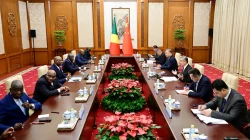
Nation-states remain the central actors in international diplomacy. Governments, through their foreign ministries and diplomatic missions, are responsible for formulating and executing foreign policy. This involves appointing ambassadors, engaging in bilateral and multilateral negotiations, and representing their country’s interests on the global stage. The decisions made by national leaders and diplomats have a direct impact on international relations. For example, the recent talks between China’s top diplomat and the Foreign Minister of the Republic of the Congo highlight the direct engagement between sovereign states to discuss cooperation and mutual interests. These discussions, often held in capital cities or at international forums, are the bedrock of diplomatic activity.
International Organizations: Facilitators of Cooperation
International organizations, such as the United Nations (UN), the World Trade Organization (WTO), and regional bodies like the African Union (AU) or the European Union (EU), play a crucial role in structuring diplomatic interactions. These organizations provide platforms for member states to convene, discuss common issues, and develop collective responses to global challenges. They establish rules, facilitate negotiations, and sometimes even provide mechanisms for dispute resolution. The UN, for instance, serves as a universal forum for dialogue on peace, security, and development, enabling countries to coordinate their efforts on a wide range of issues. The Forum on China-Africa Cooperation (FOCAC), mentioned in the context of China-Africa relations, is another example of a structured diplomatic mechanism aimed at enhancing cooperation between China and African nations.
Non-Governmental Organizations (NGOs) and Civil Society
While not official state actors, NGOs and civil society groups increasingly influence the diplomatic landscape. They can act as advocates, raising awareness about specific issues, lobbying governments, and providing expertise. For example, environmental NGOs play a significant role in international climate negotiations, pushing for stronger commitments and more ambitious targets. Similarly, human rights organizations monitor state behavior and can bring international pressure to bear on governments that violate human rights norms. Their involvement adds another layer to the diplomatic structure, bringing diverse perspectives and demands into the international arena.
Multinational Corporations (MNCs)
MNCs also exert influence on international diplomacy, particularly in areas related to trade, investment, and economic policy. Their global operations and economic power can shape negotiations on trade agreements, environmental regulations, and labor standards. Governments often engage in diplomatic efforts to attract foreign investment or to resolve disputes involving MNCs operating within their borders. The economic interests of these corporations can therefore be a significant factor in shaping diplomatic agendas and outcomes.
The Mechanics of Diplomatic Engagement
The way countries interact diplomatically can be categorized into several key types of engagement, each with its own methods and objectives. These mechanics are the tools and processes that diplomats use to achieve their foreign policy goals.
Bilateral Diplomacy: Direct State-to-State Relations
Bilateral diplomacy refers to the direct interactions between two countries. This is the most common form of diplomacy and involves a wide range of activities, from routine communication between embassies to high-level state visits and negotiations. Ambassadors and their staff stationed in foreign capitals serve as the primary conduits for bilateral communication. They manage day-to-day relations, promote economic and cultural ties, and represent their home government’s policies. State visits by heads of state or government are significant events that can lead to major agreements or a deepening of relations. The talks between China and the Republic of the Congo, as reported, are a prime example of bilateral diplomacy in action, focusing on specific areas of cooperation and mutual support.
Multilateral Diplomacy: Collective Action Through Organizations
Multilateral diplomacy involves three or more countries engaging in discussions and negotiations, typically within the framework of international organizations. This form of diplomacy is essential for addressing global issues that transcend national borders, such as climate change, pandemics, and international security. The UN General Assembly, the Security Council, and various specialized agencies are key venues for multilateral diplomacy. Participating in these forums allows countries to coordinate policies, share information, and build consensus on common challenges. It also provides smaller nations with a platform to voice their concerns and influence global decision-making, which might otherwise be dominated by larger powers.
Public Diplomacy: Engaging Foreign Populations
Public diplomacy goes beyond traditional state-to-state interactions and aims to influence foreign publics directly. This involves using tools such as cultural exchanges, educational programs, media outreach, and digital communication to foster understanding and build goodwill towards a country. The goal is to shape perceptions, promote a positive image, and create a more favorable environment for a nation’s foreign policy objectives. Public diplomacy can be a powerful tool for building long-term relationships and countering negative stereotypes. It recognizes that public opinion in other countries can influence their governments’ policies.
Summit Diplomacy: High-Level Encounters
Summit diplomacy refers to meetings between heads of state or government. These meetings are often reserved for discussing the most critical issues and making high-level decisions. Summits can be bilateral, like a meeting between the leaders of two countries, or multilateral, such as the G7 or G20 summits. They offer a unique opportunity for leaders to engage in direct dialogue, build personal rapport, and break through diplomatic impasses. The outcomes of summit meetings can significantly shape the direction of international relations.
The Principles Guiding Diplomatic Structure
Several underlying principles inform the structure and practice of international diplomacy. These principles act as guiding lights, shaping how nations interact and what they can expect from each other.
Reciprocity: The Principle of Mutual Exchange
Reciprocity is a fundamental principle in diplomacy, suggesting that states should treat each other in a similar manner. If one country offers a particular concession or benefit, it expects a similar gesture in return. This principle applies to various aspects of international relations, including trade, visa policies, and diplomatic courtesies. For example, if Country A grants tariff reductions on certain goods from Country B, Country B is likely to reciprocate with similar reductions. This mutual exchange helps to build trust and encourages cooperation, as both sides see a clear benefit in engaging constructively.
Non-Interference in Internal Affairs
As mentioned earlier, the principle of non-interference is a cornerstone of state sovereignty and international law. It dictates that states should not intervene in the domestic affairs of other sovereign states. This principle is crucial for maintaining stability and preventing conflicts. While the interpretation and application of this principle can sometimes be debated, particularly in cases of human rights abuses or internal conflicts with international implications, it remains a foundational norm in diplomatic practice.
Peaceful Settlement of Disputes
International diplomacy is fundamentally geared towards the peaceful resolution of disagreements between nations. This principle is enshrined in the UN Charter and is a primary objective of most diplomatic efforts. Countries are encouraged to use negotiation, mediation, arbitration, and judicial settlement to resolve their disputes rather than resorting to force. Diplomatic channels are constantly at work to de-escalate tensions and find common ground when conflicts arise. The existence of international courts and tribunals, alongside the constant work of diplomats, underscores this commitment.
Balance of Power and Collective Security
Historically, the concept of the balance of power has played a significant role in shaping international relations and diplomatic strategies. This involves states forming alliances or taking actions to prevent any single power from becoming too dominant. More recently, the idea of collective security has gained prominence, particularly through organizations like the UN. Collective security involves states agreeing to act together to deter aggression and maintain peace, believing that an attack on one is an attack on all. These concepts influence how states form relationships and how they approach security challenges.
Evolving Structures in Modern Diplomacy
The landscape of international diplomacy is constantly evolving, adapting to new technologies, global challenges, and shifting power dynamics. The traditional structures are being supplemented and sometimes challenged by new forms of engagement.
Digital Diplomacy: The Rise of Online Engagement
The advent of the internet and social media has given rise to digital diplomacy, also known as e-diplomacy. This involves using digital tools and platforms to conduct diplomatic activities, communicate with foreign publics, and engage in international dialogue. Foreign ministries and embassies now use social media to disseminate information, respond to queries, and even conduct informal consultations. Digital diplomacy can increase transparency, broaden outreach, and enable faster communication, though it also presents challenges related to misinformation and cybersecurity.
Economic Diplomacy: Trade and Investment as Tools
Economic diplomacy has become increasingly important as countries use trade, investment, and financial tools to advance their foreign policy objectives. This can involve negotiating trade agreements, offering development aid, imposing sanctions, or using financial leverage. The pursuit of economic interests is often intertwined with broader geopolitical strategies, making economic diplomacy a powerful instrument in the hands of states. For instance, China’s engagement with African nations, including the Republic of the Congo, often involves significant economic cooperation and investment, which in turn shapes diplomatic relations.
Environmental Diplomacy: Addressing Global Ecological Challenges
As the world grapples with issues like climate change, biodiversity loss, and pollution, environmental diplomacy has emerged as a critical area of international engagement. This involves negotiations and cooperation among states to address these shared ecological challenges. International agreements like the Paris Agreement on climate change are products of extensive environmental diplomacy. Countries work together to set targets, share technologies, and mobilize resources to protect the planet.
Health Diplomacy: Global Cooperation on Public Health
Recent global health crises have underscored the importance of health diplomacy. This involves international cooperation to address public health threats, such as pandemics, and to improve global health outcomes. Diplomatic efforts in this area focus on sharing information, coordinating responses, ensuring equitable access to medical resources, and strengthening health systems worldwide. The assistance China has provided to Africa in combating epidemics and strengthening health infrastructure, as noted in diplomatic discussions, exemplifies health diplomacy.
Challenges and Future Directions in Diplomacy
Despite its established structures and principles, international diplomacy faces numerous challenges. Geopolitical rivalries, the rise of nationalism, and the complexities of global issues require constant adaptation.
One significant challenge is the increasing complexity of global issues. Problems like cyber warfare, transnational terrorism, and global financial instability require coordinated responses from multiple actors, often involving intricate negotiations and compromises. The traditional state-centric model of diplomacy is sometimes insufficient to address these challenges, necessitating greater involvement of non-state actors and innovative diplomatic approaches.
Another challenge is the rise of populism and nationalism in various parts of the world, which can lead to protectionist policies and a reluctance to engage in multilateral cooperation. This can strain international relations and make diplomatic progress more difficult. Building consensus and maintaining trust in such an environment requires skilled and persistent diplomatic efforts.
Looking ahead, the structure of international diplomacy will likely continue to evolve. We may see a greater emphasis on flexible, issue-specific coalitions rather than rigid alliances. The role of technology in diplomacy will undoubtedly expand, offering new tools for communication and engagement but also new risks. Furthermore, the growing importance of the Global South in international affairs suggests a shift towards a more multipolar world order, where diplomatic influence is more widely distributed.
The ongoing dialogue between nations, exemplified by the high-level talks between China and the Republic of the Congo, demonstrates the enduring necessity of diplomacy. These interactions, whether bilateral or multilateral, are the threads that weave the fabric of international relations, aiming to promote peace, stability, and shared prosperity in an increasingly interconnected world. Understanding the structure of this intricate system is not just an academic exercise; it is essential for navigating the complexities of our global community.
Conclusion
The structure of international diplomacy is a dynamic and evolving system, built upon principles of sovereignty and international law, and enacted through the interactions of diverse actors. From the direct engagements between nation-states to the collaborative efforts within international organizations, diplomacy employs a range of tools and strategies to manage global affairs. Bilateral and multilateral discussions, public outreach, and high-level summits all contribute to this intricate architecture. As the world faces new challenges, from climate change to global health crises, diplomatic structures continue to adapt, incorporating economic, environmental, and health dimensions. Despite the complexities and evolving geopolitical landscape, the fundamental goal of diplomacy remains constant: to foster understanding, resolve disputes peacefully, and promote cooperation for a more stable and prosperous world. The ongoing commitment to dialogue, as seen in diplomatic exchanges worldwide, ensures that this vital framework for global interaction will continue to shape our collective future.


Conversation
0 Comments