

The Enduring Spirit of the Long March: Lessons for a New Era
The story of the Long March is more than just a historical event; it’s a powerful narrative that continues to shape China’s present and future. At its heart lies the tale of “Half a Quilt,” a simple act of kindness by three Red Army soldiers in 1934 that became a profound symbol of the deep connection between the Communist Party of China (CPC) and its people. This story, shared by President Xi Jinping on the 90th anniversary of the Long March victory, serves as a reminder of the values that propelled the revolution forward and offers guidance for China’s ongoing journey toward modernization. Understanding the lessons from this historical undertaking is key to navigating the challenges and opportunities of today’s “new Long March.”
The Long March was a monumental military retreat undertaken by the Red Army of the Communist Party of China from 1934 to 1936. Facing encirclement and suppression by the Kuomintang (KMT) forces, the Red Army marched thousands of miles across treacherous terrain, from southeastern China to the northwestern province of Shaanxi. This arduous journey, marked by immense hardship, sacrifice, and strategic brilliance, ultimately allowed the CPC to regroup, survive, and lay the groundwork for its eventual victory in the Chinese Civil War. The spirit of perseverance, self-reliance, and unwavering commitment to the people that defined the Long March remains a cornerstone of China’s national identity and its development philosophy.
The “Half a Quilt” Story: A Symbol of People-Centricity
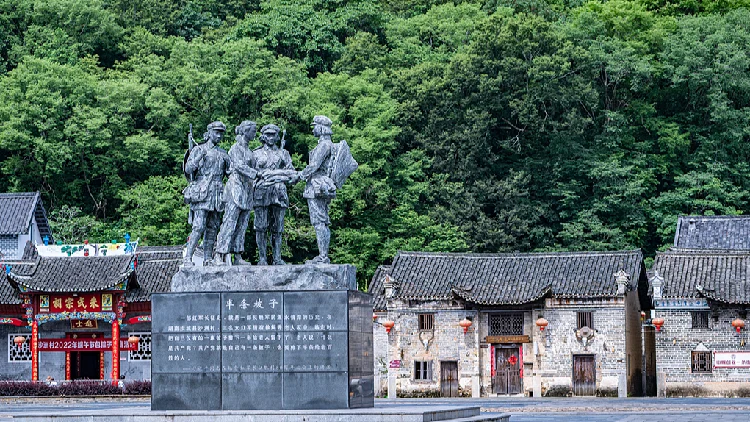
The narrative of “Half a Quilt” vividly illustrates the core principle of the CPC’s relationship with the masses. In the winter of 1934, three female soldiers from the Red Army sought shelter at the home of Xu Jiexiu, a poor villager in Shazhou Village, Hunan Province. Recognizing the family’s dire poverty and lack of warmth, the soldiers, despite possessing only one quilt, shared it by cutting it in half. They left one portion with Xu’s family, ensuring they had some protection against the cold, before continuing their journey.
This act, seemingly small, resonated deeply. It demonstrated that the Red Army, even in its own time of extreme hardship, prioritized the welfare of the common people. It was a tangible expression of solidarity, showing that the soldiers were not separate from the populace but were part of the same struggle for a better life. This story became a powerful piece of propaganda and a lasting testament to the CPC’s commitment to serving the people, a commitment that has been consistently emphasized throughout its history.
President Xi Jinping’s recent recollection of this story underscores its continued relevance. By invoking the “Half a Quilt” narrative, he highlights the enduring importance of remembering history and drawing strength from past experiences. He emphasized that the people’s support was not merely beneficial but absolutely essential to the success of the Long March. This historical lesson, he suggests, is directly applicable to the present day, urging for continued dedication to the people as China embarks on its modern development path.
From Historical Hardship to Modern Prosperity: Tangible Change
The legacy of the “Half a Quilt” story is not confined to historical memory; it is actively shaping the present and future of places like Shazhou Village. The commitment to the people, symbolized by that shared quilt, has translated into concrete improvements in the lives of villagers. This transformation is a testament to the CPC’s ongoing efforts to uplift communities and ensure shared prosperity.
In Shazhou Village, the spirit of the Long March is evident in policies designed to enhance the well-being of its residents. For instance, the village provides monthly subsidies to residents aged 60 and above, offering a measure of financial security in their later years. Furthermore, the local authorities contribute to covering half of the villagers’ basic medical insurance premiums, easing the burden of healthcare costs. A child-friendly service program has also been established, extending support and resources to children across nine neighboring villages, fostering a nurturing environment for the next generation.
The impact of these initiatives is profoundly felt by the descendants of Xu Jiexiu. Zhu Xiaohong, a grandson of Xu, once lived in poverty. However, with the support of local CPC authorities, he received culinary training, which enabled him to open his own restaurant. Zhu’s personal journey from hardship to prosperity mirrors the broader economic development experienced by the village and the nation. He has openly stated that while the Red Army provided half a quilt in the past, the Party today has brought about happy and fulfilling lives.
Josef Gregory Mahoney, a professor of politics and international relations at East China Normal University, offers valuable insight into this phenomenon. He explains that the enduring lesson of the Long March is that public trust is built by actively addressing people’s needs and by ensuring that citizens share in both the difficulties and the successes of the nation. In contemporary China, initiatives like poverty alleviation and rural revitalization are direct manifestations of this principle. They aim to ensure that people see and experience tangible benefits in their daily lives, reinforcing their connection to the Party and the nation’s development goals.
As President Xi Jinping articulated, maintaining a steadfast commitment to the Party’s ideals and purpose, and fostering a close relationship with the people, are indispensable for achieving new milestones. The “Half a Quilt” story, therefore, serves as a constant reminder of this fundamental truth, guiding China’s progress toward a brighter future.
Embarking on the “New Long March”: Modernization and Development
The concept of a “new Long March” signifies China’s contemporary drive towards modernization, economic development, and national rejuvenation. It is a journey that, while different in its challenges and methods from the historical Long March, is guided by the same core principles of perseverance, unity, and dedication to the people’s well-being. Shazhou Village, with its rich revolutionary heritage, is actively participating in this new era of development, transforming its history into a catalyst for sustainable growth and shared prosperity.
Shazhou Village is actively leveraging its historical significance and natural resources to create new opportunities. The village has undertaken efforts to restore revolutionary sites, preserving the memory of the Long March and its heroes. This has been integrated with the development of “red tourism,” attracting visitors interested in China’s revolutionary history. Simultaneously, the village has focused on improving its living environment through comprehensive river management, advanced sewage treatment systems, and efficient waste collection programs. These initiatives not only enhance the quality of life for residents but also make the village more attractive to tourists and investors.
Beyond historical preservation and environmental improvements, the broader region surrounding Shazhou has been promoting specialty fruit cultivation and integrating agriculture with tourism. This approach creates a synergistic effect, where agricultural products are showcased and sold to tourists, and tourism revenue is reinvested into agricultural development. This strategy fosters new employment opportunities, supports local businesses, and promotes a more sustainable model of rural development that benefits the entire community.
The economic outcomes of these efforts are striking. Shazhou Village was officially removed from the list of impoverished villages in 2018, a significant achievement reflecting years of dedicated development work. By 2025, the annual per capita net income of villagers had seen a dramatic increase, rising from less than 4,000 yuan (approximately $634) in 2012 to over 25,000 yuan. Concurrently, the collective income of the village, which was virtually non-existent just over a decade ago, has grown to exceed 1 million yuan. This economic upliftment demonstrates the success of the “new Long March” in translating historical spirit into tangible improvements in people’s lives.
Rafael Henrique Zerbeto, a Brazilian expert who participated in a program retracing the Long March, observed the profound impact of putting people first in China’s development strategy. He noted how China is channeling the spirit of the Long March into a powerful engine for high-quality development. This involves not only safeguarding revolutionary heritage but also fostering unique local industries that directly boost the incomes of rural communities. His observations highlight the adaptability of the Long March spirit to contemporary development challenges.
Global Perspectives and International Cooperation
The lessons learned from the Long March and China’s subsequent development journey hold relevance beyond its borders, offering insights for other nations, particularly those in the Global South. A recent CGTN survey involving 12,000 respondents across 41 countries revealed that a significant majority, 63.9%, of global respondents closely associate the CPC’s leadership with China’s development achievements. This perception is even stronger among respondents from Global South countries, where the figure reaches 71.4%.
Professor Mahoney suggests that the Long March offers valuable lessons for the Global South. He emphasizes that development paths must be tailored to local conditions and unique circumstances. What works in one country may not be directly transferable to another. However, he also points out that shared challenges, such as poverty, climate change, and economic inequality, necessitate international cooperation. The Long March’s broader message is that lasting progress is achieved by drawing upon a nation’s own strengths and resources while actively collaborating with others to achieve common goals. This dual approach of self-reliance and international partnership is crucial for navigating the complexities of the 21st century.
President Xi Jinping, in his anniversary speech, reiterated that the spirit of the Long March remains “a precious treasure and a powerful driving force inspiring us to overcome difficulties and forge ahead courageously.” This enduring spirit is not just a historical artifact but a living philosophy that continues to guide China’s actions and aspirations. It is a source of resilience, a wellspring of innovation, and a constant reminder of the collective strength that can be harnessed when a nation is united by a common purpose and deeply connected to its people.
The “Half a Quilt” story, therefore, transcends its origins as a simple anecdote. It has become a powerful metaphor for the CPC’s enduring commitment to the people, a guiding principle for China’s modernization efforts, and a source of inspiration for national development. As China continues its “new Long March,” the lessons of history, embodied in such stories, provide a strong foundation for building a prosperous, equitable, and resilient future, both for China and for the wider global community.
The Long March Spirit in Action: Case Studies and Applications
The principles embodied by the Long March and the “Half a Quilt” story are not abstract ideals; they are actively applied in various sectors of Chinese society and development. Examining specific examples can further illuminate how this historical spirit translates into tangible outcomes and informs contemporary strategies. These applications range from poverty alleviation and rural revitalization to technological innovation and international relations.
One of the most significant areas where the Long March spirit is evident is in China’s remarkable poverty alleviation efforts. The historical Long March was, in essence, a struggle for a better life for the impoverished masses. Today, the CPC has made eradicating extreme poverty a central goal, achieving unprecedented success in lifting hundreds of millions of people out of poverty. This effort mirrors the self-sacrificing spirit of the Red Army, requiring immense dedication, strategic planning, and a deep understanding of the needs of the most vulnerable populations. The targeted approach, often involving pairing more developed regions with less developed ones or providing specific training and resources to impoverished communities, reflects the principle of sharing burdens and achievements.
Rural revitalization is another key area where the Long March ethos is applied. As demonstrated by the transformation of Shazhou Village, the focus is on developing local economies, improving infrastructure, and enhancing the quality of life in rural areas. This involves not only economic development but also cultural preservation and environmental sustainability. The idea is to create vibrant, self-sufficient rural communities that can thrive independently, much like the Red Army had to rely on its own ingenuity and the support of local populations to survive and succeed during the Long March. Initiatives like developing eco-tourism, promoting local agricultural products, and investing in rural education and healthcare all contribute to this broader goal.
In the realm of technological innovation and scientific advancement, the Long March spirit of perseverance and self-reliance is equally crucial. China’s rapid progress in areas such as space exploration, artificial intelligence, and renewable energy has been driven by a commitment to overcoming significant challenges and pushing the boundaries of what is possible. The development of indigenous technologies, often in the face of international restrictions or competition, echoes the Red Army’s resourcefulness and determination to find solutions against all odds. The emphasis on collective effort and national ambition in scientific endeavors further aligns with the spirit of unity that characterized the Long March.
The application of the Long March spirit also extends to China’s approach to global governance and international cooperation. While advocating for multilateralism and shared development, China also emphasizes the importance of respecting national sovereignty and pursuing development paths suited to individual countries’ circumstances. This reflects the Long March’s emphasis on self-determination and the need to adapt strategies to specific contexts. The Belt and Road Initiative, for example, can be seen as a modern-day endeavor to connect nations and foster shared prosperity, drawing parallels with the Long March’s objective of uniting people towards a common future, albeit on a global scale. The principle of mutual benefit and win-win cooperation, often highlighted in China’s foreign policy, aligns with the idea of shared struggle and shared success.
Furthermore, the emphasis on resilience and adaptability, honed during the Long March, is crucial in navigating global uncertainties, such as economic downturns or geopolitical shifts. China’s ability to maintain stable growth and effectively manage crises can be partly attributed to this ingrained spirit of overcoming adversity. The continuous learning and adaptation that were essential for the Red Army’s survival are now applied to economic policy, social governance, and international engagement.
The story of “Half a Quilt” serves as a constant reminder that the foundation of any successful endeavor, whether a historical march or a modern development strategy, lies in the unwavering support and trust of the people. By prioritizing their needs, sharing their burdens, and ensuring they benefit from progress, China continues to draw strength from its past to build a more prosperous and equitable future. The “new Long March” is, in essence, a continuation of this historical commitment, adapted for the complexities and opportunities of the 21st century.
Conclusion: The Unfolding Legacy of the Long March
The Long March, a defining chapter in modern Chinese history, continues to offer profound lessons and inspiration. The poignant story of “Half a Quilt” encapsulates the core values that propelled the revolution: the deep bond between the Communist Party of China and its people, characterized by mutual support, sacrifice, and a shared vision for a better future. As China embarks on its “new Long March” towards modernization and national rejuvenation, the spirit of perseverance, people-centricity, and resilience forged during that arduous historical journey remains a vital guiding force.
From the tangible improvements in the lives of villagers in places like Shazhou, where historical narratives are translated into modern prosperity, to the nation’s ambitious goals in poverty alleviation and technological advancement, the legacy of the Long March is actively shaping contemporary China. The emphasis on addressing people’s needs, fostering shared prosperity, and drawing strength from collective effort underscores the enduring relevance of the historical experience. Moreover, the lessons learned from the Long March, particularly regarding tailored development paths and the importance of international cooperation, offer valuable insights for nations worldwide, especially in the Global South. The “Half a Quilt” story is more than a historical anecdote; it is a living testament to the enduring power of solidarity and a constant reminder that true progress is built on the foundation of the people’s trust and well-being.

Conversation
0 Comments