

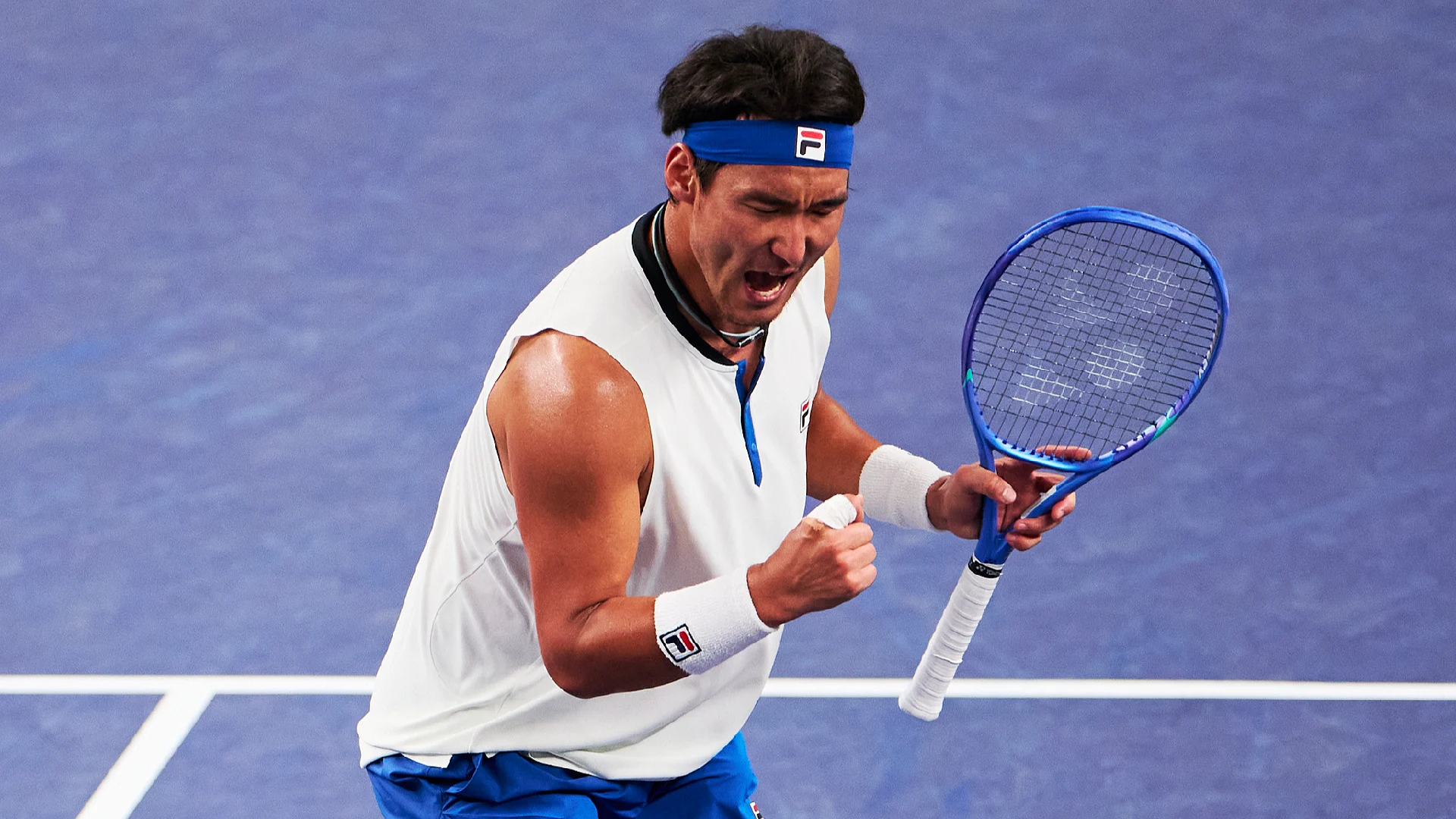
The Rise of Buyunchaokete: A New Force in Men’s Tennis
The world of professional tennis is constantly evolving, with new talents emerging to challenge the established order. In recent years, Chinese tennis has seen a significant surge in its profile, particularly in the men’s game. A key figure in this ascent is Buyunchaokete, a player who has demonstrated remarkable skill and determination on the court. His performances, especially his impressive serving abilities, have not only secured victories but also positioned him as a player to watch in major tournaments. This analysis will explore Buyunchaokete’s journey, his strengths, and his impact on the landscape of men’s professional tennis, highlighting his recent successes and future potential.
Buyunchaokete’s Breakthrough at the Shanghai Masters
One of the most significant moments in Buyunchaokete’s career thus far was his performance at the Shanghai Masters. In a highly anticipated first-round match, he faced France’s Luca Van Assche. The encounter showcased Buyunchaokete’s exceptional talent, particularly his commanding presence on serve. He secured a victory with a score of 7-6(3), 6-3, a result that underscored his growing prowess.
During this match, Buyunchaokete’s serving was a standout feature. He won an astonishing 37 out of 38 points on his first serve, achieving a success rate of 97 percent. This dominance meant he did not face a single break point throughout the entire match, holding all 11 of his service games. This level of control is a testament to his technical skill and mental fortitude under pressure.
The first set remained tightly contested, with neither player managing to secure a break of serve. The set was ultimately decided in a tiebreak, which Buyunchaokete decisively won 7-3. In the second set, the 24-year-old Chinese player broke Van Assche’s serve in the eighth game, a crucial turning point that allowed him to serve out the match and secure his place in the next round.
Buyunchaokete, who holds the distinction of being China’s number one men’s player, expressed his satisfaction with his serving performance. He also shared insights into his strategic approach, noting that he aimed to target Van Assche’s forehand, recognizing it as a less consistent shot compared to his opponent’s backhand. This strategic thinking, combined with his physical execution, proved to be a winning formula.
Facing Top Competition: The Showdown with Casper Ruud
The victory against Van Assche set up a second-round clash with Norway’s Casper Ruud, the 20th seed. This match presented a significant challenge, especially given their previous encounter. At the 2024 US Open, Ruud had defeated Buyunchaokete in straight sets. However, Buyunchaokete had already shown he could compete with the best, having secured a notable victory over Rafael Jodar at the same US Open tournament just a month prior.
The match against Ruud was a tough test for Buyunchaokete. While the specific outcome of this particular match isn’t detailed in the provided excerpt, the context highlights Buyunchaokete’s consistent ability to reach the later stages of tournaments and face highly ranked opponents. His performance against Ruud, regardless of the result, would have provided valuable experience and further demonstrated his standing in the professional tennis circuit.
Buyunchaokete’s Impact on Chinese Men’s Tennis
Buyunchaokete’s success is not just a personal achievement; it is a significant development for Chinese men’s tennis as a whole. He became the third Chinese player to reach the second round of the Shanghai Masters in that year, joining Wu Yibing and Zhou Yi. This collective progress indicates a growing depth of talent and a rising standard within the sport in China.
Wu Yibing, another prominent Chinese player, also advanced, defeating Michael Zheng of the United States. Wu’s victory set up a match against top seed Alexander Zverev, a testament to his own high level of play. Meanwhile, Zhou Yi overcame Italy’s Mattia Bellucci and was scheduled to face the 24th seed Lorenzo Musetti. The presence of multiple Chinese players competing at this level in a prestigious tournament like the Shanghai Masters signals a positive trend and increased national interest in the sport.
The achievements of players like Buyunchaokete, Wu Yibing, and Zhou Yi are inspiring a new generation of aspiring tennis players in China. Their success on the international stage provides tangible proof that reaching the highest levels of the sport is achievable, encouraging more young athletes to pursue tennis professionally. This growing pool of talent is crucial for the long-term development and sustainability of men’s tennis in China.
Analyzing Buyunchaokete’s Strengths
Buyunchaokete’s game is characterized by several key strengths that have contributed to his rise. His most prominent asset, as demonstrated at the Shanghai Masters, is his serve. An exceptionally high first-serve percentage, coupled with the ability to win a vast majority of those points, puts immense pressure on his opponents from the outset of each service game. This makes him difficult to break and allows him to control the pace of the match.
Beyond his serve, Buyunchaokete exhibits strong groundstrokes. While the excerpt focuses on his serving, his ability to win matches against strong opponents like Van Assche and his previous victory over Rafael Jodar suggest a well-rounded game. He appears to possess the power and accuracy needed to compete in rallies, and his strategic thinking, such as targeting specific weaknesses in an opponent’s game, shows a mature approach to match play.
His mental toughness is another critical factor. Winning close sets, like the tiebreak against Van Assche, and maintaining composure under pressure are hallmarks of a mentally strong player. The ability to perform at a high level in front of a home crowd at the Shanghai Masters also speaks to his capacity to handle significant pressure.
The Strategic Element of Buyunchaokete’s Game
Buyunchaokete’s mention of targeting Van Assche’s forehand highlights a strategic dimension to his play. Professional tennis is not just about power; it’s also about intelligence and adaptability. Identifying an opponent’s weaker side and consistently directing play towards it is a fundamental but effective tactic. This suggests that Buyunchaokete is not simply relying on his physical abilities but is also thinking critically about how to outmaneuver his opponents.
This strategic approach likely extends to his overall game plan. Whether it’s varying his serve placement, employing different types of shots during rallies, or adapting his strategy based on the opponent’s strengths and weaknesses, Buyunchaokete appears to be a thoughtful competitor. This intellectual aspect of his game is as important as his physical prowess in his quest for success.
The Role of Coaching and Development
The development of a player like Buyunchaokete is often the result of dedicated coaching and a robust support system. While specific details about his coaching team are not provided, it is evident that significant investment in training and development has gone into honing his skills. The focus on his serve, for instance, suggests a deliberate training regimen aimed at maximizing this crucial weapon.
Furthermore, the progress of Chinese tennis players collectively points to a broader development strategy within the country’s sports infrastructure. The establishment of training centers, the provision of resources, and the identification and nurturing of young talent are all essential components that contribute to the emergence of players like Buyunchaokete.
Future Prospects and Potential
Buyunchaokete’s performances have firmly established him as a significant player in the men’s professional tennis circuit. His ability to compete and win against established players indicates that he has the potential to climb further up the rankings. His next steps will likely involve continued participation in major tournaments, aiming for deeper runs and perhaps even challenging for titles.
The upcoming matches and tournaments will be crucial for his development. Facing a variety of playing styles and opponents will help him refine his game and identify areas for further improvement. His experience against top-tier players like Casper Ruud will be invaluable in preparing him for future high-stakes encounters.
As he continues to mature as a player, Buyunchaokete’s impact on the sport in China is likely to grow. He serves as a role model for aspiring young athletes and contributes to the increasing popularity of tennis within the country. His journey is a compelling narrative of dedication, skill, and the relentless pursuit of excellence in the competitive world of professional tennis.
The Importance of the Shanghai Masters
The Shanghai Masters holds a special place in the tennis calendar, and for Chinese players, it represents a significant opportunity to perform on home soil. The tournament attracts some of the world’s best players, providing a platform for domestic talent to test themselves against the elite. For Buyunchaokete, winning his first-round match and advancing to face a seeded opponent like Casper Ruud was a career-defining moment.
The experience of playing in front of a passionate home crowd can be a double-edged sword, offering immense support but also adding pressure. Buyunchaokete’s ability to deliver such a strong performance under these circumstances speaks volumes about his character and his readiness for the big stage. The tournament serves as a crucial benchmark for his progress and a springboard for future ambitions.
Building on Success: Consistency and Adaptation
The challenge for any emerging player is to maintain consistency and adapt to the demands of the professional tour. Buyunchaokete has shown he has the tools to win, but sustained success requires more than just occasional brilliant performances. He will need to continue working on his fitness, refining his technique, and developing strategies to overcome different types of opponents.
The tennis world is highly competitive, and players are constantly evolving. Buyunchaokete’s ability to adapt his game, learn from his matches, and stay ahead of the curve will be critical in his long-term career trajectory. His strategic mind, evident in his match against Van Assche, will be a key asset in this ongoing process.
The Global Context of Tennis Development
Buyunchaokete’s rise is part of a broader trend of globalization in tennis. While traditionally dominated by players from Europe and North America, the sport has seen increasing success from athletes across Asia, South America, and Africa. This diversification enriches the sport and brings new styles and perspectives to the game.
China, in particular, has been investing heavily in sports development, and tennis is a beneficiary of this focus. The success of players like Buyunchaokete validates these investments and signals China’s growing influence in the global sports arena. As more resources and attention are directed towards tennis in China, it is likely that more talents like Buyunchaokete will emerge.
Conclusion
Buyunchaokete’s performance at the Shanghai Masters, marked by his exceptional serving and strategic play, has solidified his position as a rising star in men’s professional tennis. His victory over Luca Van Assche and his subsequent match against Casper Ruud underscore his ability to compete at the highest levels. As China’s number one men’s player, he is not only achieving personal success but also contributing significantly to the growth and visibility of tennis in his home country. His journey exemplifies the dedication, skill, and mental fortitude required to excel in the demanding world of professional sports, and his future in tennis promises to be one of continued achievement and impact.
The organization’s website can be found at CGTN.



Conversation
0 Comments