

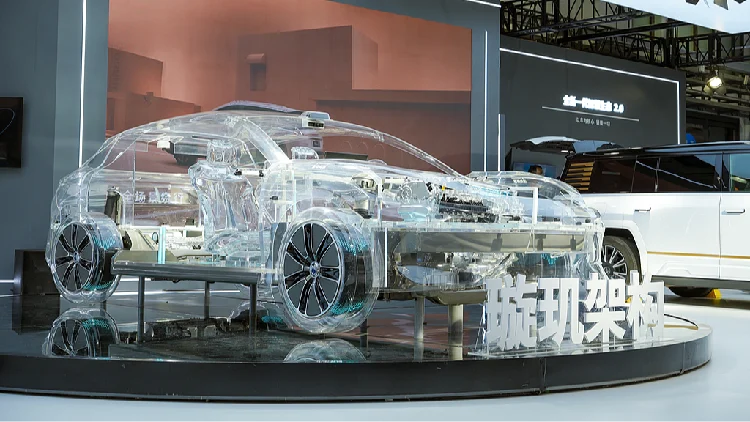
The Road Ahead: Navigating the Expansion of Intelligent Connected Vehicles
The automotive industry is on the cusp of a significant transformation, driven by the rapid advancement of intelligent connected vehicles (ICVs). These vehicles, equipped with sophisticated sensors, communication systems, and artificial intelligence, promise a future of safer, more efficient, and more convenient transportation. As technology progresses, countries worldwide are exploring ways to integrate these advanced vehicles into their infrastructure and daily lives. China, in particular, is taking a structured approach to expanding the applications of ICVs, focusing on steady progress, rigorous testing, and robust regulatory frameworks. This expansion is not just about new technology; it’s about reshaping how we travel, manage our cities, and interact with our environment.
The journey toward widespread adoption of ICVs involves overcoming technical hurdles, establishing clear safety standards, and fostering collaboration across various sectors. From advanced driver-assistance systems to fully autonomous driving, the capabilities of these vehicles are growing at an unprecedented pace. Understanding the strategies and challenges involved in this expansion is key to grasping the future of mobility. This article will explore the current landscape of intelligent connected vehicles, China’s strategic approach to their development and deployment, the technological advancements driving this evolution, and the critical considerations for ensuring a safe and effective transition.
Understanding Intelligent Connected Vehicles (ICVs)
Intelligent connected vehicles represent a significant leap forward from traditional automobiles. At their core, ICVs are vehicles that can communicate with their surroundings, including other vehicles, infrastructure, and even pedestrians, through various wireless technologies. This connectivity, combined with advanced onboard computing and sensing capabilities, allows them to perceive their environment, make decisions, and act upon them, often without direct human intervention. The “intelligent” aspect refers to the vehicle’s ability to process information and adapt its behavior, while “connected” highlights its capacity to exchange data.
The development of ICVs is often categorized by levels of automation, a framework that helps define the extent of the vehicle’s self-driving capabilities. These levels range from Level 0, where the driver performs all driving tasks, to Level 5, representing full automation where the vehicle can handle all driving situations under all conditions.
- Level 0 (No Automation): The driver is in complete control.
- Level 1 (Driver Assistance): The vehicle can assist with either steering or acceleration/braking, but not both simultaneously. Examples include adaptive cruise control or lane keeping assist.
- Level 2 (Partial Automation): The vehicle can control both steering and acceleration/braking simultaneously under certain conditions. The driver must remain engaged and monitor the driving environment. This is the most common level of automation currently seen in consumer vehicles, often referred to as advanced driver-assistance systems (ADAS).
- Level 3 (Conditional Automation): The vehicle can handle all aspects of driving under specific conditions, and the driver can disengage from the driving task. However, the driver must be ready to take back control when the system requests it. This level introduces the concept of “eyes off” driving under limited circumstances.
- Level 4 (High Automation): The vehicle can perform all driving tasks and monitor the driving environment under specific operational design domains (ODDs). The driver does not need to be ready to take over within these ODDs. This means the vehicle can handle most driving situations autonomously.
- Level 5 (Full Automation): The vehicle can perform all driving tasks under all conditions that a human driver could manage. No human intervention is required.
The integration of ICVs into society is not merely a technological upgrade; it has the potential to revolutionize transportation systems. By enabling vehicles to communicate with each other (V2V), with infrastructure like traffic lights and road sensors (V2I), and with networks (V2N), ICVs can contribute to smoother traffic flow, reduced congestion, and fewer accidents. The ability to share real-time information about road conditions, hazards, and traffic patterns allows for more coordinated and efficient movement of vehicles. Furthermore, the development of autonomous driving capabilities promises to enhance mobility for individuals who are unable to drive, such as the elderly or those with disabilities, and to free up commute time for productivity or leisure.
The underlying technologies powering ICVs are diverse and rapidly evolving. These include advanced sensor suites (cameras, radar, lidar), high-precision GPS, powerful onboard processors, sophisticated algorithms for perception and decision-making, and robust communication modules for wireless data exchange. The increasing sophistication of artificial intelligence, particularly in areas like machine learning and deep learning, is crucial for enabling vehicles to interpret complex driving scenarios and make safe, reliable decisions. As these technologies mature and become more cost-effective, the widespread adoption of ICVs becomes increasingly feasible.
China’s Strategic Approach to ICV Expansion
China is actively pursuing the development and deployment of intelligent connected vehicles, recognizing their potential to drive economic growth, improve transportation efficiency, and enhance safety. The nation’s strategy is characterized by a phased approach, emphasizing steady expansion, rigorous testing, and a strong focus on regulatory development and standardization. This methodical approach aims to balance innovation with safety and public acceptance.
A key aspect of China’s strategy is the gradual introduction of advanced driving functionalities. The country is moving from widespread adoption of driver assistance systems to the cautious expansion of more automated driving capabilities. Vice Minister of Industry and Information Technology Xin Guobin highlighted this approach at the 2026 World Intelligent Connected Vehicles Conference, stating that China will “steadily expand the use of intelligent connected vehicles while cautiously advancing market access and road trials.” This indicates a commitment to ensuring that the technology is mature and safe before broad commercial deployment.
The ministry plans to accelerate large-scale demonstrations of autonomous driving in key settings. This means that rather than immediately allowing widespread use, China is focusing on controlled environments and specific applications where the benefits can be clearly demonstrated and risks can be managed. These demonstrations are crucial for gathering real-world data, identifying potential issues, and refining the technology and operational procedures.
The introduction of Level 3 conditional automated driving models into road trials is a significant step in this expansion. Level 3 systems require drivers to be ready to take over when prompted, representing a transitional phase towards higher levels of automation. By allowing these trials in designated areas, China is creating a controlled environment for testing and validation. This allows manufacturers and regulators to assess the performance of these systems under real-world conditions while ensuring that human oversight is maintained.
The scale of testing and demonstration infrastructure in China is substantial. The country has opened over 57,000 kilometers of roads for testing and demonstration purposes. This extensive network allows for a wide variety of testing scenarios, from urban environments to highways, under different weather and traffic conditions. Furthermore, over 60,000 sets of intelligent equipment have been deployed, and vehicles have accumulated over 220 million kilometers of testing. As of June, more than 20,000 testing and demonstration license plates had been issued, underscoring the active engagement of the industry in developing and validating ICV technologies.
The government’s role is central to this strategy. The Ministry of Industry and Information Technology (MIIT) and other departments have jointly issued a development plan for the intelligent connected new energy vehicle industry for the 15th Five-Year Plan period. This plan outlines specific goals and priority tasks, providing a clear roadmap for the industry. The ministry is committed to supporting industry-led research partnerships, focusing on critical areas such as power systems, intelligent chassis, and connected vehicle technologies. This collaborative approach ensures that research and development efforts are aligned with industry needs and market demands.
Strengthening basic research and shared technology platforms is another priority. This involves investing in fundamental scientific advancements and creating common resources that can be accessed by multiple companies, fostering innovation and reducing redundant efforts. Upgrading connected infrastructure is also a key component, as ICVs rely on robust communication networks and smart road systems to function effectively. Expanding pilot programs that link vehicles, roads, and cloud computing is essential for creating an integrated ecosystem where vehicles, infrastructure, and data work together seamlessly.
On the regulatory front, China is prioritizing the development of mandatory national standards for autonomous driving. This includes standards for automated parking, operational monitoring, and data security. Establishing clear and comprehensive standards is vital for ensuring safety, reliability, and interoperability of ICVs. The government also aims to improve vehicle quality, regulate market competition, and protect consumers’ rights. International cooperation is also being pursued to align domestic standards with global rules, facilitating international trade and collaboration in the ICV sector.
Technological Advancements Driving ICV Growth
The rapid progress in intelligent connected vehicles is fueled by a confluence of technological breakthroughs across various domains. These advancements are not only enhancing the capabilities of ICVs but also making them more reliable, efficient, and accessible. Key areas of innovation include computing power, sensor technology, artificial intelligence, and connectivity.
One of the most significant drivers of ICV development is the advancement in computing chips and processing power. Modern ICVs are essentially powerful computers on wheels, requiring immense processing capabilities to handle the vast amounts of data generated by their sensors and to run complex algorithms for decision-making. Innovations in specialized processors, such as GPUs (Graphics Processing Units) and AI accelerators, are enabling vehicles to perform real-time analysis of their surroundings. The integration of cockpit and driving functions into unified computing platforms is also a trend, leading to more streamlined and efficient vehicle architectures. This consolidation can reduce complexity, save space, and potentially lower costs.
Sensor technology continues to evolve, providing ICVs with increasingly detailed and accurate perceptions of their environment. Lidar (Light Detection and Ranging) sensors, which use lasers to measure distances and create 3D maps of the surroundings, are becoming more powerful and cost-effective. Their wider use, alongside advanced radar and camera systems, provides redundant sensing capabilities, enhancing the vehicle’s ability to detect objects, pedestrians, and road features under various conditions, including low light and adverse weather. Electronically controlled chassis systems are also crucial, allowing for precise control over steering, braking, and acceleration, which is essential for both driver assistance and autonomous driving functions.
Artificial intelligence, particularly machine learning and deep learning, is at the heart of ICV intelligence. These AI models are trained on massive datasets of driving scenarios to learn how to recognize objects, predict the behavior of other road users, and make optimal driving decisions. Advances in large AI models are particularly impactful, enabling more sophisticated understanding and response to complex situations. The ability of these systems to continuously learn and improve through data collection and model updates is a key factor in their ongoing development.
Connectivity is another cornerstone of ICV technology. Vehicles are increasingly equipped with advanced communication modules that enable them to connect to networks and exchange data. This includes Vehicle-to-Everything (V2X) communication, which encompasses:
- V2V (Vehicle-to-Vehicle): Allows vehicles to communicate directly with each other, sharing information about speed, position, and braking intentions. This can help prevent collisions and improve traffic flow.
- V2I (Vehicle-to-Infrastructure): Enables vehicles to communicate with roadside infrastructure, such as traffic lights, road signs, and sensors. This can optimize traffic signal timing, warn drivers of hazards, and provide real-time navigation updates.
- V2N (Vehicle-to-Network): Connects vehicles to cellular or Wi-Fi networks, allowing access to cloud services, over-the-air software updates, and remote diagnostics.
- V2P (Vehicle-to-Pedestrian): Allows vehicles to communicate with pedestrians, for example, through their smartphones, to alert them of approaching vehicles or for pedestrians to signal their presence.
The development of 5G and future wireless technologies is critical for enabling the high bandwidth, low latency communication required for real-time V2X interactions. This seamless data exchange is fundamental to the cooperative driving and enhanced safety promised by ICVs.
Furthermore, advancements in cybersecurity are paramount. As vehicles become more connected and reliant on data, protecting them from cyber threats is essential. Robust security measures are being developed to safeguard vehicle systems and user data from unauthorized access and malicious attacks. The integration of these diverse technologies is creating a sophisticated ecosystem that is steadily moving towards a future of more autonomous and connected mobility.
Challenges and Considerations for ICV Deployment
Despite the rapid technological advancements and strategic initiatives, the widespread deployment of intelligent connected vehicles (ICVs) faces several significant challenges. These hurdles span technical, regulatory, ethical, and societal domains, and addressing them is crucial for realizing the full potential of this transformative technology.
One of the primary challenges is ensuring the safety and reliability of ICV systems. While these vehicles are designed to be safer than human-driven cars, the complexity of real-world driving environments presents immense difficulties. Edge cases, unpredictable human behavior, and adverse weather conditions can all pose significant risks. The industry must rigorously test and validate these systems to ensure they can handle a vast array of scenarios safely. This includes developing robust fail-safe mechanisms and ensuring that the transition of control between the automated system and the human driver is seamless and secure, especially in Level 3 systems. The potential for system malfunctions or cyberattacks to compromise safety is a constant concern that requires continuous vigilance and advanced security protocols.
Regulatory frameworks and standardization are still evolving globally. While China is developing its own standards, aligning with international norms and ensuring interoperability between vehicles from different manufacturers and across different regions is a complex task. Clear regulations are needed for testing, deployment, liability in case of accidents, and data privacy. The absence of harmonized global standards can slow down development and market entry. Establishing clear legal responsibilities when an automated system is involved in an accident is particularly challenging. Determining fault among the vehicle owner, the manufacturer, the software developer, or other parties requires new legal paradigms.
Infrastructure readiness is another critical factor. For ICVs to operate at their full potential, especially those relying on V2I communication, the surrounding infrastructure must be upgraded. This includes deploying smart traffic signals, roadside sensors, and reliable high-speed communication networks (like 5G). The cost and complexity of upgrading existing infrastructure across vast urban and rural areas are substantial. Without adequate infrastructure, the capabilities of even the most advanced ICVs will be limited.
Cybersecurity is a paramount concern. As ICVs become more connected, they become more vulnerable to cyber threats. Hacking into a vehicle’s control systems could have catastrophic consequences, leading to accidents or the theft of sensitive personal data. Robust cybersecurity measures, including secure software development practices, encryption, intrusion detection systems, and regular security updates, are essential. Protecting the vast amounts of data generated by ICVs, including location, driving habits, and personal information, is also critical for maintaining user trust and complying with privacy regulations.
Public acceptance and trust are vital for the widespread adoption of ICVs. Many people are still hesitant to relinquish control to an automated system, especially for fully autonomous driving. Building public confidence requires transparency about the technology’s capabilities and limitations, extensive public education campaigns, and a proven track record of safety. Demonstrating the benefits of ICVs, such as improved safety and convenience, through successful pilot programs and gradual introduction can help foster acceptance.
Ethical considerations also come into play, particularly in situations where an accident is unavoidable. The programming of decision-making algorithms in such scenarios, often referred to as the “trolley problem,” raises complex ethical questions about how the vehicle should prioritize safety. Should it protect its occupants at all costs, or should it minimize overall harm, even if it means sacrificing its occupants? These are profound ethical dilemmas that require societal consensus and careful consideration in the design of autonomous systems.
Finally, the economic and social impact of ICVs needs careful management. The transition to automated driving could lead to job displacement in sectors like professional driving (trucking, taxis, delivery services). Governments and industries will need to develop strategies for retraining and supporting affected workers. The affordability of ICVs will also play a role in equitable access to this technology, ensuring that its benefits are not limited to a privileged few.
Addressing these multifaceted challenges requires a collaborative effort involving governments, industry stakeholders, researchers, and the public. A balanced approach that prioritizes safety, security, and ethical considerations while fostering innovation and infrastructure development will be key to successfully navigating the expansion of intelligent connected vehicles.
The Future of Mobility: ICVs and Beyond
The expansion of intelligent connected vehicles (ICVs) is not just an evolution in automotive technology; it represents a fundamental shift in how we conceive of transportation and urban living. As these vehicles become more integrated into our daily lives, they promise to reshape our cities, our economies, and our personal mobility in profound ways. The trajectory is clear: a future where driving is safer, more efficient, and more accessible for everyone.
Looking ahead, the integration of ICVs with smart city infrastructure will unlock new levels of efficiency and convenience. Imagine traffic lights that communicate with approaching vehicles to optimize flow, parking systems that automatically guide drivers to available spots, and emergency services that can navigate through traffic unimpeded. This interconnected ecosystem, often referred to as the Internet of Vehicles (IoV), will enable seamless coordination between vehicles, infrastructure, and urban management systems. This can lead to significant reductions in traffic congestion, lower fuel consumption, and a decrease in emissions, contributing to more sustainable and livable cities.
The impact on personal mobility will be transformative. For individuals who currently face barriers to driving, such as the elderly, people with disabilities, or young people, ICVs offer newfound independence and freedom. Commute times can be repurposed for work, relaxation, or entertainment, fundamentally changing the experience of travel. The rise of Mobility-as-a-Service (MaaS) platforms, which integrate various forms of transport into a single, on-demand service, will likely be accelerated by the capabilities of ICVs. Users could summon autonomous vehicles for rides, deliveries, or even mobile workspaces, all managed through a single app.
The automotive industry itself is undergoing a dramatic transformation. The focus is shifting from traditional vehicle manufacturing to becoming technology and service providers. Companies are investing heavily in software development, artificial intelligence, and data analytics, recognizing that the value of a vehicle increasingly lies in its digital capabilities. This shift is also driving new business models, such as subscription services for advanced features, data monetization, and on-demand mobility solutions.
However, the path forward is not without its complexities. The ethical considerations surrounding autonomous decision-making, the potential for job displacement in the transportation sector, and the need for robust cybersecurity measures will continue to be areas of intense focus and debate. Ensuring that the benefits of ICVs are shared equitably across society, and that vulnerable populations are not left behind, will require proactive policy-making and thoughtful implementation strategies.
Furthermore, the development of ICVs is closely intertwined with the broader trends in electrification and sustainability. Many of the leading ICV initiatives are focused on new energy vehicles, combining the benefits of autonomous driving with zero-emission powertrains. This synergy is crucial for achieving global climate goals and creating a cleaner transportation future.
As China and other nations continue to expand the applications of intelligent connected vehicles, the world is moving towards a new era of mobility. This era promises not only technological marvels but also a more efficient, safer, and sustainable transportation system. The journey will require continued innovation, careful planning, and a commitment to addressing the challenges that lie ahead, ensuring that the future of mobility benefits all of humanity.
Conclusion
The expansion of intelligent connected vehicles (ICVs) marks a pivotal moment in the evolution of transportation. As detailed throughout this analysis, China’s strategic and measured approach, focusing on steady progress, rigorous testing, and comprehensive regulatory development, provides a compelling model for global adoption. The technological advancements in computing, sensing, AI, and connectivity are rapidly bringing the vision of safer, more efficient, and more accessible mobility closer to reality.
While significant challenges remain in areas such as safety validation, regulatory harmonization, infrastructure readiness, cybersecurity, and public acceptance, the commitment to overcoming these hurdles is evident. The ongoing development of standards, the acceleration of pilot programs, and the focus on industry-wide collaboration are all critical steps in this journey. The future of mobility, powered by ICVs, promises not only to revolutionize how we travel but also to contribute to smarter cities, a more sustainable environment, and enhanced quality of life for individuals worldwide. The road ahead is complex, but the direction is clear: intelligent connected vehicles are set to redefine our relationship with transportation.



Conversation
0 Comments