

Bridging the Globe: How Satellite Internet Connects the Unconnected
In an era defined by instant communication, vast regions of our planet remain isolated, cut off from the digital world. This digital divide is particularly stark in remote and extreme environments. However, a groundbreaking development is changing this landscape. China’s recent success in establishing satellite internet connectivity across the Arctic, Antarctica, and the Qinghai-Xizang Plateau marks a significant leap forward. This achievement not only closes a critical communications gap but also opens new possibilities for research, exploration, and connectivity in the world’s most challenging locations.
The Challenge of Remote Connectivity
Connecting the most remote corners of the Earth has always been a formidable task. Traditional terrestrial networks, like fiber optic cables and cellular towers, are expensive and difficult to deploy in areas with extreme geography, sparse populations, or harsh environmental conditions. The Arctic, with its icy terrain and vast distances, the desolate expanse of Antarctica, and the high-altitude, rugged terrain of the Qinghai-Xizang Plateau all present unique obstacles to establishing reliable communication infrastructure. These areas are vital for scientific research, resource management, and understanding global climate patterns, yet they have historically suffered from limited or non-existent internet access. This lack of connectivity hinders real-time data sharing, emergency response, and the ability of researchers and inhabitants to stay connected with the outside world.
A New Era of Global Communication
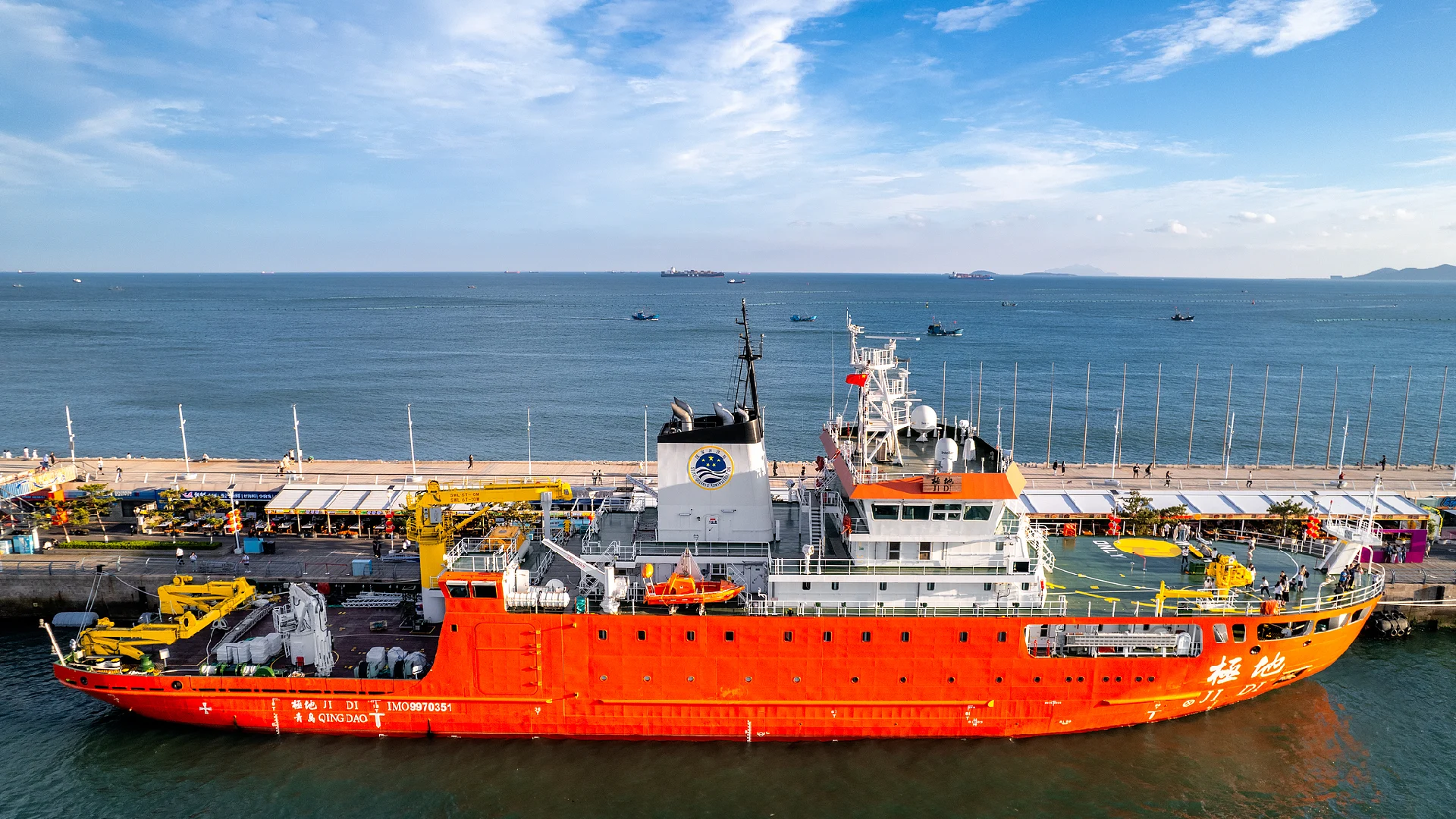
The successful test of China’s domestically developed satellite internet by the polar icebreaker Jidi during its 16th Arctic Ocean expedition signifies a major technological breakthrough. This initiative has demonstrated the capability to provide networked communications across these previously disconnected regions. By linking the Arctic, Antarctica, and the Qinghai-Xizang Plateau, often referred to as the “Third Pole,” this satellite internet system has effectively closed the last major communications coverage gap on Earth. This achievement is not just about providing internet access; it’s about enabling seamless data flow and communication between some of the planet’s most critical and isolated scientific outposts.
The implications of this development are far-reaching. For scientists conducting research in these extreme environments, real-time data transmission is crucial for their work. Whether it’s monitoring climate change in the Arctic, studying unique ecosystems in Antarctica, or observing atmospheric conditions on the Qinghai-Xizang Plateau, immediate access to information and the ability to collaborate with colleagues worldwide can accelerate discoveries. This new connectivity allows for faster analysis of data, quicker responses to environmental changes, and more efficient coordination of international research efforts.
Technological Underpinnings of Global Reach
The success of this satellite internet initiative relies on advanced satellite technology and sophisticated network management. Satellites in orbit can provide coverage over vast geographical areas, overcoming the limitations of ground-based infrastructure. By strategically positioning these satellites, it is possible to create a network that spans the globe, reaching even the most inaccessible locations. The development of high-throughput satellites and efficient ground terminals has been key to achieving the necessary bandwidth and reliability for applications like real-time video conferencing, large data transfers, and continuous monitoring.
Furthermore, the integration of these satellite systems with existing terrestrial networks is essential for providing a truly global communication solution. This allows data collected in remote locations to be seamlessly integrated into global information systems, making it accessible to researchers, policymakers, and the public worldwide. The ability to establish a consistent and reliable connection, even in the face of challenging weather conditions and remote locations, is a testament to the advancements in satellite communication technology. This technology is not only about connecting people but also about connecting critical scientific instruments and data streams across the planet.
Impact on Scientific Research and Exploration
The Qinghai-Xizang Plateau, often called the “Third Pole,” is a region of immense scientific importance. Its glaciers and snow cover are critical indicators of global climate change, and its unique biodiversity is of great interest to researchers. Similarly, the Arctic and Antarctic are vital for understanding global weather patterns, ocean currents, and the impact of rising temperatures. Historically, communication limitations have hampered the pace and scope of research in these areas.
With the advent of reliable satellite internet, scientists can now transmit vast amounts of data in real-time from field stations. This includes sensor readings from remote weather stations, high-resolution imagery from drones, and video feeds from underwater or aerial research platforms. This immediate access to information allows for dynamic adjustments to research strategies, enabling scientists to respond more effectively to unexpected findings or critical events. Collaboration among international research teams is also greatly improved, fostering a more unified and efficient approach to tackling global scientific challenges.
Moreover, the enhanced connectivity supports the deployment of more sophisticated research equipment. Remote operation of sensitive instruments, real-time monitoring of experiments, and immediate troubleshooting of technical issues become feasible, even when the equipment is thousands of miles away. This not only increases the efficiency of research expeditions but also reduces the risks associated with operating in dangerous environments, as personnel can remain at a safe distance while still maintaining full control and oversight.
Expanding Horizons for Remote Communities
Beyond scientific endeavors, this satellite internet connectivity holds immense potential for the communities that inhabit or rely on these remote regions. Indigenous populations in the Arctic, research station personnel in Antarctica, and communities in the high-altitude regions of the Qinghai-Xizang Plateau can benefit from improved access to education, healthcare, and economic opportunities.
For instance, remote learning platforms can be accessed, providing educational resources to children and adults who may not have access to traditional schooling. Telemedicine services can connect individuals with medical professionals, offering diagnoses and consultations that would otherwise be impossible to obtain. Furthermore, improved communication can foster economic development by enabling participation in global markets, facilitating remote work opportunities, and supporting local businesses through enhanced digital services.
The ability to stay connected with family and friends, access news and information, and participate in online social networks can also significantly improve the quality of life for individuals living in isolation. This digital inclusion helps to bridge the gap between remote areas and the rest of the world, fostering a greater sense of community and shared experience.
Addressing the Digital Divide
The successful implementation of satellite internet in these extreme environments is a powerful demonstration of how technology can be used to overcome geographical barriers and address the global digital divide. While many parts of the world have readily available high-speed internet, billions still lack basic access. Initiatives like this one highlight the potential for satellite technology to provide a viable solution for underserved populations.
The development and deployment of such systems require significant investment and international cooperation. However, the benefits in terms of scientific advancement, economic development, and social inclusion are substantial. As satellite technology continues to evolve, offering higher speeds, lower latency, and more affordable services, its role in connecting the unconnected is set to expand even further. This achievement serves as a beacon of hope, illustrating that no place on Earth needs to remain out of reach in the digital age.
Future Prospects and Global Implications
The successful linking of the Arctic, Antarctica, and the Qinghai-Xizang Plateau is just the beginning. This technology has the potential to revolutionize communication and data exchange across the entire planet. As more satellites are launched and ground infrastructure is improved, we can expect to see even greater capabilities and wider accessibility.
This advancement could lead to a truly global internet, where seamless connectivity is available everywhere, from the highest mountains to the deepest oceans. It could enable new forms of global collaboration, facilitate faster responses to humanitarian crises, and provide unprecedented access to information and services for all. The ongoing development in satellite internet technology promises to reshape our world, making it a more connected and informed place for everyone.
Conclusion
The achievement of establishing satellite internet connectivity across the Arctic, Antarctica, and the Qinghai-Xizang Plateau is a monumental step in global communication. It overcomes the formidable challenges posed by extreme environments and sparse populations, effectively closing a significant gap in worldwide connectivity. This breakthrough promises to accelerate scientific discovery, enhance exploration, and improve the lives of people in remote regions by providing access to education, healthcare, and economic opportunities. As satellite technology continues to advance, its role in bridging the digital divide and connecting the entire planet will only grow, ushering in a new era of global communication and collaboration.



Conversation
0 Comments