

Unlock Your Productivity: How Voice Typing is Revolutionizing Digital Communication
In today’s fast-paced world, efficiency is key. Whether you’re a student juggling assignments, a professional managing a busy schedule, or a creative mind brimming with ideas, finding ways to communicate your thoughts quickly and effectively can make all the difference. For years, the keyboard has been our primary tool for digital expression, but a new wave of technology is emerging that promises to set our fingers free. Voice typing, once a niche feature, is rapidly becoming a mainstream solution, offering a more natural and significantly faster way to get your words onto the screen. This analysis explores the transformative power of voice typing, examining its capabilities, applications, and the impact it’s having on how we interact with our devices and each other.
The core promise of voice typing is simple yet profound: speak your thoughts, and watch them appear as text. This fundamental shift from manual input to spoken output has the potential to dramatically increase productivity. Imagine composing emails, drafting documents, or even writing code simply by speaking. This isn’t science fiction; it’s the reality that advanced AI and natural language processing are bringing to our fingertips, or rather, to our voices. As we move beyond the limitations of typing speed, voice typing opens up new avenues for seamless digital communication and content creation.
The Evolution of Voice Input Technology
Voice input technology has come a long way from its early, often frustrating, iterations. Initially, voice recognition systems required highly specific pronunciations and were prone to errors, making them more of a novelty than a practical tool. However, continuous advancements in artificial intelligence, machine learning, and natural language processing have dramatically improved accuracy and usability. Modern voice typing systems can understand a wide range of accents, dialects, and speaking styles, adapting to individual users over time.
These sophisticated systems are trained on vast datasets of spoken language, allowing them to discern nuances in tone, context, and even emotion. This enables them to not only transcribe words but also to understand punctuation, paragraph breaks, and formatting commands. For instance, saying “new paragraph” or “comma” can be automatically translated into the correct typographical marks, streamlining the writing process. This level of accuracy and contextual understanding means that users can speak more naturally, without needing to consciously alter their speech patterns for the software to comprehend.
The journey from clunky, error-prone software to the sophisticated AI-powered tools available today has been driven by a desire to make technology more accessible and intuitive. Early systems often struggled with background noise, multiple speakers, or rapid speech. Today’s best voice typing solutions, however, can filter out ambient sounds and focus on the user’s voice with remarkable clarity. This evolution has made voice typing a viable and often superior alternative to traditional keyboard input for a growing number of tasks.
How Modern Voice Typing Works: The AI Behind the Words
At the heart of modern voice typing technology lies a complex interplay of artificial intelligence, machine learning, and sophisticated algorithms. When you speak, your voice is captured by a microphone and converted into a digital signal. This signal is then processed through several stages to transform it into accurate text.
The first stage involves acoustic modeling. Here, the system analyzes the sound waves of your speech, breaking them down into phonemes, which are the basic units of sound in a language. This is where the AI’s ability to recognize different accents and pronunciations comes into play. It compares the incoming sounds to its vast library of phonemes, identifying the most likely ones.
Following acoustic modeling is language modeling. This stage uses statistical probabilities to predict the sequence of words that are most likely to follow each other. For example, after recognizing the sounds for “I want to go,” the language model will predict “to the store” as a more probable continuation than “to the door knob,” based on common language patterns. This helps to correct potential errors from the acoustic model and ensures that the transcribed text makes grammatical sense.
Natural language processing (NLP) plays a crucial role in understanding the context and intent behind your words. This allows the system to differentiate between homophones (words that sound alike but have different meanings, like “there,” “their,” and “they’re”) and to interpret commands for punctuation and formatting. For example, the system needs to understand that “new paragraph” is an instruction, not just a phrase to be transcribed.
Machine learning algorithms are continuously refining these models. As more users dictate, the system learns from its successes and failures, improving its accuracy for individual users and for the general population. This adaptive learning means that voice typing software becomes more personalized and effective over time, better understanding your unique speech patterns and vocabulary. The result is a system that can transcribe speech with remarkable speed and accuracy, often rivaling or even surpassing human typing speed.
Granola’s AI Notepad: A New Frontier in Voice Productivity
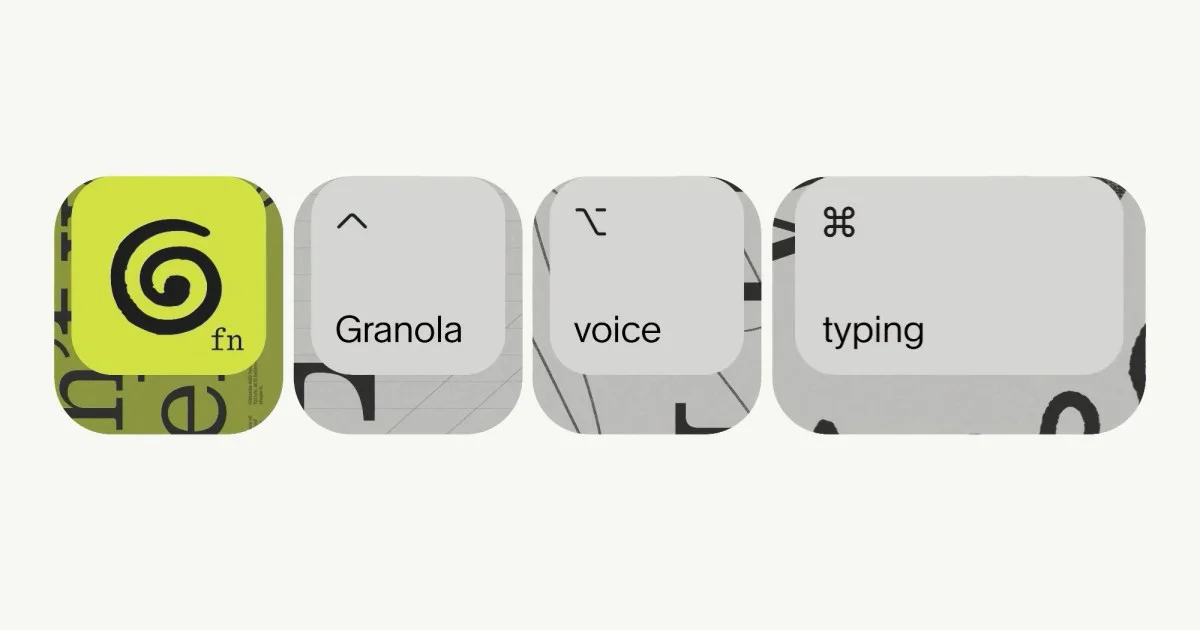
One of the most exciting recent developments in voice technology comes from Granola, an AI notepad designed for busy professionals. While Granola initially gained attention for its ability to automatically capture and transcribe meetings, its latest feature is set to broaden its appeal significantly: unlimited, free voice typing for any application. This innovation moves beyond specialized note-taking and integrates voice input directly into the user’s daily workflow across all their digital tasks.
Granola’s voice typing feature aims to make dictation as seamless as possible. The core idea is that users can speak naturally, and their words will appear as polished text wherever their cursor is active. This means that whether you are composing an email, writing a social media post, updating a project management tool, or even crafting a complex AI prompt, you can simply speak your thoughts. The system is designed to automatically handle punctuation, such as commas and full stops, and to recognize commands for new paragraphs, ensuring that the output is clean and ready to use.
The benefits are substantial. Granola claims that users can write up to four times faster using their voice compared to typing. This speed advantage is particularly valuable for individuals who spend a significant portion of their day communicating digitally. By reducing the time spent on manual input, Granola’s voice typing allows users to focus more on the content and ideas they want to convey, rather than the mechanics of typing.
Furthermore, the fact that this feature is offered at no cost and with no word limits makes it an incredibly accessible tool. This democratizes advanced productivity features, allowing anyone with a computer and a microphone to experience the benefits of high-speed voice dictation. For those who already use Granola for meeting notes, this new functionality extends its utility, transforming it from a meeting-specific tool into an all-purpose productivity assistant.
Where Can You Use Granola’s Voice Typing?
The versatility of Granola’s voice typing feature means it can be integrated into virtually any digital task that requires text input. Its design prioritizes broad applicability, aiming to replace the keyboard for a wide range of communication and content creation needs. This flexibility is a key differentiator, allowing users to maintain a consistent input method across different platforms and applications.
For everyday communication, dictating quick email replies is a prime use case. Instead of laboriously typing out a response, users can simply speak their message, and it will appear in the draft email, ready for review and sending. This can save considerable time, especially when dealing with a high volume of correspondence. Similarly, updating team members via instant messaging platforms like Slack or Microsoft Teams becomes much faster. A quick spoken update can convey necessary information about project status, next steps, or important changes without the delay of typing.
Beyond simple communication, Granola’s voice typing is particularly beneficial for tasks that involve longer or more complex text. For instance, writing detailed reports, drafting articles, or creating extensive documentation can be significantly accelerated. The ability to speak at a natural pace, rather than being limited by typing speed, allows for a more fluid generation of ideas and a reduction in the mental friction associated with manual input.
A particularly compelling application highlighted by Granola is the creation of AI prompts. Many users find that typing out lengthy and detailed prompts for AI models can be cumbersome, often leading to abbreviated or less descriptive instructions. With voice typing, users can articulate their needs, provide extensive context, and include every necessary detail without their fingers tiring. This can lead to more precise, effective, and higher-quality results from AI tools, as the prompts themselves are more comprehensive and clearly expressed.
The integration into any app means that users don’t need to switch between different programs or copy and paste text. The voice input flows directly into the active application, maintaining a smooth workflow. This makes it a practical tool for students writing essays, researchers compiling notes, developers writing code comments, or anyone who needs to generate text efficiently across various digital environments.
Enhancing Productivity Beyond Typing Speed
While the most obvious benefit of voice typing is the increase in speed, its impact on productivity extends far beyond simply typing faster. By removing the physical act of typing, voice technology can unlock new levels of efficiency and creativity for users. This shift allows for a more natural and intuitive interaction with digital tools, leading to several key advantages.
One significant advantage is improved focus and reduced cognitive load. Typing requires a certain level of manual dexterity and attention to detail, which can sometimes detract from the core task of formulating ideas. Voice typing allows users to concentrate more fully on what they want to say, as the physical act of input becomes secondary. This can lead to clearer thinking and more coherent expression, as the flow of ideas is less interrupted by the mechanics of writing.
For individuals who experience physical discomfort or strain from prolonged typing, voice typing offers a welcome alternative. Conditions like carpal tunnel syndrome or repetitive strain injuries can make traditional keyboard use painful or even impossible. Voice dictation provides a way to continue producing written content without exacerbating these issues, making digital communication more accessible and sustainable for a broader range of users.
Furthermore, voice typing can foster greater creativity. When the barrier of typing is lowered, people may feel more inclined to explore complex ideas, elaborate on their thoughts, or simply write more freely. The ability to speak at a natural conversational pace can encourage a more spontaneous and less inhibited approach to writing, potentially leading to more innovative and original content. This is especially true for brainstorming sessions or initial drafting phases, where speed and volume of ideas are paramount.
The integration of voice typing into various applications also promotes a more fluid workflow. Users can transition seamlessly between speaking and typing, or rely entirely on voice for certain tasks. This adaptability means that individuals can choose the input method that best suits their current activity and personal preference, optimizing their efficiency in different contexts. The technology aims to make digital interaction feel less like a chore and more like a natural extension of thought.
The Future of Digital Communication: Voice as the Primary Interface
The rise of sophisticated voice typing tools like Granola’s offering signals a significant shift in how we interact with technology. For decades, the keyboard and mouse have been the dominant interfaces for personal computing. However, as AI capabilities advance, voice is emerging as a powerful, and in many cases, more efficient primary interface. This evolution suggests a future where spoken commands and dictation are as common, if not more so, than manual input.
The trend towards voice interaction is already evident in smart speakers, virtual assistants, and in-car infotainment systems. These technologies have conditioned users to speak to their devices and expect them to understand and respond. Voice typing extends this paradigm to all forms of text-based communication and content creation, making our digital lives more integrated and intuitive.
As voice recognition technology continues to improve, we can expect even more advanced features. This might include real-time translation of spoken words into different languages, the ability to dictate and format complex documents with greater precision, or even AI-powered suggestions and edits delivered verbally as you speak. The goal is to create an experience where the technology fades into the background, allowing users to focus entirely on their message.
The implications for accessibility are profound. Voice typing can empower individuals with disabilities that affect their ability to use traditional input devices, opening up new possibilities for education, employment, and social participation. It also offers a more natural and less intimidating way for less tech-savvy individuals to engage with digital tools.
Ultimately, the future of digital communication is likely to be multimodal, with voice playing an increasingly central role. While keyboards may not disappear entirely, voice typing and other voice-based interactions will become indispensable tools for productivity, creativity, and connection in an increasingly digital world. Companies like Granola are at the forefront of this transformation, demonstrating the practical and powerful applications of advanced voice AI.
Considerations for Adopting Voice Typing
While the benefits of voice typing are clear, adopting it as a primary input method involves a few considerations to ensure a smooth and effective transition. Understanding these aspects can help users maximize the advantages and minimize potential challenges.
Firstly, audio quality and environment are crucial. For the best results, a quiet environment is ideal. Background noise can interfere with the accuracy of transcription. Using a good quality microphone, whether built into your device or an external one, can also significantly improve performance. Many modern laptops and smartphones have excellent built-in microphones, but in noisy settings, a headset with a dedicated microphone can be a game changer.
Secondly, practice and adaptation are key. While voice typing is intuitive, it still requires some adjustment. Users may need to practice speaking clearly and at a moderate pace. Learning the specific commands for punctuation, formatting, and special characters can also enhance efficiency. Most voice typing software includes tutorials or help sections that guide users through these commands. Getting comfortable with these will make the transition from typing much smoother.
Thirdly, privacy and security are important. Voice typing software, especially cloud-based solutions, processes your speech data. It’s essential to be aware of the privacy policies of the software you use. Reputable providers, like Granola, typically have robust security measures in place and are transparent about how your data is handled. For sensitive information, users might prefer to stick to typing or ensure their voice data is processed locally if the software supports it.
Fourthly, editing and proofreading remain necessary. While voice typing is highly accurate, no system is perfect. Occasional errors can occur due to misinterpretations, background noise, or unusual phrasing. Therefore, it’s always advisable to quickly proofread dictated text before sending or finalizing it. This ensures accuracy and professionalism in your communications.
Finally, choosing the right tool for your needs is important. Different voice typing applications offer varying features, levels of accuracy, and pricing models. Granola’s offering of unlimited, free voice typing across any app is a compelling option for general use. However, for highly specialized fields, such as medical transcription or legal dictation, dedicated software might offer superior accuracy and domain-specific vocabulary. Evaluating your primary use cases will help you select the best solution.
The Impact on Different Professions
The widespread adoption of voice typing technology is poised to reshape workflows across a multitude of professions. Its ability to increase speed, reduce physical strain, and improve focus offers distinct advantages depending on the demands of each role.
For writers, journalists, and content creators, voice typing can dramatically speed up the drafting process. The initial phase of getting ideas down on paper, or screen, can be significantly accelerated, allowing for more time to focus on refining and editing. This is particularly beneficial for those who produce a high volume of written content, such as bloggers, copywriters, and novelists. The ability to dictate long-form content without fatigue can also lead to more sustained creative output.
Professionals in sales and customer service can benefit from faster email responses, quicker updates in CRM systems, and more efficient communication with clients and colleagues. For example, a salesperson can dictate follow-up emails immediately after a client call, ensuring timely engagement. Customer service agents can use voice typing to quickly log interaction details or respond to customer inquiries, improving response times and overall efficiency.
Students and academics can find voice typing invaluable for writing essays, research papers, and dissertations. The ability to speak complex thoughts and arguments without the interruption of typing can lead to more coherent and well-structured academic work. It can also be a significant aid for students who struggle with the physical demands of writing or have learning differences that make typing challenging.
In the tech industry, developers can use voice typing for writing code comments, documentation, or even drafting simple scripts. While complex coding still requires precise keyboard input, voice can streamline the more text-heavy aspects of software development. The ability to dictate AI prompts, as mentioned earlier, is also a growing advantage for those working with AI tools.
Medical professionals have long used dictation for patient notes and reports. Modern voice typing technology enhances this capability, offering greater accuracy and integration with electronic health record (EHR) systems. This can reduce the administrative burden on doctors and nurses, allowing them to spend more time with patients.
Even in fields that traditionally rely less on extensive typing, such as management and consulting, voice typing can streamline communication. Dictating meeting summaries, action items, or quick memos can save valuable time that can be redirected to strategic thinking and decision-making. The overall trend is towards making digital communication more accessible, faster, and less physically demanding for everyone.
Conclusion: Embracing the Voice-Powered Future
The evolution of voice typing technology marks a significant leap forward in how we interact with the digital world. Tools like Granola’s new AI-powered voice dictation feature are not just about convenience; they represent a fundamental shift towards more intuitive, efficient, and accessible communication. By allowing users to speak their thoughts directly into any application, this technology removes a major bottleneck in productivity, enabling faster content creation, clearer communication, and a more natural interaction with our devices.
From the speed gains that allow us to communicate up to four times faster than typing, to the reduced cognitive load that frees us to focus on ideas rather than mechanics, the benefits are substantial. Voice typing empowers professionals across all industries, students, and creatives to express themselves more freely and efficiently. It also holds immense promise for improving digital accessibility for individuals facing physical challenges.
As AI continues to advance, the capabilities of voice input will only grow, paving the way for a future where speaking to our devices is as common as typing. Embracing voice typing today means stepping into this future, unlocking new levels of productivity, and experiencing a more seamless integration of our thoughts and digital actions. The era of voice-powered communication is here, and its potential to transform our digital lives is just beginning to be realized.


Conversation
0 Comments