

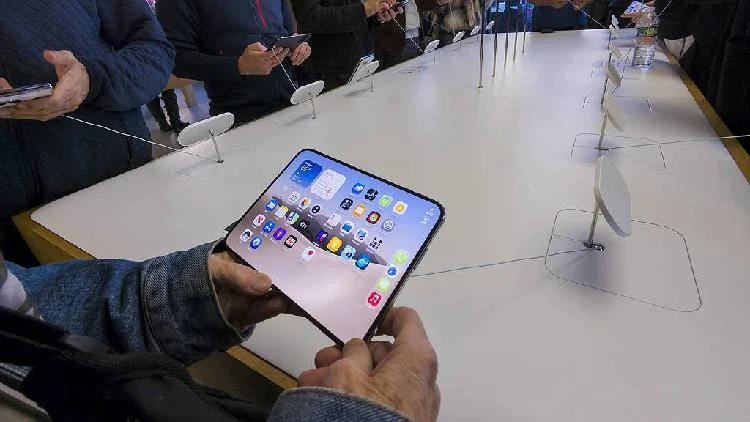
The world of smartphones is constantly evolving, with new designs and features emerging regularly. Foldable phones, in particular, have captured the imagination of consumers and manufacturers alike, promising a larger screen experience in a more compact form factor. However, with innovation comes challenges, and early adopters of new technology often face unexpected issues. This is precisely what happened with Apple’s recent entry into the foldable market, the iPhone Duo.
Shortly after its highly anticipated launch, reports began surfacing about screen problems affecting some iPhone Duo units. These issues, primarily manifesting as cracks and lines along the central hinge, raised concerns among users and highlighted the complexities of producing reliable foldable displays. Apple, known for its attention to detail and customer satisfaction, quickly addressed these concerns, demonstrating a commitment to resolving the problems. This situation offers a valuable case study in product development, customer service, and the inherent risks and rewards of pushing technological boundaries. Understanding how Apple handled the iPhone Duo’s screen issues provides insights into the company’s approach to quality control, its responsiveness to market feedback, and the broader landscape of the rapidly advancing smartphone industry.
Understanding the iPhone Duo’s Screen Issues
The launch of the iPhone Duo marked a significant moment for Apple, signaling its entry into the competitive foldable smartphone market. The device, designed to unfold like a passport booklet, offered users a larger display for enhanced productivity and entertainment, all within a pocketable size. However, the complex engineering required for such a design also presented unique challenges. Soon after the iPhone Duo began shipping, social media platforms buzzed with images and accounts of display problems.
These issues primarily involved the inner screen, specifically along the central hinge where the device folds. Users reported seeing cracks and lines appearing on the display, detracting from the user experience and raising questions about the device’s durability. The timing of these reports was particularly sensitive, as the iPhone Duo was already facing tight inventory due to high demand and the inherent manufacturing complexities that analysts had predicted. The problem seemed to emerge relatively quickly after users began interacting with their devices, suggesting an issue tied to the folding mechanism or the display’s interaction with it.
Apple’s swift acknowledgment of the problem demonstrated a proactive approach to customer relations. The company stated that it was aware of the issue affecting a small number of iPhone Duo units and advised affected users to contact AppleCare for a replacement. This immediate response aimed to reassure customers and mitigate potential damage to the brand’s reputation, which is often built on reliability and quality. While Apple did not immediately offer a detailed explanation for the cause of the screen problems, the company’s commitment to replacing affected devices underscored its dedication to customer satisfaction.
The Role of Third-Party Analysis
In the wake of user reports and Apple’s initial statement, third-party analysis played a crucial role in shedding light on the potential causes of the iPhone Duo’s screen issues. iFixit, a well-known firm specializing in device teardowns and repair guides, conducted an in-depth investigation. By examining teardown footage, analyzing patents, and even using CT scans, iFixit created a 3D simulation of the iPhone Duo’s hinge mechanism. They then compared this simulation with the locations where users reported damage.
Their findings suggested that the reported damage was concentrated in an area just below where a display cable runs beneath the screen, close to a central support bar within the hinge. iFixit theorized that this support bar might not be retracting sufficiently as the phone is folded. This could create a small stress point, or “hotspot,” on the screen near the reported break locations. This detailed analysis provided a plausible technical explanation for the observed screen failures, moving beyond speculation to a more concrete understanding of the potential engineering challenge.
While Apple did not immediately comment on iFixit’s specific findings, the analysis offered valuable insights into the intricate design of the foldable hinge and its potential impact on the display. Interestingly, iFixit’s report also concluded that despite the screen issues, the iPhone Duo was the most repairable foldable phone they had tested to date. This dual finding – identifying a design flaw while also noting a positive aspect regarding repairability – provided a more balanced perspective on the device’s engineering. The involvement of independent analysis like iFixit’s is vital in the tech industry, offering transparency and helping consumers and manufacturers alike understand the complexities of new technologies.
Comparing Responses: Apple vs. Industry Precedents
Apple’s handling of the iPhone Duo’s screen issues can be better understood by comparing it to how other manufacturers have responded to similar challenges, particularly with foldable devices. The most prominent precedent is Samsung’s experience with its original Galaxy Fold in 2019. Shortly after its debut, the Galaxy Fold faced significant display problems, including screen failures and hinge issues, leading Samsung to delay its release.
Samsung’s initial response involved recalling review units and conducting a thorough investigation. When the device was eventually re-released, Samsung had implemented design changes to improve durability, such as reinforcing the hinge and adding protective caps to the display’s edges. This experience was a learning curve for Samsung and the industry, highlighting the fragility of early foldable screen technology.
In contrast, Apple’s approach with the iPhone Duo was characterized by a quicker public acknowledgment and a direct offer of replacement for affected units. Francisco Jeronimo, a vice president at market research firm IDC, described Apple’s quick replacement offer as the “right first step.” He noted that a fast and transparent response is crucial in containing potential damage to a product category, referencing Samsung’s successful navigation of the Galaxy Fold issues.
While Samsung focused on redesigning and reinforcing the hardware before a wider release, Apple’s strategy seemed to be one of rapid iteration and customer support. By acknowledging the problem and offering immediate solutions, Apple aimed to maintain customer trust and prevent the issue from overshadowing the device’s innovative features. This difference in approach reflects the distinct strategies of the two companies. Samsung, having faced a more severe and widespread initial failure, opted for a more cautious, design-focused correction. Apple, perhaps confident in the limited scope of the issue or prioritizing speed to market, chose a customer-centric resolution. Both approaches have their merits, but Apple’s swift action in offering replacements aligns with its established customer service reputation.
The Technical Challenges of Foldable Displays
The issues encountered with the iPhone Duo’s screen underscore the significant technical hurdles involved in creating reliable foldable displays. Unlike traditional rigid smartphone screens, foldable displays must be flexible enough to bend repeatedly without cracking or losing functionality. This requires advanced materials and sophisticated manufacturing processes.
One of the primary challenges is the display’s protective layer. In most smartphones, this is a layer of glass, which is rigid and prone to shattering. For foldable phones, manufacturers use flexible materials like ultra-thin glass (UTG) or specialized plastic films. While these materials allow for bending, they are generally more susceptible to scratches, dents, and, as seen with the iPhone Duo, stress-induced damage along the fold.
The hinge mechanism itself is another critical component. It must allow the screen to fold smoothly and securely, while also protecting the delicate display from excessive pressure or debris. The design of the hinge directly impacts how the screen bends. If the hinge does not allow the screen to flex at the correct radius, or if it creates uneven pressure points, it can lead to premature wear and tear on the display. The iFixit analysis of the iPhone Duo suggested that a potential issue with the hinge’s support bar might be contributing to screen stress.
Furthermore, the internal components, such as display cables and connectors, must be designed to accommodate the folding motion without being stressed or damaged. These cables often need to navigate complex pathways within the hinge area, and any misalignment or excessive tension can lead to failure. The integration of these flexible displays and robust hinge systems requires a level of precision engineering that is still being refined across the industry. As technology advances, we can expect to see improvements in materials, hinge designs, and manufacturing techniques that will lead to more durable and reliable foldable devices.
Apple’s Commitment to Quality and Customer Service
Apple has built a global reputation on its commitment to product quality and exceptional customer service. When issues arise, the company’s response often sets a benchmark for the industry. The handling of the iPhone Duo’s screen problems is a testament to this philosophy.
From the outset, Apple acknowledged the problem rather than attempting to downplay it. This transparency is key to maintaining customer trust. By issuing a statement and directing users to AppleCare, the company provided a clear path for resolution. AppleCare, Apple’s extended warranty and technical support service, is designed to handle such issues efficiently, offering repairs or replacements.
The decision to replace affected units, rather than attempting repairs on a potentially complex and delicate foldable screen, suggests a strategic choice to prioritize customer satisfaction and speed of resolution. For a device as new and intricate as the iPhone Duo, a full replacement might be more practical and reliable than attempting to repair a foldable display, especially in the early stages of production. This approach minimizes the risk of further issues arising from attempted repairs and ensures that customers receive a fully functional device.
Moreover, Apple’s history of addressing product issues, such as the butterfly keyboard on older MacBook models or the “batterygate” controversy with iPhones, demonstrates a pattern of taking responsibility and implementing solutions. While these past issues varied in nature and resolution, they often involved significant engineering changes, software updates, or customer service programs. The iPhone Duo situation, while concerning for early adopters, appears to be managed in a way that aligns with Apple’s established customer-centric policies. The company’s ability to quickly identify and address problems, coupled with its robust support infrastructure, plays a significant role in mitigating negative impacts and reinforcing its brand loyalty.
The Future of Foldable Technology and Lessons Learned
The challenges faced by the iPhone Duo, while disappointing for some users, are indicative of the broader development process for cutting-edge technology. Foldable displays represent a significant leap in smartphone design, and like any pioneering technology, they come with a learning curve. The issues encountered are not necessarily a sign of failure but rather a natural part of innovation.
The experience with the iPhone Duo, and indeed with earlier foldable devices from other manufacturers, provides valuable lessons for the industry. Firstly, it highlights the importance of rigorous testing and quality control, especially for novel components like flexible displays and complex hinge mechanisms. Manufacturers must invest heavily in simulating real-world usage scenarios, including repeated folding, exposure to different temperatures, and potential impacts.
Secondly, the importance of transparent communication and swift customer support cannot be overstated. When problems arise, acknowledging them openly and providing clear, accessible solutions can significantly mitigate negative sentiment and preserve brand loyalty. Apple’s quick replacement offer is a prime example of this.
Thirdly, these challenges drive further innovation. The issues with current foldable screens will undoubtedly spur research into more durable flexible materials, more resilient hinge designs, and improved manufacturing techniques. We can anticipate future generations of foldable phones to be more robust, more reliable, and potentially more affordable as production processes mature.
The iPhone Duo’s journey, from its exciting launch to the subsequent screen issue and Apple’s response, offers a compelling narrative about the realities of technological advancement. It demonstrates that even leading companies face obstacles when pushing the boundaries of what’s possible. The lessons learned from these early iterations will pave the way for more refined and dependable foldable devices in the years to come, ultimately benefiting consumers with more versatile and innovative mobile technology. The organization’s website, Apple.com, provides further information on their products and services.
Conclusion
The introduction of the iPhone Duo into the foldable smartphone market brought with it both excitement and unforeseen challenges. The emergence of screen problems shortly after launch served as a reminder that innovation often involves navigating complex technical hurdles. Apple’s response, characterized by prompt acknowledgment and a commitment to replacing affected units, demonstrated a strong focus on customer service and maintaining brand trust.
The analysis of the issues, including insights from third-party experts like iFixit, shed light on the intricate engineering required for foldable displays and hinges. Comparing Apple’s approach to industry precedents, such as Samsung’s experience with the Galaxy Fold, highlights different strategies for managing product challenges. Ultimately, the iPhone Duo’s situation underscores the ongoing evolution of foldable technology, emphasizing the continuous drive for improvement in materials, design, and manufacturing processes. As the industry matures, these early lessons will undoubtedly contribute to the development of more robust and reliable foldable devices, shaping the future of mobile technology.



Conversation
0 Comments