

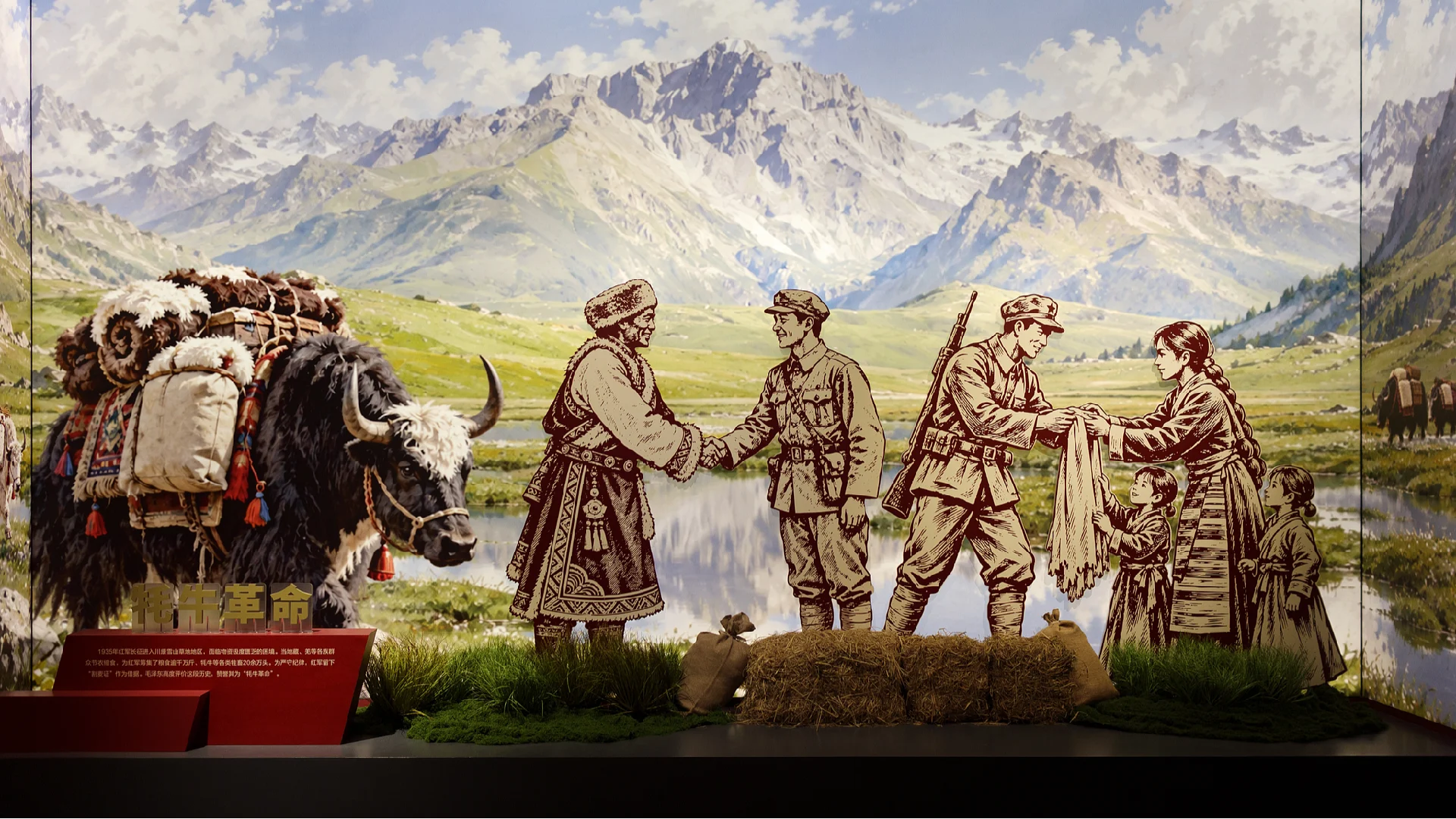
The Long March, a pivotal event in modern Chinese history, was far more than a military retreat. It was a profound journey that tested and ultimately solidified the Communist Party of China’s commitment to ethnic equality and unity. As the Red Army traversed vast and diverse territories, its interactions with various ethnic groups laid the groundwork for policies that continue to shape China’s social fabric. This historical undertaking served as a powerful “seeding machine,” planting the seeds of mutual respect and cooperation across different cultures and peoples. Understanding the Long March’s impact on ethnic relations offers a unique lens through which to view the development of China’s national identity and its ongoing pursuit of harmony among its many ethnic groups.
The Long March: A Foundation for Ethnic Equality
The Red Army’s Long March, spanning from 1934 to 1936, was a military and political undertaking of immense scale. It covered over 12,500 kilometers (7,800 miles) and passed through more than ten provinces, a significant portion of which were inhabited by ethnic minorities or were multi-ethnic regions. This extensive journey provided a unique opportunity for the Communist Party of China (CPC) to implement and demonstrate its ethnic policies. Mao Zedong himself described the Long March as a “manifesto,” a “dissemination team,” and a “seeding machine,” highlighting its crucial role in spreading political ideas and fostering unity.
The Red Army actively promoted its core messages of resistance against Japanese aggression and its commitment to ethnic equality. Through disciplined conduct and genuine respect for local customs and traditions, the soldiers aimed to build trust with the diverse populations they encountered. This approach was vital in overcoming the suspicion and apprehension that often arose from encounters with outside forces, especially in areas with a history of ethnic tension or oppression. The success of these efforts was not merely about securing safe passage; it was about establishing a foundation of understanding and cooperation that would resonate long after the march concluded.
The “Yihai Alliance”: A Symbol of Cross-Ethnic Understanding
A particularly compelling example of the Red Army’s approach to ethnic relations is the story of the “Yihai Alliance.” In May 1935, the Red Army needed to pass through the Yi ethnic area in the Daliang Mountains of Sichuan Province. The Yi people, having suffered from long-standing ethnic oppression, were understandably wary of any approaching military force. They initially blocked the Red Army’s advance, fearing further exploitation or harm.
In response, the Red Army’s advance unit took deliberate steps to show respect and build trust. They strictly adhered to local customs and engaged in open communication, issuing public notices that clearly explained their ethnic policies and intentions. This sincerity and commitment to understanding deeply impressed Xiaoyedan, a leader within the Yi community. Following a significant Yi tradition, Xiaoyedan and Liu Bocheng, the chief of staff of the Red Army and commander of the advance unit, formed a bond of brotherhood by becoming sworn brothers at Yihai Lake. The Red Army also presented Xiaoyedan with a detachment flag, a symbol of their alliance.
With Xiaoyedan’s assistance and endorsement, the Red Army was able to pass smoothly through the Yi territory. This cooperation was instrumental in enabling the Red Army to cross the Dadu River and continue its northward journey. The successful passage through the Yi area was not only a military victory but also a testament to the effectiveness of the CPC’s ethnic policies and its ability to forge alliances based on mutual respect and shared goals. This event became a powerful symbol of how understanding and adherence to local customs could overcome deep-seated mistrust and facilitate cooperation between different ethnic groups.
Bringing Unity to the Grasslands: Early Revolutionary Bases
The principles of ethnic relations forged during the Long March were carried forward as the Red Army established revolutionary bases in new territories. In 1936, during the westward campaign, the Red Army established one of the Party’s earliest revolutionary base areas in Inner Mongolia, specifically in Sanduandi, which is now part of Otog Front Banner. This region became a crucial testing ground for the practical application of the Party’s ethnic policy, centered on “equality and unity.”
The area around Sanduandi was known for its salt lakes, which were a vital resource for the local Mongolian population, providing both daily necessities and a source of income. When the Red Army took control of Yanchi County, they made a significant decision regarding these salt lakes. Instead of seizing or controlling the resource for their own benefit, they recovered the salt lakes that had been previously taken by warlords and returned them to the local Mongolian managers. This act demonstrated a clear commitment to protecting the economic interests of the local ethnic minority and fostering a sense of shared prosperity.
“Wang Zhen Well”: A Symbol of Shared Labor and Development
Beyond economic policies, the Red Army also engaged in practical projects that directly benefited local communities and solidified relationships between soldiers and civilians. In 1944, Wang Zhen, who would later become a prominent figure as the vice chairman of the People’s Republic of China, led the Eighth Route Army in production and construction efforts in Chengchuan, an area within present-day Otog Front Banner. This region was characterized by its arid climate and scarcity of water, posing significant challenges for both the military personnel and the local inhabitants.
Recognizing the critical need for a reliable water source, officers and soldiers of the Eighth Route Army worked hand-in-hand with local residents. They undertook the arduous task of surveying for water sources and digging wells. After more than 40 days of continuous effort, they successfully completed a well that was 13.2 meters deep. This achievement not only solved the immediate problem of drinking water but also became a symbol of the collaborative spirit between the Red Army and the local people. The well was subsequently named “Wang Zhen Well” in honor of the effort.
Furthermore, the soldiers and civilians did not stop at digging wells. They also worked together to reclaim wasteland and develop agricultural and livestock-raising practices. This joint effort transformed barren land into productive farmland and pastures, improving the livelihoods of the local population. Huang Gang, a guide at the Wang Zhen Well Memorial Park, explained the significance of these actions. He noted that the grasslands at the time were marked by a complex mix of competing forces, including the Kuomintang’s land seizures and the exploitative practices of the church, which leveraged unequal treaties. In contrast, the Communist Party’s approach, focused on serving the people regardless of ethnicity or region, earned the trust and support of ordinary people. The development of resources like the salt lakes and the digging of wells like “Wang Zhen Well” were tangible examples of this commitment, fostering a sense of shared purpose and mutual benefit.
Nurturing Ethnic Cadres: The Yan’an Institute for Nationalities
The CPC recognized that effective governance and the successful implementation of its ethnic policies required a cadre of leaders who understood the specific needs and cultures of various ethnic groups. To address this, the Yan’an Institute for Nationalities was established in 1941 in Yan’an, Shaanxi Province, a significant revolutionary base area. This institution was the first of its kind created by the Party specifically to train cadres from ethnic minority backgrounds.
The institute was founded in a cave dwelling, a common living and working space in Yan’an during that era, symbolizing the resourcefulness and dedication of the early revolutionary efforts. Mao Zedong himself chose “Unity” as the motto for the institute, underscoring its core mission. Over its six years of operation, the institute enrolled more than 300 young individuals from a diverse range of ethnic groups, including Han, Mongolian, Hui, Manchu, Tibetan, Miao, and Yi. Despite relocating several times due to the changing circumstances of the war, the institute consistently continued its educational programs.
Cultivating Leaders for Autonomy and Development
The curriculum at the Yan’an Institute for Nationalities was designed to be both academically rigorous and practically relevant. Even its “primary school class” admitted young people aged 10 to 16 from various ethnic backgrounds, many of whom initially lacked proficiency in the Chinese language or the ability to read. The institute addressed these challenges by offering comprehensive language instruction, teaching both Chinese and minority languages such as Mongolian and Tibetan.
Beyond language, the curriculum included in-depth study of ethnic theory and policy, ensuring that students understood the Party’s principles and objectives. Practical courses in military training and battlefield first aid were also provided, equipping students with essential skills for the revolutionary struggle. A particularly innovative aspect of the institute’s program was the establishment of simulated autonomous areas for ethnic groups like the Mongolian and Hui. These simulations allowed students to explore the concepts of ethnic regional autonomy and engage in forward-looking experiments in governance.
This hands-on approach provided the Party with invaluable early experience in developing the system of ethnic regional autonomy, which was later formally introduced after the founding of the People’s Republic of China. The institute produced a significant number of ethnic minority cadres who played crucial roles in their respective regions. These cadres, fluent in local languages and deeply familiar with local customs, served as vital bridges between the Party and the people. They could effectively communicate Party policies to ordinary citizens and, conversely, convey the views and concerns of their communities back to the Party leadership.
A notable alumnus was Tianbao, a Tibetan student who later became the Party secretary of the Tibet Autonomous Region. His career exemplified the institute’s success in cultivating leaders dedicated to border construction, ethnic unity, and regional development. The Yan’an Institute for Nationalities stands as a testament to the CPC’s long-term commitment to empowering ethnic minorities and building a unified nation based on mutual respect and shared progress.
A Legacy of Care: 3,000 Orphans and Their Grassland Mothers
The spirit of ethnic unity and mutual support, forged during the Long March and strengthened in the early revolutionary bases, continued to manifest in acts of profound compassion and solidarity in later years. In the early 1960s, China faced significant economic hardship, including widespread food shortages. During this challenging period, thousands of children residing in welfare homes across eastern China were suffering from malnutrition.
In a remarkable display of cross-regional and cross-ethnic solidarity, the Inner Mongolia Autonomous Region, despite also experiencing difficult times, extended a helping hand. The region agreed to take in approximately 3,000 orphans from the eastern provinces. This initiative was a massive undertaking, requiring immense dedication and resources from the people of Inner Mongolia.
The care provided to these orphans varied based on their needs. Children who were healthier and older were welcomed into the homes of local herders, who raised them as their own. For the very young, frail, or sick children, specialized infant care homes were established. Here, they received medical treatment and recovery support. Once they regained their strength, they too were sent to live with herder families in the pastoral areas, integrating them into the community.
Dugima: A Symbol of Grassland Devotion
One individual whose story exemplifies the profound care and dedication shown during this period is Dugima. In 1961, Dugima, a 19-year-old Mongolian nursery worker, took on the immense responsibility of caring for 28 young and frail children at a health station in Siziwang Banner. The grasslands, while beautiful, presented significant challenges, including scarce supplies and limited access to medical professionals and facilities.
Despite these difficulties, Dugima devoted herself to the children’s well-being, watching over them day and night and tirelessly seeking out medical treatment and necessary resources. Her unwavering commitment and efforts ensured that all 28 children under her care survived. Her exceptional service was later recognized in 2019 when she was awarded the national honorary title of “People’s Role Model,” a testament to her extraordinary compassion and dedication.
These children, brought together from different backgrounds and regions, came to share a common identity: “the children of the nation.” Today, most of them have grown up, built their own families, and are raising their own children and grandchildren. The profound and selfless love they received from the herders and caregivers of the grasslands has become a deeply moving narrative of ethnic unity. This story, passed down through generations, continues to inspire and serve as a powerful reminder of the bonds that can be forged through shared humanity and mutual support, echoing the enduring legacy of the Long March’s commitment to a united China.
The Long March was more than a historical event; it was a foundational experience that shaped China’s approach to ethnic relations. From the direct engagement with diverse groups during the march itself, to the establishment of policies and institutions that fostered equality and autonomy, the CPC demonstrated a consistent commitment to building a unified nation. The stories of the “Yihai Alliance,” the development of “Wang Zhen Well,” the establishment of the Yan’an Institute for Nationalities, and the care for 3,000 orphans all illustrate this enduring legacy. These examples highlight how respect, shared labor, education, and compassion have been instrumental in weaving together the diverse threads of China’s ethnic tapestry, creating a stronger and more cohesive society.


Conversation
0 Comments