

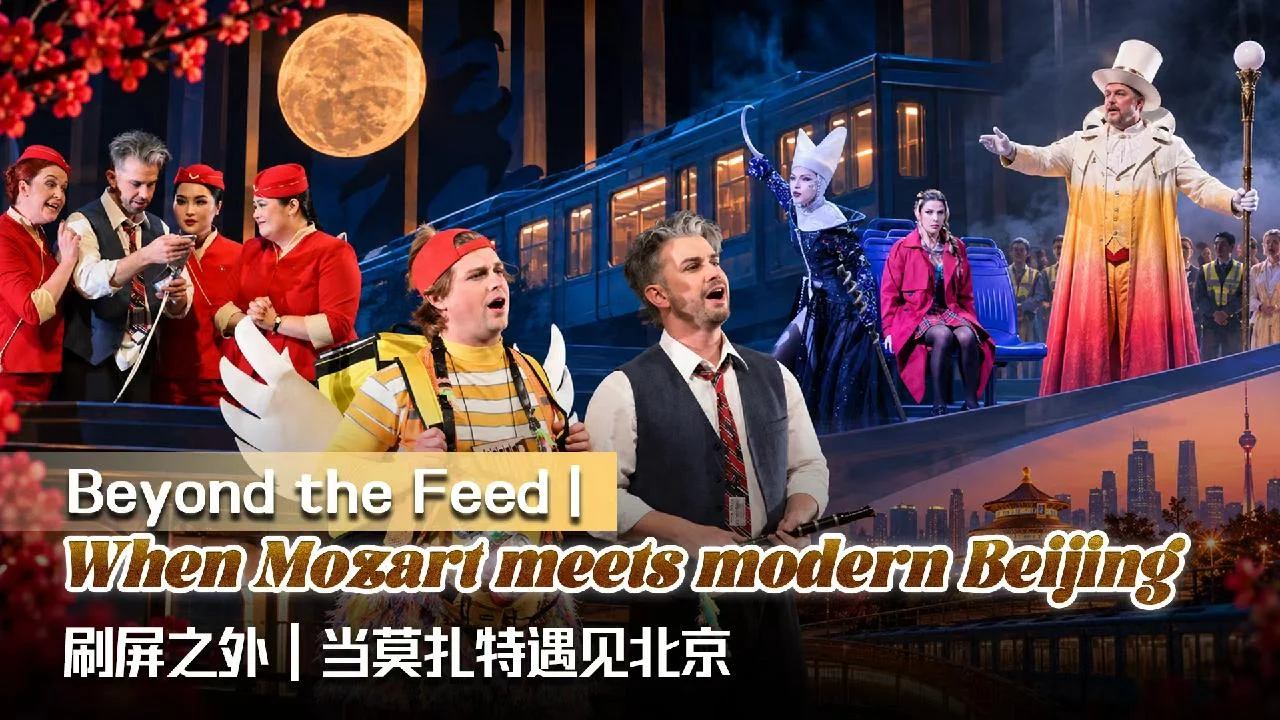
The Magic Flute in Modern Beijing: A Symphony of Tradition and Innovation
Wolfgang Amadeus Mozart’s “The Magic Flute” is a timeless opera, beloved for its enchanting melodies and universal themes of love, wisdom, and the triumph of good over evil. However, a recent production at the 29th Beijing Music Festival offered a fresh perspective, transplanting this classic tale into the vibrant, contemporary setting of modern Beijing. This innovative staging, directed by Chinese director Zou Shuang, aimed to bridge cultural divides and explore how a beloved European opera can resonate with a 21st-century Chinese audience. The production featured an international cast and creative team, highlighting the collaborative spirit of global arts.
This reimagining of “The Magic Flute” is more than just a theatrical event; it’s an exploration of how art transcends borders and time. By placing Mozart’s characters within the bustling subway trains, amidst the daily lives of delivery riders, and against the backdrop of a rapidly evolving city, the production invited audiences to see the opera through a new lens. This analysis will delve into the structure and impact of this unique production, examining how it blended classical music with modern aesthetics, engaged with Chinese cultural elements, and ultimately offered a new interpretation of a cherished masterpiece. We will explore the creative choices made by the director and the international team, and consider what this fusion of East and West signifies for the future of opera and the performing arts.
A Contemporary Canvas for a Classic Tale
The decision to set “The Magic Flute” in modern Beijing was a bold one, immediately signaling a departure from traditional interpretations. Instead of the mythical kingdom of ancient Egypt, audiences were transported to the bustling streets, crowded subways, and towering skyscrapers of China’s capital. This contemporary setting served as a powerful metaphor, allowing the opera’s enduring themes to be explored in a context that is both familiar and dynamic for a modern audience. The production aimed to make the characters and their struggles more relatable by placing them in everyday situations, suggesting that the quest for enlightenment and love is as relevant today as it was in Mozart’s time.
Director Zou Shuang’s vision was to create a production that felt alive and connected to the pulse of contemporary life. The use of elements like subway trains and delivery riders in the staging was not merely decorative; it was intended to immerse the audience in a world that mirrors their own experiences. This approach sought to break down the perceived barriers between classical opera and modern entertainment, demonstrating that the emotional core of “The Magic Flute” can be found in the most unexpected places. The international cast and creative team brought diverse perspectives to this vision, contributing to a rich tapestry of ideas that informed the production’s unique aesthetic and narrative.
The International Ensemble: A Global Collaboration
The success of any opera production relies heavily on the talent and synergy of its cast and creative team. In the case of this modern “Magic Flute,” the involvement of an international ensemble was a key factor in its innovative approach. Bringing together artists from different cultural backgrounds fostered a unique environment for creative exchange, allowing for a fusion of artistic traditions and interpretations. This collaboration was essential in translating the spirit of Mozart’s opera into a contemporary Chinese context.
The cast members, hailing from various parts of the world, brought their own understanding and experiences to their roles. This diversity likely enriched their performances, adding layers of interpretation that might not have been possible with a purely local cast. Similarly, the creative team, which would have included designers, choreographers, and technical staff from different countries, contributed a wide range of skills and aesthetic sensibilities. This cross-cultural collaboration is a hallmark of contemporary performing arts, demonstrating how global talent can come together to create something new and exciting. The process of working together likely involved overcoming language barriers and differing artistic conventions, ultimately leading to a stronger, more cohesive final product.
The article mentions that CGTN goes “beyond the stage to meet the international cast and creative team to uncover the surprises behind the production and hear how Beijing is shaping their experience of Mozart’s timeless opera.” This suggests that the interviews and behind-the-scenes insights from these international artists were a significant part of the narrative surrounding the production. Their perspectives would have offered valuable context on how they adapted to the Beijing setting and how their own cultural backgrounds influenced their work on “The Magic Flute.” This global approach not only enriches the opera itself but also speaks to the increasing interconnectedness of the arts world.
Reinterpreting Iconic Characters for a New Era
“The Magic Flute” is populated by characters who have become archetypes: the noble Prince Tamino, the brave Pamina, the mischievous Papageno, and the enigmatic Queen of the Night. In a modern Beijing setting, these characters needed to be re-envisioned to fit their new environment while retaining their essential qualities. The director and the cast would have faced the challenge of making these familiar figures feel fresh and relevant to an audience accustomed to contemporary storytelling.
For instance, Prince Tamino, often depicted as a heroic figure on a quest, might have been portrayed as a young man navigating the complexities of modern urban life, perhaps a student or a young professional seeking purpose. Pamina, his love interest, could have been a strong, independent woman facing her own challenges within the city’s social landscape. Papageno, the bird-catcher, might have been reimagined as a delivery rider or a street performer, someone connected to the everyday pulse of Beijing. Even the more fantastical elements, like the Queen of the Night and her magical powers, would need to be translated into a modern idiom, perhaps through technology or psychological manipulation.
The article’s mention of “subway trains, delivery riders and a little theatrical magic” directly points to how these characters might have been integrated into the urban fabric. A subway scene could have been the setting for Tamino’s initial encounter with the Queen’s emissaries, or Pamina could have been shown navigating the crowded transit system. Papageno’s interactions with birds might have been replaced with his interactions with the city’s animal life or even his role as a messenger in a digital world. These adaptations are crucial for ensuring that the opera’s narrative remains engaging and understandable for a contemporary audience, allowing them to connect with the characters’ journeys and emotional arcs.
The Visual and Auditory Landscape of Modern Beijing Opera
The visual and auditory elements of an opera production are paramount in creating its atmosphere and conveying its narrative. For a production of “The Magic Flute” set in modern Beijing, this meant a deliberate fusion of classical operatic traditions with the aesthetics of a contemporary metropolis. The stage design, costumes, lighting, and soundscape would all have played a critical role in establishing this unique environment.
The stage design likely incorporated iconic elements of Beijing, such as its modern architecture, bustling street scenes, and perhaps even traditional motifs reinterpreted in a contemporary style. The contrast between the grandeur of the opera house and the everyday reality of the city could have been a powerful visual theme. Costumes would have been a key area for innovation, with characters potentially dressed in a mix of modern fashion and operatic attire, or perhaps entirely in contemporary clothing that reflects their personalities and roles within the urban setting. The Queen of the Night’s dramatic costumes, for example, might have been re-imagined with a futuristic or avant-garde flair, while Papageno’s attire could have emphasized his working-class status.
The music, of course, remains Mozart’s masterpiece. However, the way it is presented can be influenced by the staging. The orchestra might have been augmented with contemporary instruments, or the sound design could have incorporated urban soundscapes to blend with the orchestral score. The use of lighting would have been crucial in transforming the stage from the bright, chaotic energy of the city streets to the more intimate and magical moments of the opera. The article’s mention of “theatrical magic” suggests that the production likely employed innovative stagecraft and visual effects to create a sense of wonder and enchantment, even within a modern context. This careful orchestration of visual and auditory elements would have been essential in creating a cohesive and immersive experience for the audience, allowing them to fully engage with the opera’s story and its emotional depth.
Thematic Resonance: Universal Truths in a Local Setting
At its heart, “The Magic Flute” explores universal themes that have resonated with audiences for centuries. These include the journey of self-discovery, the power of love, the struggle between reason and emotion, and the quest for enlightenment. By transplanting the opera to modern Beijing, the production sought to demonstrate that these themes are not confined to a specific time or place but are deeply relevant to the human experience everywhere.
The opera’s allegorical nature lends itself well to reinterpretation. The trials that Tamino and Pamina undergo can be seen as metaphors for the challenges faced by young people today as they navigate complex social structures, personal relationships, and the search for meaning in a rapidly changing world. The contrast between the enlightened world of Sarastro and the seductive illusions of the Queen of the Night can be interpreted as a timeless struggle between wisdom and ignorance, truth and deception, which is particularly pertinent in an age of information overload and digital manipulation.
The article notes that the production aims to explore “how Beijing is shaping their experience of Mozart’s timeless opera.” This suggests that the city itself, with its unique blend of ancient traditions and hyper-modernity, provides a fertile ground for these themes to unfold. The pressures of urban life, the pursuit of success, and the search for authentic connections in a globalized society are all elements that can be explored through the characters’ journeys. By grounding the opera in a specific, recognizable location, the production invited audiences to reflect on these universal truths within their own lived experiences, making the opera’s message more personal and impactful.
Bridging Cultures: The East Meets West in Opera
The production of “The Magic Flute” in Beijing represents a significant cultural exchange, showcasing the increasing dialogue between Western classical music and Chinese artistic expression. Opera, a genre with deep roots in European history, is finding new life and interpretations in diverse cultural contexts around the world. This particular production highlights how a Western masterpiece can be adapted and enriched by Eastern perspectives, creating a truly global art form.
The collaboration between an international cast and creative team with a Chinese director and setting is a testament to the interconnectedness of the arts. It demonstrates a willingness to embrace different cultural viewpoints and to find common ground in the universal language of music and storytelling. This cross-cultural approach can lead to fresh insights and innovative artistic outcomes that might not be possible within a single cultural framework. The article’s focus on how “Beijing is shaping their experience” suggests that the city’s unique cultural landscape played an active role in influencing the artists’ creative process.
Furthermore, such productions can help to foster greater understanding and appreciation between different cultures. By presenting a familiar Western opera in a new, culturally relevant context, it can open doors for audiences to engage with both the opera itself and the culture in which it is being presented. This fusion of East and West in opera is not just about artistic innovation; it’s also about building bridges and fostering a more inclusive and globalized cultural landscape. The success of such ventures can pave the way for future collaborations and a broader acceptance of diverse artistic expressions.
The Role of Technology and Modern Staging
Modern opera productions often employ advanced technology and innovative staging techniques to enhance the audience’s experience. For a production set in contemporary Beijing, the integration of technology would have been a natural fit, allowing for dynamic visual effects and immersive storytelling. The article’s mention of “theatrical magic” hints at the creative use of these tools.
This could have included sophisticated lighting systems to create dramatic shifts in mood and atmosphere, advanced projection mapping to transform the stage into various urban environments, or even the use of digital screens to display real-time imagery or abstract visuals that complement the music. The incorporation of sound design, beyond the orchestral score, could have involved weaving in the ambient sounds of Beijing – traffic, crowds, city announcements – to create a more realistic and immersive urban soundscape.
The use of technology can also help to make opera more accessible and engaging for younger audiences who are accustomed to visually rich and fast-paced media. By blending classical music with cutting-edge visual presentation, productions like this can capture attention and convey the emotional power of the opera in new ways. The challenge for the creative team would have been to use technology not as a mere spectacle, but as a tool to serve the narrative and enhance the emotional impact of Mozart’s music, ensuring that the magic of “The Magic Flute” still shines through the modern embellishments.
Audience Reception and Cultural Impact
The reception of a production like this is crucial in understanding its impact. How did the Beijing audience, accustomed to both traditional Chinese arts and international performances, respond to this modern interpretation of a Western classic? The success of such a venture lies not only in its artistic merit but also in its ability to connect with its audience on an emotional and intellectual level.
A production that successfully bridges cultural divides and offers a fresh perspective on a familiar work is likely to generate significant interest and discussion. The article’s focus on meeting the “international cast and creative team” suggests that the production was seen as a significant event, worthy of in-depth coverage. The aim to make the opera relatable to a contemporary audience means that the themes and characters would have been presented in a way that resonates with their daily lives and concerns.
The cultural impact of such a production can be far-reaching. It can contribute to a broader appreciation of opera as a living art form, capable of evolving and adapting to new contexts. It can also foster a greater understanding and appreciation of cultural exchange, demonstrating the value of collaboration between artists from different backgrounds. By offering a unique interpretation of “The Magic Flute,” this production likely left a lasting impression on its audience, sparking conversations about art, culture, and the enduring power of music to connect us all.
The Enduring Appeal of “The Magic Flute”
Despite its 18th-century origins, “The Magic Flute” continues to captivate audiences worldwide. Its enduring appeal lies in its masterful blend of musical genius, compelling narrative, and profound philosophical underpinnings. The opera’s exploration of themes such as the pursuit of knowledge, the nature of good and evil, and the journey towards spiritual enlightenment are as relevant today as they were when Mozart first composed it.
The opera’s structure, which incorporates elements of fairy tale, Masonic allegory, and Singspiel (a form of opera that includes spoken dialogue), makes it uniquely adaptable. This flexibility has allowed “The Magic Flute” to be reinterpreted in countless ways across different cultures and time periods. Each new production offers an opportunity to explore its themes through a contemporary lens, revealing new layers of meaning and relevance.
The Beijing production, by setting the opera in a modern urban environment, tapped into this inherent adaptability. It demonstrated that the core messages of “The Magic Flute” can transcend geographical and temporal boundaries. The journey of Tamino and Pamina, their trials and their ultimate triumph, speaks to the universal human desire for love, truth, and personal growth. The opera’s enduring power lies in its ability to inspire, to provoke thought, and to remind us of the fundamental values that unite us, regardless of our background or the era in which we live.
Conclusion: A Harmonious Blend of Past and Present
The 29th Beijing Music Festival’s production of “The Magic Flute” stands as a compelling example of how classical art can be revitalized for a modern audience. By transplanting Mozart’s beloved opera into the dynamic setting of contemporary Beijing, director Zou Shuang and an international creative team crafted a production that was both innovative and deeply resonant. The use of urban elements like subway trains and delivery riders, coupled with a diverse cast and cutting-edge staging, successfully bridged the gap between tradition and modernity.
This reimagining of “The Magic Flute” proved that universal themes of love, wisdom, and self-discovery can find new expression in any cultural context. The production not only offered a fresh perspective on a timeless masterpiece but also highlighted the power of cross-cultural collaboration in the arts. It demonstrated that opera, far from being a relic of the past, is a vibrant and evolving art form capable of engaging with the complexities of the 21st century. The success of this production suggests a promising future for artistic endeavors that embrace global perspectives and innovative interpretations, ensuring that the magic of Mozart continues to enchant audiences for generations to come.


Conversation
0 Comments