

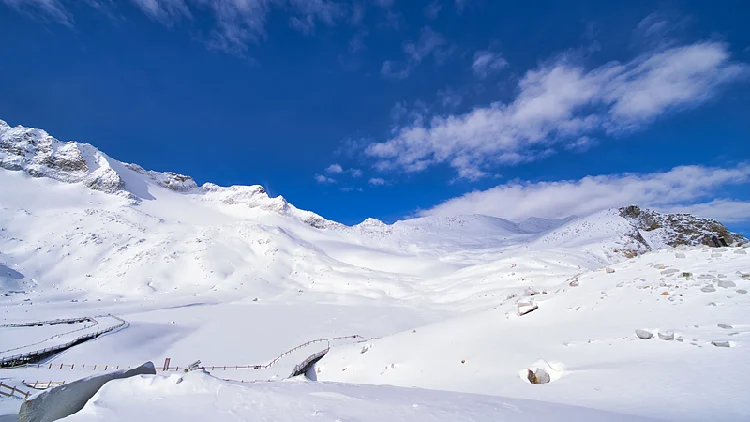
Protecting Glaciers: An Analysis of Geoengineering Efforts and Their Potential
Glaciers, often called the “water towers of the world,” are vital sources of freshwater for millions of people. However, these massive ice formations are rapidly shrinking due to rising global temperatures. Scientists are exploring various methods to slow this melting, from large-scale climate change mitigation to more localized, experimental approaches. One such experiment involves covering parts of a glacier with special blankets to shield it from the sun’s heat. This article will analyze the effectiveness, challenges, and broader implications of such geoengineering efforts in the fight against glacier loss.
The Urgent Need to Protect Glaciers
Glaciers are more than just frozen rivers; they are critical components of Earth’s climate system and essential water resources. They store vast amounts of freshwater, releasing it gradually through meltwater, which sustains rivers, lakes, and ecosystems, especially during dry seasons. For communities in mountainous regions and downstream areas, this meltwater is a lifeline for agriculture, drinking water, and hydropower.
The accelerated melting of glaciers is a direct consequence of global warming. As greenhouse gas concentrations in the atmosphere increase, the planet’s average temperature rises, leading to more intense heatwaves and warmer overall conditions. Glaciers, particularly those at lower altitudes or in warmer climates, are highly sensitive to these changes. When the rate of melting exceeds the rate of snowfall and ice accumulation, glaciers begin to shrink. This shrinkage has far-reaching consequences, including reduced freshwater availability, increased risk of flooding from glacial lake outbursts, and impacts on local biodiversity. The loss of glacial ice also contributes to sea-level rise, affecting coastal communities worldwide. Understanding the science behind glacier melt and exploring potential solutions is therefore of paramount importance.
Geoengineering: A Closer Look at Glacier Blanketing
One innovative, albeit localized, approach to combatting glacier melt involves the use of specialized blankets. This method, often referred to as glacier covering or geoengineering, aims to reduce the amount of solar radiation reaching the ice surface. The concept is straightforward: by reflecting sunlight, the blankets prevent the ice from absorbing heat and melting.
How Glacier Blankets Work
These blankets are typically made of reflective materials, such as geotextiles or specialized plastics, designed to maximize solar reflectivity and minimize heat absorption. They are laid out over significant portions of a glacier’s surface, particularly in areas experiencing the most rapid melting. The primary mechanism is albedo modification. Albedo refers to the measure of how much light that hits a surface is reflected without being absorbed. A white, reflective surface has a high albedo, bouncing back more sunlight, while a dark surface has a low albedo, absorbing more heat. By covering the darker, more exposed ice with a bright, reflective material, scientists aim to increase the glacier’s overall albedo, thereby reducing surface melt.
The blankets also serve to insulate the ice from warmer air temperatures. While the primary goal is solar reflection, the material itself can create a barrier, slowing down the transfer of heat from the atmosphere to the ice. This dual action of reflection and insulation is key to the effectiveness of this technique.
Case Study: Dagu Glacier, China
An example of this technique in practice can be seen at the Dagu Glacier in southwest China. Scientists have been experimenting with covering parts of this glacier with large, white blankets. The goal is to protect the ice from the intense summer sun and slow down its retreat. Initial reports from this experiment have shown encouraging local results, with the covered areas experiencing less melting compared to unprotected sections. This suggests that, on a small scale, the method can indeed help preserve glacial ice. The Dagu Glacier is a significant ice body, and its preservation is important for the local ecosystem and water supply. The experiment there provides valuable data on the feasibility and impact of such interventions.
Materials and Deployment
The materials used for glacier blankets are carefully chosen for their durability, reflectivity, and environmental impact. Geotextiles, which are permeable fabrics used in civil engineering, are often favored because they allow meltwater to pass through, preventing the buildup of water that could otherwise accelerate melting. They are also designed to withstand harsh weather conditions, including strong winds and extreme temperatures.
Deployment is a labor-intensive process. The blankets are transported to the glacier, often by helicopter or specialized vehicles, and then carefully laid out by hand or with machinery. The size of the area to be covered can be substantial, requiring significant logistical planning and resources. Securing the blankets to the ice is also critical to prevent them from being blown away or dislodged. This often involves anchoring them with ropes, weights, or specialized fasteners. The process must be conducted with care to minimize disturbance to the fragile glacial environment.
Challenges and Limitations of Glacier Blanketing
While glacier blanketing shows promise on a local scale, it faces significant challenges and limitations when considered as a widespread solution to glacier loss. These challenges range from practical and economic to environmental and ethical.
Scale and Cost
One of the most significant hurdles is the sheer scale of the problem. Glaciers are vast, and covering even a fraction of the world’s shrinking ice bodies would require an enormous amount of material and labor. The cost of producing, transporting, and deploying these blankets on a global scale would be astronomical. For instance, covering a single large glacier could cost millions of dollars, and there are thousands of glaciers worldwide that are experiencing significant melt. This makes widespread application economically unfeasible for most regions.
Environmental Impact of Materials
The materials used for glacier blankets, while designed to be relatively inert, are still artificial products. Their long-term impact on the glacial ecosystem is not fully understood. Concerns include the potential for microplastic shedding from synthetic fabrics, the release of chemicals into meltwater, and the physical disturbance of the ice surface and surrounding environment during deployment and removal. While efforts are made to use environmentally friendly materials, the sheer volume required for large-scale application raises questions about their ultimate sustainability. Furthermore, the disposal of these materials after their useful life presents another environmental challenge.
Effectiveness in a Warming Climate
Glacier blanketing is essentially a palliative measure; it treats the symptom (melting) rather than the cause (global warming). While it can slow down melting in the short term, it does not address the underlying issue of rising global temperatures. As the climate continues to warm, the effectiveness of these blankets may diminish. The ambient air temperatures could become so high that even with reflective coverings, melting continues at an accelerated rate. Moreover, the blankets themselves could degrade faster under more extreme conditions. This means that continuous reapplication and maintenance would be necessary, further increasing costs and environmental impact.
Logistical Difficulties
Deploying and maintaining blankets on remote and often treacherous glacial environments presents immense logistical challenges. Glaciers are dynamic systems, constantly shifting and changing. Accessing them can be difficult and dangerous, especially during the melt season. Extreme weather conditions, crevasses, and avalanches pose constant risks to the personnel involved. The need for specialized equipment, such as helicopters and snowmobiles, adds to the complexity and expense of operations.
Ethical Considerations
There are also ethical questions surrounding geoengineering interventions like glacier blanketing. Some argue that focusing on such localized fixes distracts from the urgent need for global action to reduce greenhouse gas emissions. They contend that investing heavily in these technological solutions might create a false sense of security, potentially reducing the political will to implement more fundamental changes to our energy systems and consumption patterns. The question arises: should we be trying to engineer our way out of a problem caused by our own actions, or should we focus on preventing the problem in the first place?
Broader Strategies for Glacier Preservation
Given the limitations of localized geoengineering, it is clear that a multi-faceted approach is necessary to address the global crisis of glacier melt. These broader strategies focus on mitigating climate change at its source and adapting to the inevitable changes that are already underway.
Reducing Greenhouse Gas Emissions
The most effective long-term solution to saving glaciers is to tackle the root cause of their melting: global warming. This requires a significant and rapid reduction in greenhouse gas emissions worldwide. Transitioning to renewable energy sources like solar, wind, and geothermal power, improving energy efficiency, developing sustainable transportation systems, and adopting greener industrial practices are all critical steps. International cooperation and strong political will are essential to set ambitious emission reduction targets and implement policies that support a transition to a low-carbon economy. Without substantial global efforts to curb emissions, localized interventions like glacier blanketing will ultimately be insufficient.
Reforestation and Land Management
Forests play a crucial role in regulating the climate by absorbing carbon dioxide from the atmosphere. Reforestation and afforestation projects, coupled with sustainable land management practices, can help increase carbon sequestration and mitigate climate change. Protecting existing forests from deforestation is equally important. Healthy ecosystems, including forests and wetlands, also help regulate water cycles, which can indirectly benefit areas dependent on glacial meltwater.
Water Resource Management and Adaptation
As glaciers shrink, communities that rely on their meltwater will need to adapt to changing water availability. This involves developing more efficient water management strategies, investing in water storage infrastructure like reservoirs, and exploring alternative water sources. Promoting water conservation in agriculture and urban areas is also vital. Furthermore, communities living in glacial floodplains need to be prepared for increased risks of glacial lake outburst floods (GLOFs) and implement early warning systems and disaster preparedness plans.
Research and Monitoring
Continued research and monitoring of glaciers are essential to understand their behavior, predict future changes, and assess the effectiveness of different intervention strategies. This includes using satellite imagery, ground-based measurements, and climate modeling to track glacier mass balance, ice thickness, and melt rates. Such data is crucial for informing policy decisions and guiding adaptation efforts. Understanding the specific vulnerabilities of different glacier systems will help prioritize conservation efforts and develop tailored solutions.
The Future of Glaciers and Geoengineering
The future of glaciers hangs precariously in the balance, largely dependent on humanity’s collective response to climate change. While localized geoengineering techniques like glacier blanketing offer a glimpse of potential short-term interventions, they are not a panacea. The success seen at Dagu Glacier is encouraging for that specific location, but it highlights the immense challenges of scaling such solutions globally.
The primary battle against glacier loss must be fought on the front lines of climate change mitigation. Reducing greenhouse gas emissions is the only way to slow the rate of global warming and give glaciers a fighting chance of survival. This requires a fundamental shift in how we produce and consume energy, a commitment to sustainable practices across all sectors, and unprecedented international cooperation.
In parallel, adaptation strategies will be crucial. Communities must prepare for a future with less glacial meltwater, developing resilient water management systems and robust disaster preparedness plans. Research into innovative solutions, including improved geoengineering techniques and nature-based climate solutions, should continue, but always with a clear understanding of their limitations and potential side effects.
Ultimately, the story of glaciers is a stark reminder of our planet’s interconnectedness and the profound impact of human activities. The decision of whether to preserve these magnificent ice formations for future generations rests on our willingness to act decisively and collectively to address the climate crisis. The blankets on Dagu Glacier are a symbol of human ingenuity and a desperate attempt to buy time, but the real solution lies not in covering ice, but in cooling the planet.
Conclusion
The rapid melting of glaciers due to climate change poses a significant threat to global freshwater resources and ecosystems. While experimental methods like covering glaciers with reflective blankets, as seen at China’s Dagu Glacier, show localized promise in slowing melt, they are fraught with challenges. The immense cost, logistical complexities, potential environmental impacts of materials, and the fundamental fact that these are temporary fixes that do not address the root cause of global warming limit their widespread applicability. The most effective strategy for preserving glaciers remains a global commitment to drastically reducing greenhouse gas emissions. Alongside this, adaptation measures for water resource management and disaster preparedness are essential. Continued research and monitoring are vital, but the ultimate fate of Earth’s glaciers depends on our collective action to mitigate climate change.



Conversation
0 Comments