

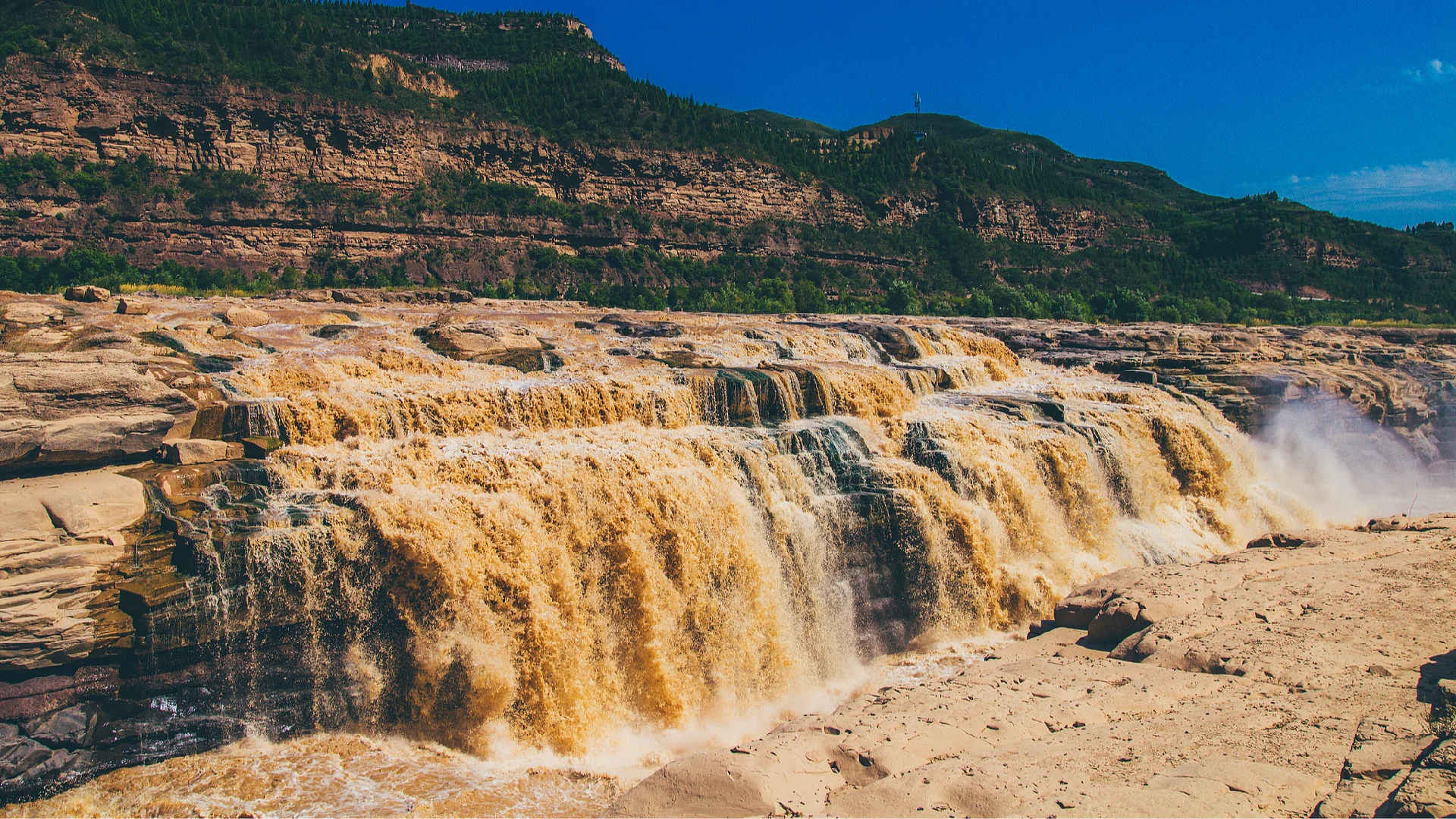
The Yellow River, often called China’s “mother river,” has undergone a remarkable transformation. For centuries, it was known for its turbulent, muddy waters and destructive floods. However, decades of dedicated conservation and management efforts have led to a significant improvement in its water quality and ecological health. This change is not just a matter of environmental policy; it’s a visible shift that photographers, local communities, and scientists are now documenting. The once-muddy torrents are now clearer, symbolizing a new era for this vital waterway.
This article will explore the history of the Yellow River’s challenges, the comprehensive strategies implemented for its restoration, and the tangible benefits these efforts have brought to the environment and the people living along its banks. We will examine the engineering feats, ecological initiatives, and policy changes that have contributed to making the Yellow River run clearer and healthier.
A River of Challenges: The Yellow River’s Troubled Past
The Yellow River, stretching over 5,464 kilometers, is China’s second-longest river. Its journey from the Qinghai highlands to the Bohai Sea carves through diverse landscapes, including deserts and loess plateaus. Historically, this journey was fraught with peril. The river’s high sediment load, particularly from the Loess Plateau, earned it the nickname “China’s Sorrow.” This sediment caused the riverbed to rise, leading to frequent and devastating floods.
Before the establishment of the People’s Republic of China in 1949, the Yellow River’s lower reaches were a scene of constant struggle. Historical records indicate that dyke breaches and overflows occurred over 1,500 times, and the river changed its course 26 times. This instability made agriculture precarious and life along the river dangerous. The saying “half a bowl of Yellow River water is sand” vividly illustrates the severity of the sedimentation problem. Managing this immense natural force required immense effort and a deep understanding of its complex dynamics.
The Genesis of Conservation: Early Efforts and the Yellow River Conservancy Commission
The recognition of the Yellow River’s critical importance and its destructive potential led to early attempts at management. As far back as 1946, an agency for Yellow River management was established under the leadership of the Communist Party of China. Recognizing the severe impact of flooding on Henan Province, the Yellow River Conservancy Commission (YRCC) later relocated its headquarters to Zhengzhou in December 1953. This marked a more centralized and organized approach to tackling the river’s multifaceted issues.
These early initiatives laid the groundwork for the extensive conservation programs that would follow. The focus was on understanding the river’s hydrology, sediment transport, and flood patterns. The establishment of dedicated institutions like the YRCC was crucial for coordinating efforts across different regions and developing long-term strategies for flood control, soil erosion management, and water resource allocation. The challenges were immense, requiring a sustained commitment to research, engineering, and policy development.
Engineering a Solution: Flood Control and Infrastructure Development
A cornerstone of the Yellow River’s restoration has been its robust flood control system. Decades of work have resulted in the construction of extensive dykes and reservoirs designed to manage the river’s immense power. Today, dykes along the lower reaches stretch for a total of 1,371 kilometers, engineered to withstand major flood events. These aren’t just simple barriers; they are sophisticated structures built with advanced engineering knowledge to protect the surrounding areas.
Complementing the dykes are forty flood-control reservoirs situated on the Yellow River and its tributaries. These reservoirs have a combined capacity to hold 19 billion cubic meters of water, providing a critical buffer during periods of high flow. This infrastructure has been instrumental in preventing catastrophic floods. According to Wei Xiangyang, the YRCC’s chief engineer, these projects have helped avoid an estimated 10.09 trillion yuan (approximately $1.5 trillion) in economic losses from floods over the past eight decades. This figure highlights the immense economic and human cost that has been averted through diligent infrastructure development and maintenance.
Tackling Sedimentation: Soil Erosion Control and Water Management
The persistent problem of sedimentation has been a major focus of conservation efforts. The Loess Plateau, a significant source of sediment, has been the target of extensive soil and water conservation measures. Zhu Xiaoyong, director of the YRCC’s soil and water conservation bureau, reported that 290,500 square kilometers of land affected by soil erosion within the river basin have been rehabilitated. These measures have been highly effective, preventing approximately 24.7 billion tonnes of sediment from entering the river annually.
This reduction in sediment load has a direct impact on water clarity and the river’s overall health. Beyond erosion control, innovative water management techniques have been developed. Zhang Jinliang, chief scientist at Yellow River Engineering Consulting Co., Ltd., explained the development of a reservoir operation approach that strategically stores clean water while discharging sediment. This “precision water-sediment regulation” represents a shift from a reactive approach to a proactive one, allowing for more effective management of the river’s flow and sediment content.
A Coordinated Approach: Integrated Water Management and Sustainable Use
The Yellow River basin is an integrated ecosystem, and its effective management requires coordinated efforts across multiple provinces and regions. Since the introduction of a unified water management system in 1999, covering all provincial-level regions along the river, a more harmonious approach has been adopted. This system ensures that water resources are allocated efficiently and sustainably, meeting the needs of agriculture, industry, and the environment.
This coordinated management has yielded remarkable results. The Yellow River has flowed uninterrupted for 27 consecutive years, a significant achievement given its historical tendency to dry up. This consistent flow has supported the expansion of irrigated farmland to 8.8 million hectares within the river basin. The agricultural output from these areas is substantial, contributing roughly 89.5 billion kilograms of grain annually, which accounts for 13.3% of China’s national grain production. This demonstrates how effective water management can bolster food security and support rural economies.
Visible Improvements: Water Quality and Ecological Restoration
The most striking evidence of the conservation success is the improvement in water quality. YRCC data reveals a significant upward trend. The proportion of monitoring sections classified as Class I to III, indicating good water quality, rose from 59.1% in 2016 to an impressive 93.2% in 2025. This dramatic improvement means that a vast majority of the river now meets standards for healthy aquatic ecosystems and safe human use.
The ecological benefits extend to the river’s lower reaches and delta. At the Yellow River Delta National Nature Reserve in Shandong Province, conservation efforts have led to a flourishing ecosystem. The number of recorded bird species has reached 407. Over the past five years, 241 kilometers of waterways have been connected, and ecological water replenishment totaling 860 million cubic meters has been undertaken. These actions have significantly improved the integrity and biodiversity of the estuary ecosystem, creating a vital habitat for numerous species.
Beyond the Environment: Socio-Economic Impacts and Tourism
The positive changes along the Yellow River have also had a profound impact on local communities. The improved aesthetics and ecological health of areas like the Hukou Waterfall have become a draw for tourism. Photographer Lyu Guiming’s work, documenting the clearer waters, has helped to transform tourism into a pillar industry in counties that were once impoverished. His widely shared photographs showcase the beauty of the revitalized river, attracting visitors and generating economic opportunities.
This revitalization demonstrates that environmental conservation and economic development can go hand in hand. The “green” development of the Yellow River Basin, as described by Lyu, is becoming a defining feature. This approach integrates upstream conservation, midstream soil and water management, and downstream wetland restoration, creating a holistic model for sustainable development that benefits both the environment and the local populations. The Yellow River’s transformation is a testament to the power of sustained, coordinated conservation efforts.
The Future of the Yellow River: Continued Commitment to High-Quality Development
The journey of the Yellow River from a symbol of environmental distress to a model of ecological restoration is ongoing. The success achieved so far is a result of decades of dedicated work, scientific innovation, and strong political will. The YRCC and other involved organizations continue to monitor the river’s health, adapt management strategies, and implement new initiatives to ensure its long-term sustainability.
The focus now is on “high-quality development” in the Yellow River Basin. This means balancing economic growth with environmental protection, ensuring that development is sustainable and benefits both present and future generations. The integrated ecosystem approach, which considers the entire river basin as a connected whole, will remain central to these efforts. Continued investment in ecological restoration, technological innovation in water management, and community engagement will be key to maintaining and further improving the Yellow River’s health. The vision is for a river that not only flows clearly but also supports a thriving and sustainable environment for all.
Conclusion
The transformation of the Yellow River is a powerful story of environmental recovery and human ingenuity. From its historical reputation as “China’s Sorrow,” plagued by floods and sediment, it has emerged as a symbol of successful ecological management. The decades-long commitment to conservation, marked by significant infrastructure development, advanced soil erosion control, integrated water management, and a focus on ecological restoration, has yielded remarkable results. The waters run clearer, biodiversity is returning, and the river now supports sustainable economic development and vibrant communities. The Yellow River’s journey underscores the possibility of reversing environmental degradation through sustained effort and a holistic approach to natural resource management, offering valuable lessons for ecological conservation efforts worldwide.


Conversation
0 Comments