

Advancing Connectivity: The Engineering Marvel of Northwest China’s High-Speed Rail Network
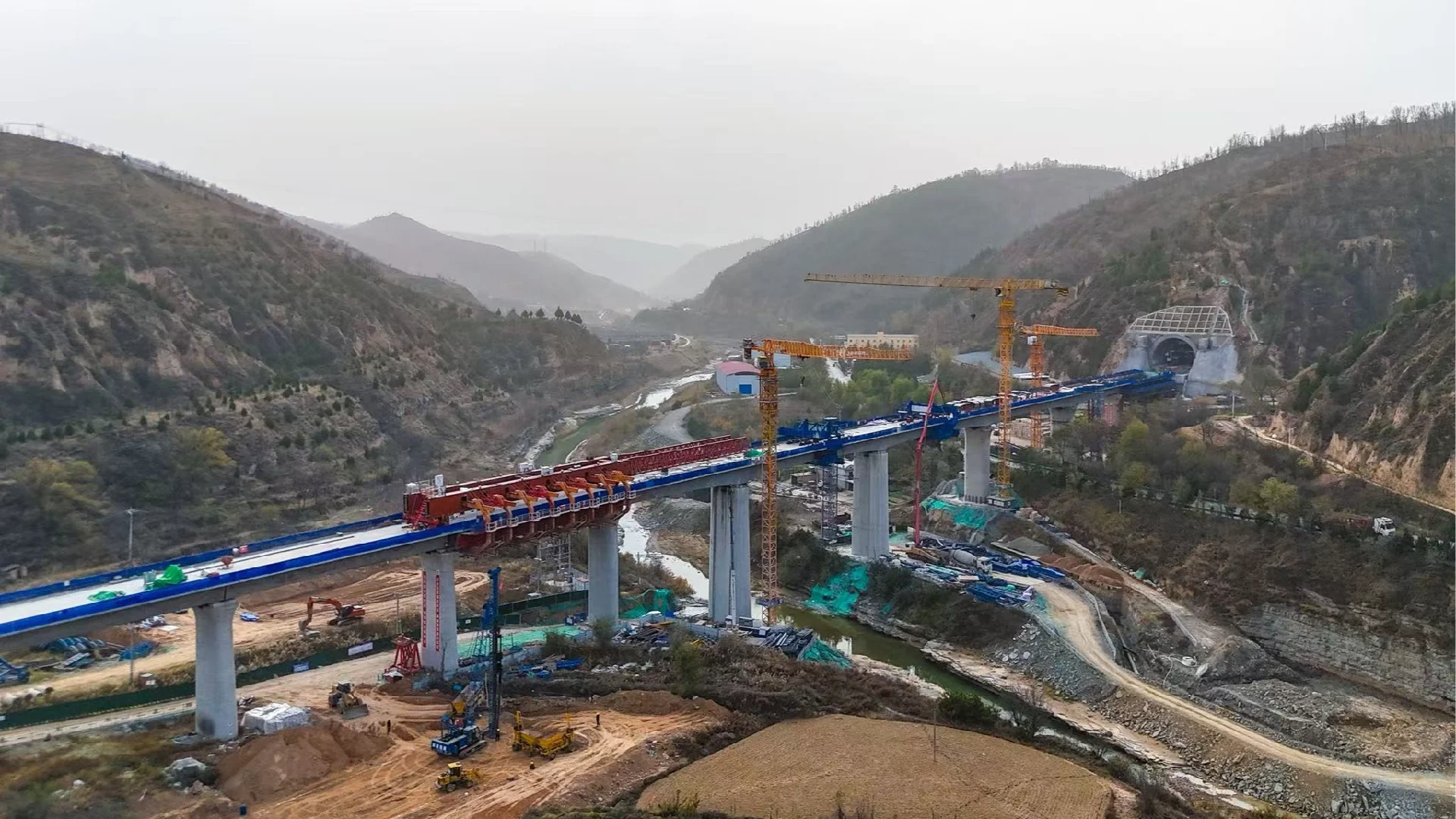
A significant milestone has been reached in northwest China with the successful joining of the Qingjian River Bridge. This critical structure is part of the Yan’an-Yulin high-speed railway, a project poised to dramatically improve transportation and economic ties across the region. The completion of this bridge, located in the challenging terrain of Shaanxi Province, highlights innovative engineering solutions and their impact on modern infrastructure development. This advancement is more than just a bridge; it’s a symbol of progress and a key component in China’s expanding high-speed rail network.
The Engineering Challenge of the Qingjian River Bridge
The Qingjian River Bridge, spanning 670.55 meters across the Qingjian River, presented a formidable engineering task. Situated in the rugged loess landscape of northern Shaanxi, the area is known for its complex geological conditions and difficult terrain along the riverbanks. These factors demanded specialized construction methods and careful planning to ensure both the structural integrity of the bridge and the safety of the construction process.
Overcoming Geological Hurdles
Building in the loess landscape required specific approaches to foundation work. The project team employed a vertical excavation method for the bridge’s pile-cap foundations. This technique, supported by steel sheet piles, allowed for stable construction in the challenging soil conditions. Furthermore, the piers and abutments were constructed from the bottom up on slopes. This method was crucial for effectively preventing and mitigating potential geological risks associated with the unstable terrain.
Advanced Construction Techniques
The main sections of the bridge that cross the river and roads utilized continuous girders. These were built using the balanced cantilever method. This sophisticated technique involves casting concrete segments in place using movable formwork. It requires extremely precise coordination among construction teams and rigorous safety management protocols. The successful application of this method on the Qingjian River Bridge demonstrates a high level of technical expertise and project execution.
Digital Integration in Construction
To guarantee the highest standards of safety and quality, the project incorporated advanced digital monitoring systems. These systems provided real-time oversight throughout the construction process. Concrete quality was monitored continuously at batching plants, ensuring that materials met strict specifications. Remote video surveillance offered constant visual checks on critical areas of the construction site.
Full-Process Traceability and Monitoring
These digital tools enabled full-process traceability, meaning every step of the construction could be tracked and documented. From the initial production of concrete to the complex stages of continuous-girder construction, key performance indicators were monitored in real-time. This level of oversight allows for immediate identification and correction of any potential issues, contributing significantly to the project’s success and the long-term reliability of the bridge.
The Yan’an-Yulin High-Speed Railway: A Network Connector
The Qingjian River Bridge is a vital part of the larger Yan’an-Yulin high-speed railway. This railway line is a significant component of China’s national high-speed rail network plan, specifically forming a key section of the Baotou-Yinchuan-Haikou railway link. This strategic connection is part of a broader vision for “eight vertical lines running north-south and eight horizontal lines running east-west” across the country.
Regional Impact and Connectivity
Stretching 238.7 kilometers through northern Shaanxi, the Yan’an-Yulin line is designed for trains capable of reaching speeds up to 350 kilometers per hour. Once operational, it will serve as a crucial passenger transport link. It will connect western Inner Mongolia with northern Shaanxi, and further extend connections to the Central, Southwest, and South Central regions of China. This improved connectivity is expected to foster greater economic and social integration across these diverse areas.
Reduced Travel Times and Economic Growth
The operationalization of this high-speed railway will lead to substantial reductions in travel times. The journey between Yan’an and Yulin, for instance, is projected to take approximately one hour, a significant decrease from current travel durations. Similarly, travel between Xi’an and Yulin will be cut from around five hours to about two hours. These time savings will not only benefit passengers but also facilitate the efficient movement of goods, supporting regional economic development and creating new opportunities for businesses and communities.
The Broader Significance of High-Speed Rail Infrastructure
The development of high-speed rail networks like the Yan’an-Yulin line represents a forward-thinking approach to national infrastructure. These projects go beyond mere transportation; they are engines for economic growth, environmental sustainability, and improved quality of life. By connecting distant regions more effectively, high-speed rail encourages tourism, business investment, and cultural exchange.
Economic Development and Urbanization
High-speed rail lines often stimulate development around stations, leading to the growth of new commercial centers and residential areas. This can help to balance regional economic disparities and promote more sustainable patterns of urbanization. The increased accessibility provided by these lines can attract skilled labor and investment, further boosting local economies.
Environmental Considerations
Compared to other forms of long-distance travel, high-speed rail is generally more energy-efficient and produces lower carbon emissions per passenger mile. As countries look for ways to reduce their environmental footprint, investing in electric-powered high-speed rail offers a greener alternative to air and road travel. This aligns with global efforts to combat climate change and promote sustainable development.
Technological Advancement and Innovation
The construction and operation of high-speed rail systems push the boundaries of engineering and technology. Projects like the Qingjian River Bridge showcase the application of advanced materials, construction techniques, and digital management systems. This continuous innovation not only improves the efficiency and safety of current projects but also lays the groundwork for future advancements in transportation infrastructure worldwide.
Conclusion
The successful joining of the Qingjian River Bridge is a testament to the engineering prowess and strategic vision driving the expansion of China’s high-speed rail network. This critical infrastructure project not only overcomes significant geographical and geological challenges but also promises to revolutionize travel and commerce in northwest China. By drastically reducing travel times and enhancing regional connectivity, the Yan’an-Yulin high-speed railway will foster economic growth, improve accessibility, and contribute to the overall development of the region. As this network continues to expand, it underscores the transformative power of modern infrastructure in connecting communities and shaping a more integrated future.


Conversation
0 Comments