

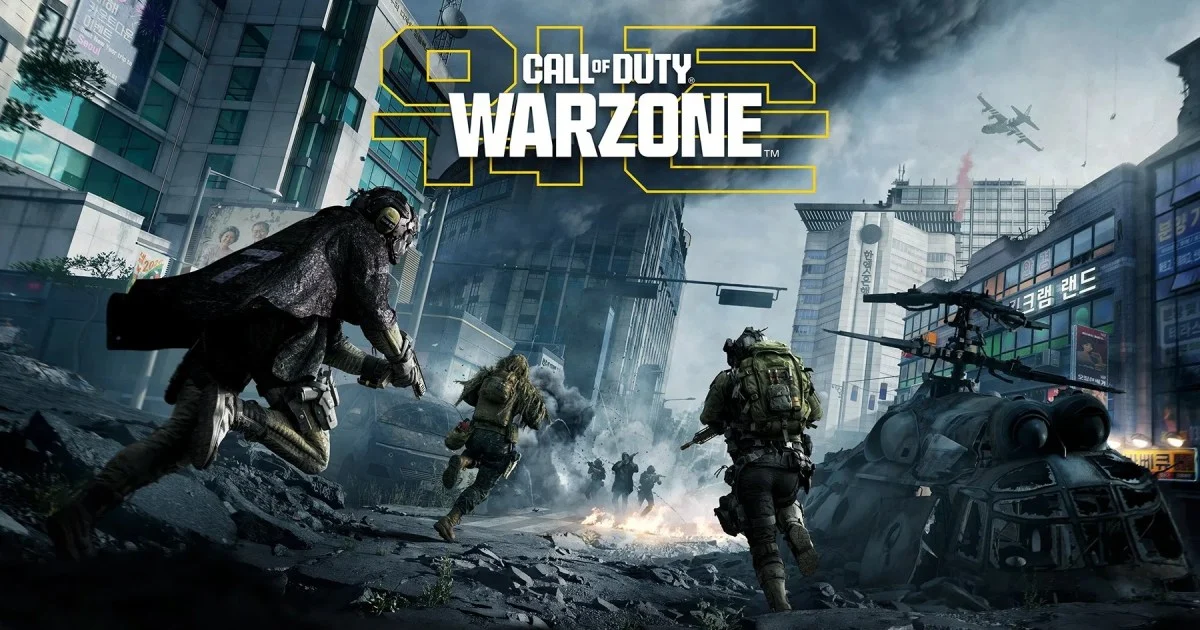
The final chapter for Call of Duty: Warzone on PlayStation 4 and Xbox One has closed. After a considerable run on these older consoles, Activision officially ended support for Warzone on these platforms on November 6, 2026. This decision marks the end of an era for many players who have spent years building their arsenals and progressing through the popular battle royale. The shutdown was initially announced in May, giving players a window of opportunity to continue playing until the end of Season 06 of Black Ops 7. Now, that deadline has passed, signaling a definitive end for Warzone on the PS4 and Xbox One.
This transition is a natural progression for a game that is deeply tied to the latest Call of Duty releases. As new titles like Modern Warfare 4 introduce updated engines, maps, and gameplay mechanics, older hardware often becomes unable to keep pace. The decision to move forward without supporting the PS4 and Xbox One is a reflection of this technological evolution. For those who have not yet upgraded their gaming systems, this news means they will no longer be able to access Warzone on their current consoles.
Carry Over Your Progress and Content
A significant concern for many long-time Warzone players is the fate of their accumulated in-game content. Years of dedication have resulted in a vast collection of unlocked weapons, cosmetic items, and battle pass rewards. Fortunately, Activision has confirmed that players can transfer their progression and items purchased with COD Points to newer platforms. This includes PlayStation 5, Xbox Series X|S, and PC. The key to this seamless transfer is using the same linked Activision account across all platforms.
However, the handling of unspent COD Points requires a bit more attention. While PlayStation players can move their balances from PS4 to PS5, and Xbox players can do the same from Xbox One to Xbox Series X|S, cross-platform transfers are not supported. This means that if you have unspent COD Points on your PlayStation account, they will remain within the PlayStation ecosystem. Similarly, Xbox players will find their points transferable only within the Xbox family of consoles. Switching between PlayStation and Xbox will not allow for the transfer of these in-game currency balances.
The Engine of Change: Why Older Consoles Are Left Behind
The primary reason behind Activision’s decision to cease Warzone support on the PS4 and Xbox One lies in the game’s evolving technical requirements. Warzone’s updates are intrinsically linked to the latest Call of Duty game releases. With Modern Warfare 4 now at the forefront, bringing its own engine, progression systems, and content, the game’s demands have outpaced the capabilities of the decade-old PS4 and Xbox One.
Modern Warfare 4, which launched alongside the new season of Warzone, was not developed with backward compatibility for these older consoles in mind. Consequently, Warzone, now integrated with Modern Warfare 4’s systems, cannot function on hardware that does not support the new game. This technological dependency is a common factor in the lifecycle of many modern video games, especially those that are constantly updated and expanded.
The Evolving Landscape of Call of Duty: Warzone
The shutdown of Call of Duty: Warzone on the PlayStation 4 and Xbox One is more than just the end of an era for a specific game on older hardware; it represents a broader trend in the gaming industry. As technology advances, game developers must make difficult decisions about where to focus their resources to deliver the best possible experience for the majority of their player base. This often means leaving behind older, less capable systems to make way for the innovations and enhancements that newer hardware enables.
Warzone’s journey on the PS4 and Xbox One has been remarkable. Launched in March 2020, it quickly became a dominant force in the battle royale genre. Its accessibility, free-to-play model, and integration with the mainline Call of Duty titles allowed it to attract millions of players. The game evolved significantly over its lifespan, with numerous map updates, weapon additions, and seasonal events that kept the experience fresh and engaging. The fact that it continued to be supported on consoles released in 2013 for so long is a testament to its enduring popularity and the developers’ efforts.
The Technical Demands of Modern Gaming
Modern video games, particularly live-service titles like Warzone, are increasingly demanding. They require powerful processors, substantial amounts of RAM, and advanced graphics capabilities to render detailed environments, complex character models, and smooth gameplay. The PS4 and Xbox One, while groundbreaking in their time, were built with the technology of the early 2010s. Their hardware limitations become more apparent as game development pushes the boundaries of what is graphically and technically possible.
The shift to the PlayStation 5 and Xbox Series X|S has brought about significant leaps in performance. These new consoles feature faster storage (SSDs), more powerful CPUs and GPUs, and support for advanced features like ray tracing and higher frame rates. These improvements are not just about making games look prettier; they enable more complex game mechanics, larger player counts, and more dynamic game worlds. For a game like Warzone, which thrives on large-scale battles and constant updates, these advancements are crucial for its continued development and competitiveness.
The Role of Modern Warfare 4
The release of Modern Warfare 4 has been a pivotal moment for the Call of Duty franchise and, by extension, for Warzone. As mentioned, Warzone’s updates are now tied to this new title. This integration means that the content and features introduced in Modern Warfare 4 are directly influencing the Warzone experience. This approach allows for a more cohesive and streamlined development process, ensuring that the latest weapons, perks, and gameplay innovations are available to players across both the mainline game and the battle royale.
However, this tight integration also means that any game that is not compatible with Modern Warfare 4 will inevitably lose access to Warzone. The decision by Activision to not release Modern Warfare 4 on the PS4 and Xbox One was likely a strategic one, aimed at focusing development efforts on platforms that can fully support the game’s intended experience. This allows the developers to push the envelope without being constrained by the limitations of older hardware.
Player Migration and the Future of Warzone
The end of Warzone on the PS4 and Xbox One naturally leads to questions about player migration. Millions of players who have invested time and money into the game on these older consoles now face a decision: upgrade their hardware or find a new game. Activision’s efforts to facilitate the transfer of progress and purchased items are a clear attempt to retain as many players as possible within the Call of Duty ecosystem.
For players who can make the leap to a PS5, Xbox Series X|S, or PC, the transition should be relatively smooth, provided they use their existing Activision account. This ensures that their hard-earned unlocks and cosmetics are waiting for them on their new platform. This continuity is vital for maintaining player engagement and loyalty. The ability to carry over progress is a significant incentive for players to invest in the newer generation of consoles or to transition to PC gaming.
The Importance of the Activision Account
The Activision account serves as the central hub for player data across all Call of Duty titles and platforms. It is the digital identity that links a player’s achievements, purchases, and progression. In the context of Warzone’s cross-platform capabilities and the recent transition, this account becomes even more critical. It is the thread that connects a player’s past achievements to their future experiences on newer hardware.
Players who have not yet linked their accounts or are unsure about their account status are encouraged to visit the official Activision support website. Ensuring that their account is properly set up and linked to their chosen platform before attempting to play on a new system is essential. This proactive step can prevent potential issues and ensure a smooth transition.
Navigating the COD Points Transfer
The specifics of COD Points transfer warrant careful consideration. While in-game content and progression are generally transferable, the in-game currency itself has platform-specific limitations. This is a common practice in the gaming industry, often due to platform holder policies and payment processing differences.
For PlayStation users, moving from PS4 to PS5 is straightforward. The PlayStation Network handles the transfer of digital currency balances between generations of its consoles. Similarly, Microsoft facilitates the transfer of Xbox currency balances between the Xbox One and Xbox Series X|S. However, attempting to transfer COD Points from a PlayStation account to an Xbox account, or vice versa, is not possible. This means that any unspent COD Points on one platform will remain exclusive to that platform’s ecosystem. Players considering a platform switch should ideally spend any remaining COD Points on their current system before making the move, if possible, or be aware that they will need to repurchase them on their new platform.
The Broader Implications for the Gaming Industry
The discontinuation of Warzone on older consoles is a microcosm of the larger trends shaping the video game industry. As hardware capabilities advance, developers are increasingly able to create more immersive and complex gaming experiences. This necessitates a focus on newer, more powerful platforms to fully realize these ambitions.
The Lifecycle of Gaming Hardware
Consoles, like any technology, have a finite lifespan. The PS4 and Xbox One, released in 2013, have had an exceptionally long and successful run. However, the pace of technological innovation means that even these relatively recent consoles are now considered last-generation. The industry standard for new console releases has historically been around five to seven years, and the PS5 and Xbox Series X|S, launched in late 2020, are now entering their prime.
As the player base shifts towards newer hardware, developers naturally follow. Supporting older consoles requires maintaining separate development pipelines, optimizing game performance for less capable hardware, and potentially limiting the scope of new features. This can divert resources that could otherwise be used to innovate and improve the experience on current-generation platforms.
The Rise of Cross-Platform Play and Progression
Despite the challenges of supporting older hardware, the trend towards cross-platform play and progression has become a defining characteristic of modern gaming. Titles like Warzone have embraced this model, allowing players on different systems to compete and cooperate together. This not only expands the potential player pool but also offers players more flexibility in choosing how and where they play.
The ability to carry over progress across platforms is a crucial component of this cross-platform ecosystem. It ensures that players are not penalized for switching between PC, PlayStation, or Xbox, fostering a more inclusive and connected gaming community. Activision’s commitment to this aspect of Warzone’s transition is a positive sign for the future of cross-platform gaming.
The Free-to-Play Model and its Demands
Warzone’s free-to-play model has been instrumental in its widespread adoption. This model, however, relies on continuous content updates and engagement to drive in-game purchases and maintain a healthy player base. To achieve this, developers must constantly innovate and push the technical boundaries of the games.
This constant evolution is what makes supporting older hardware increasingly difficult. New graphical techniques, larger game worlds, and more sophisticated AI require hardware that can handle these demands. The decision to end Warzone support on the PS4 and Xbox One is, in part, a consequence of the free-to-play model’s inherent need for ongoing development and technological advancement.
Looking Ahead: The Future of Warzone and Call of Duty
The conclusion of Warzone on the PS4 and Xbox One is not an end, but a transition. It signifies the game’s move into its next phase, one that is fully aligned with the capabilities of current-generation hardware and the latest Call of Duty titles. Players who can make the upgrade will find a Warzone experience that is more robust, visually impressive, and feature-rich than ever before.
The integration with Modern Warfare 4 is expected to bring a wealth of new content and gameplay possibilities. Players can anticipate new weapons, operators, game modes, and potentially even significant map changes that leverage the power of the PS5, Xbox Series X|S, and PC. This ongoing evolution is what keeps games like Warzone relevant and exciting for years to come.
Embracing the New Generation
For players who have already upgraded or are considering it, the future of Warzone is bright. The enhanced performance of the new consoles allows for faster load times, smoother frame rates, and more detailed graphics. This translates to a more immersive and responsive gameplay experience, which is particularly important in a fast-paced battle royale where split-second decisions can mean the difference between victory and defeat.
The developers at Activision and its partner studios are now free to design content without the constraints of older hardware. This creative freedom can lead to more ambitious game design and a richer overall experience for players on the supported platforms. The focus will undoubtedly be on maximizing the potential of the PS5, Xbox Series X|S, and PC to deliver the definitive Warzone experience.
The Enduring Appeal of Call of Duty
The Call of Duty franchise has a long history of adapting to technological changes and maintaining its relevance. Warzone, as a free-to-play component, has been a key part of this strategy, attracting a new generation of players and keeping existing fans engaged. The decision to sunset support for older consoles, while perhaps disappointing for some, is a necessary step to ensure the franchise’s continued success and innovation.
As the gaming landscape continues to evolve, with new technologies and player expectations constantly emerging, the ability of franchises like Call of Duty to adapt will be paramount. Warzone’s journey from its launch on the PS4 and Xbox One to its current state on newer platforms is a clear demonstration of this adaptability. The game’s future, tied to the latest Call of Duty releases, promises continued excitement and engagement for its dedicated player base.
Conclusion
The finality of Call of Duty: Warzone’s departure from the PlayStation 4 and Xbox One marks a significant moment for many gamers. This transition, while signaling the end of an era for those on older hardware, is a necessary step in the evolution of the game and the broader Call of Duty franchise. Activision’s efforts to allow for the transfer of progression and purchased content aim to ease this shift for players, encouraging them to embrace the enhanced experiences offered by the PlayStation 5, Xbox Series X|S, and PC.
The technical demands of modern gaming, coupled with the continuous development cycle of live-service titles like Warzone, necessitate a focus on current-generation platforms. By moving forward without the constraints of older hardware, developers can unlock new possibilities, delivering more immersive graphics, smoother gameplay, and innovative features. While the PS4 and Xbox One have served players well for many years, their technological limitations are no longer compatible with the direction of games like Warzone, which are now intrinsically linked to the advancements brought by Modern Warfare 4. The future of Warzone is firmly set on newer systems, promising a more dynamic and engaging battle royale experience for all who make the upgrade.



Conversation
0 Comments