

AMD’s Zen 6 Architecture: A Deep Dive into Enhanced Performance and Core Density
AMD’s latest advancements in processor architecture, particularly with the upcoming Zen 6 and Zen 6c designs, promise a significant leap forward in computing power. These new architectures are set to redefine performance benchmarks, especially within the server market, by packing more cores into each chiplet and boosting instructions per clock (IPC). This evolution is not just about raw speed; it’s about smarter design that allows for greater efficiency and capability. For PC enthusiasts and professionals alike, understanding these architectural shifts is key to anticipating the next generation of powerful computing hardware.
The core of this innovation lies in AMD’s chiplet design. Instead of building a single, monolithic processor, AMD creates smaller, specialized chiplets that are then interconnected. This approach offers several advantages, including improved manufacturing yields and the flexibility to mix and match different types of chiplets to create processors tailored for specific tasks. With Zen 6, AMD is pushing this concept further, dramatically increasing the core count within each chiplet. This means that future processors, whether for high-end servers or powerful desktop computers, can offer substantially more processing power without necessarily increasing the physical size or complexity of the overall chip.
Understanding the Zen 6 and Zen 6c Architectures
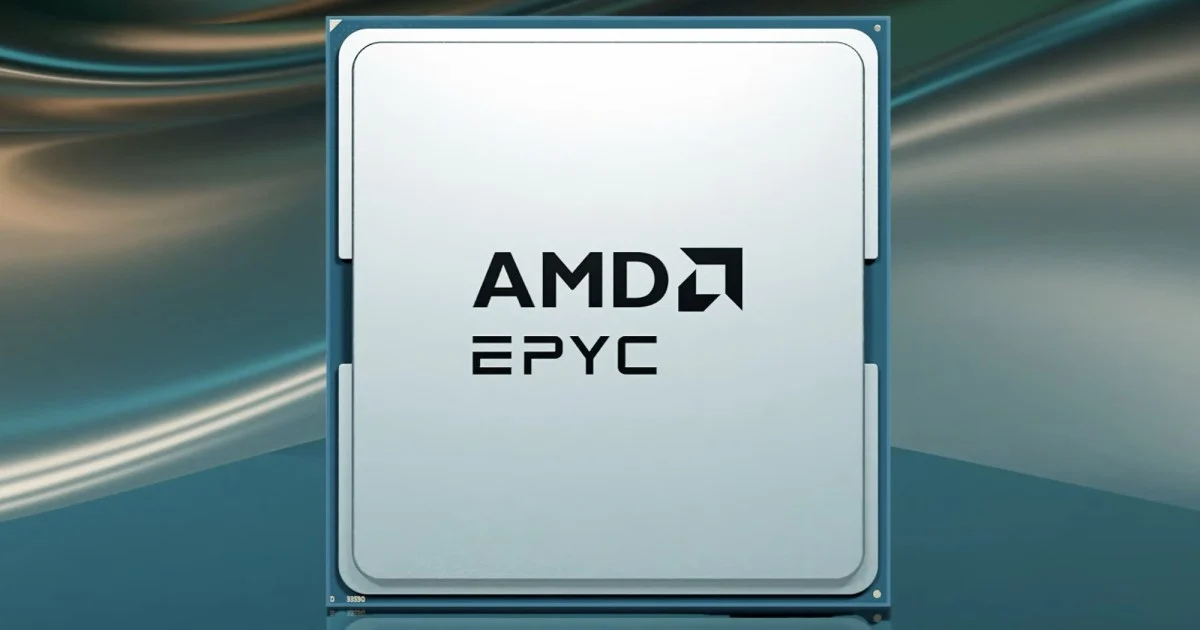
AMD has detailed its sixth-generation EPYC 9006 “Venice” server processors, which are built upon the new Zen 6 and Zen 6c architectures. These architectures represent a significant evolution from their predecessors, focusing on both increased core density and improved per-core performance. The company claims an average increase of 27% in instructions per clock (IPC) over Zen 5 in specific server workloads. While this figure was achieved under controlled conditions, comparing 16 active Zen 6c cores on a single chiplet against 16 Zen 5 cores spread across two chiplets at the same clock speed, the underlying improvements are undeniable. Even in broader enterprise and cloud scenarios, AMD reports healthy gains of around 20%.
The most striking change is the increase in core count per chiplet. A standard Zen 6 chiplet now houses 12 cores, a substantial jump from the previous generation’s eight cores. Alongside this, the shared L3 cache has also grown, increasing from 32MB to 48MB. This provides each core with more immediate access to data, reducing latency and speeding up operations. The Zen 6c variant takes this density even further, expanding from 16 cores to an impressive 32 cores within a single chiplet. The L3 cache for Zen 6c chiplets sees an even more dramatic increase, rising from 32MB to 128MB. This ensures that each of the 32 cores has ample cache, with every core in either Zen 6 or Zen 6c benefiting from 4MB of L3 cache.
Beyond core counts and cache sizes, AMD has made several architectural refinements. The new designs allow cores to hold more instructions in flight, meaning they can prepare and process more tasks simultaneously. Improvements to branch prediction, which helps the processor anticipate the flow of program execution, and integer scheduling, which optimizes the handling of arithmetic operations, further contribute to overall efficiency. The Zen 6 architecture also introduces enhanced support for advanced instruction sets. It now includes full AVX-512 FP16 support, which is beneficial for tasks involving floating-point calculations, such as in scientific simulations and machine learning. New Bit Matrix Multiply instructions are designed to accelerate matrix operations, crucial for AI and deep learning workloads. Additionally, the architecture features four VNNI-INT8 pipelines, doubling the previous count, which significantly boosts performance for integer-based neural network inference. Both Zen 6 and Zen 6c maintain the capability for two threads per core, a feature known as simultaneous multithreading (SMT), and run the same instruction set, ensuring compatibility and broad software support.
AMD has tuned these architectures for different purposes. Zen 6 is optimized for higher clock speeds, aiming for maximum performance in applications that benefit from rapid execution. In contrast, Zen 6c is designed to maximize core density, fitting as many cores as possible into a given physical space. This allows for a wider range of processor configurations to meet diverse market needs.
EPYC Venice Server Processors: A New Era of Server Computing
The EPYC 9006 “Venice” server processors represent the practical application of the Zen 6 and Zen 6c architectures. These processors are engineered to deliver unprecedented levels of performance and scalability for data centers, cloud computing environments, and high-performance computing (HPC) applications. With support for up to eight chiplets, the Venice platform can be configured to offer an astonishing number of cores. Depending on the specific configuration, users can opt for processors with up to 96 Zen 6 cores or an even more staggering 256 Zen 6c cores. This sheer core count enables servers to handle massive parallel workloads, such as complex simulations, large-scale data analytics, and extensive virtual machine deployments, with remarkable efficiency.
High-frequency models within the Venice lineup are capable of reaching clock speeds of up to 5.3GHz. This high clock speed, combined with the architectural improvements of Zen 6, translates to faster processing of individual tasks and improved responsiveness for applications that are not heavily parallelized. The platform also supports the latest I/O and memory technologies, ensuring that the processors are not bottlenecked by their supporting infrastructure. This includes support for PCIe 6.0, which offers double the bandwidth of PCIe 5.0, enabling faster data transfer rates for high-speed storage devices and network adapters. Furthermore, the Venice platform supports DDR5 MRDIMM memory at speeds up to 12,800 MT/s. This high memory bandwidth is critical for memory-intensive applications, allowing the CPU to access data more quickly and reducing the time spent waiting for memory operations to complete.
The increased core density and performance of the EPYC Venice processors have profound implications for the server market. Data centers can potentially achieve higher performance per rack unit, leading to reduced physical footprint, lower power consumption, and decreased operational costs. For cloud service providers, this means the ability to offer more powerful and cost-effective virtual instances to their customers. In HPC environments, the massive core counts and improved IPC can accelerate scientific research, financial modeling, and complex engineering simulations, potentially shortening discovery cycles and enabling more ambitious projects. The architectural enhancements, such as AVX-512 FP16 and Bit Matrix Multiply instructions, also position these processors favorably for the growing demands of artificial intelligence and machine learning workloads, allowing for faster training and inference of complex models directly on the server.
Potential Impact on Desktop Ryzen Processors
While the initial details of Zen 6 and Zen 6c are focused on AMD’s EPYC server processors, the implications for their consumer-grade Ryzen desktop CPUs are significant. The development of the 12-core Zen 6 chiplet is particularly noteworthy for desktop users. This increased core density within a single chiplet could allow AMD to introduce Ryzen processors with more cores without necessarily needing to increase the number of chiplets used in a CPU package. For example, a future high-end Ryzen processor could potentially feature more than the current maximum of 16 cores by utilizing a single 12-core chiplet alongside other specialized chiplets, or by employing multiple 12-core chiplets in configurations that were previously not feasible or cost-effective.
This architectural shift could lead to desktop CPUs that offer substantially more multi-threaded performance, benefiting users who engage in demanding tasks such as video editing, 3D rendering, software development, and high-fidelity gaming. The improved IPC of Zen 6 would also translate to better single-threaded performance, which is still critical for many applications and games, leading to a more responsive and fluid user experience across a wider range of workloads. The increased L3 cache on the Zen 6 chiplets could also provide a performance boost in cache-sensitive applications, further enhancing overall system speed.
However, AMD has not yet confirmed how the Zen 6 architecture will be specifically implemented in its consumer Ryzen processors, nor has it provided any release dates or specific performance data for these future desktop chips. This means that for consumers planning an immediate PC upgrade, it would be prudent not to postpone purchases solely in anticipation of Zen 6 Ryzen processors until AMD offers a clearer timeline. The transition to new architectures often involves a period of market adjustment, and it may take time for Zen 6-based Ryzen CPUs to become widely available and for their performance benefits to be fully realized and benchmarked in consumer-relevant scenarios. Nevertheless, the advancements seen in Zen 6 and Zen 6c lay a strong foundation for the next generation of powerful and efficient desktop processors from AMD.
Architectural Enhancements and Performance Gains
The performance improvements attributed to the Zen 6 architecture are not solely a result of increased core counts. AMD has implemented several key architectural enhancements that contribute to the significant gains in instructions per clock (IPC). These refinements target various aspects of the processor’s operation, from how it fetches and decodes instructions to how it executes them and manages data.
One of the primary areas of improvement is the instruction pipeline. The Zen 6 architecture allows cores to keep more instructions in flight. This means that the processor can have a larger number of instructions being worked on simultaneously at different stages of execution. By keeping the pipeline fuller, the processor can better hide latencies associated with memory access or other operations, leading to higher throughput and faster overall execution. This is akin to a factory assembly line where more items are being processed at once, increasing the rate at which finished goods are produced.
Branch prediction has also been a focus of optimization. In modern processors, branch prediction is crucial for maintaining high performance. When a program encounters a conditional statement (like an “if” statement), the processor needs to guess which path of execution will be taken. Accurate branch prediction allows the processor to speculatively execute instructions along the predicted path, avoiding stalls if the prediction is correct. If the prediction is wrong, the speculative work is discarded, and the processor corrects its course. Zen 6 features revised branch prediction algorithms that are more accurate, reducing the number of mispredictions and the associated performance penalties. This leads to a smoother and faster execution flow for programs with complex conditional logic.
Integer scheduling has also seen improvements. Integer operations, such as addition, subtraction, and logical operations, are fundamental to most computing tasks. Efficient scheduling of these operations ensures that the processor’s execution units are utilized as effectively as possible. The revised integer scheduler in Zen 6 can better manage and prioritize these operations, minimizing idle time and maximizing the rate at which integer instructions are completed. This contributes to the overall IPC gains, particularly in workloads that are heavily reliant on integer arithmetic.
Furthermore, the introduction of new instruction set support plays a vital role in accelerating specific types of workloads. The full AVX-512 FP16 support is a significant addition for applications that deal with high-precision floating-point numbers. This instruction set extension can perform operations on 16-bit floating-point numbers much faster than previous generations, which is beneficial for graphics processing, scientific simulations, and certain machine learning tasks. The new Bit Matrix Multiply instructions are specifically designed to speed up matrix multiplication, a core operation in deep learning and artificial intelligence. By providing specialized hardware for these operations, Zen 6 can dramatically accelerate the training and inference of AI models. The inclusion of four VNNI-INT8 pipelines, compared to two in previous architectures, further boosts performance for neural network inference tasks that utilize 8-bit integers, a common format for efficient AI processing. These combined architectural enhancements ensure that Zen 6 processors are not only faster in general-purpose computing but also exceptionally capable in specialized, computationally intensive domains.
The Role of Chiplet Design in AMD’s Strategy
AMD’s strategic reliance on chiplet design has been a cornerstone of its success in recent years, and the Zen 6 architecture continues this trend. This modular approach to processor design involves creating smaller, specialized silicon dies (chiplets) that are then interconnected on a single package. This contrasts with traditional monolithic designs, where an entire processor is fabricated as a single piece of silicon. The chiplet strategy offers several compelling advantages that drive AMD’s innovation and market competitiveness.
One of the most significant benefits of chiplet design is improved manufacturing efficiency and yield. Fabricating large, complex monolithic chips is challenging, and a single defect on the die can render the entire chip unusable, leading to low yields and high costs. By breaking down the processor into smaller chiplets, AMD can use smaller, more manageable pieces of silicon. This reduces the probability of defects on any given chiplet, leading to higher yields and lower manufacturing costs. Furthermore, AMD can use different manufacturing processes for different chiplets. For instance, high-performance core chiplets might be manufactured on a leading-edge process node, while I/O chiplets, which are less sensitive to process technology, could be made on a more mature and cost-effective node. This allows AMD to optimize cost and performance for each component of the processor.
Flexibility and scalability are also key advantages. The chiplet approach allows AMD to create a wide range of processors by mixing and matching different types and numbers of chiplets. For the EPYC Venice processors, this means AMD can offer configurations with varying core counts (from 96 Zen 6 cores to 256 Zen 6c cores) and different cache sizes, all built upon the same fundamental chiplet designs. This modularity enables AMD to quickly adapt its product offerings to meet diverse market demands, from high-density servers requiring many cores to specialized accelerators needing specific I/O capabilities. It also facilitates easier upgrades and refreshes, as new generations of chiplets can be introduced and integrated into existing platforms with less redesign effort.
The increased core density within Zen 6 chiplets, as discussed earlier, is a direct outcome of this refined chiplet strategy. By packing 12 cores into a standard Zen 6 chiplet and 32 cores into a Zen 6c chiplet, AMD is pushing the boundaries of what’s possible within a single piece of silicon. This allows for more powerful processors without necessarily increasing the physical footprint of the CPU package or the complexity of the interconnect between chiplets. The larger L3 cache integrated into these denser chiplets further enhances their performance, providing cores with faster access to frequently used data.
Moreover, the chiplet design allows for better thermal management. By distributing the heat-generating components across multiple smaller chiplets rather than concentrating them in one large die, AMD can potentially achieve more efficient heat dissipation. This is crucial for maintaining high clock speeds and preventing thermal throttling, especially in high-performance server and desktop processors. The interconnect technology used to link these chiplets, such as AMD’s Infinity Fabric, is also critical and has been continuously improved to provide high bandwidth and low latency communication between the chiplets, ensuring they function as a cohesive unit. This strategic use of chiplet design is fundamental to AMD’s ability to deliver increasingly powerful, efficient, and scalable processors across its entire product portfolio.
Future Outlook and Potential Applications
The advancements introduced with AMD’s Zen 6 architecture signal a significant shift in computing capabilities, with far-reaching implications for various sectors. The combination of increased core density, higher IPC, and specialized instruction set support positions these processors to tackle increasingly complex computational challenges.
In the server and data center space, the EPYC Venice processors with their massive core counts and enhanced performance are poised to drive the next wave of cloud computing infrastructure. This will enable cloud providers to offer more powerful and cost-effective services, supporting everything from large-scale web hosting and big data analytics to advanced AI model training and deployment. The efficiency gains also mean that data centers can potentially reduce their physical footprint and energy consumption, contributing to more sustainable computing practices. For enterprise IT, this translates to the ability to run more demanding workloads in-house, such as complex simulations for engineering, financial modeling, and scientific research, with greater speed and efficiency.
For the high-performance computing (HPC) sector, Zen 6 offers the potential to accelerate scientific discovery. Researchers in fields like climate modeling, genomics, drug discovery, and materials science rely on immense computational power. The substantial increase in processing cores and the architectural improvements in Zen 6 can significantly shorten the time required for complex simulations and data analysis, potentially leading to faster breakthroughs and innovations. The specialized instructions for AI and matrix operations will also be invaluable for researchers integrating machine learning into their workflows.
On the consumer side, while the timeline for Zen 6 in Ryzen desktop processors remains uncertain, the architectural groundwork laid by Zen 6 and Zen 6c is promising. Future Ryzen CPUs could offer a substantial boost in multi-threaded performance, making high-end content creation tasks like 8K video editing, professional 3D rendering, and complex software compilation more accessible and efficient for a wider range of users. Gamers could also benefit from improved frame rates and smoother gameplay, particularly in CPU-intensive titles, as well as better performance in background tasks while gaming. The enhanced IPC will ensure a more responsive overall computing experience, even for everyday tasks.
The continued evolution of AMD’s chiplet strategy, coupled with architectural innovations like Zen 6, suggests a future where processors are increasingly modular, scalable, and specialized. This approach allows for greater customization and optimization for specific workloads, moving beyond a one-size-fits-all model. As AI and machine learning continue to permeate all aspects of computing, processors with dedicated hardware acceleration for these tasks, like those found in Zen 6, will become increasingly important. AMD’s trajectory with Zen 6 indicates a strong commitment to pushing the boundaries of performance and efficiency, setting the stage for a new era of computing power across all market segments.
Conclusion
AMD’s Zen 6 architecture represents a significant stride forward in processor design, particularly evident in the EPYC 9006 “Venice” server processors. By dramatically increasing core density within chiplets and enhancing instructions per clock (IPC), AMD is delivering substantial performance gains. The architectural refinements, including improved branch prediction, integer scheduling, and the introduction of advanced instruction sets like AVX-512 FP16 and Bit Matrix Multiply, further bolster processing capabilities. This focus on both raw power and efficiency, driven by AMD’s successful chiplet strategy, promises to reshape the landscape of server computing, HPC, and potentially future desktop processors. While the exact implementation for consumer Ryzen chips is still under wraps, the technological advancements showcased by Zen 6 lay a strong foundation for more powerful and capable computing experiences across the board.



Conversation
0 Comments