

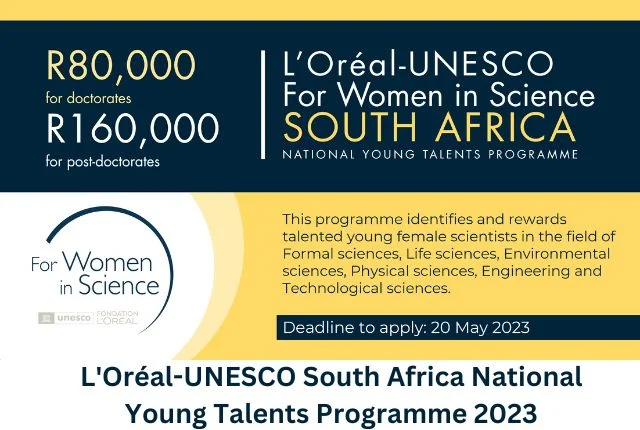
L’Oréal-UNESCO South Africa National Young Talents Programme: A Gateway for Women in Science
The pursuit of scientific knowledge is a journey that requires dedication, innovation, and support. For women in South Africa, this path is becoming increasingly accessible and recognized, thanks to initiatives like the L’Oréal-UNESCO For Women in Science South Africa National Young Talents Programme. This program, now in its fifth edition, serves as a vital platform to empower and celebrate young African women making significant contributions to various scientific fields. It aims to foster a new generation of female leaders in science by providing not only financial support but also crucial leadership and communication training.
The program specifically targets doctoral and postdoctoral students who are South African nationals and are actively engaged in research within South Africa. By focusing on these critical stages of a scientific career, the L’Oréal-UNESCO program helps to solidify the foundations of promising research projects and equip young scientists with the skills needed to advance their careers and inspire others. This analysis will explore the program’s eligibility criteria, the application process, the selection standards, and the valuable awards offered, providing a comprehensive guide for potential applicants.
Key Takeaways
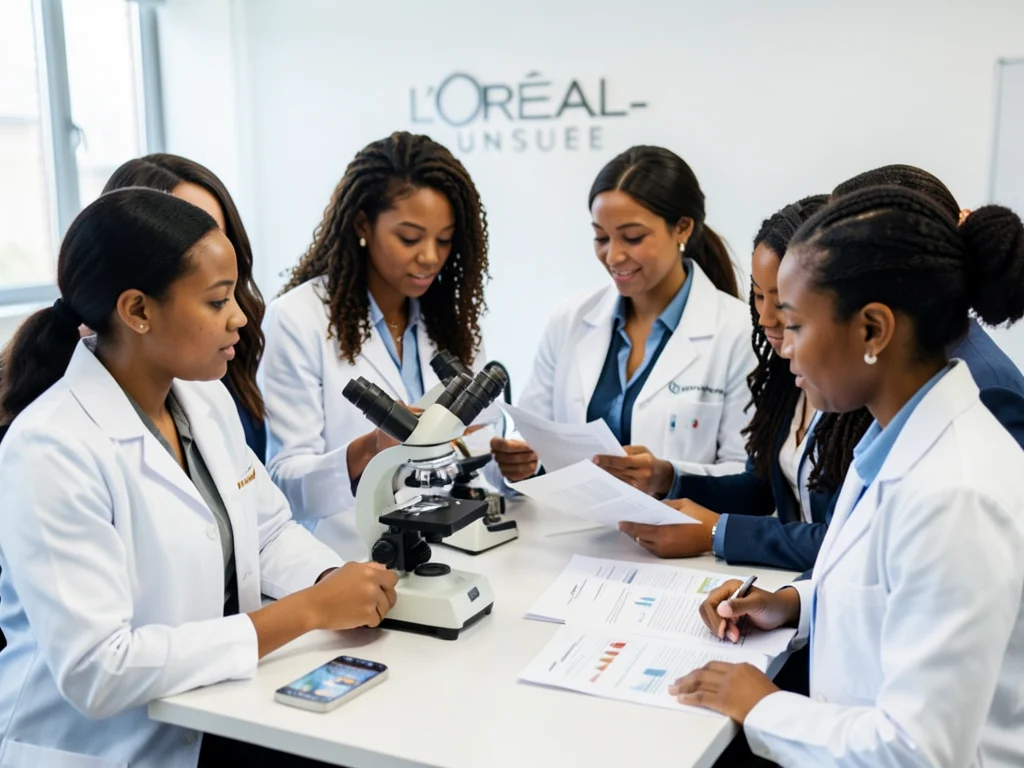
- The L’Oréal-UNESCO For Women in Science South Africa National Young Talents Programme supports doctoral and postdoctoral female students in South Africa.
- Eligibility requires South African nationality, research conducted within South Africa, and specific academic progress for doctoral candidates or doctorate attainment for postdocs.
- The program offers research grants of R80,000 for doctoral students and R160,000 for postdoctoral fellows.
- Beyond financial aid, recipients receive crucial leadership, management, negotiation, and communication training to foster career advancement.
Understanding the L’Oréal-UNESCO For Women in Science Programme
The L’Oréal-UNESCO For Women in Science initiative is a global movement dedicated to recognizing and supporting women in science. Established in 1998, it has since expanded to numerous countries, including South Africa, with the aim of correcting the gender imbalance in scientific research and careers. The South African National Young Talents Programme is a key component of this global effort, tailored to address the specific needs and opportunities within the country. It champions women in formal sciences, life sciences, environmental sciences, physical sciences, engineering, and technological sciences, encouraging them to pursue their research with passion and determination.
The program’s commitment extends beyond financial aid. It acknowledges that scientific success also depends on strong communication, leadership, and management skills. Therefore, recipients are provided with specialized training designed to enhance these abilities, preparing them for greater influence and impact within the scientific community and beyond. This holistic approach ensures that the young talents nurtured by the program are not only excellent researchers but also effective communicators and future leaders.
Eligibility Criteria for Aspiring Scientists
To ensure that the program supports those who can benefit most and who are deeply invested in South African research, specific eligibility criteria are in place for both doctoral and postdoctoral candidates. These requirements are designed to identify individuals with a strong academic background, a commitment to research within the country, and a clear potential for future scientific achievement.
Doctoral Students
For doctoral candidates, the program seeks to support students who are well into their research journey and demonstrating significant progress. The key requirements include:
- Nationality: Applicants must hold South African nationality. This ensures the program directly benefits the country’s scientific talent pool.
- Enrollment and Research Location: Candidates must be officially enrolled at a South African university. Furthermore, their research must be conducted in a laboratory located within one of South Africa’s nine provinces. This geographical requirement emphasizes the program’s focus on strengthening local research infrastructure and capabilities.
- Academic Standing: A minimum requirement is that the student must be in at least their second year of their thesis work. This ensures that applicants have a substantial research project underway and can demonstrate progress and a clear research direction.
- Field of Research: The research must fall within the scientific fields recognized by the program. These include formal sciences, life sciences, environmental sciences, physical sciences, engineering, and technological sciences. This broad scope allows for diverse research projects to be considered, reflecting the wide-ranging nature of scientific inquiry.
Postdoctoral Candidates
Postdoctoral researchers represent the next stage of scientific development, often leading independent research and mentoring junior scientists. The eligibility criteria for this group are:
- Nationality: Similar to doctoral students, applicants must be South African nationals.
- Research Institution: Candidates must be enrolled in a postdoctoral program at a research laboratory or an institution situated within one of South Africa’s nine provinces. This reinforces the program’s commitment to fostering research excellence within the nation.
- Doctorate Attainment: Applicants must have successfully obtained a doctorate degree. The research area for their doctorate should align with the scientific fields covered by the program.
- Current Research Focus: The postdoctoral research itself must be conducted in one of the eligible scientific fields.
- Timing of Postdoctoral Start: A crucial requirement is that the postdoctoral research must have commenced before the official opening date of the call for applications. This ensures that the program supports ongoing, established postdoctoral work rather than new, uninitiated projects.
Adherence to these criteria is the first step for any aspiring applicant to be considered for the L’Oréal-UNESCO South Africa National Young Talents Programme.
The Application and Nomination Process
Submitting an application or nominating a deserving candidate for the L’Oréal-UNESCO South Africa National Young Talents Programme involves a structured online procedure. The program aims to make this process as clear and accessible as possible, while also ensuring that all necessary information is provided for thorough evaluation.
Online Application Submission
To initiate the application or nomination process, individuals must first log in to their account on the program’s official platform. This online portal is designed to guide users through the necessary steps, from creating an account to completing and submitting the application form. It is important for applicants to ensure they have all required documents and information ready before starting the online submission.
For those who encounter difficulties accessing the application form after logging in, the program provides a dedicated section in its Frequently Asked Questions (FAQ) for assistance. This resource offers step-by-step guidance on how to navigate the platform and resolve common technical issues. The program encourages applicants to consult the FAQ section before reaching out for direct support, as many common queries are addressed there.
Nomination by Institutions
While individual applications are common, the program also allows for nominations. Universities and research institutions are encouraged to identify and put forward their most promising young female scientists for consideration. This collaborative approach helps to ensure that exceptional talent is not overlooked and that the program receives applications from a diverse range of high-caliber candidates. Institutional nominations often carry weight, as they are typically supported by endorsements from leading academics and researchers within the nominating institution.
Essential Information for Application
Regardless of whether one is applying directly or being nominated, the application typically requires detailed information about the candidate and their research. This usually includes:
- Personal and Academic Details: Full name, contact information, nationality, academic qualifications, and current institutional affiliation.
- Research Project Description: A clear and concise outline of the research project, including its objectives, methodology, expected outcomes, and scientific significance.
- Curriculum Vitae (CV): A comprehensive CV detailing academic achievements, publications, conference presentations, awards, and any relevant work experience.
- Letters of Recommendation: Typically, one or more letters of recommendation from supervisors, mentors, or senior academics who can attest to the candidate’s scientific abilities and potential.
- Proof of Enrollment/Affiliation: Documentation confirming enrollment in a doctoral or postdoctoral program and affiliation with a South African research institution.
The program’s online platform will specify the exact documents and information required for the application. It is crucial for applicants to carefully review these requirements and submit all necessary materials by the stated deadline.
Selection Criteria: Identifying Excellence in Science
The L’Oréal-UNESCO South Africa National Young Talents Programme is highly competitive, and the selection process is rigorous. The evaluation committee looks for candidates who not only demonstrate exceptional scientific aptitude but also possess the potential to become leaders and role models in their respective fields. The selection criteria are designed to identify research that is both scientifically sound and has the potential for significant impact.

Scientific Excellence of the Research Project
This is arguably the most critical criterion. The evaluation committee assesses the originality, innovation, and scientific merit of the proposed or ongoing research. Key aspects considered include:
- Novelty and Innovation: Does the research address a new question or approach an existing problem in a novel way? Is it pushing the boundaries of current knowledge?
- Scientific Rigor: Is the research methodology sound? Are the experimental designs appropriate and robust?
- Potential Impact: What is the potential contribution of this research to its scientific field? Could it lead to significant discoveries, technological advancements, or solutions to societal challenges?
- Feasibility: Is the research project realistic and achievable within the given timeframe and resources?
The project’s alignment with the program’s focus on addressing national and global scientific challenges is also taken into account.
Quality of the Application
Beyond the scientific content, the clarity, organization, and persuasiveness of the application itself are crucial. A high-quality application demonstrates:
- Clarity of Communication: Is the research project explained in a clear, concise, and understandable manner, even to those outside the immediate sub-field?
- Logical Structure: Is the application well-organized, with a logical flow of information?
- Attention to Detail: Have all instructions been followed, and have all required sections been completed accurately and thoroughly?
- Professional Presentation: Is the application free from grammatical errors and typos? Does it present a professional image of the candidate?
A well-crafted application reflects the candidate’s ability to communicate their scientific work effectively, a skill highly valued by the program.
Ability to Communicate and Promote Science
The L’Oréal-UNESCO program is not just about supporting research; it’s about fostering scientists who can inspire and engage with the wider community. Therefore, candidates are assessed on their potential to communicate and promote science. This includes:
- Public Speaking Skills: The ability to articulate complex scientific ideas to diverse audiences.
- Engagement Potential: A demonstrated interest or aptitude for public outreach, science education, or advocating for science.
- Leadership Qualities: Evidence of leadership potential, teamwork, and the ability to inspire others.
- Commitment to the Field: A clear passion for science and a dedication to advancing scientific knowledge and its applications.
The leadership, management, negotiation, and communication training provided to awardees is specifically designed to enhance these abilities further, underscoring their importance in the selection process.
Awards and Benefits: Investing in Future Leaders
The L’Oréal-UNESCO South Africa National Young Talents Programme offers substantial awards and benefits designed to significantly advance the careers of its recipients. These awards are not merely financial grants; they represent a comprehensive investment in the professional development of promising young women in science.
Research Grants
The program provides significant financial support in the form of research grants. These grants are intended to help cover the costs associated with conducting research, such as purchasing equipment, accessing specialized facilities, attending conferences, and covering living expenses during the research period. The amounts vary depending on the candidate’s academic level:
- Doctoral Students: Three research grants are awarded to doctoral candidates, with each endowment amounting to R80,000. This funding can be instrumental in enabling students to focus on their research without the immediate pressure of securing additional funding for essential research needs.
- Postdoctoral Candidates: Three research grants are available for postdoctoral fellows, with each endowment set at R160,000. This higher amount reflects the often more extensive and resource-intensive nature of postdoctoral research projects and the greater responsibilities typically held by postdocs.
These grants are a critical component of the program, directly supporting the continuation and advancement of groundbreaking scientific work.
Leadership and Communication Training

Beyond the financial awards, a cornerstone of the L’Oréal-UNESCO program is the provision of specialized training. Recipients participate in workshops and programs focused on developing essential soft skills that are vital for career progression in any field, especially in science where communication and leadership are paramount. The training covers:
- Leadership: Developing skills to guide teams, manage projects, and take on leadership roles within research institutions and beyond.
- Management: Enhancing project management capabilities, including planning, resource allocation, and effective execution of research initiatives.
- Negotiation: Equipping participants with the skills to negotiate effectively for resources, collaborations, and career opportunities.
- Communication: Improving the ability to communicate scientific findings clearly and persuasively to diverse audiences, including peers, policymakers, and the general public.
This comprehensive training equips the awardees with a well-rounded skill set, preparing them not only for scientific success but also for leadership positions within the scientific community and for advocating for science in broader societal contexts.
Recognition and Networking Opportunities
Receiving a L’Oréal-UNESCO award brings significant recognition within the scientific community. It serves as a powerful endorsement of a young scientist’s talent and potential, which can open doors to future opportunities, collaborations, and funding. Furthermore, the program fosters a network among awardees, alumni, and established scientists, creating valuable connections that can support career development throughout their professional lives. This network provides a platform for sharing knowledge, seeking advice, and building collaborative research endeavors.
Application Dates and Important Timelines
Staying informed about application deadlines is crucial for anyone interested in the L’Oréal-UNESCO South Africa National Young Talents Programme. The program operates on a specific schedule each year, and missing a deadline can mean waiting for the next cycle.
The provided information indicates that the application closing date for the 2023 cycle was May 20th, 2023. While this date has passed, it serves as a reference point for understanding the typical timeline. Prospective applicants should actively monitor the official L’Oréal-UNESCO For Women in Science website or relevant South African academic portals for announcements regarding the opening and closing dates for future program editions.
It is advisable to begin preparing application materials well in advance of the announced deadlines. This allows ample time for gathering necessary documents, drafting research proposals, obtaining letters of recommendation, and carefully reviewing the application for completeness and accuracy. Early preparation minimizes the risk of last-minute errors or omissions that could jeopardize an otherwise strong application.
How to Apply: Direct Link and Registration
For those ready to take the next step and apply for the L’Oréal-UNESCO South Africa National Young Talents Programme, the process is managed through an online platform. While the specific URL for the application portal can change with each program cycle, the general procedure involves accessing the official L’Oréal-UNESCO For Women in Science website and navigating to the South Africa section.
Direct Application Link:
To apply for the L’Oréal-UNESCO South Africa National Young Talents Programme, please visit the official program portal. The direct link for registration and application submission is typically found on the L’Oréal-UNESCO For Women in Science website dedicated to South Africa. As of the last update, the general pathway involves navigating to the program’s specific call for applications.
Registration Process:
- Visit the Official Website: Go to the L’Oréal-UNESCO For Women in Science portal.
- Navigate to South Africa: Locate the section dedicated to the South African National Young Talents Programme.
- Create an Account: If you are a new user, you will need to register for an account on the application platform. This usually requires providing basic contact information.
- Log In and Access Form: Once registered, log in to your account to access the application form.
- Complete the Application: Fill out all required fields accurately and upload all necessary supporting documents as specified in the program guidelines.
- Submit: Review your application thoroughly before submitting it by the specified deadline.
It is highly recommended to check the official program announcements for the most current application link and any updates to the registration process for the upcoming cycle.
Conclusion: Empowering the Future of Science in South Africa
The L’Oréal-UNESCO South Africa National Young Talents Programme stands as a beacon of support and recognition for women in science across South Africa. By offering substantial research grants and invaluable leadership and communication training, the program not only fuels scientific discovery but also cultivates the next generation of female leaders in STEM fields. Its commitment to identifying and nurturing talent from doctoral and postdoctoral levels ensures that promising research continues to flourish within the country, contributing to both academic advancement and societal progress.
The rigorous selection process, which prioritizes scientific excellence, the quality of the application, and the candidate’s potential to communicate and promote science, guarantees that the awards are bestowed upon individuals with exceptional promise. For aspiring young women scientists in South Africa, this program represents a significant opportunity to gain financial backing, professional development, and recognition that can profoundly shape their careers. By encouraging participation and providing a robust platform for growth, the L’Oréal-UNESCO programme is actively contributing to a more diverse, equitable, and innovative scientific landscape in South Africa.
Frequently Asked Questions
What is the L’Oréal-UNESCO For Women in Science South Africa National Young Talents Programme?
It’s a program that supports and celebrates young South African women pursuing doctoral or postdoctoral research in science, offering grants and training.
Who is eligible to apply for the program?
South African doctoral and postdoctoral students conducting research in South Africa, meeting specific academic progress and nationality requirements, are eligible.
What are the benefits of the program?
Awardees receive research grants (R80,000 for PhD, R160,000 for Postdoc) and specialized training in leadership, communication, and management skills.
How can I apply for the program?
Applications are submitted online through the official L’Oréal-UNESCO For Women in Science website, requiring registration and submission of detailed personal and research information.
Conversation
0 Comments