Your Complete Guide to Applying for NSFAS Funding
Navigating the world of higher education funding can feel overwhelming, especially when financial assistance is a key factor in pursuing your academic dreams. For many South African students, the National Student Financial Aid Scheme (NSFAS) is a critical pathway to accessing university or TVET college education. This comprehensive guide will walk you through everything you need to know about NSFAS, from understanding what it is and who qualifies, to the detailed steps of the application process. We aim to demystify the NSFAS online application and ensure you have all the information needed to submit a successful application.
What is NSFAS?
NSFAS, the National Student Financial Aid Scheme, is a government-funded entity that provides bursaries and financial aid to students from low-income households in South Africa. Its primary goal is to ensure that financial constraints do not prevent deserving students from pursuing tertiary education at public universities and Technical and Vocational Education and Training (TVET) colleges. NSFAS funding goes beyond just covering tuition fees; it also extends to accommodation, transport, meals, and learning materials, offering a holistic support system for students.
The scheme operates on an annual application cycle, with specific periods for university and TVET college courses. Understanding these timelines is crucial, as applications are not transferable between different academic terms or years. NSFAS aims to support students who demonstrate academic potential but lack the financial means to fund their studies, thereby contributing to a more equitable and educated society.
When to Apply for NSFAS
Timing is everything when it comes to NSFAS applications. The application periods differ for university and TVET college students, and it’s essential to apply within the correct window to be considered for funding.
University Applications
For students aiming to study at public universities, the NSFAS application period typically opens in the final quarter of the calendar year. For instance, applications for the 2027 academic year are open now and will close on October 31, 2026. It is vital to mark these dates and submit your application well before the deadline.
TVET College Applications
TVET college students have multiple application periods throughout the year, which are often tied to the start dates of their courses. These can be for full-year courses, trimester-based programs, or semester-based programs.
- Trimester 2: If you intend to start a course in the second trimester, you need to be aware of the specific application window for this period. Currently, applications for Trimester 2 are not open.
- Semester 2: Similarly, for courses starting in the second semester, there is a dedicated application period. Keep an eye out for announcements regarding when these applications will open.
- Occupational Programmes: Starting from 2027, there’s a significant rollout of Occupational Programmes at TVET colleges, which replace the older Nated courses. These programs will also have their own application timelines.
- Trimester 3: For courses beginning in the third trimester, a separate application period applies.
It is critical to understand that NSFAS applications are not transferable. If you miss the application window for one period or course start date, you will need to submit a new application during the designated period for the term you wish to enroll.
What Funding Does NSFAS Provide?
NSFAS offers comprehensive financial support to eligible students, aiming to cover all essential costs associated with higher education. This support is provided in the form of bursaries, meaning the funds do not need to be repaid.
The funding typically includes:
- Tuition Fees: The full cost of your course fees at a public university or TVET college.
- Registration Fees: The initial costs associated with registering for your chosen program.
- Accommodation: Financial assistance for on-campus or off-campus student housing.
- Transport: Support for daily travel costs to and from the institution.
- Meals: A daily allowance to cover food expenses.
- Learning Materials: Funds for textbooks, stationery, and other necessary academic resources.
NSFAS funding is available for students pursuing undergraduate degrees, diplomas, and certificates at any of South Africa’s 26 public universities and 50 TVET colleges.
NSFAS Application Requirements
To qualify for NSFAS funding, applicants must meet specific criteria related to their financial situation, citizenship, and academic progression.
Financial Eligibility
The primary financial requirement for NSFAS is that your combined gross household income must be R350,000 or less per year. This means that the total annual income of everyone living in your household, including parents, guardians, and any working siblings or spouses, should not exceed this amount. NSFAS verifies this information, so it’s crucial to provide accurate details.
For students with disabilities, this financial threshold is increased to R600,000 per year. This adjustment acknowledges the potentially higher costs associated with supporting students with disabilities.
Citizenship
Applicants must be South African citizens. While NSFAS is primarily for citizens, there are provisions for refugees, asylum seekers, and individuals with permanent residency permits, who may also be eligible under specific conditions.
Academic Requirements
While not always a strict requirement for initial application, academic performance plays a role in maintaining NSFAS funding. For first-time applicants, meeting the minimum admission requirements for the chosen course at the university or TVET college is essential. For continuing students, maintaining a satisfactory academic record is necessary to ensure continued funding.
SASSA Grant Recipients
Recipients of a South African Social Security Agency (SASSA) grant are automatically considered eligible for NSFAS funding, simplifying the application process for these students.
How to Apply for NSFAS Online
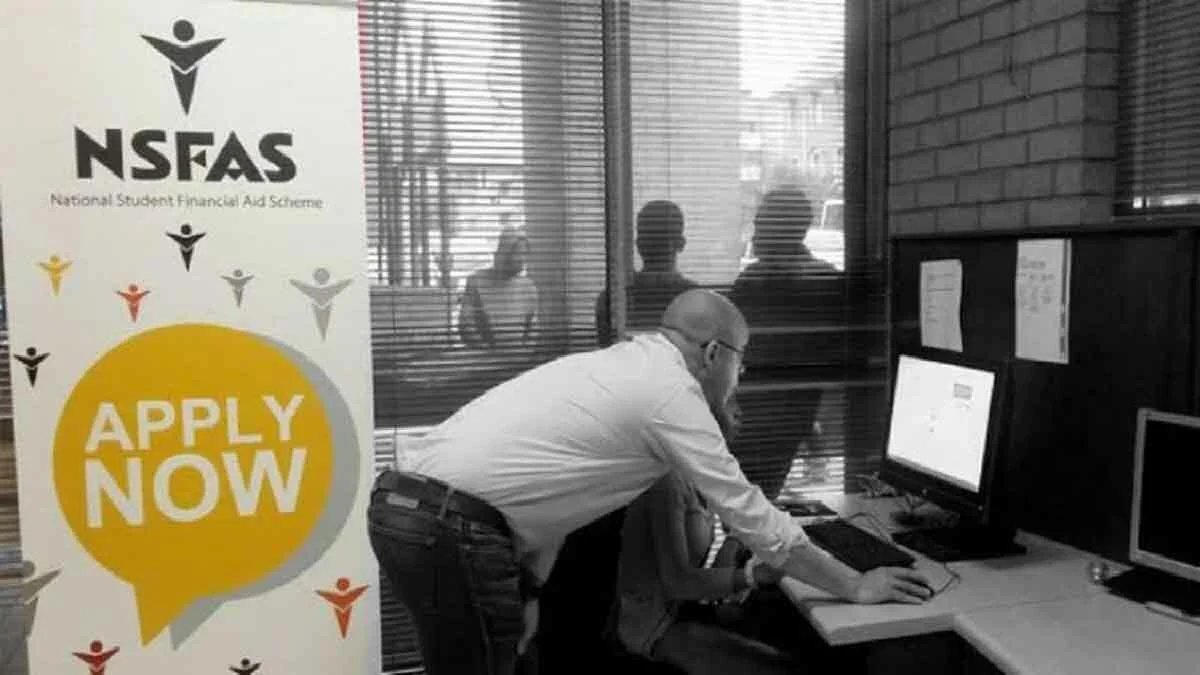
The NSFAS application process is primarily conducted online through the myNSFAS student portal. Having reliable internet access is essential.
Step 1: Create a myNSFAS Account
Before you can apply, you need to create an account on the myNSFAS portal. Visit the official NSFAS website and navigate to the application section. You will be prompted to register using your South African ID number, a valid cellphone number, and an email address.
Step 2: Log In and Navigate to the Application Tab
Once your account is created and verified, log in to the myNSFAS portal. Look for the ‘APPLY’ tab or a similar section dedicated to new applications.
Step 3: Complete the Application Form
Fill out all the required sections of the online application form accurately. This will include personal details, contact information, household income details, and information about the institution and course you intend to study. Ensure you provide your own cellphone number and ID number.
Step 4: Upload Supporting Documents
While the NSFAS application process has been simplified, you may still need to upload certain supporting documents. These can include:
- Certified copy of your South African ID document or birth certificate.
- Proof of income for your household (e.g., payslips, employment letters, or affidavits for informal workers). If you are a SASSA grant recipient, proof of grant may be required.
- Parents’ or guardians’ ID documents and proof of income (if applicable).
- A consent form, which is often part of the online application, allowing NSFAS to verify your information with relevant authorities like SARS.
Important Note: For the 2027 application cycle, supporting documents are often not required upfront, as NSFAS can verify much of the information electronically. However, it’s always best to have these documents ready in case they are requested.
Step 5: Submit Your Application
After completing all sections and uploading any necessary documents, review your application carefully for any errors. Once satisfied, submit your application before the closing date. You will receive a confirmation once your application has been successfully submitted.
Alternative Application Method
NSFAS also offers a mobile application that can be downloaded from app stores, providing another convenient way to apply.
What Supporting Documents Are Needed for NSFAS Applications?
The NSFAS application process has been streamlined to reduce the burden of document submission. However, certain documents might still be required depending on your circumstances. It’s always advisable to have these ready.
- South African ID Document or Birth Certificate: A certified copy is usually required to confirm your identity and citizenship.
- Proof of Income: This is a critical document for verifying your household’s financial eligibility. It can include:
- Payslips for employed household members.
- A letter of employment.
- Affidavits for individuals in informal employment.
- Pension statements.
- Proof of SASSA grant or child support grants.
- If you are self-employed, you may need to provide an affidavit or tax returns.
- Parents’ or Guardians’ Information: If you are a dependent, you will likely need to provide your parents’ or guardians’ ID numbers and proof of their income.
- Marriage Certificate: If you are married, this document may be required.
- Death Certificate: If a parent or guardian is deceased, their death certificate may be needed.
- SARS Consent Form: This form grants NSFAS permission to verify your financial information with the South African Revenue Service (SARS). It is often integrated into the online application.
- Proof of Address: Sometimes, proof of your residential address might be requested.
Remember, the NSFAS system is increasingly relying on electronic verification, so you might not need to submit all these documents physically. Always check the latest requirements on the myNSFAS portal.
Understanding NSFAS Application Status
After submitting your application, you can track its progress through the myNSFAS portal. This is where you will find updates on whether your application has been received, is under review, or has been approved or rejected.
Common NSFAS statuses include:
- Application Received: Your application has been successfully submitted.
- Awaiting SASSA Verification: NSFAS is verifying your SASSA grant status.
- Awaiting Financial Information: NSFAS is verifying your household’s financial details.
- Awaiting Academic Information: NSFAS is confirming your course enrollment and academic results.
- Approved: Your application has been successful, and you are eligible for NSFAS funding.
- Rejected: Your application did not meet the eligibility criteria. Reasons for rejection are usually provided.
- Awaiting Academic Results/Admission: This status often appears when you have applied before receiving your final matric results or confirmation of admission from your chosen institution.
If you encounter issues or cannot track your status online, you can contact the NSFAS call center for assistance.
Should You Wait Until You Get Your Matric Results?
It is strongly advised not to wait until you receive your Matric results to apply for NSFAS funding. The application period for NSFAS usually closes before Matric results are released. By the time your results are out, the application window may have already closed, meaning you could miss the opportunity for funding for the upcoming academic year.
NSFAS applications are processed based on the information provided at the time of application. If you are provisionally accepted into a course based on your current academic standing or predicted results, you should apply for NSFAS immediately. If you do not ultimately qualify for your chosen course or meet the institution’s admission criteria after receiving your final results, your NSFAS application for that specific course will simply fall away.
Furthermore, Matric is not always a prerequisite for NSFAS funding. Many TVET colleges offer courses that do not require a full Matric pass, and students enrolling in these programs may still qualify for NSFAS support if they meet the other criteria.
Is NSFAS a Loan or a Bursary?
This is a common point of confusion, but the answer is clear: NSFAS is now a bursary scheme.
In previous years, NSFAS operated as a loan system, where students had to repay the funds after graduation and securing employment. However, since 2018, the scheme has been converted into a bursary for qualifying students. This means that the financial aid provided by NSFAS does not need to be repaid, regardless of your future earning potential. This change has made higher education more accessible and less of a financial burden for students and their families.
How Much Has NSFAS Paid Out in Financial Aid?
The South African government significantly invests in NSFAS to support its youth in accessing higher education. For the 2026 academic year, over R51 billion was allocated to the National Student Financial Aid Scheme. This substantial budget allows NSFAS to fund more than one million students annually across public universities and TVET colleges.
Key figures for the 2026 academic year illustrate the scale of NSFAS operations:
- Total NSFAS Budget: Over R51 billion
- Students Funded: More than 1 million students
- First-time Funded Students: Approximately 626,935
- Continuing Funded Students: Approximately 427,144
These figures highlight NSFAS’s role as the largest provider of financial aid for tertiary students in South Africa, enabling countless young individuals to pursue their educational goals.
NSFAS Contact Details and Support
If you have questions about your application, need clarification on requirements, or are experiencing technical difficulties, NSFAS provides several channels for support.
- myNSFAS Portal: The online portal is the primary source of information and application management.
- NSFAS Call Centre: You can contact NSFAS directly via their toll-free number: 0800 673 27. Be prepared to confirm your identity before they can provide specific details about your application status.
- Email Support: NSFAS also offers email support for inquiries. Check their official website for the correct email addresses for different types of queries.
- Institutional Financial Aid Offices: Universities and TVET colleges have their own financial aid offices that can offer guidance and support regarding NSFAS applications and other funding options.
It is always recommended to use official channels to ensure you receive accurate and up-to-date information.
Frequently Asked Questions About NSFAS
Here are answers to some of the most common questions about NSFAS:
1. Who qualifies for NSFAS funding?
NSFAS funding is primarily for South African citizens who are studying or intend to study at public universities or TVET colleges. Applicants must come from a family with a combined gross household income of less than R350,000 per year (or R600,000 for students with disabilities). You also need to meet the specific admission criteria for the institution and course you wish to attend.
2. How do I apply for NSFAS?
Applications are submitted online via the official NSFAS website (myNSFAS portal). You will need to create an account, complete the online application form, and upload any required supporting documents.
3. What does NSFAS support cover?
NSFAS provides comprehensive coverage for tuition fees, registration fees, accommodation, transport, meals, and learning materials for eligible students.
4. How do I check my NSFAS application status?
You can check your NSFAS application status by logging into your account on the myNSFAS website. The portal will display the current status of your application.
5. What documents do I need to apply for NSFAS?
Typically, you will need a copy of your ID or birth certificate, proof of household income, and potentially consent forms. For dependents, parents’ or guardians’ ID documents and proof of income are also required. The need for physical documents has been reduced due to electronic verification.
6. Can I apply for NSFAS if I’m already a university student?
Yes, students already enrolled at a university or TVET college can apply for NSFAS funding, provided they meet all the qualifying criteria and are within the prescribed study period (N+ rule).
7. Does NSFAS fund postgraduate studies?
NSFAS funding is primarily for undergraduate courses, including diplomas, degrees, and certificates. It generally does not cover postgraduate studies.
8. What is the N+ rule for NSFAS?
The N+ rule means that NSFAS will fund a student for the minimum duration of their course plus one additional year. For example, a three-year degree is funded for four years. Exceeding this rule can lead to funding being withdrawn.
9. What happens if my NSFAS application is rejected?
If your application is rejected, you will usually be given a reason. You may have the option to appeal the decision or reapply during the next application cycle if you believe there was an error or your circumstances have changed.
10. Can NSFAS fund private colleges?
No, NSFAS only funds students studying at public universities and public TVET colleges in South Africa.
Conclusion
Securing financial aid for higher education is a significant step towards achieving your academic and career aspirations. NSFAS plays a pivotal role in making this possible for thousands of South African students each year. By understanding what NSFAS is, who qualifies, and the detailed steps involved in the online application process, you can navigate this system with confidence. Remember to apply early, provide accurate information, and keep track of your application status. With careful preparation and timely submission, you can increase your chances of receiving the financial support needed to pursue your educational journey.
Direct Organisation’s Application Link: NSFAS Online Application