

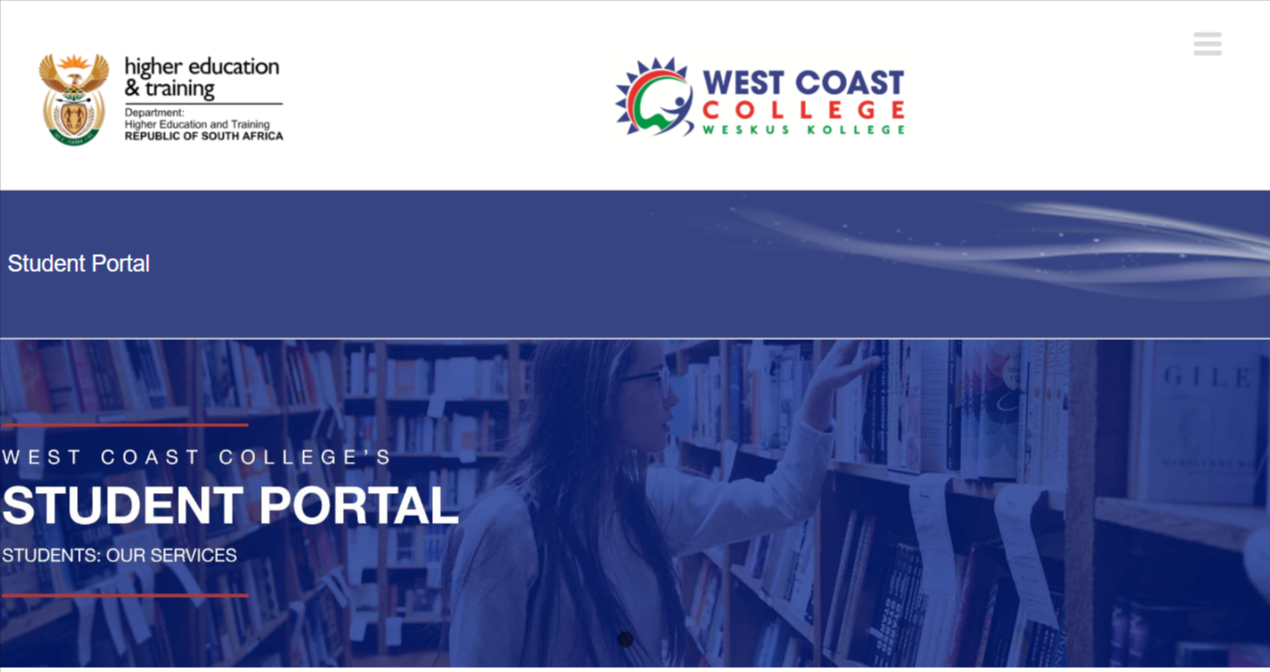
If you’re planning your next academic move and West Coast TVET College is on your shortlist, you’ve landed in the right place. This guide walks you through everything you need to know about applying for the 2027 academic year — from opening and closing dates, to entry requirements, required documents, campuses, funding options, and a simple step-by-step walkthrough of the application process itself.
Whether you just finished matric, you’re switching from another institution, or you’re returning to studies after a break, this guide is written to make the process as clear and stress-free as possible.
Official application portal: https://www.westcoastcollege.co.za/students/how-to-apply/
A Quick Introduction to West Coast TVET College
West Coast College is a public Technical and Vocational Education and Training (TVET) institution based in the Western Cape, South Africa. It is registered with and accredited by the Department of Higher Education and Training (DHET), and it has built a solid reputation for turning out job-ready graduates — including producing a WorldSkills SA medal winner and being recognised as a Centre of Specialisation in Pipe Fitting.
Unlike universities, TVET colleges focus heavily on practical, hands-on skills. A qualification from West Coast College can lead you straight into employment, help you start your own business, or serve as a stepping stone into further studies at a university of technology.
The college operates across several campuses in the Western Cape, offering programmes spanning engineering, business, tourism, hospitality, and safety-related fields. Some courses are campus-specific — for example, Tourism has traditionally been offered at the Vredenburg campus, while Engineering programmes are concentrated at the Vredendal campus — so it’s worth checking which campus offers your chosen programme before you apply.
When Do 2027 Applications Open and Close?
This is usually the first question on every applicant’s mind, so let’s address it directly.
As of now, West Coast College’s official website is still displaying its most recent confirmed cycle, which followed this pattern:
- Applications open: 1 September
- Applications close: 30 September
- Provisional approval: Shortly after the closing date
- Registration: January of the intake year
Based on this recurring annual pattern, most independent education portals are projecting that 2027 applications will open around 1 September 2026 and close around 30 September 2026. However, this is a projection based on historical timing, not an official confirmation from the college. TVET colleges in South Africa sometimes adjust their dates slightly from year to year, so treat early-September as your target window, but confirm the exact dates directly on the college’s official application page closer to the time.
Bottom line: Don’t wait for a reminder. Mark late August through September 2026 on your calendar, and check the official site regularly from August onward so you don’t miss the window.
Why You Shouldn’t Wait Until the Deadline
TVET colleges process applications for high-demand programmes on a first-come, first-served basis within the application window. Popular courses — particularly in engineering trades and business studies — fill up fast. Late applications are typically not considered once a programme reaches capacity, even if the official closing date hasn’t technically passed yet.
Applying in the first week or two after the portal opens gives you:
- A better chance of securing your first-choice programme
- More time to fix any document or certification issues before the deadline
- Breathing room to also apply to other institutions as a backup, if needed
Who Can Apply?
West Coast College’s admissions are open to South African citizens and, in many cases, international applicants, provided they meet the entry requirements for their chosen programme. There is no restriction based on race, gender, religion, or background — admission is based purely on meeting the academic and programme-specific criteria.
Minimum Entry Requirements by Programme Type
NCV (National Certificate Vocational) Programmes
- Minimum: Grade 9 pass, or an ABET (Adult Basic Education and Training) Level 4 certificate
- Covers NCV Levels 2, 3, and 4
Report 191 / NATED Programmes
- Generally require Grade 12 (Matric) or an equivalent qualification
- Engineering-focused NATED programmes typically want Mathematics and Physical Science, a Technical Matric, or an NCV Level 4 qualification
- Business and utility studies NATED programmes look for relevant subjects such as Accounting or Hospitality Studies, or an NCV Level 4
Occupational and Foundational Programmes
- Entry requirements vary between Grade 9 and Matric, depending on the specific course
Pre-Vocational Learning
- Grade 9 or equivalent
Skills Programmes and Learnerships
- Typically Grade 10 or higher, though some accept Grade 9 graduates
Because requirements do vary by programme and can shift slightly year to year, always cross-check the specific requirements for your intended course in the college’s official prospectus before applying.
The PACE Career Assessment
New applicants are usually required to complete an online PACE Career Assessment as part of the process. This is a short evaluation of literacy, numeracy, and career interests, and the results help the admissions team recommend or confirm a suitable course for you. Don’t stress about this — it’s designed to guide placement, not to filter people out.
Documents You’ll Need Before You Start
Gathering your documents in advance will save you a lot of frustration once the portal opens. Have certified copies of the following ready:
- South African ID document (or valid passport for international applicants)
- Latest academic results — your most recent Grade 9, 10, or 11 report card, or your full Grade 12 (Matric) certificate/statement of results
- Academic transcript or record, if you previously studied at another college or university
- Parent or guardian’s ID, if you intend to apply for NSFAS funding
- Proof of household income, also required for NSFAS applications
A few practical tips here:
- Certification of documents must be recent — most institutions won’t accept certified copies older than three months.
- Scan everything clearly. Blurry or cropped scans are one of the most common reasons applications get delayed or sent back for resubmission.
- If you have documents from a previous institution, request your transcript early — administrative offices can be slow, especially closer to year-end.
Step-by-Step: How to Apply Online for 2027
Here’s the practical walkthrough, from opening the portal to submitting your application.
Step 1: Choose Your Programme and Campus
Decide which qualification you want to study and confirm which campus offers it. Not every programme is available at every campus, so this step matters — you don’t want to apply for a course that isn’t offered where you assumed it would be.
Step 2: Visit the Official Application Page
Go to the official how-to-apply page: westcoastcollege.co.za/students/how-to-apply. This is where you’ll find the current application status, the link through to the online portal, and any downloadable forms you might need.
Step 3: Access the Online Application Portal
From the how-to-apply page, click through to the student portal. New applicants will select the option to start a new application; returning students can log in with their existing details.
Step 4: Complete the PACE Career Assessment
If prompted, complete the short online literacy, numeracy, and career-interest assessment. This helps confirm you’re being placed on the right course level.
Step 5: Fill In Your Application and Upload Documents
Complete the application form with your personal details, contact information, and programme choice, then upload your certified supporting documents (ID, academic results, and any additional documents relevant to your situation).
Step 6: Submit
Double-check every field and every uploaded document before hitting submit. Errors or missing documents are the number one cause of delayed processing.
Step 7: Wait for Provisional Approval
Historically, successful applicants receive provisional approval shortly after the application window closes. Keep an eye on the email address and phone number you used to apply — this is how the college will contact you.
Step 8: Register
Registration for confirmed applicants typically takes place in January of the intake year. You’ll receive further instructions from the college once your application has been provisionally approved.
Applying In Person
If you’d rather not apply online, or you need help along the way, you can visit your nearest West Coast College campus in person and complete the application with staff assistance. This is also the recommended route for applicants who need to submit a Special Needs Application Form.
Applying With Special Needs
If you or a family member has a disability or a learning support need, West Coast College has a dedicated process for this. Contact the Student Support Office at (022) 482 1143, and complete the Special Needs Application Form available for download on the college’s official site, in addition to your standard application.
Funding Your Studies: NSFAS and College Bursaries
Cost is often the biggest barrier standing between a prospective student and their qualification — but West Coast College is an NSFAS-eligible institution, which opens up meaningful financial support for qualifying students.
NSFAS (National Student Financial Aid Scheme)
For the 2027 intake, NSFAS applications have generally opened in late November and closed at the end of January in recent cycles. NSFAS can cover:
- Tuition fees
- Accommodation
- Meals
- Textbooks and learning materials
- A monthly personal care allowance (historically in the region of R3,000–R5,500, though this can change from year to year)
To apply, you’ll need certified copies of your own ID, your parent or guardian’s ID, and proof of household income, so it’s worth preparing these documents at the same time as your college application documents.
Tuition Fees Without Funding
If you don’t qualify for NSFAS, tuition at West Coast College is still relatively affordable compared to university fees. Annual fees have generally ranged from around R2,000 to R25,000 depending on the specific programme, with most NCV and occupational courses sitting at the lower end of that range. Contact the college directly for a precise, up-to-date fee quote for your chosen programme, since fees are adjusted annually.
College Bursaries
Beyond NSFAS, the college also administers its own bursary opportunities for students who show financial need or academic merit. Ask the admissions or student support office about current bursary options when you apply.
A Word of Caution: Avoid Application Scams
Every application season, unofficial “agents” pop up offering to fast-track applications for a fee. West Coast College has explicitly warned prospective students against paying anyone claiming to be an admissions representative or application agent. There is no cost to submit your application, and the only two safe channels are:
- The official website: www.westcoastcollege.co.za
- In person, at the college’s registrar’s office or any of its campuses
If anyone contacts you asking for payment to “guarantee” your admission, treat it as a scam and report it.
Quick Reference Checklist
Before the portal opens, make sure you’ve ticked off the following:
- Decided on your programme and campus
- Certified a copy of your SA ID or passport (within the last 3 months)
- Gathered your latest academic results
- Requested a transcript from any previous institution, if applicable
- Prepared parent/guardian ID and proof of household income (for NSFAS)
- Bookmarked the official application page
- Set a calendar reminder for early September 2026
Frequently Asked Questions
When exactly do 2027 applications open? Based on the college’s recent application pattern, expect the window to open around 1 September 2026 and close around 30 September 2026 — but confirm the exact dates on the official site closer to the time, since dates are set annually and haven’t been formally published for 2027 yet.
Can I apply for more than one programme or campus? Yes, applicants can generally apply for multiple programmes and campuses simultaneously, which is a smart strategy if you have more than one course you’d be happy to study.
Do I need Matric to apply? Not necessarily. NCV programmes accept a Grade 9 pass or ABET Level 4, while NATED/Report 191 programmes generally require Matric. Check the specific requirement for your chosen course.
Is there an application fee? West Coast College has warned that applications should never require payment to third parties. Confirm any official fee structure directly through the college’s official channels.
What if I miss the deadline? Late applications are usually not accepted once a programme fills up, so it’s best to apply as early in the window as possible rather than risk missing out.
Final Thoughts
Applying to West Coast TVET College for 2027 doesn’t need to be complicated — it just needs a bit of preparation. Get your documents certified early, decide on your programme and campus, and be ready to apply the moment the portal opens in September 2026. If you’re eligible for NSFAS, get that application in as well, since funding windows and college application windows don’t always align perfectly.
For the most accurate, up-to-date information — including the confirmed 2027 opening date once it’s published — always go straight to the source:
👉 Official application page: https://www.westcoastcollege.co.za/students/how-to-apply/



Conversation
0 Comments