

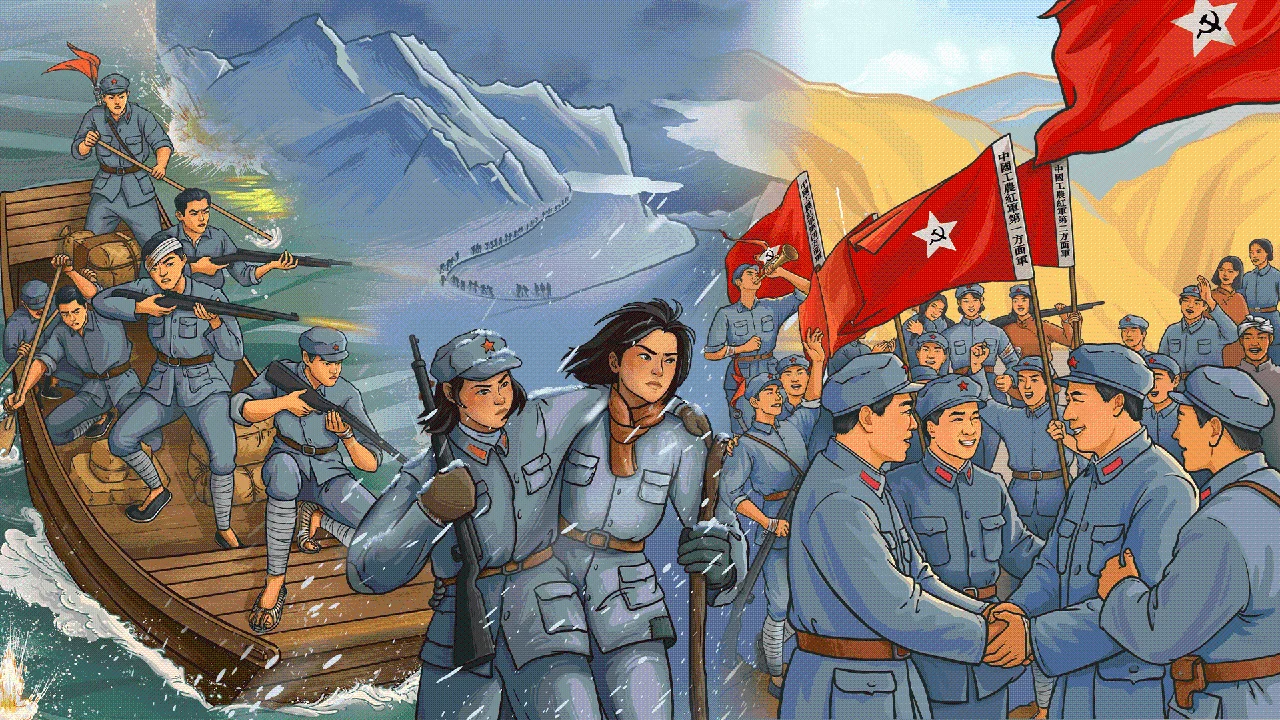
The Long March is a pivotal event in modern Chinese history, a testament to endurance, sacrifice, and the unwavering spirit of those who participated. This monumental journey, undertaken by the Red Army from 1934 to 1936, covered thousands of kilometers across incredibly challenging terrain. It was more than just a military maneuver; it was a defining moment that shaped the future of the People’s Republic of China. Imagine the stories these veterans could tell if they could write to us today, sharing their experiences, the hardships they endured, and the hopes they carried. This article explores the spirit of the Long March through the imagined words of its veterans, reflecting on what they would want future generations to remember.
The Unyielding Spirit of the Long March
The Long March was not a single event but a series of marches undertaken by various elements of the Red Army. The most famous segment, led by the First Front Army, began in October 1934 from the Jiangxi Soviet. The soldiers faced relentless pursuit by the Nationalist forces, forcing them to abandon their established bases and embark on a desperate strategic withdrawal. This journey was characterized by extreme conditions: crossing treacherous rivers, scaling snow-capped mountains, and traversing vast, arid grasslands.
The sheer scale of the undertaking is difficult to comprehend. The First Front Army alone covered approximately 12,500 kilometers (7,800 miles) over the course of a year. Along the way, they encountered numerous natural barriers and enemy blockades. The soldiers were often underfed, poorly equipped, and exhausted, yet they pressed on. This relentless forward momentum, despite overwhelming odds, is a core element of the Long March’s legacy. It demonstrated an extraordinary level of resilience and determination that would become a hallmark of the Chinese Communist Party’s history.
The veterans of the Long March would likely emphasize that their journey was not merely about survival, but about a profound belief in their cause. They were fighting for a vision of a new China, free from foreign influence and internal strife. This ideological conviction fueled their perseverance through unimaginable suffering. The hardships were not just physical; they were also emotional and psychological. Facing constant danger, loss of comrades, and the uncertainty of their future, the soldiers relied on each other and their shared commitment to keep going.
Echoes from the Past: Imagined Voices of the Veterans
If the veterans of the Long March could pen letters to us today, their words would likely resonate with a blend of reflection, warning, and enduring hope. They might begin by describing the sheer physical toll of the march. Imagine the feeling of worn-out boots, the gnawing hunger, and the biting cold that seeped into their bones. They would recount the bravery of crossing the Dadu River, where they fought against both the rapids and enemy fire to secure a vital crossing. This single act of courage, repeated countless times in different forms, highlights the daily struggle for survival.
A veteran might write about the vast, desolate grasslands, where food was scarce and the ground offered little shelter. They would describe the constant threat of starvation and disease, and how they learned to forage for edible plants or hunt small animals. The camaraderie forged in these extreme conditions would be a recurring theme. Soldiers shared their meager rations, carried their wounded comrades, and offered words of encouragement when spirits flagged. This shared experience created bonds that transcended mere military service, forming a brotherhood forged in the crucible of hardship.
Furthermore, the veterans would likely speak of the strategic brilliance and leadership that guided them. They would remember the critical decisions made at pivotal moments, such as the Zunyi Conference, where leadership was consolidated and the strategic direction of the revolution was reaffirmed. These moments of clarity and decisive action were as crucial as any physical battle in ensuring the success of the Long March. The veterans would want us to understand that their journey was not just a series of random events, but a carefully orchestrated movement guided by strong leadership and a clear objective.
The Significance of Sacrifice and Hope
The sacrifices made during the Long March were immense. Tens of thousands of soldiers perished along the way, succumbing to battle, disease, starvation, or exposure. These were not just statistics; they were individuals with families, dreams, and aspirations. The veterans would undoubtedly convey the profound sense of loss and the enduring memory of those who did not complete the journey. They would want us to honor these fallen comrades by remembering the price that was paid for the future they helped to build.
The hope that sustained them was a powerful force. It was the hope for a better future for China, a nation free from oppression and poverty. It was the hope that their sacrifices would not be in vain, and that the next generation would live in a more just and prosperous society. This hope was not passive; it was an active force that propelled them forward, inspiring them to overcome obstacles and endure suffering. The veterans would want us to understand that their struggle was driven by a deep-seated optimism about what China could become.
They might also reflect on the lessons learned from the Long March. The importance of perseverance, the strength of unity, the necessity of clear leadership, and the power of a shared vision are all lessons that would be central to their message. They would want us to apply these lessons to our own lives and to the challenges facing our society today. The spirit of the Long March, they might argue, is not just a historical artifact but a living principle that can guide us through difficult times.
The Long March in Modern Context
Ninety years after this epic journey, the Long March continues to hold significant meaning. It serves as a powerful symbol of resilience and determination in the face of adversity. For many, it represents the foundational struggle that led to the establishment of modern China. The stories of the Long March veterans are often invoked to inspire patriotism, unity, and a commitment to national development.
The narrative of the Long March is carefully preserved and taught, ensuring that its lessons are passed down through generations. It is a reminder of the sacrifices made by those who came before and a call to action for the present. The veterans’ imagined letters would likely underscore the importance of remembering this history, not just as a record of past events, but as a source of inspiration and guidance for the future. They would want us to understand that the challenges they faced, though different in nature, share a common thread with the challenges we face today.
The spirit of innovation and adaptation that characterized the Long March is also relevant. The Red Army constantly had to devise new strategies and tactics to overcome obstacles. This adaptability is a crucial quality for any organization or society seeking to navigate a complex and changing world. The veterans would likely encourage us to be resourceful, creative, and willing to adapt to new circumstances, just as they did on their arduous journey.
The Enduring Legacy of the Long March
The Long March was a defining moment that forged the character of the Chinese Revolution. It was a testament to the power of human endurance, the strength of collective will, and the unwavering pursuit of a vision. The veterans, if they could speak to us today, would remind us that true progress often comes at a great cost, and that the values of sacrifice, perseverance, and hope are timeless.
Their imagined letters would serve as a powerful reminder of the past, urging us to learn from history and to carry forward the spirit of the Long March. It is a spirit that emphasizes overcoming challenges, fostering unity, and working towards a brighter future for all. The journey may have ended decades ago, but its echoes continue to resonate, shaping the present and inspiring generations to come. The lessons of the Long March are not confined to history books; they are living principles that can guide us as we face our own challenges and strive to build a better world.
The veterans would likely impress upon us the importance of understanding the context of their struggle. They were fighting against immense social and political injustices, seeking to create a more equitable society. Their journey was a fight for liberation and self-determination. This historical context is crucial for appreciating the depth of their commitment and the significance of their eventual success. Without understanding the conditions they were escaping, it is difficult to fully grasp the magnitude of their undertaking.
Moreover, the veterans might reflect on the evolution of China since their time. They would likely express pride in the nation’s progress and development, while also acknowledging that new challenges have emerged. They would urge us to remain vigilant, to continue striving for improvement, and to never forget the lessons learned from the Long March. The journey of a nation, like the Long March itself, is a continuous process of overcoming obstacles and moving forward.
The imagined words of the Long March veterans serve as a powerful call to reflection. They remind us of the extraordinary capacity of the human spirit to endure hardship and to achieve seemingly impossible goals. They underscore the importance of collective action, shared purpose, and unwavering belief in a cause. As we look to the future, the legacy of the Long March offers a timeless source of inspiration, urging us to face our own challenges with courage, resilience, and a steadfast commitment to building a better tomorrow. The path forward may be long and arduous, but the spirit of the Long March teaches us that with determination and unity, any obstacle can be overcome.
The veterans would likely emphasize that the Long March was not just a military campaign but a profound cultural and ideological undertaking. It was about instilling a new set of values and a new way of thinking among the soldiers and the populace. The discipline, self-reliance, and revolutionary fervor that characterized the march became integral to the identity of the Communist Party. This ideological transformation was as important as the physical journey in shaping the future of China.
They might also speak about the importance of remembering the human element of history. Beyond the grand narratives of battles and political maneuvers, there were individual stories of bravery, loss, and hope. The veterans would want us to remember the ordinary soldiers who endured extraordinary circumstances, their personal sacrifices, and their unwavering loyalty. These individual stories are the heart of the Long March, providing a deeply human perspective on this monumental event.
The veterans would likely convey a sense of continuity, suggesting that the spirit of the Long March is not a relic of the past but a living force that continues to shape China. They would encourage us to embody that spirit in our own endeavors, whether personal, professional, or societal. The challenges of today may differ from those of the 1930s, but the fundamental qualities of courage, perseverance, and unity remain essential for progress.
In their imagined letters, the veterans would likely express a profound sense of responsibility to future generations. They would want us to learn from their experiences, to avoid repeating past mistakes, and to continue the work of building a strong and prosperous nation. The Long March was a journey towards a better future, and that journey, they would remind us, is ongoing. The torch of progress has been passed, and it is now our turn to carry it forward with the same dedication and spirit that defined their epic march.
The veterans might also reflect on the international context of their struggle. They were fighting not only for China’s future but also as part of a broader global movement. Their actions had implications far beyond their borders, and they would want us to understand the global significance of their fight for national independence and social justice. This perspective adds another layer of complexity to the Long March, highlighting its role in shaping 20th-century geopolitics.
Ultimately, the imagined voices of the Long March veterans would serve as a powerful reminder of the enduring human capacity for resilience, sacrifice, and hope. They would urge us to remember the past, to learn from its lessons, and to face the future with courage and determination. The Long March was a journey of immense hardship, but it was also a journey of profound hope and unwavering commitment. Its legacy continues to inspire, reminding us that even in the face of overwhelming odds, a determined spirit can achieve the extraordinary. The application link for direct organization’s application is not provided in the research data.


Conversation
0 Comments