

Virgin Galactic: Charting a Course for the Final Frontier
The dream of space travel, once confined to science fiction and the bold endeavors of national space agencies, is rapidly becoming a reality for private citizens. Companies like Virgin Galactic are at the forefront of this revolution, offering the chance to experience the unique sensation of weightlessness and gaze back at Earth from the edge of space. While the allure of the cosmos is undeniable, the journey to achieving this dream comes with a significant price tag and complex logistical challenges. Understanding the structure and operational model of companies like Virgin Galactic is key to grasping the future of space tourism.
Virgin Galactic, founded by Sir Richard Branson, aims to make space accessible to a wider audience through suborbital flights. The company’s approach involves launching a spaceplane from a carrier aircraft, reaching an altitude where passengers can experience a few minutes of weightlessness before returning to Earth. This method differs from orbital spaceflight, which involves reaching a much higher velocity and altitude to circle the planet. The focus on suborbital hops allows for shorter flight times and potentially simpler spacecraft design, though the cost remains a major barrier for most.
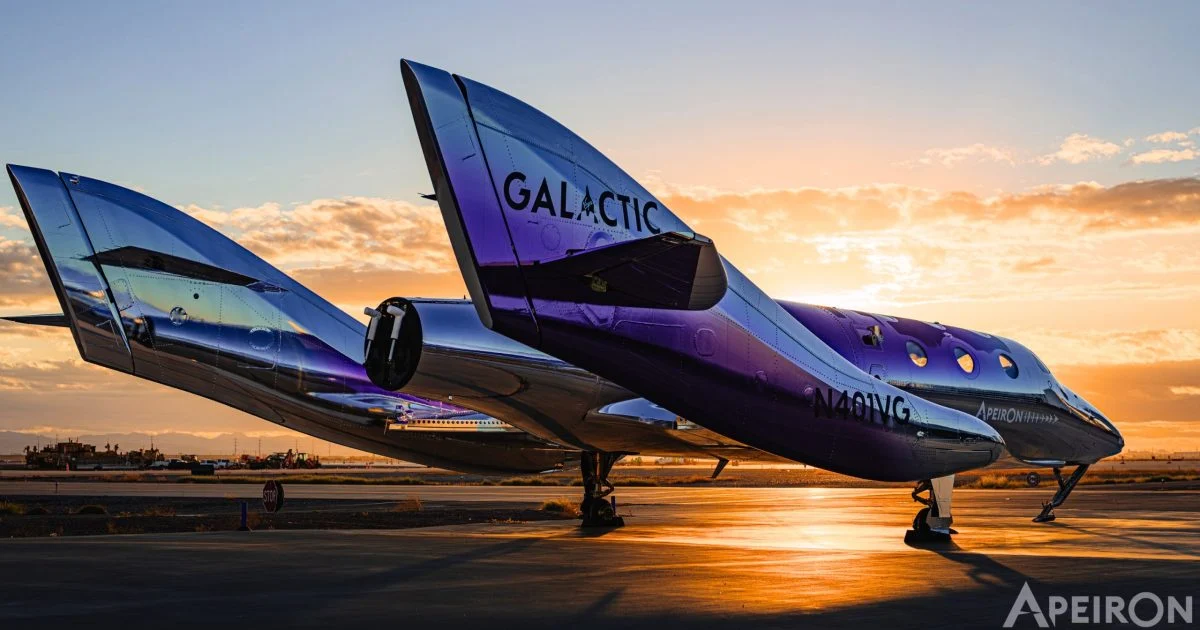
The company’s latest spacecraft, Apeiron, represents a significant step forward in their mission. Named through a global public vote, Apeiron is the first of the new Delta class of spaceplanes. It’s designed to carry more passengers and require less maintenance between flights, a crucial factor for increasing flight frequency and operational efficiency. This upgrade from the previous VSS Unity aims to move Virgin Galactic closer to its goal of frequent commercial flights, potentially up to eight per month.
The Mechanics of a Suborbital Journey
Virgin Galactic’s suborbital flights are a marvel of engineering and operational planning. The process begins with the carrier aircraft, named “Eve,” taking off with the spaceplane, “Apeiron,” attached beneath its wing. Eve ascends to an altitude of approximately 44,500 feet. At this height, the spaceplane is released, and its rocket engine ignites, propelling it towards the edge of space.
The spaceplane reaches a peak altitude of about 54.2 miles, or 87 kilometers. While this is below the internationally recognized Kármán line of 62 miles (100 kilometers), it is widely considered the boundary of space for many purposes, including space tourism. At this apex, passengers experience the sensation of weightlessness for approximately three to four minutes. During this time, they can unbuckle their restraints and float freely within the cabin, offering unparalleled views of the Earth below and the blackness of space above.
Following the weightless experience, the spaceplane begins its descent. It glides back to Earth, much like a conventional aircraft, and lands at Spaceport America in New Mexico. The entire flight, from launch to landing, is relatively short, with the most exhilarating part – the weightlessness – lasting only a few minutes. This condensed experience is a core part of Virgin Galactic’s offering, emphasizing a brief but profound encounter with the space environment.
Apeiron: A New Generation of Spaceplane
Apeiron marks a significant evolution in Virgin Galactic’s fleet. As the first of the Delta class spaceplanes, it is designed to address some of the limitations of its predecessor, VSS Unity. Unity successfully completed seven suborbital flights in 2023 and 2024, gathering valuable data and experience. However, Virgin Galactic paused operations to focus on developing and deploying the more advanced Delta class.
One of the key improvements in Apeiron is its passenger capacity. It can accommodate six passengers, an increase from the four passengers on VSS Unity. This higher capacity is vital for improving the economics of each flight. Furthermore, the Delta class spaceplanes are engineered for reduced maintenance downtime. This means they can be serviced and prepared for their next flight more quickly, enabling the higher flight cadence that Virgin Galactic aims for.
The transition to the Delta class is a strategic move to scale up operations. The goal of up to eight flights per month is ambitious and requires a robust and efficient spacecraft. Apeiron’s design is intended to meet these demands, ensuring that the company can meet the growing interest in space tourism. The successful transfer of Apeiron from its Arizona factory to Spaceport America is a critical step in its flight testing program, bringing it closer to commercial service.
The Cost of Cosmic Views
The price of experiencing space firsthand is substantial. Virgin Galactic has indicated that a seat on their commercial flights will cost around $750,000. This figure reflects the immense research, development, and operational costs involved in providing such a unique and high-risk service. For context, this price is comparable to purchasing a very nice house in many parts of the world.
Despite the high cost, demand for these flights appears strong. The company is preparing over 100 existing ticket holders for the initial flights. Beyond that, a substantial queue of more than 600 individuals are waiting for their opportunity. This waiting list represents a significant potential revenue stream, estimated to be around $525 million based on the current ticket price. This demonstrates a clear market appetite for space tourism, even at premium prices.
The timeline for these commercial flights is set for early Q2 2027. This date is subject to ongoing testing and regulatory approvals, so it is approached with cautious optimism. The company is also developing a second Delta-class spaceplane, expected to be ready in late Q2 or early Q3 of 2027. This parallel development ensures that Virgin Galactic can ramp up its flight schedule once operations commence.
Market Landscape and Future Prospects
The suborbital space tourism market is still in its nascent stages, and Virgin Galactic is positioned to be a major player. With competitors like Blue Origin having paused their suborbital flights for an extended period, Virgin Galactic could find itself with a significant portion of the market to itself once its commercial operations resume. This presents a unique opportunity to establish a dominant presence in the emerging industry.
However, the ultimate success of Virgin Galactic will depend on its ability to translate high ticket sales into a sustainable and profitable business. The operational costs of launching and maintaining spacecraft are considerable. Achieving profitability will require not only attracting customers but also managing expenses effectively and ensuring a high volume of flights. The company’s focus on reducing maintenance needs and increasing flight frequency with the Delta class is a direct response to this challenge.
For the average person, the cost of a Virgin Galactic flight remains out of reach. The $750,000 price tag places it firmly in the luxury travel category. Until costs decrease significantly, space tourism will likely remain an exclusive experience. For most, the current reality is to follow these developments from the ground, watching as humanity takes its first steps towards a future where space is more accessible. The journey of Virgin Galactic, with its ambitious goals and high-stakes execution, offers a compelling glimpse into that future.
The Role of Technology and Innovation
The development of space tourism hinges on continuous technological advancement. Virgin Galactic’s progression from the VSS Unity to the Delta class spaceplane, exemplified by Apeiron, showcases this commitment. Each iteration of their spacecraft is designed to be more efficient, more capable, and more reliable. This iterative process is fundamental to making space travel safer and more economically viable.
The engineering behind these spaceplanes involves sophisticated aerodynamics, advanced propulsion systems, and robust life support. The ability to withstand the extreme conditions of ascent and re-entry, while ensuring passenger comfort and safety, requires cutting-edge materials and design principles. For instance, the thermal protection systems needed to manage the heat generated during re-entry are critical for the spacecraft’s integrity.
Furthermore, the operational infrastructure, such as Spaceport America, represents a significant investment in technology and logistics. These spaceports are not just landing strips; they are complex facilities designed to support spacecraft assembly, maintenance, launch operations, and passenger processing. The integration of these elements is crucial for the smooth execution of frequent flights.
Safety and Regulation in Space Tourism
As with any pioneering venture, safety is paramount in the space tourism industry. Virgin Galactic, like other companies in this sector, operates under stringent safety protocols and is subject to oversight from regulatory bodies. The Federal Aviation Administration (FAA) in the United States, for example, licenses and regulates commercial space launches and re-entries.
The FAA’s Office of Commercial Space Transportation (AST) works to ensure that these operations are conducted safely, protecting the public, astronauts, and property. For private spaceflight participants, there is often a waiver process that acknowledges the inherent risks involved. Passengers are typically required to sign waivers that inform them of these risks and absolve the company of liability in certain circumstances, a common practice in high-risk adventure tourism.
Virgin Galactic’s commitment to safety is demonstrated through its rigorous testing programs and the experience gained from its initial flights. The transition to the Delta class involves extensive flight testing to validate its performance and safety features before carrying paying customers. The company’s long-term viability depends not only on its technological prowess but also on its ability to maintain an impeccable safety record.
Economic Implications and Future Growth
The emergence of space tourism has significant economic implications. It represents a new frontier for investment, job creation, and technological development. The high cost of current offerings suggests a niche market, but proponents envision a future where costs decrease, making space travel accessible to a broader demographic.
The potential for growth in this sector is immense. Beyond tourism, the infrastructure and technology developed for space tourism could have applications in other areas, such as point-to-point suborbital travel or even rapid cargo delivery. Companies are exploring various business models to capitalize on the growing interest in space.
The economic success of Virgin Galactic will be a key indicator for the broader space tourism industry. If they can achieve profitability with their current model, it will validate the business case for suborbital flights and encourage further investment. Conversely, challenges in scaling operations or managing costs could signal the need for different approaches or a longer timeline for market maturity. The $750,000 price tag, while high, is a starting point, and market forces will likely drive innovation aimed at reducing these costs over time.
The Human Element: Experience and Perspective
Beyond the technological and economic aspects, space tourism offers a profound human experience. The chance to see Earth from space, often referred to as the “overview effect,” has been reported by astronauts to induce a cognitive shift in their perception of the planet and humanity’s place within it. This perspective shift, characterized by a sense of global unity and the fragility of Earth, is a powerful aspect of space travel.
Virgin Galactic aims to provide this transformative experience to its passengers. The three to four minutes of weightlessness, combined with the unparalleled views, are designed to be a life-changing event. While the duration is brief, the impact is intended to be lasting. This psychological and emotional dimension is a key selling point for the high-ticket price.
The company’s focus on making this experience accessible, albeit to a select few initially, speaks to a broader vision of expanding human horizons. As technology advances and costs potentially decrease, the overview effect could become an experience shared by more people, fostering a greater appreciation for our planet and a sense of shared responsibility for its future. The journey to space, for these early pioneers, is not just a physical one but also an internal transformation.
Challenges and Opportunities Ahead
Virgin Galactic faces a number of challenges as it moves towards regular commercial operations. These include the inherent risks associated with spaceflight, the need to maintain a consistent safety record, and the economic imperative to achieve profitability. The company must also navigate the complexities of scaling its operations to meet demand while managing costs effectively.
The competitive landscape, while currently offering Virgin Galactic a potential advantage due to Blue Origin’s hiatus, is likely to evolve. Other companies are exploring different approaches to space tourism, including orbital flights and even lunar missions, which could offer different experiences and attract different customer segments. Virgin Galactic’s focus on suborbital flights positions it as a leader in a specific segment of the market.
Despite these challenges, the opportunities are significant. The growing public fascination with space, coupled with advancements in technology, creates a fertile ground for the space tourism industry. Virgin Galactic’s innovative approach and its ambitious goals place it at the forefront of this exciting new era. The success of Apeiron and the Delta class will be critical in determining the pace and scale of this expansion. The company’s ability to execute its plans, manage its resources, and deliver on its promise of a unique space experience will ultimately define its legacy in the history of human spaceflight.
Conclusion
Virgin Galactic is actively shaping the future of space tourism with its suborbital flight program. The introduction of the Delta class spaceplane, exemplified by Apeiron, signifies a commitment to increased capacity, improved efficiency, and higher flight frequencies. While the $750,000 price tag for a few minutes of weightlessness places this experience out of reach for most, the strong demand indicates a significant market interest. The company’s journey is a testament to human ingenuity and the enduring desire to explore beyond our planet. As Virgin Galactic progresses through its testing phases and aims for commercial flights in early 2027, it stands poised to offer a select group of individuals a glimpse of the cosmos and a potentially life-altering perspective on Earth. The success of this venture will not only be measured in ticket sales but in its contribution to making space a more accessible destination for humanity.

Conversation
0 Comments