

The intersection of history and technology is rapidly reshaping how we understand and experience the past. Artificial intelligence (AI), once a concept confined to science fiction, is now a powerful tool for historical recreation and storytelling. This technology allows for the reconstruction of events, the restoration of lost voices, and the visualization of past eras with unprecedented detail. As AI capabilities expand, its application in historical contexts offers new avenues for education, preservation, and public engagement. This article will explore the multifaceted ways AI is being used to bring history to life, examining its potential, its challenges, and its impact on our connection to the past.
Recreating Historical Narratives with AI
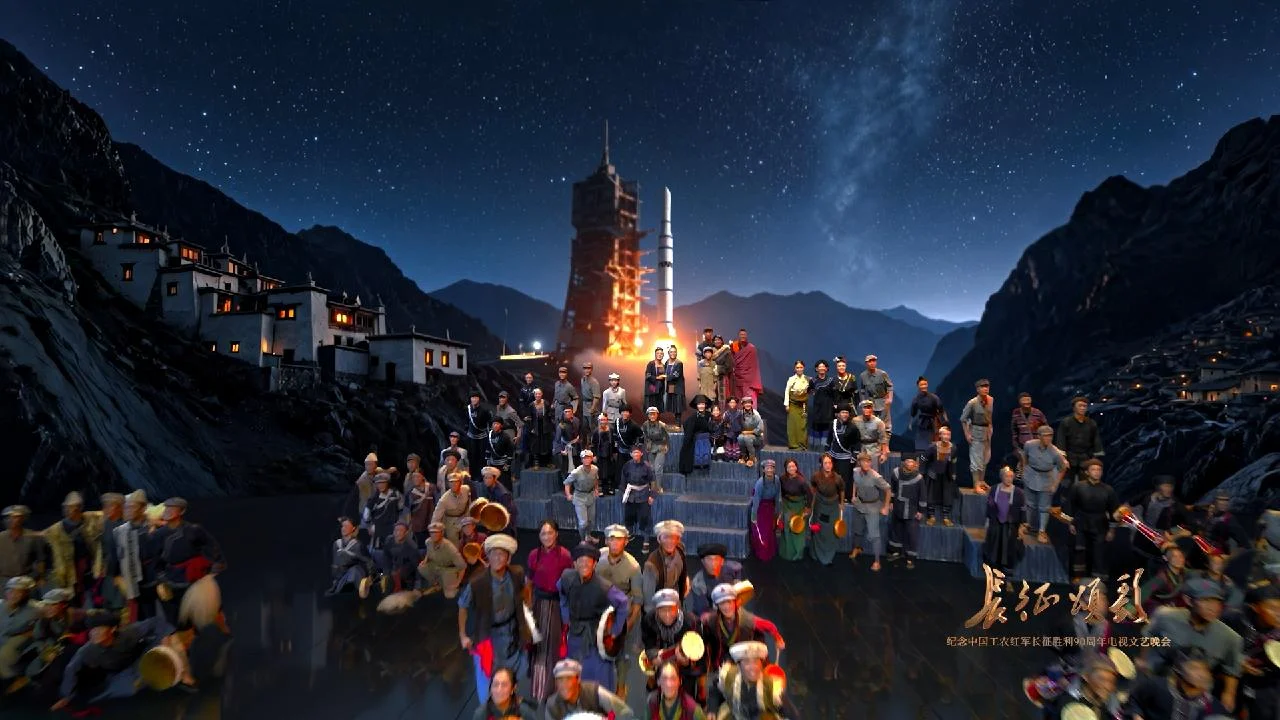
The use of AI in historical recreation is transforming how stories from the past are told and understood. One notable example is the television gala that marked the 90th anniversary of the Long March, a pivotal event in modern Chinese history. This event, broadcast by China Media Group (CMG), showcased how AI can be employed to bring historical moments to life for a contemporary audience. The gala aimed to balance the spectacle of advanced technology with the need for historical accuracy, a delicate act that requires careful consideration.
In one segment, actor Li Xuejian portrayed a Red Army cooking squad leader. His performance was particularly challenging as he has impaired hearing and speech. The creative team used CMG’s AI digital technology to restore his narration, which was based on samples of his past performances and guidance from a voice actor. This process involved multiple rounds of adjustments to ensure the recreated voice sounded authentic and matched the historical context. This application of AI not only allowed for a powerful performance but also demonstrated a sensitive approach to overcoming physical limitations through technological innovation.
Another segment, titled “Jiajin Mountain,” effectively linked two different time periods. The historical event depicted was the Red Army’s crossing of the snow-covered Jiajin Mountain in 1935. Ninety years later, a tunnel was opened on National Highway 351, providing a vital connection for over 110,000 residents who had previously been isolated by winter snow. The gala used AI-generated content (AIGC) for spatial expansion, allowing the historical marching column and the modern tunnel construction to be displayed on the same screen. This visual juxtaposition highlighted the enduring impact of historical events and the progress made over time, offering a unique perspective on historical continuity and change.
The gala also utilized a cloud-based AI multi-view system. This system employed an array of cameras to capture a 180-degree view, providing viewers with a three-dimensional studio experience that went beyond traditional fixed camera positions. This technology enhanced the immersive quality of the broadcast, making the historical reenactments feel more dynamic and engaging. By offering a more comprehensive visual perspective, the AI system helped to draw the audience deeper into the narrative, creating a more impactful connection to the historical events being portrayed.
The creators of the gala emphasized their commitment to historical accuracy. They implemented a rigorous three-stage checking process for historical details. This involved reviews by researchers, consultations with local memorial museums situated along the Long March route, and verification by historians and military museum experts. Furthermore, artifacts were meticulously restored from existing collections. For instance, a boat used on the Dadu River was rebuilt to a 1:1 scale based on a museum artifact. The directors stated their goal was to allow digital technology to expand the scope of historical representation while ensuring that rigorous research maintained the authenticity of the history presented. This dual approach, combining technological innovation with deep historical grounding, is key to responsible AI-driven historical storytelling.
AI in Historical Preservation and Access
Beyond recreating events, AI plays a significant role in preserving historical artifacts and making historical information more accessible. The ability of AI to process vast amounts of data, recognize patterns, and automate tasks is invaluable in fields like archival science and historical research. By digitizing and analyzing historical documents, images, and even audio recordings, AI can help to safeguard cultural heritage and unlock new insights from existing records.
One area where AI is making a difference is in the restoration and preservation of damaged historical materials. For example, AI algorithms can be trained to identify and repair missing or corrupted parts of old photographs, documents, or films. This is particularly useful for materials that are fragile or have suffered from the passage of time. By digitally reconstructing these items, AI helps to preserve them for future generations and makes them available for study and appreciation. This technology can also be used to enhance the legibility of faded or damaged texts, allowing historians to access information that might otherwise be lost.
AI also excels at cataloging and organizing large historical archives. Traditionally, this process has been manual, time-consuming, and prone to human error. AI-powered systems can automatically tag images, transcribe handwritten documents, and identify recurring themes or entities within vast collections of data. This makes it much easier for researchers and the public to search for and find relevant historical information. For instance, an AI could scan thousands of historical newspaper articles and identify all mentions of a particular event or person, providing a comprehensive overview that would be difficult to achieve through manual searching.
Furthermore, AI can help to make historical sites and artifacts more interactive and engaging. Through technologies like augmented reality (AR) and virtual reality (VR), AI can create immersive experiences that allow people to explore historical locations as they once were or interact with digital reconstructions of artifacts. Imagine visiting an ancient ruin and using an AR app that overlays AI-generated reconstructions of buildings and daily life onto the existing structures. This can bring history to life in a way that static displays or written descriptions cannot.
The development of AI-powered chatbots and virtual assistants also offers new ways for people to engage with historical information. These AI systems can be programmed to answer questions about historical events, figures, or periods, providing users with instant access to knowledge. They can be designed to adopt the persona of a historical figure, offering a more engaging and personalized learning experience. This democratizes access to historical knowledge, making it available to a wider audience beyond academic circles.
The challenge in these applications lies in ensuring the AI models are trained on accurate and representative data. Biases in the training data can lead to skewed interpretations or incomplete representations of history. Therefore, careful curation of data and ongoing evaluation of AI outputs are essential for responsible historical preservation and access.
AI in Historical Education and Research
The integration of AI into historical education and research promises to revolutionize how students learn about the past and how scholars conduct their work. AI tools can personalize learning experiences, provide new analytical capabilities, and help uncover hidden connections within historical data. These advancements have the potential to make history more accessible, engaging, and relevant to a broader audience.
For students, AI can offer tailored educational pathways. AI-powered learning platforms can assess a student’s understanding of historical concepts and adapt the curriculum to their individual needs. If a student struggles with a particular period or event, the AI can provide additional resources, explanations, or practice exercises. Conversely, if a student demonstrates a strong grasp of the material, the AI can offer more advanced content or related topics for exploration. This personalized approach can help to keep students motivated and ensure they develop a solid foundation in historical knowledge.
AI can also enhance the way historical research is conducted. For historians, AI tools can analyze massive datasets of historical texts, such as digitized books, letters, and government records, far more quickly than human researchers ever could. These tools can identify patterns, trends, and correlations that might otherwise go unnoticed. For example, AI can be used to track the evolution of language over time, map trade routes based on shipping manifests, or identify social networks by analyzing correspondence between individuals. This allows scholars to explore historical questions on a much larger scale and uncover new perspectives.
The use of AI in natural language processing (NLP) is particularly beneficial for historical research. NLP allows computers to understand and interpret human language, enabling AI systems to analyze the sentiment, tone, and meaning of historical documents. This can help researchers understand public opinion during a specific era, track the spread of ideas, or identify propaganda. For instance, an AI could analyze thousands of political speeches from a particular period to identify common rhetorical strategies or shifts in political discourse.
AI can also assist in the creation of historical simulations and interactive learning environments. These simulations can allow students and researchers to explore “what if” scenarios, testing hypotheses about historical events and their potential outcomes. By engaging with these dynamic models, users can gain a deeper understanding of the complexities and contingencies of history. This moves beyond passive learning to active exploration and critical thinking.
However, the application of AI in education and research also raises important questions. There is a need to ensure that AI tools are used ethically and do not perpetuate historical biases. The interpretation of AI-generated insights requires critical human oversight. Historians must remain the ultimate arbiters of historical truth, using AI as a tool to augment, rather than replace, their own judgment and expertise. The focus should always be on using AI to deepen our understanding and appreciation of history, not to automate the process of historical interpretation.
Ethical Considerations and Challenges
While the advancements in AI for historical applications are exciting, they also bring forth significant ethical considerations and challenges that must be addressed. The power of AI to shape narratives and influence perceptions of the past necessitates careful thought about its responsible deployment. Ensuring accuracy, avoiding bias, and maintaining transparency are paramount.
One of the primary concerns is the potential for AI to perpetuate or even amplify existing historical biases. AI models are trained on data, and if that data reflects the biases of the past—whether racial, gender, or cultural—the AI’s outputs will likely reflect those same biases. For example, if historical texts predominantly feature the perspectives of dominant groups, an AI analyzing these texts might inadvertently marginalize or misrepresent the experiences of minority groups. It is crucial to develop AI systems that are trained on diverse and representative datasets and to implement mechanisms for identifying and correcting biased outputs.
Another challenge is the issue of accuracy and authenticity. While AI can recreate historical scenes or restore voices, there is always a risk of misrepresentation or factual error. The creators of the Long March anniversary gala, for instance, emphasized rigorous checking processes to ensure historical accuracy. This highlights the need for human oversight and verification. AI should be seen as a tool to assist in historical reconstruction, not as an infallible source of truth. The process of AI-driven historical recreation must be transparent, with clear explanations of how the AI was used and what data it was trained on.
The potential for AI to generate deepfakes or manipulate historical imagery also raises concerns. As AI becomes more sophisticated, it can create highly realistic but fabricated historical content. This could be used to spread misinformation or distort historical events for political or ideological purposes. Safeguards and detection methods are needed to combat the misuse of AI in historical contexts. Educating the public about the capabilities and limitations of AI in historical representation is also important.
Furthermore, questions arise about the ownership and control of AI-generated historical content. Who owns the rights to a digitally recreated historical event? How should credit be given when AI plays a significant role in historical interpretation or presentation? These are complex legal and ethical questions that will require ongoing discussion and the development of new frameworks.
Finally, there is the challenge of accessibility and equity. While AI can democratize access to historical information, the development and deployment of sophisticated AI tools can be expensive. This could create a divide between institutions or individuals who can afford to leverage these technologies and those who cannot. Efforts should be made to ensure that the benefits of AI in history are shared broadly and that these tools are accessible to all who wish to engage with the past. Addressing these ethical considerations proactively will be essential for harnessing the full potential of AI in history in a responsible and beneficial way.
The Future of AI in Historical Studies
The trajectory of AI in historical studies points towards an increasingly integrated and sophisticated role. As AI technology continues to advance, its applications in understanding, preserving, and presenting the past will undoubtedly expand. We can anticipate AI becoming an indispensable tool for historians, educators, and the public alike, offering new ways to connect with and learn from history.
One area of future development is the enhanced ability of AI to analyze complex historical relationships. Beyond identifying simple correlations, future AI systems may be able to model intricate social, economic, and political networks with greater accuracy. This could lead to a deeper understanding of the causal factors behind historical events and the long-term consequences of human actions. AI might also be able to simulate historical scenarios with greater fidelity, allowing for more robust testing of historical hypotheses.
The development of more advanced natural language processing (NLP) will also play a crucial role. Future AI systems will likely be able to understand and interpret historical texts with greater nuance, capturing subtle meanings, cultural contexts, and authorial intent more effectively. This could unlock new insights from vast archives of written material, including personal letters, diaries, and oral histories, providing richer and more personal perspectives on the past.
AI’s role in historical preservation is also set to grow. We can expect AI to become even more adept at restoring damaged artifacts, digitizing fragile documents, and creating detailed digital twins of historical sites. This will not only help to safeguard cultural heritage but also make it more accessible to a global audience through virtual and augmented reality experiences. Imagine walking through a fully reconstructed ancient city, guided by an AI that can explain the significance of every building and artifact.
In education, AI will likely drive further personalization. Learning platforms will become even more sophisticated in adapting to individual student needs, offering dynamic curricula and interactive learning experiences. AI tutors could provide personalized feedback and guidance, helping students develop critical thinking skills and a deeper appreciation for historical inquiry. The ability to create immersive historical simulations will also make learning more engaging and memorable.
However, as AI’s capabilities grow, so too will the importance of ethical considerations. The challenges of bias, accuracy, and transparency will require continuous attention and the development of robust ethical guidelines and oversight mechanisms. The responsible development and deployment of AI in historical studies will depend on a collaborative effort between AI developers, historians, ethicists, and policymakers.
Ultimately, the future of AI in historical studies is not about replacing human historians but about augmenting their capabilities. AI can handle the heavy lifting of data analysis, pattern recognition, and simulation, freeing up human experts to focus on interpretation, critical thinking, and the nuanced understanding of human experience that defines historical scholarship. By working together, humans and AI can unlock new frontiers in our exploration and understanding of the past, ensuring that history remains a vibrant and relevant field for generations to come.
Conclusion
The integration of artificial intelligence into the study and presentation of history marks a significant evolution in how we connect with our past. From recreating pivotal historical events with stunning visual fidelity, as seen in the Long March anniversary gala, to preserving fragile artifacts and democratizing access to historical knowledge, AI offers transformative potential. It empowers historians with powerful analytical tools, provides educators with personalized learning platforms, and offers the public immersive experiences that bring history to life.
However, this technological advancement is not without its challenges. The ethical considerations surrounding bias, accuracy, transparency, and the potential for misuse are critical and demand ongoing attention. As AI becomes more sophisticated, the need for rigorous human oversight, diverse data sets, and clear ethical frameworks becomes even more pronounced. The goal is not to automate historical interpretation but to augment human capabilities, allowing for deeper insights and a more comprehensive understanding of the past.
Looking ahead, AI is poised to become an even more integral part of historical research and education. Its ability to analyze complex relationships, process vast amounts of information, and create engaging simulations will undoubtedly lead to new discoveries and a richer appreciation of history. By navigating the ethical landscape with care and fostering collaboration between technologists and historians, we can ensure that AI serves as a powerful force for preserving our collective memory and illuminating the lessons of history for future generations. The journey of AI in history is just beginning, promising a future where the past is more accessible, understandable, and relevant than ever before.



Conversation
0 Comments