

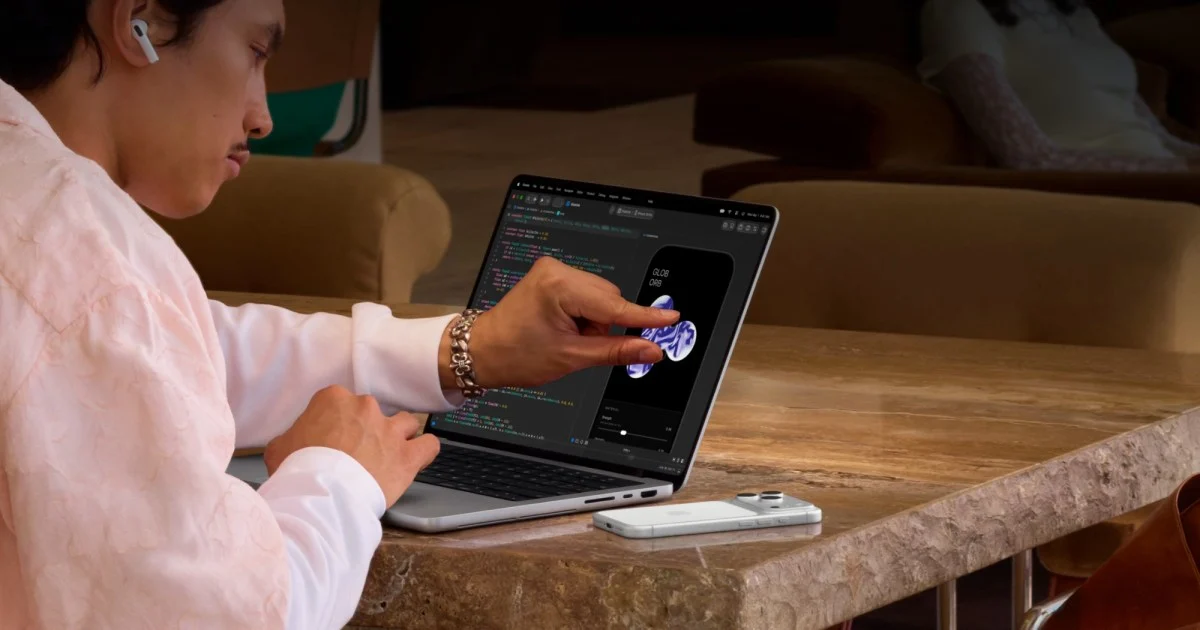
Apple’s Next MacBook Pro: A Deeper Dive into the OLED and M7 Chip Revolution
Apple’s approach to its MacBook Pro line has always been about pushing boundaries, and the recent introduction of OLED displays and touch capabilities marks a significant evolution. However, the company appears poised for an even more substantial leap forward. Reports suggest that the next generation of MacBook Pro models will not only refine the user experience with advanced display technology but also introduce a powerful new generation of Apple silicon, the M7 Pro and M7 Max chips, designed to unlock new artificial intelligence hardware capabilities. This strategic move signals Apple’s intent to further differentiate its professional laptops, offering a blend of familiar touch interactions and groundbreaking performance.
The current generation of MacBook Pro, featuring OLED displays and touch input, represents Apple’s initial foray into integrating these features into its macOS ecosystem. While these models offer a richer visual experience and more intuitive gestures, the underlying silicon, the M5 Pro and M5 Max chips, remains an iteration of existing technology. The upcoming M7 generation, however, is anticipated to be a more transformative upgrade. This shift in silicon focus suggests that Apple is not merely adding new display features but is fundamentally rethinking the performance and intelligence of its professional laptops. The integration of dedicated AI hardware within these new chips could pave the way for entirely new functionalities and a more responsive, intelligent user experience, setting the stage for a compelling sequel to the current OLED MacBook Pro.
The Evolution of MacBook Pro: From Display to Silicon
Apple’s journey with the MacBook Pro has been characterized by a relentless pursuit of innovation, consistently redefining user expectations for professional laptops. The recent introduction of OLED displays and touch input on the latest MacBook Pro models represents a significant step in this ongoing evolution. These advancements bring a more vibrant and dynamic visual experience, with deeper blacks and richer colors, enhancing everything from creative work to media consumption. The addition of touch capabilities further bridges the gap between the familiar interfaces of iOS and iPadOS and the macOS environment, allowing for more intuitive navigation and interaction with applications.
However, the true power of these new hardware features is intrinsically linked to the silicon that drives them. The current generation of MacBook Pro laptops, while boasting impressive displays and touch functionality, are powered by the M5 Pro and M5 Max chips. These processors, while highly capable, represent an incremental improvement over their predecessors. The real excitement for the future lies in the anticipated M7 generation of Apple silicon. Reports indicate that these next-generation chips will not only be more powerful but will also incorporate dedicated hardware for artificial intelligence tasks. This focus on AI capabilities suggests a move beyond simply enhancing existing features; Apple seems poised to introduce entirely new ways for users to interact with their devices, leveraging the power of AI to create a more personalized, efficient, and intelligent computing experience.
The strategic timing of this silicon upgrade is also noteworthy. Apple is carefully navigating the landscape of its product ecosystem, aiming to create a more cohesive experience across its Mac and iPad lines without necessarily merging them. By introducing touch input and advanced displays on the MacBook Pro, Apple makes the transition for users familiar with iPhones and iPads smoother. Simultaneously, the enhanced silicon with AI capabilities promises to elevate the Mac experience to new heights, offering functionalities that could redefine productivity and creativity for professionals. This dual approach of refining the user interface and bolstering the underlying performance ensures that the MacBook Pro continues to lead the pack in the competitive laptop market.
Unpacking the M7 Pro and M7 Max: AI at the Core
The upcoming M7 Pro and M7 Max chips are poised to represent a significant leap forward in Apple’s silicon development, particularly with their emphasis on artificial intelligence hardware capabilities. While the M5 generation introduced impressive performance gains and efficiency improvements, the M7 series is expected to integrate specialized processing units designed to accelerate AI and machine learning tasks. This dedicated hardware could unlock a new era of intelligent features within macOS, transforming how users interact with their MacBook Pros.
The implications of dedicated AI hardware are far-reaching. For creative professionals, this could mean faster and more sophisticated image and video editing tools, with AI assisting in tasks like object recognition, background removal, and intelligent upscaling. Developers might benefit from AI-powered code completion, debugging assistance, and even automated testing, significantly speeding up the development cycle. For everyday users, AI capabilities could manifest in more personalized user experiences, smarter predictive text, enhanced voice recognition, and more efficient power management based on usage patterns.
The report from Bloomberg’s Mark Gurman suggests that these AI capabilities will be a key differentiator for the second-generation OLED MacBook Pro lineup. This indicates that Apple views AI not as an add-on feature but as a fundamental component of the future of personal computing. The integration of these specialized AI processors within the M7 chips means that these tasks can be performed directly on the device, offering greater speed, privacy, and efficiency compared to cloud-based AI solutions. This on-device processing is crucial for maintaining user privacy and ensuring that AI features are responsive and accessible even without an internet connection.
Furthermore, the development of the M7 generation of chips hints at Apple’s long-term strategy for its silicon. By investing heavily in AI hardware, Apple is positioning itself to compete at the forefront of the AI revolution, ensuring that its devices remain powerful and relevant in an increasingly intelligent world. The M7 Pro and M7 Max are not just about raw processing power; they are about intelligent power, designed to anticipate user needs and streamline workflows in ways that were previously unimaginable. This focus on AI-driven performance is likely to be a defining characteristic of Apple’s professional laptops for years to come.
The Touchscreen Experience: Refined, Not Revolutionized (Yet)
The introduction of touch input on the latest MacBook Pro models represents a thoughtful, albeit conservative, integration of a familiar interaction method into the macOS environment. Apple has opted to implement touch gestures that are largely consistent with those found on iPhones and iPads, such as tapping, swiping, pinching, and scrolling. This approach ensures a degree of familiarity for users transitioning between Apple’s different product lines, making the learning curve for the touchscreen functionality relatively gentle.
However, this initial implementation has not fundamentally altered the way macOS is used. The display does not fold back into a tablet-like configuration, and there has been no addition of Apple Pencil support, features that might have signaled a more radical reimagining of the laptop’s form factor and interaction. Instead, Apple appears to be using touch as an enhancement to the traditional mouse and trackpad experience, offering a convenient alternative for certain tasks. This measured approach allows Apple to gather user feedback and refine its strategy before potentially introducing more transformative touch-based features in future iterations.
The decision to keep the touchscreen implementation conservative in the first generation of OLED MacBook Pros is likely a strategic one. Apple is known for its meticulous product development, and it is probable that the company is observing how users adopt and integrate touch functionality into their workflows. The current setup allows for quick selections, scrolling through documents, and navigating web pages with greater ease, which can be particularly beneficial in specific professional contexts.
The expectation is that the M7 generation of chips, coupled with potential software updates, will pave the way for a more profound integration of touch and AI capabilities. While the current generation focuses on familiar gestures, the next iteration could see Apple exploring more advanced touch interactions that are deeply intertwined with the AI hardware. This could involve gesture-based commands that are contextually aware, or touch interfaces that dynamically adapt based on the task at hand, powered by the intelligent processing of the M7 silicon. For now, the touchscreen on the MacBook Pro is an evolution, offering a more fluid way to interact with the existing macOS interface, with the promise of more revolutionary changes on the horizon.
A More Consistent MacBook Pro Lineup
Apple’s strategy with the MacBook Pro lineup appears to be moving towards greater consistency across its professional offerings. The introduction of a thinner design and slimmer bezels on the higher-end OLED models is a significant aesthetic and functional update. This refreshed design language is not expected to be limited to the premium configurations; reports suggest that Apple plans to bring these design elements to an entry-level 14-inch MacBook Pro as well, powered by a standard M7 chip.
This move towards a unified design language across the MacBook Pro range would offer a more cohesive user experience. Buyers will be able to choose a MacBook Pro based on their performance needs and budget, without having to compromise on the modern look and feel of the device. The slimmer bezels, in particular, contribute to a more immersive display experience, allowing users to focus more on their content and less on the surrounding hardware. This design consistency can also simplify manufacturing and supply chain management for Apple, potentially leading to more efficient production cycles.
The inclusion of the M7 chip in the entry-level 14-inch model signifies that even the more accessible MacBook Pro will benefit from the advancements in Apple’s silicon. While it may not feature the Pro or Max variants of the M7, the standard M7 chip is still expected to offer substantial performance improvements over previous generations, ensuring that all MacBook Pro users can enjoy a capable and responsive computing experience. This approach democratizes access to the latest design and core performance enhancements, making the MacBook Pro a more attractive option for a wider audience.
The potential for a more consistent MacBook Pro lineup, featuring both a design refresh and a new generation of Apple silicon, paints a picture of a product line that is both forward-looking and user-centric. It suggests that Apple is listening to market demands for modern aesthetics and powerful, efficient performance, and is working to deliver these across its entire professional laptop range. This strategic alignment of design and silicon ensures that the MacBook Pro remains a compelling choice for professionals seeking a premium computing experience.
The AI Hardware Question: What Will It Actually Enable?
While the prospect of new AI hardware capabilities within Apple’s M7 Pro and M7 Max chips is exciting, the specific functionalities and their impact on everyday use remain largely speculative at this stage. Apple has a history of developing groundbreaking technologies and integrating them seamlessly into its products, often with a focus on user experience and privacy. The exact nature of these AI-driven features will likely be revealed closer to the product launch, but we can anticipate certain areas where AI could make a significant difference.
One of the most immediate applications of enhanced AI hardware would be in improving the performance and intelligence of existing macOS features. For instance, Spotlight search could become more contextually aware, understanding natural language queries with greater accuracy and providing more relevant results. Siri, Apple’s virtual assistant, could see a significant boost in its ability to understand complex commands, engage in more natural conversations, and perform a wider range of tasks proactively. Photo and video editing applications could benefit from AI-powered intelligent suggestions, automated adjustments, and more sophisticated content analysis.
Beyond these enhancements, the dedicated AI hardware could pave the way for entirely new functionalities. Imagine a MacBook Pro that can intelligently manage its power consumption based on your specific usage patterns, optimizing battery life in real-time. Or consider a system that can learn your workflow and proactively suggest shortcuts, applications, or information relevant to your current task. In creative fields, AI could assist in generating design elements, composing music, or even writing code, acting as a powerful co-pilot for professionals.
The emphasis on on-device AI processing is also a critical factor. This approach prioritizes user privacy by keeping sensitive data on the machine rather than sending it to the cloud for processing. This is particularly important for AI applications that deal with personal information, such as voice commands, facial recognition, or personalized recommendations. By keeping AI processing local, Apple can offer powerful intelligent features while maintaining a high standard of user privacy, a hallmark of its product philosophy.
The true potential of Apple’s AI hardware will unfold as the company unveils its specific software integrations. However, the commitment to developing dedicated AI silicon within the M7 chips signals a clear intention to embed intelligence at the core of its future devices. This focus on AI-driven performance is not just about keeping pace with technological advancements; it’s about shaping the future of personal computing, making devices more intuitive, efficient, and personalized than ever before. The upcoming MacBook Pro models, powered by the M7 generation, are expected to be at the forefront of this AI revolution.
The OLED MacBook Pro: A Glimpse into the Future
The first generation of OLED touchscreen MacBook Pro models represents a significant milestone for Apple, marking its entry into a new era of display technology and user interaction for its professional laptops. The adoption of OLED displays brings a level of visual fidelity previously unseen on MacBooks, offering unparalleled contrast ratios, true blacks, and vibrant colors. This enhancement is particularly impactful for professionals working with visual media, where color accuracy and image depth are paramount. The Dynamic Island interface, a feature that has already made its mark on iPhones, also finds a new home on the Mac, providing a dynamic and interactive way to display alerts and ongoing activities without interrupting the user’s workflow.
Beyond the visual enhancements, the integration of touch input, while conservative in its initial implementation, offers a more direct and intuitive way to interact with the macOS interface. This allows for quicker selections, smoother scrolling, and a more tactile connection with the digital content. Combined with a thinner and lighter design, improved heat management, and a redesigned cooling system, these first-generation OLED MacBook Pros are a testament to Apple’s continuous effort to refine the user experience and push the boundaries of hardware design.
However, as discussed, the true potential of these advancements is only beginning to be realized. The M5 Pro and M5 Max chips, while powerful, are a stepping stone towards the more transformative capabilities expected with the M7 generation. The current touchscreen implementation serves as a foundation, demonstrating Apple’s commitment to exploring new interaction paradigms. The absence of features like a foldable display or Apple Pencil support in this first iteration suggests a deliberate strategy to evolve these aspects over time, informed by user adoption and technological advancements.
The success of this initial foray into OLED and touch technology will undoubtedly influence Apple’s future product roadmap. If users embrace these features and find them beneficial to their workflows, it could signal a broader shift in Apple’s laptop design philosophy. The upcoming M7 silicon, with its focus on AI hardware, is poised to unlock the next level of innovation, potentially transforming the touchscreen experience into something far more dynamic and intelligent. The current OLED MacBook Pro is more than just an upgrade; it’s an opening act, setting the stage for a sequel that promises to be considerably more compelling and revolutionary.
Apple’s Commitment to Innovation: A Look at the Organization
Apple’s official website serves as the central hub for understanding the company’s vision, product offerings, and commitment to innovation. As a global leader in consumer electronics, software, and online services, Apple consistently strives to deliver products that are not only technologically advanced but also designed with user experience, privacy, and environmental responsibility in mind. The company’s relentless pursuit of excellence is evident in its integrated approach to hardware, software, and services, creating a seamless ecosystem that defines the Apple experience.
From the development of its custom silicon, like the M-series chips, to the intuitive design of its operating systems, Apple maintains a high level of control over its product development. This vertical integration allows for optimized performance, enhanced security, and the ability to introduce groundbreaking features that set its products apart. The ongoing evolution of the MacBook Pro line, with its recent embrace of OLED displays and touch technology, and the anticipated advancements in its silicon with the M7 generation, are prime examples of Apple’s dedication to pushing the boundaries of what personal computers can achieve.
Apple’s commitment extends beyond product innovation. The company places a strong emphasis on user privacy, designing its products and services to protect personal data. This focus is increasingly important in an era where data security and privacy are major concerns for consumers. Furthermore, Apple is actively engaged in environmental initiatives, working towards carbon neutrality and using recycled materials in its products. These efforts reflect a broader corporate responsibility that complements its technological ambitions.
By visiting Apple’s official website, one can gain a deeper appreciation for the company’s philosophy and its impact on the technology landscape. It is a platform that showcases not just the products themselves, but the underlying principles of design, innovation, and user-centricity that drive Apple’s success. The continuous development and refinement of product lines like the MacBook Pro underscore Apple’s enduring commitment to providing professionals with the most advanced and capable tools available.
Conclusion
The trajectory of Apple’s MacBook Pro line is clearly pointing towards a future where advanced display technology, intuitive touch interactions, and powerful, intelligent silicon converge. The current generation of OLED touchscreen MacBook Pros has laid a robust foundation, offering a visually stunning and more interactive computing experience. However, the true excitement lies in what’s next. The anticipated M7 Pro and M7 Max chips, with their integrated AI hardware capabilities, promise to elevate the MacBook Pro from a highly capable professional tool to an even more intelligent and responsive partner.
This strategic evolution, from refining display technology and touch input to fundamentally enhancing the processing power and intelligence of the core silicon, demonstrates Apple’s commitment to leading the personal computing industry. The move towards a more consistent design language across the MacBook Pro lineup further solidifies Apple’s dedication to delivering a premium and cohesive user experience. While the exact nature of the AI-driven features remains to be seen, the focus on on-device processing suggests a future where powerful intelligence is delivered with a strong emphasis on user privacy and efficiency. The upcoming MacBook Pro models are poised to not only meet but exceed the expectations of professionals, offering a glimpse into the next generation of intelligent and visually immersive computing.


Conversation
0 Comments