

The Enduring Significance of the Tokyo Trial: A Pillar of Post-War Justice
The Tokyo Trial, officially known as the International Military Tribunal for the Far East, stands as a critical historical event that shaped the post-World War II international order. Eighty years after its opening, its legacy continues to resonate, serving as a reminder of the pursuit of justice and the importance of confronting wartime atrocities. This analysis delves into the structure, proceedings, and lasting impact of the Tokyo Trial, exploring how it established legal precedents and contributed to the global understanding of accountability for war crimes. The trial’s meticulous documentation and the judgments rendered offer invaluable insights into the complexities of international law and the enduring struggle for peace and human rights.
The Genesis of the Tokyo Trial
The end of World War II brought with it the urgent need to address the immense suffering and destruction caused by the conflict. Following the unconditional surrender of Japan in August 1945, the Allied powers recognized the necessity of holding accountable those responsible for initiating and perpetuating the war in the Pacific. This led to the establishment of the International Military Tribunal for the Far East, commonly referred to as the Tokyo Trial. The trial was conceived as a mechanism to deliver justice for the widespread war crimes committed by the Empire of Japan and its military leaders.
The legal framework for the tribunal was established by the Allied Powers, primarily under the authority of General Douglas MacArthur, the Supreme Commander for the Allied Powers in Japan. The charter of the tribunal was modeled after the Nuremberg Trials, which had already begun prosecuting Nazi war criminals in Europe. This ensured a degree of consistency in the international community’s approach to holding individuals responsible for crimes against peace, war crimes, and crimes against humanity. The tribunal’s mandate was to prosecute individuals who bore the greatest responsibility for the war and its associated atrocities.
The selection of defendants was a complex process, involving extensive investigations into the conduct of Japanese political, military, and economic leaders. Ultimately, 28 individuals were indicted, including former Prime Ministers, military commanders, and diplomats. These individuals were accused of a wide range of offenses, from planning and waging aggressive war to ordering or permitting the mistreatment of prisoners of war and the commission of atrocities against civilian populations. The indictment itself was a monumental document, detailing the systematic nature of Japan’s wartime aggression and the horrific consequences for millions of people across Asia and the Pacific.
The establishment of the tribunal was not without its challenges. The geopolitical landscape of the post-war era was rapidly evolving, and differing perspectives among the Allied nations on how to handle the prosecution of Japanese war leaders sometimes created friction. However, the shared commitment to establishing a precedent for international accountability ultimately prevailed. The Tokyo Trial was thus born out of a collective desire to ensure that such widespread devastation and inhumanity would not be repeated and that those who orchestrated such crimes would face justice.
Structure and Proceedings of the Tribunal
The International Military Tribunal for the Far East was structured to ensure a fair and thorough examination of the charges brought against the defendants. The tribunal consisted of eleven judges appointed by the Allied Powers, representing a diverse range of legal backgrounds and nationalities. These judges were tasked with presiding over the proceedings, hearing evidence, and ultimately rendering a verdict. The prosecution team was equally diverse, comprising legal experts from various Allied nations, responsible for presenting the case against the accused.
The trial itself was an extensive and complex undertaking, lasting for over two and a half years, from May 1946 to November 1948. The proceedings were held in Tokyo, Japan, within a specially constructed courtroom. The sheer volume of evidence presented was staggering, including thousands of documents, photographs, and testimonies from witnesses. The prosecution meticulously laid out its case, detailing the aggressive expansionist policies of Japan, the planning and execution of wars of aggression, and the numerous war crimes committed by Japanese forces.
Key to the prosecution’s strategy was demonstrating a conspiracy among the defendants to wage aggressive war. This involved presenting evidence of secret meetings, policy decisions, and the systematic planning that led to the outbreak of hostilities in the Pacific. The prosecution also focused on specific instances of war crimes, such as the mistreatment of Allied prisoners of war, the Nanjing Massacre, and other atrocities committed against civilian populations in occupied territories. The testimonies of survivors and former soldiers provided harrowing accounts of the brutality inflicted upon countless individuals.
The defense teams, composed of both Japanese and international lawyers, worked to challenge the prosecution’s evidence and arguments. They raised various legal defenses, including questioning the jurisdiction of the tribunal, arguing that the defendants were acting under orders, and asserting that the charges were based on ex post facto laws. However, the tribunal largely upheld its jurisdiction and found sufficient evidence to proceed with the trials. The defense presented its own witnesses and documentary evidence, attempting to mitigate the culpability of their clients.
The proceedings were conducted in a formal and structured manner, with strict rules of evidence and procedure. Interpreters were crucial to ensure that all parties could understand the proceedings, as the trial involved multiple languages. The tribunal’s commitment to due process was evident in the extensive opportunities provided for both the prosecution and the defense to present their cases. The sheer scale and complexity of the trial underscored the monumental effort required to bring such a significant number of high-ranking individuals to justice.
Judgments and Sentences
After months of deliberation, the International Military Tribunal for the Far East delivered its verdict on November 12, 1948. The judgments were a culmination of the extensive evidence presented and the rigorous legal arguments made by both the prosecution and the defense. The tribunal found 25 of the 28 defendants guilty of various charges, including crimes against peace, war crimes, and crimes against humanity. The sentences ranged from life imprisonment to the death penalty.
Seven of the defendants were sentenced to death: Kenryo Sato, Hideki Tojo, Akira Muto, Iwane Matsui, Heitaro Kimura, Minoru Ota, and Tadamichi Kuribayashi. These individuals were deemed to bear the greatest responsibility for the planning and execution of Japan’s aggressive wars and the widespread atrocities committed during the conflict. The death sentences were carried out by hanging on December 23, 1948.
The remaining 18 defendants were sentenced to life imprisonment. These individuals, while found guilty, were not deemed to have the same level of direct responsibility for the most egregious crimes as those who received the death penalty. Their sentences reflected their roles in the Japanese government and military, and their involvement in the broader conspiracy to wage aggressive war. Over time, many of these individuals were paroled or died in prison.
The judgments of the Tokyo Trial were significant not only for their impact on the individuals convicted but also for their broader implications for international law. The tribunal affirmed the principle that individuals, not just states, can be held accountable for waging aggressive war and committing war crimes. This established a crucial precedent for future international tribunals, including those established to address atrocities in other parts of the world. The trial’s detailed findings also provided a comprehensive historical record of Japan’s wartime actions, serving as a vital resource for understanding the events of World War II in the Pacific.
However, the judgments were not without controversy. Some critics argued that the tribunal was politically motivated or that the sentences were too lenient or too harsh. There were also differing opinions among the judges themselves, with some dissenting opinions being recorded. Despite these debates, the Tokyo Trial remains a landmark event in the history of international justice, solidifying the concept of individual criminal responsibility for wartime conduct.
The Legacy and Historical Significance
The Tokyo Trial’s legacy extends far beyond the courtroom and the individuals who were prosecuted. It played a pivotal role in shaping the post-war international order and continues to influence discussions on international law, human rights, and historical memory. The trial’s findings and judgments provided a definitive historical account of Japan’s wartime aggression, serving as a crucial reference point for understanding the events of World War II in Asia and the Pacific.
One of the most significant contributions of the Tokyo Trial was its affirmation of the principle of individual criminal responsibility for war crimes and crimes against humanity. By holding leaders accountable for their actions, the tribunal sent a clear message that individuals cannot escape justice for orchestrating or permitting widespread atrocities. This principle became a cornerstone of international criminal law and was further developed in subsequent tribunals, such as those for the former Yugoslavia and Rwanda.
The trial also played a role in the broader process of demilitarization and democratization in Japan. By prosecuting key figures responsible for the war, the Allied powers aimed to dismantle the militaristic structures that had led Japan into conflict. The judgments and the subsequent occupation policies contributed to a fundamental shift in Japan’s political and social landscape, paving the way for its emergence as a peaceful and democratic nation.
Furthermore, the Tokyo Trial helped to establish a framework for international cooperation in addressing global security threats. The collaborative effort among the Allied powers in organizing and conducting the trial demonstrated the potential for collective action in upholding international law and preventing future conflicts. This spirit of cooperation, though sometimes strained, laid some groundwork for the development of international institutions like the United Nations.
However, the legacy of the Tokyo Trial is also marked by ongoing debates and differing interpretations of history. In Japan, there have been varying perspectives on the trial’s legitimacy and the extent to which its findings should inform contemporary national identity and foreign policy. Some right-wing elements have sought to question the trial’s proceedings or downplay Japan’s wartime responsibilities, a trend that has drawn criticism from neighboring countries and international observers.
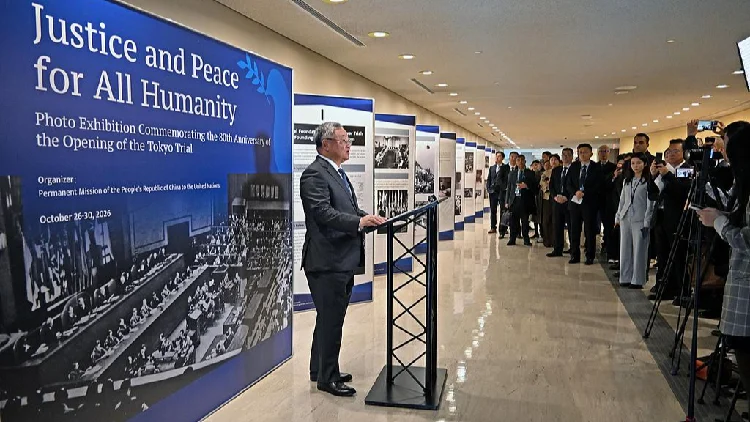
The exhibition held at the UN headquarters marking the 80th anniversary of the Tokyo Trial’s opening underscores the enduring relevance of this historical event. As China’s permanent representative to the United Nations, Fu Cong, stated, “The Tokyo Trial cements the post-war world order, upholds fairness and justice, and advances international rule of law. It is a landmark victory of peace over war, civilization over barbarism, and justice over evil, with far-reaching political and historical significance.” This sentiment highlights the trial’s role in establishing a global norm against aggression and its importance in safeguarding the international legal order.
The exhibition also serves as a reminder of the need to remain vigilant against the resurgence of militarism and the distortion of historical narratives. Fu Cong’s remarks about Japan needing to “bear in mind what is at the core of the trial, make a clean break with militarism, and commit itself to peace once and for all” point to the ongoing challenges in ensuring that the lessons of the past are fully embraced. The trial’s historical significance lies not only in its judicial outcomes but also in its continuous call for remembrance, accountability, and the unwavering commitment to peace and justice for all humanity.
Challenges and Criticisms of the Trial
While the Tokyo Trial is widely recognized as a landmark achievement in international justice, it was not without its challenges and criticisms. These critiques, raised both at the time of the trial and in subsequent historical analyses, offer important perspectives on the complexities of prosecuting war crimes and the limitations inherent in such endeavors. Understanding these criticisms is essential for a comprehensive appreciation of the trial’s historical context and its enduring legacy.
One of the most frequently raised criticisms concerns the perceived political nature of the tribunal. Critics argued that the trial was, to some extent, a victory for the victors of World War II, designed to legitimize their actions and impose their will on the defeated nations. The fact that the tribunal was established and overseen by the Allied powers, particularly the United States through General MacArthur, led some to question the impartiality of the proceedings. The selection of defendants and the scope of the charges were also subjects of debate, with some arguing that certain individuals or actions were overlooked.
Another point of contention was the legal basis for the charges, particularly the charge of “crimes against peace.” This charge, which involved prosecuting individuals for initiating and waging aggressive war, was based on principles that were still relatively nascent in international law at the time. While the Nuremberg Trials had established a precedent, the application of these principles in the Tokyo Trial faced scrutiny. Defense attorneys argued that prosecuting individuals for actions that were not explicitly defined as crimes under domestic law at the time of their commission constituted an application of ex post facto law, a principle generally considered contrary to due process.
The composition of the tribunal itself also drew criticism. While intended to represent a broad coalition of Allied powers, the tribunal’s judges were all from Allied nations. This lack of representation from neutral countries or even from Japan itself led some to question the tribunal’s claim to universal legitimacy. The differing legal traditions and cultural perspectives among the judges also presented challenges in reaching unanimous decisions on complex legal matters.
The duration and cost of the trial were also significant factors. Lasting for over two and a half years and involving immense logistical and financial resources, the trial placed a considerable burden on the Allied powers and the Japanese administration. The sheer scale of the proceedings sometimes led to concerns about the efficiency and practicality of such large-scale international tribunals.
Furthermore, the post-trial period saw varying approaches to the convicted war criminals, which complicated the narrative of justice. The eventual release of many of the imprisoned individuals, and the later rehabilitation of some war criminals in Japan, led to questions about the long-term effectiveness of the trial in ensuring lasting accountability and preventing the resurgence of militaristic ideologies. The ongoing debates in Japan regarding historical memory and the interpretation of the war period highlight the persistent challenges in fully reconciling with the past.
Despite these criticisms, it is important to acknowledge the immense historical context in which the Tokyo Trial took place. The world was grappling with the unprecedented devastation of a global conflict, and the establishment of any form of international justice was a monumental undertaking. The tribunal’s efforts to hold individuals accountable for their roles in the war, to document wartime atrocities, and to lay the groundwork for a more peaceful future were significant achievements, even if imperfect. The criticisms serve not to invalidate the trial’s importance but to provide a more nuanced understanding of its complexities and the ongoing evolution of international law and justice.
The Tokyo Trial’s Impact on International Law
The Tokyo Trial, alongside its European counterpart at Nuremberg, played a transformative role in the development and codification of international law. It solidified and expanded upon the legal principles established in the aftermath of World War I and the interwar period, particularly concerning the prohibition of aggressive war and the accountability of individuals for war crimes. The tribunal’s proceedings and judgments provided crucial precedents that continue to shape international jurisprudence today.
One of the most profound impacts of the Tokyo Trial was its definitive stance on “crimes against peace.” By prosecuting leaders for initiating and waging aggressive war, the tribunal underscored that such actions were not merely political decisions but criminal offenses under international law. This concept was further elaborated upon in the UN Charter and later codified in instruments like the Rome Statute of the International Criminal Court. The trial helped to establish the idea that the international community has a right and a duty to prevent and punish wars of aggression.
The tribunal also significantly contributed to the understanding and prosecution of war crimes and crimes against humanity. The extensive documentation of atrocities committed by Japanese forces during the war provided a detailed record of human rights violations. The judgments affirmed that individuals could be held responsible for ordering, permitting, or participating in acts such as murder, torture, rape, and the mistreatment of prisoners of war. This reinforced the notion that international law protects individuals from such barbarity, regardless of the circumstances of war.
The concept of “crimes against humanity,” which involves widespread or systematic attacks against a civilian population, was also given considerable weight in the Tokyo Trial. The tribunal’s findings on events like the Nanjing Massacre and other atrocities demonstrated the application of this principle in holding leaders accountable for state-sponsored violence against civilians. This laid important groundwork for the development of international criminal law’s capacity to address large-scale human rights abuses.
Moreover, the Tokyo Trial highlighted the importance of international cooperation in the administration of justice. The collaborative effort among the Allied powers in establishing the tribunal, gathering evidence, and conducting the proceedings demonstrated a shared commitment to upholding international legal norms. This spirit of cooperation, though often challenging, was a precursor to the multilateral institutions and legal frameworks that have been developed in the decades since the war.
The tribunal’s emphasis on due process, despite the extraordinary circumstances, also contributed to the development of standards for international criminal proceedings. While criticisms regarding impartiality and legal precedent exist, the trial provided a structured framework for presenting evidence, examining witnesses, and rendering judgments in a complex international setting. This experience informed the design and operation of subsequent international tribunals.
In essence, the Tokyo Trial served as a critical laboratory for international law. It tested existing principles, forged new ones, and demonstrated the practical application of international criminal justice. The judgments and the extensive records produced by the tribunal remain indispensable resources for legal scholars, historians, and policymakers seeking to understand the evolution of international law and the ongoing pursuit of accountability for the most serious international crimes. The exhibition marking its 80th anniversary at the UN headquarters is a testament to its enduring relevance in upholding the rule of law on a global scale.
Conclusion
The Tokyo Trial stands as a monumental testament to humanity’s pursuit of justice in the wake of devastating conflict. Eighty years after its opening, the International Military Tribunal for the Far East continues to hold profound significance, not only as a historical event but as a foundational pillar of international law. Its structure, the meticulous proceedings, and the resulting judgments provided a crucial framework for holding individuals accountable for waging aggressive war and committing horrific atrocities.
The trial’s legacy is multifaceted. It solidified the principle of individual criminal responsibility, ensuring that leaders could not escape justice for orchestrating widespread suffering. It meticulously documented Japan’s wartime aggression, creating an invaluable historical record that serves as a constant reminder of the consequences of unchecked militarism. Furthermore, the Tokyo Trial played a vital role in shaping the post-war international order, contributing to the demilitarization of Japan and reinforcing the global commitment to peace and the rule of law.
While challenges and criticisms surrounding the trial’s impartiality and legal foundations exist, they do not diminish its overall importance. Instead, they offer a more nuanced understanding of the complexities involved in establishing international justice in a post-war world. The ongoing relevance of the Tokyo Trial is underscored by events like the recent exhibition at the UN headquarters, which reaffirms its role in upholding fairness, justice, and the international rule of law. As Fu Cong, China’s permanent representative to the United Nations, aptly stated, “History, if not forgotten, can serve as a guide for the future.” The Tokyo Trial’s lessons remain a vital guide, urging vigilance against the resurgence of militarism and reinforcing the collective responsibility to safeguard international peace and security for all humanity.


Conversation
0 Comments