

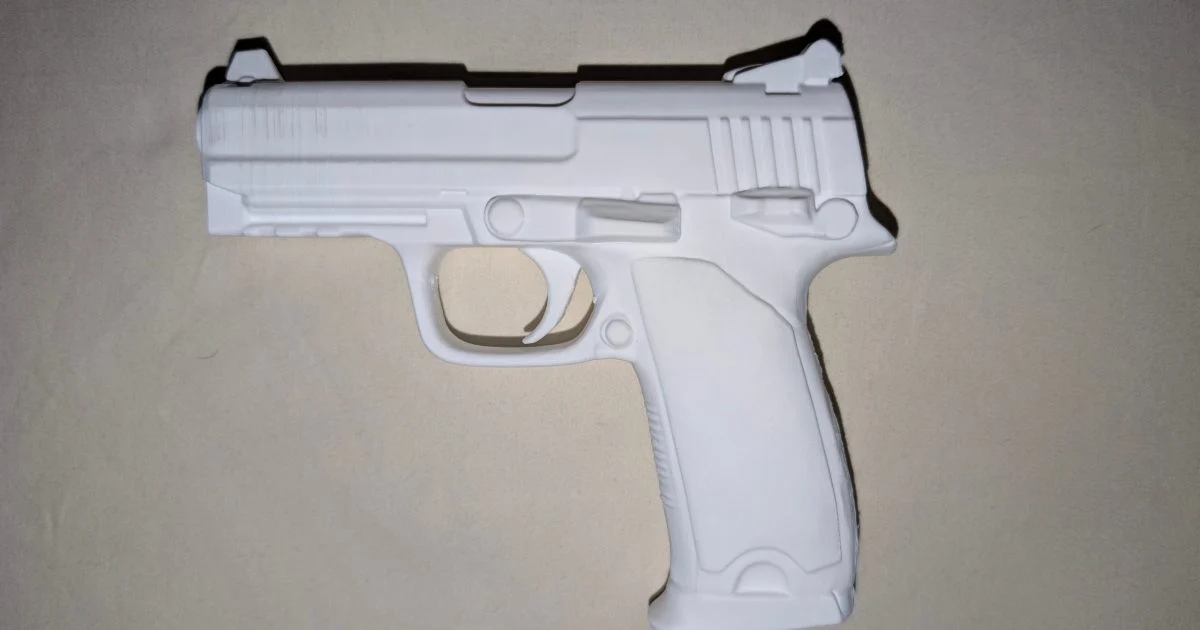
Cracking the Code: New Science Aims to Trace 3D-Printed Ghost Guns
The world of firearms is constantly evolving, and with it, the challenges faced by law enforcement and forensic investigators. While traditional firearms often bear serial numbers and leave distinct marks on ammunition, the rise of 3D-printed firearms, commonly known as ghost guns, presents a significant hurdle. These untraceable weapons can be manufactured without serial numbers, making it difficult to connect them to their owners or to specific crime scenes. However, a groundbreaking development from researchers in Australia may offer a new path forward, using the very material these guns are made from to identify them.
This innovative approach focuses on the plastic used in 3D printing, specifically Polylactic Acid (PLA). By analyzing the unique thermal properties of PLA, scientists believe they can create a forensic fingerprint for these untraceable weapons. This could revolutionize how investigators approach cases involving ghost guns, providing a much-needed tool in the fight against illegal firearm proliferation.
The Challenge of Untraceable Firearms
For decades, investigators have relied on a combination of serial numbers and microscopic markings left by firearms on bullets and cartridge cases. Serial numbers act as a unique identifier for each weapon, allowing authorities to track its ownership history. When a firearm is used in a crime, the microscopic imperfections on the barrel and firing pin leave distinct marks on the projectiles and casings. Forensic ballistics experts can compare these marks to identify the specific weapon used.
Ghost guns, however, bypass these traditional identification methods. They are often assembled from parts purchased online or manufactured using 3D printers. The key characteristic that makes them “ghost” guns is the absence of a serial number, making them incredibly difficult to trace. This lack of traceability raises serious concerns for public safety, as these weapons can be acquired by individuals who might otherwise be prohibited from owning firearms. The ability to produce firearms at home, without regulatory oversight, creates a significant blind spot for law enforcement.
Traditional forensic analysis, which relies on the unique characteristics of manufactured firearm components, also struggles with 3D-printed weapons. The printing process itself can introduce variations, and the materials used may not leave the same kind of microscopic evidence as conventional firearms. This means that even when a ghost gun is recovered, connecting it to a suspect or a previous crime can be an arduous, if not impossible, task.
A New Forensic Frontier: Analyzing 3D-Printing Plastic
Researchers at Curtin University, in collaboration with forensic experts at ChemCentre in Australia, have been exploring a novel method to overcome the traceability challenges posed by 3D-printed firearms. Their work centers on analyzing Polylactic Acid (PLA), a widely used and relatively inexpensive plastic in the 3D printing community. PLA is a biodegradable thermoplastic derived from renewable resources like corn starch or sugarcane, making it a popular choice for hobbyists and manufacturers alike.
The core of their research involves a technique called differential scanning calorimetry (DSC). DSC is a thermal analysis method used to measure the heat flow into or out of a sample as it is heated or cooled. Different materials, and even the same material from different sources or processed in different ways, will respond to heat uniquely. This response can be measured and recorded as a thermal signature.
The Australian researchers examined 28 samples of PLA filament, the raw material used in 3D printers. Their initial findings were promising: they were able to distinguish between 26 of these 28 samples using DSC. This is significant because it means that even PLA spools that appear identical in color and might be purchased from the same retailer could have subtle differences in their composition or manufacturing process that are detectable through thermal analysis. These differences create a unique thermal fingerprint for each sample.
Accounting for the Printing Process
A critical challenge in using DSC for forensic analysis of 3D-printed objects is that the printing process itself alters the material’s thermal properties. When plastic filament is heated and extruded through a 3D printer nozzle, and then cools to form a solid object, its internal structure changes. This means that the thermal signature of the finished 3D-printed part will not be identical to that of the original, unprinted filament.
The Curtin University researchers recognized this issue and developed a method to account for it. They subjected both the original PLA filament and test pieces printed from that filament to controlled heating and cooling cycles. By carefully managing these thermal cycles, they could effectively normalize the thermal properties of the printed objects, making them comparable to the original filament. This workaround allowed them to successfully associate printed test pieces with their corresponding filament across 15 of the tested samples.
This ability to link a finished 3D-printed object back to its original source material is a major breakthrough. It means that if investigators recover a 3D-printed firearm, they could potentially analyze the plastic it’s made from and compare its thermal signature to a database of known PLA filaments or to filament found in a suspect’s possession. This offers a tangible way to connect the weapon to its origin, even in the absence of a serial number.
Potential Applications for Law Enforcement
The implications of this research for law enforcement are substantial. Currently, tracing ghost guns is exceptionally difficult. If a 3D-printed firearm is recovered at a crime scene, investigators have limited options for identifying its origin. They might look for other evidence, such as fingerprints or DNA, or try to link it to other crimes through witness testimony or intelligence. However, the weapon itself offers few inherent clues.
The new thermal analysis technique could change this paradigm. Imagine a scenario where a 3D-printed handgun is found. Forensic scientists could take a sample of the plastic from the firearm and analyze its thermal properties using DSC. If they have also recovered spools of 3D-printing filament from a suspect’s home or workshop, they could perform the same analysis on that filament. By comparing the thermal signatures, they might be able to establish a direct link between the recovered firearm and the suspect’s materials.
Furthermore, this technique could help investigators connect multiple ghost guns found in different locations or recovered in separate investigations. If several untraceable firearms share the same unique thermal fingerprint, it could indicate they were all printed from the same batch of filament, potentially by the same individual or group. This could help authorities build a broader picture of criminal activity and identify networks involved in the illicit manufacturing of firearms.
Comparing with Existing Traceability Methods
It’s important to understand how this new thermal analysis method compares to other techniques developed for tracing 3D-printed items. One notable earlier effort was a system called PrinTracker, developed in 2018. PrinTracker focused on identifying microscopic imperfections that individual 3D printers leave on printed objects. Each 3D printer, due to minute variations in its manufacturing and calibration, tends to leave a unique pattern of surface imperfections. PrinTracker aimed to capture these patterns and match them to a database of known printers.
PrinTracker demonstrated impressive accuracy, achieving 99.8% accuracy in matching printed keys to 14 test printers. However, its practical application has been limited. The primary reason for this is its reliance on a comprehensive database of printers. To effectively use PrinTracker, investigators would need to have a reference sample from the specific printer used to create the untraceable weapon, or a database containing the unique signatures of a vast number of 3D printers. Building and maintaining such a database is a significant undertaking.
The new thermal analysis approach offers a different, potentially more accessible, avenue for tracing. Instead of relying on the unique characteristics of the printing machine, it focuses on the unique characteristics of the printing material. This means that investigators might not need to identify the specific 3D printer used. Instead, they could focus on matching the plastic from the recovered firearm to plastic filament found in a suspect’s possession. This shifts the focus from the printer itself to the raw material, which might be easier to recover and analyze in many cases.
While PrinTracker requires a reference database of printers, the thermal analysis method could potentially work by comparing a seized firearm’s material signature against filament found at a suspect’s location or even against a broader, curated database of filament manufacturers and batches. This could simplify the investigative process, as it might not require the same level of specific printer identification.
Limitations and Future Directions
Despite the promising nature of this research, it is crucial to acknowledge that the technique is not yet a fully developed forensic tool ready for immediate deployment by law enforcement. The study, while groundbreaking, has certain limitations and requires further investigation.
One of the primary areas for future research is the testing of a wider range of materials. The current study focused on PLA, which is common but not the only plastic used in 3D printing. Other materials, such as ABS (Acrylonitrile Butadiene Styrene) or PETG (Polyethylene Terephthalate Glycol), have different thermal properties and may require different analytical approaches. Expanding the research to include these materials would significantly broaden the applicability of the technique.
Another important factor to consider is the effect of environmental conditions on the plastic. The study involved controlled laboratory conditions. However, in real-world scenarios, 3D-printed firearms might be exposed to various environmental factors such as soil, water, extreme temperatures, or prolonged sunlight. These conditions could potentially alter the plastic’s thermal properties, affecting the accuracy of the DSC analysis. Further testing is needed to understand how these environmental exposures impact the material’s thermal signature and whether the current analytical methods can still yield reliable results.
The researchers also noted that while they could distinguish between many samples, there were instances where subtle differences were harder to pinpoint. Refining the DSC methodology and potentially combining it with other analytical techniques could improve the resolution and accuracy of the material identification process.
Finally, the development of a standardized protocol and the creation of a comprehensive database of filament thermal signatures would be essential for widespread adoption by forensic laboratories. This would involve extensive testing across numerous manufacturers, batches, and printing conditions to build a robust reference library.
The Broader Context of Ghost Gun Regulation
The scientific advancements in tracing 3D-printed firearms come at a time of ongoing debate and evolving regulations surrounding these weapons. In many jurisdictions, the legality of manufacturing and possessing 3D-printed firearms is a contentious issue. Some argue that the ability to create untraceable weapons poses an unacceptable risk to public safety, while others emphasize the right to bear arms and the potential for 3D printing to be used for legitimate purposes, such as creating replacement parts for existing firearms or for hobbyist projects.
The development of technologies that can help trace these weapons could influence regulatory discussions. If law enforcement agencies gain a more effective means of identifying and tracking ghost guns, it might lead to stronger calls for stricter regulations on the sale and possession of 3D printers and the materials used to create firearms. Conversely, proponents of 3D printing might argue that the focus should be on responsible use and education rather than outright bans.
The scientific community’s role in providing tools for investigation and evidence collection is critical in this evolving landscape. By developing methods to identify and trace untraceable weapons, researchers are contributing to a more informed and evidence-based approach to firearm policy.
Conclusion
The challenge of untraceable 3D-printed firearms, or ghost guns, has long been a significant concern for law enforcement and public safety. Traditional methods of firearm identification are often ineffective against these weapons due to their lack of serial numbers and unique manufacturing processes. However, recent research from Curtin University and ChemCentre offers a promising new avenue for tracing these firearms.
By analyzing the unique thermal properties of Polylactic Acid (PLA), a common 3D-printing plastic, using differential scanning calorimetry, scientists have demonstrated the potential to link a 3D-printed object back to its original filament source. This technique, which accounts for the changes in material properties caused by the printing process, could provide investigators with a crucial piece of evidence to connect recovered firearms to their origin.
While this technology is still in its early stages and requires further development and testing, it represents a significant step forward in addressing the traceability problem of ghost guns. As research continues and the method is refined, it holds the potential to become a valuable tool in the ongoing efforts to enhance public safety and combat the illicit manufacturing and use of firearms. The ability to identify the material fingerprint of these weapons could fundamentally change how investigators approach cases involving untraceable firearms, offering hope for a more secure future.


Conversation
0 Comments