

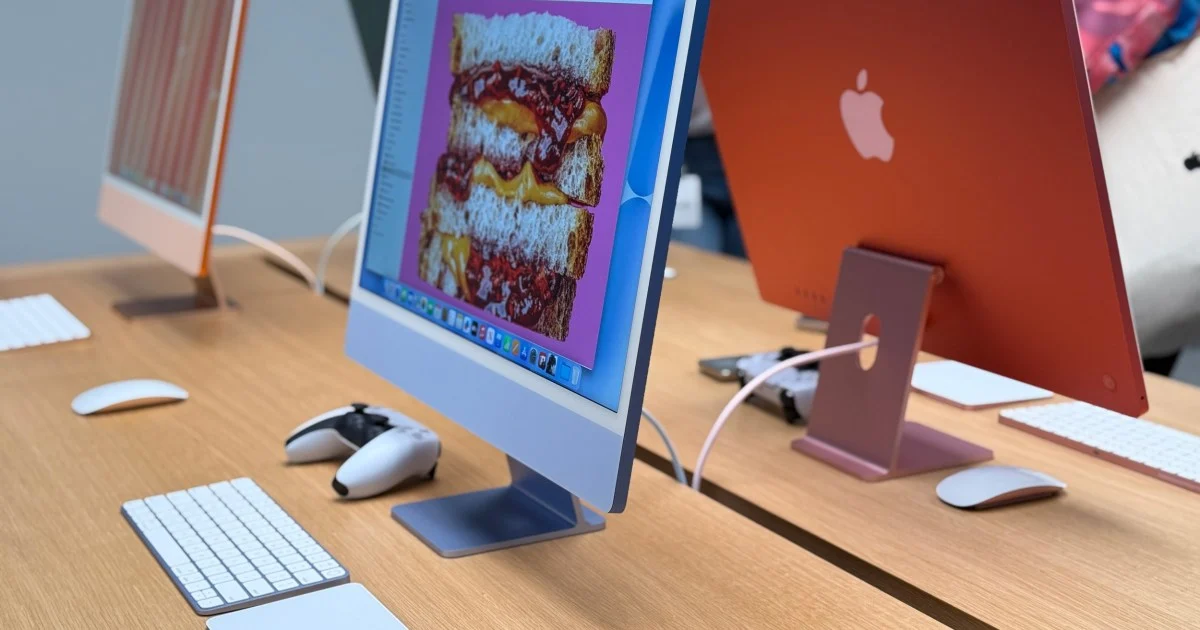
The iMac has long been a symbol of Apple’s commitment to elegant design and powerful performance in an all-in-one desktop computer. For years, users have appreciated its clean lines and integrated experience. However, as technology advances, so do user expectations. While recent iMac models have seen processor upgrades, the core design and display technology have remained largely unchanged since the M1-powered refresh in 2021. This has led to discussions about what the future holds for this iconic machine, particularly concerning display advancements.
One of the most significant potential upgrades being discussed for the iMac is the adoption of OLED screen technology. This shift would represent a substantial leap forward from the current LCD panels, offering deeper blacks, brighter whites, and more vibrant colors. While OLED is already a staple in Apple’s iPhone and Apple Watch lineups, and has made its way into the iPad Pro and MacBook Pro, its integration into the iMac could redefine the desktop experience. This analysis will explore the implications of an OLED iMac, considering the technological advancements, potential market positioning, and the broader impact on Apple’s product ecosystem. We will examine what an OLED iMac might look like, when it could arrive, and why this upgrade is so eagerly anticipated by tech enthusiasts and creative professionals alike.
The Case for OLED in the iMac
The move towards OLED technology in Apple’s product line has been consistent and deliberate. After establishing OLED on its mobile devices and then its professional laptops and tablets, the iMac appears to be the next logical frontier for this display innovation. The benefits of OLED technology are substantial and directly address areas where current LCD displays, even those used in high-end devices, have limitations.
OLED, which stands for Organic Light Emitting Diode, works differently from traditional LCD screens. In an LCD, a backlight shines through a layer of liquid crystals and color filters to produce an image. This backlight is always on, meaning that even when displaying black, some light inevitably leaks through, resulting in less pure blacks and a lower contrast ratio. OLED pixels, on the other hand, are self-emissive. Each individual pixel can be turned on or off independently. This allows for perfect blacks, as pixels can be completely deactivated when displaying black. This capability dramatically improves contrast ratios, leading to a more dynamic and lifelike image.
For a device like the iMac, which is often used for creative tasks such as photo and video editing, graphic design, and even general productivity, the enhanced color accuracy and contrast offered by OLED would be invaluable. Artists and designers rely on precise color representation, and OLED panels can deliver a wider color gamut and more accurate color reproduction compared to many LCDs. The deeper blacks also contribute to a more immersive viewing experience, whether for watching movies, playing games, or simply browsing the web.
Furthermore, OLED technology can offer faster response times and wider viewing angles. Faster response times mean less motion blur in fast-paced content, while wider viewing angles ensure that the image quality remains consistent even when viewed from the side. These are all significant improvements that would elevate the iMac from a capable desktop computer to a truly premium visual workstation. The integration of OLED would not only enhance the user experience but also align the iMac with Apple’s broader strategy of bringing its most advanced display technologies across its product portfolio.
Potential Timeline and Market Positioning
While the prospect of an OLED iMac is exciting, it’s important to consider when such a product might become a reality and how Apple might position it in the market. Reports suggest that an OLED iMac is still a few years away, indicating that Apple is likely taking a measured approach to its development and integration. This timeframe allows for further advancements in OLED manufacturing, cost reduction, and the refinement of the technology for a desktop form factor.
The cost of OLED panels has historically been higher than that of LCD panels. This is a significant factor, especially for a product like the iMac, which traditionally aims for a balance of premium features and accessible pricing within Apple’s ecosystem. Introducing OLED technology could push the iMac into a more premium or even luxury category, especially if it’s applied to larger screen sizes. Currently, mainstream all-in-one desktop computers with OLED screens are rare and typically come with a much higher price tag than the standard iMac.
It’s plausible that Apple could initially reserve OLED technology for a higher-end or specialized iMac model. This could include a larger, perhaps 27-inch iMac, or even a revived iMac Pro. Such a strategy would allow Apple to test the market’s reception to OLED in its desktop lineup while managing production costs and targeting a professional user base that might be more willing to pay a premium for the enhanced display capabilities. Alternatively, Apple might wait until OLED panel costs decrease sufficiently to offer it across a wider range of iMac configurations without drastically increasing the entry price.
The current iMac, updated with the M6 chip, focuses on performance improvements rather than significant design or display overhauls. This suggests that a major display upgrade like OLED is a more substantial undertaking that requires dedicated development and manufacturing pipelines. Apple’s past product launches demonstrate a pattern of introducing new technologies in flagship or Pro models before making them more widely available. Therefore, an OLED iMac, when it arrives, might initially be positioned as a top-tier offering, setting a new benchmark for desktop display quality.
Broader Implications for Apple’s Ecosystem
The introduction of an OLED iMac would have ripple effects across Apple’s entire product ecosystem, reinforcing its commitment to advanced display technologies and potentially influencing the development of future devices. As Apple continues to integrate OLED across its product lines, it creates a more cohesive and premium user experience, where the visual quality is consistently high, regardless of the device.
For users who own multiple Apple products, the transition to OLED on the iMac would mean a consistent visual standard. This consistency is a hallmark of Apple’s design philosophy, ensuring that the look and feel of its devices are familiar and intuitive. A user accustomed to the vibrant colors and deep blacks of their iPhone or OLED iPad Pro would find a similar visual fidelity on their desktop, enhancing their overall Apple experience.
Moreover, the widespread adoption of OLED technology by Apple can accelerate its adoption in the wider tech industry. As a major player, Apple’s decisions often influence market trends and drive innovation. By committing to OLED for its iMac, Apple would further legitimize the technology for desktop applications and potentially encourage other manufacturers to explore similar upgrades for their all-in-one computers. This could lead to a broader market availability of OLED desktops at more competitive price points in the long run.
The development of OLED technology for larger displays like those found on iMacs also presents engineering challenges and opportunities. Optimizing pixel density, brightness, power consumption, and durability for desktop-sized screens requires specific solutions. Success in this area could lead to advancements that benefit other large-format displays, including future iterations of Apple’s Pro Display XDR or even potential television products.
Finally, an OLED iMac would solidify Apple’s position as a leader in display technology. It would underscore the company’s dedication to providing the best possible visual experience for its users, catering to both creative professionals who demand accuracy and everyday users who appreciate stunning visuals. This commitment to cutting-edge display technology is a key differentiator for Apple and a significant factor in its brand appeal.
Design and Form Factor Considerations
Beyond the display technology itself, the integration of an OLED screen into the iMac could also coincide with or influence potential design and form factor changes. While the current iMac design has been praised for its simplicity and elegance, it has remained largely consistent for several years. A significant technological upgrade like OLED might present an opportunity for Apple to revisit the iMac’s physical design.
One of the advantages of OLED panels is their potential for thinner and lighter displays. This could allow for even sleeker iMac designs, potentially reducing the overall thickness of the display unit. While the current iMac is already quite slim, further reductions in component size could lead to a more minimalist aesthetic or allow for different design approaches.
However, the iMac is an all-in-one computer, meaning the display unit also houses the processing components, storage, and other hardware. Integrating these components efficiently while maintaining a slim profile is a design challenge. The heat generated by these components also needs to be managed effectively, which can influence the enclosure’s design and ventilation. While OLED panels themselves can be more power-efficient for certain content (especially dark scenes), the overall power consumption of the iMac’s internal hardware remains a factor.
There’s also the question of screen size and resolution. Apple currently offers the iMac in a 24-inch size. As mentioned, a potential OLED iMac could debut in a larger 27-inch size, or even as a successor to the discontinued 27-inch iMac. The resolution would likely remain high, possibly at 5K or higher, to maintain Apple’s standard for Retina displays, ensuring that individual pixels are imperceptible at normal viewing distances.
The placement of ports and the overall ergonomics of the iMac are also design considerations. While Apple has moved towards a more streamlined approach, the practicalities of connecting peripherals and managing cables are important for user experience. Any redesign would need to balance aesthetic goals with functional requirements. The possibility of a new color palette or material finishes could also accompany a significant redesign, further differentiating a new generation of iMacs.
The User Experience Impact of OLED iMac
The most profound impact of an OLED iMac would undoubtedly be on the user experience. The visual improvements offered by OLED technology translate directly into a more engaging and satisfying interaction with the computer. For professionals, this means a more accurate and immersive workspace. For everyday users, it means a more enjoyable and visually rich computing experience.
Creative professionals, such as photographers, videographers, and graphic designers, would benefit immensely from the superior color accuracy and contrast ratios of OLED. The ability to see true blacks and a wider spectrum of colors without compromise is critical for tasks like photo retouching, color grading video, and ensuring brand consistency in design work. This level of fidelity can reduce the need for external, color-calibrated monitors, making the iMac a more self-sufficient powerhouse for creative endeavors.
For general users, the benefits might be less about professional precision and more about enhanced everyday use. Watching movies or streaming video content on an iMac with an OLED screen would be a more cinematic experience. The deep blacks would make dark scenes more dramatic and detailed, while the vibrant colors would bring content to life. Similarly, gaming on an iMac would be more immersive, with faster response times reducing motion blur and deeper contrast enhancing visual depth.
Even for standard productivity tasks, such as browsing the web, working with documents, or engaging in video calls, the visual improvements would be noticeable. Text might appear sharper against deeper backgrounds, and the overall clarity of the display would reduce eye strain during long work sessions. The wider viewing angles would also be beneficial in multi-user environments or when sharing content on the screen.
The self-emissive nature of OLED pixels also allows for greater power efficiency when displaying dark content. While the overall power consumption of an iMac is influenced by its internal components, the display itself can contribute to better energy usage in certain scenarios. This aligns with Apple’s ongoing efforts to improve the environmental footprint of its products. The combination of stunning visuals, professional-grade accuracy, and potential efficiency gains makes the prospect of an OLED iMac a compelling one for a wide range of users.
Challenges and Considerations for OLED iMac Development
Despite the clear advantages, developing an OLED iMac is not without its challenges. Apple, known for its meticulous attention to detail and high standards, would need to overcome several technical and manufacturing hurdles to bring this product to market successfully.
One of the primary concerns with OLED technology, particularly for larger displays, is its susceptibility to burn-in. Burn-in occurs when static images displayed for extended periods cause permanent discoloration or ghosting on the screen. While modern OLED technology has made significant strides in mitigating this issue through pixel shifting, software-based compensation, and improved materials, it remains a consideration, especially for a device that might be used for long, continuous periods with static elements like taskbars or application interfaces. Apple would need to implement robust solutions to ensure the longevity and reliability of an OLED iMac display.
Another challenge is the cost of manufacturing large OLED panels. Producing these panels at scale, with high yields and consistent quality, is complex and expensive. As mentioned earlier, this cost factor is a primary reason why OLED is not yet common in mainstream desktop computers. Apple would need to secure a reliable and cost-effective supply chain for these panels, or invest heavily in its own manufacturing capabilities.
Brightness levels are also a point of consideration. While OLED excels in contrast and color, achieving the same peak brightness across the entire screen as some high-end LCDs can be challenging, especially for sustained periods. For certain professional applications that require extremely high brightness, this could be a limitation. However, advancements in tandem OLED structures and other technologies are continuously pushing brightness limits.
Heat dissipation is another engineering challenge. While OLED pixels themselves generate less heat than LCD backlights, the powerful processors and other components within an iMac still require effective cooling. Integrating these systems into a slim, aesthetically pleasing chassis, especially if the display itself is thinner due to OLED, requires careful thermal design.
Finally, Apple’s commitment to repairability and sustainability is also a factor. While OLED displays are advanced, they can sometimes be more difficult or costly to repair than traditional LCD panels. Apple would need to consider how an OLED iMac would fit into its service and repair strategies, ensuring that users have viable options if their display requires attention. Addressing these challenges will be critical for Apple to deliver an OLED iMac that meets its own high standards and user expectations.
The Future of the iMac: Beyond OLED
While the prospect of an OLED iMac is a significant and exciting development to anticipate, it’s also worth considering the broader trajectory of the iMac line and what other advancements might be on the horizon. Apple’s product development is often characterized by iterative improvements alongside occasional revolutionary leaps.
Beyond display technology, the core performance of the iMac will continue to evolve with Apple’s silicon. As Apple develops more powerful and efficient M-series chips, future iMacs will undoubtedly offer increased processing power, improved graphics capabilities, and enhanced AI performance. This will benefit all users, from creative professionals needing more horsepower for demanding tasks to everyday users who appreciate a snappier and more responsive experience.
Connectivity is another area ripe for advancement. While recent iMacs have seen improvements in wireless connectivity, future models could explore even faster Wi-Fi standards, enhanced Bluetooth capabilities, or new port technologies that offer greater bandwidth and versatility. As external displays and peripherals become more sophisticated, the iMac’s ability to connect seamlessly will remain important.
Software integration is always a key focus for Apple. The synergy between macOS and Apple’s hardware is a major selling point. Future iMacs will likely feature deeper integration with new macOS features, particularly those related to AI and machine learning, which are becoming increasingly central to Apple’s strategy. This could manifest in more intelligent software features that anticipate user needs and streamline workflows.
The form factor itself might also see further evolution. While the current iMac design is iconic, Apple has a history of reinventing its products. Future iterations could explore modularity, different screen sizes, or even entirely new approaches to the all-in-one desktop concept. The company’s ongoing research into display technologies, materials, and user interaction could all play a role in shaping the future of the iMac.
Ultimately, the iMac’s future will likely be a blend of continued refinement of its existing strengths and the bold introduction of new technologies. The pursuit of better displays, more powerful performance, and seamless integration will ensure that the iMac remains a compelling choice for users seeking a premium desktop experience. The journey towards an OLED iMac is just one chapter in this ongoing story of innovation.
Conclusion
The iMac has consistently represented Apple’s vision for a powerful, elegant, and user-friendly all-in-one desktop computer. While recent updates have focused on internal performance enhancements, the anticipation for a significant display upgrade, particularly the adoption of OLED technology, is palpable. An OLED iMac promises a visual experience that is richer, more accurate, and more immersive, aligning perfectly with Apple’s commitment to cutting-edge technology across its product lines.
The transition to OLED would not only elevate the iMac’s capabilities for creative professionals but also enhance the everyday computing experience for all users. While challenges related to cost, burn-in, and manufacturing complexity exist, Apple’s track record suggests a methodical approach to overcoming these hurdles. The potential arrival of an OLED iMac, possibly in larger screen sizes or premium configurations, signifies a new era for Apple’s desktop offerings.
As Apple continues to innovate, the iMac will undoubtedly evolve, incorporating advancements in processing power, connectivity, and software integration. The journey towards an OLED iMac is a testament to Apple’s dedication to pushing the boundaries of what’s possible in personal computing, ensuring that this iconic device remains at the forefront of design and technology for years to come.


Conversation
0 Comments