


China’s Lunar Ambitions: A New Era of Space Exploration
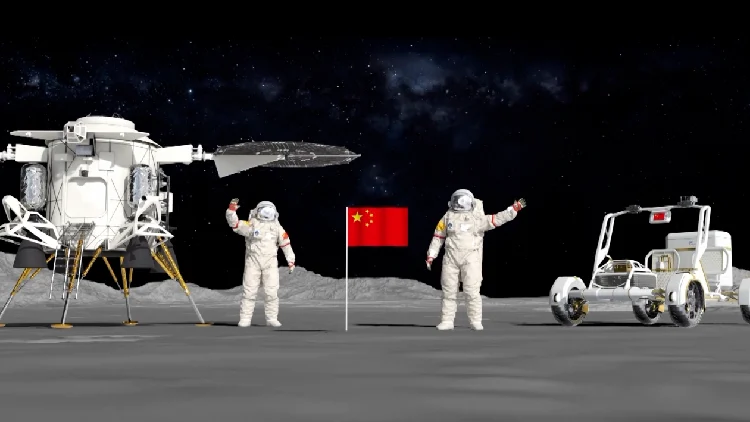
China’s journey into space has been marked by a series of ambitious and successful missions, pushing the boundaries of human exploration and scientific discovery. From launching its first astronaut to establishing a space station, the nation has demonstrated a growing capability and a clear vision for its future in the cosmos. The latest chapter in this ongoing saga is the planned crewed mission to the Moon, a monumental undertaking that signifies China’s intent to become a major player in lunar exploration and beyond. This mission, set to carry three astronauts with two scheduled to land on the lunar surface, represents a significant leap forward, building upon decades of dedicated research, technological advancement, and strategic planning.
The prospect of humans returning to the Moon has captured the imagination of the world, and China’s program is poised to contribute substantially to this renewed interest. The mission is not merely about planting a flag; it is about scientific research, resource assessment, and laying the groundwork for future long-term human presence in space. As China continues to invest heavily in its space program, its lunar ambitions are becoming increasingly concrete, promising new insights into the Moon’s geology, potential resources, and its role in the solar system. This article will explore the multifaceted aspects of China’s first crewed lunar mission, examining its objectives, the technology involved, the challenges ahead, and its broader implications for the future of space exploration.
The Genesis of China’s Lunar Program
China’s space program, while perhaps not as historically prominent as those of the United States or Russia, has developed with remarkable speed and precision. The foundation for its lunar ambitions was laid with the unmanned Chang’e program, a series of robotic missions that systematically explored the Moon. These missions, named after the Chinese moon goddess, began in 2007 with Chang’e 1, an orbiter that mapped the lunar surface. Subsequent missions, including Chang’e 2, 3, and 4, achieved increasingly complex objectives. Chang’e 3 successfully landed a rover, Yutu, on the Moon in 2013, marking China as the third nation to achieve a soft lunar landing.
The Chang’e 4 mission, launched in 2018, achieved a historic first by landing on the far side of the Moon, an area that is never visible from Earth due to tidal locking. This mission provided unprecedented data about the Von Kármán crater, a region of significant scientific interest. Following these successes, Chang’e 5 successfully collected lunar samples and returned them to Earth in 2020, a feat that had not been accomplished by any nation in over 40 years. These unmanned missions were crucial stepping stones, allowing China to test and refine the technologies required for a crewed lunar landing, including rendezvous and docking in lunar orbit, sample return, and long-duration spaceflight.
The development of China’s human spaceflight program, known as Project 921, ran parallel to its lunar exploration efforts. The Shenzhou program, which began with uncrewed test flights in the late 1990s, successfully sent China’s first astronaut, Yang Liwei, into orbit in 2003. Since then, China has conducted several crewed missions, culminating in the construction and operation of the Tiangong space station. The experience gained from these missions, including spacewalks, orbital operations, and life support systems, has been directly transferable to the planning and execution of a lunar mission. The synergy between the robotic lunar exploration and the human spaceflight programs has created a robust framework for China’s ambitious lunar goals.
Mission Objectives: More Than Just a Visit
China’s first crewed lunar mission is driven by a multifaceted set of objectives that extend beyond the symbolic achievement of landing humans on the Moon. Scientific research is at the forefront, with plans to conduct detailed geological surveys, collect diverse lunar samples, and perform in-situ experiments. The astronauts will be equipped with advanced instruments to analyze the lunar regolith, study the Moon’s internal structure, and investigate the potential for resources such as water ice, which is believed to be present in permanently shadowed craters near the lunar poles. Understanding the distribution and accessibility of these resources is critical for future long-term lunar habitation and for supporting deeper space missions.
Another key objective is to test and validate the technologies and operational procedures necessary for sustained lunar presence. This includes the performance of the lunar lander, the surface mobility systems, and the life support systems under lunar conditions. The mission will also focus on practicing lunar surface operations, including extravehicular activities (EVAs), scientific sample collection, and the deployment of scientific instruments. The experience gained from these activities will be invaluable for planning future, more extended stays on the Moon. The ability to operate effectively on the lunar surface is a prerequisite for establishing a research outpost or a base.
Furthermore, the mission serves as a crucial step in China’s broader space exploration strategy, which includes eventual human missions to Mars. The Moon, with its relatively close proximity and similar environmental challenges to Mars, serves as an excellent proving ground for technologies and strategies that will be needed for interplanetary travel. The lessons learned from a crewed lunar mission will inform the design of spacecraft, life support systems, and operational protocols for missions to more distant destinations. This mission is, therefore, not an isolated event but an integral part of a long-term vision for China’s role in space.
Technological Prowess: The Hardware Behind the Mission
The success of a crewed lunar mission hinges on a sophisticated array of advanced technologies, and China has been diligently developing and testing the necessary hardware. The mission will likely involve a multi-component system, including a powerful new generation launch vehicle, a crewed spacecraft, a lunar orbiter, and a lunar lander. The launch vehicle, expected to be an evolution of the Long March series, will need to possess the immense thrust required to send the heavy payload towards the Moon. This represents a significant engineering challenge, pushing the limits of rocket propulsion and structural integrity.
The crewed spacecraft will be responsible for transporting the astronauts to lunar orbit and back to Earth. It will need to provide a safe and habitable environment for the crew during the transit, including robust life support systems, radiation shielding, and advanced navigation and communication capabilities. The design will likely incorporate lessons learned from the Shenzhou program, but with enhancements to handle the longer duration and more demanding environment of a lunar journey. The spacecraft will also need to be capable of rendezvousing and docking with the lunar lander in lunar orbit.
The lunar lander is perhaps the most critical piece of hardware for the surface operations. It must be capable of a precise, powered descent to the lunar surface, a safe landing, and subsequent ascent to rendezvous with the orbiting spacecraft. The lander will carry the astronauts to the surface and provide them with a base of operations during their stay. It will be equipped with systems for power generation, communication, and potentially scientific experiments. The development of a reliable lunar lander is a complex undertaking, requiring expertise in guidance, navigation, control, and propulsion systems tailored for the lunar environment.
Finally, the mission will likely involve a lunar orbiter, which will remain in orbit around the Moon while the lander descends. This orbiter will serve as a communication relay, a platform for scientific observation, and potentially a vehicle for the return journey to Earth. The ability to perform complex orbital maneuvers, including rendezvous and docking with the lander, is essential for the mission’s success. The entire system represents a culmination of China’s advancements in aerospace engineering, materials science, and computer systems, showcasing its growing capabilities in complex space missions.
The Astronauts: China’s Lunar Pioneers
The selection and training of astronauts for a lunar mission are rigorous processes, demanding exceptional physical and mental fortitude, as well as specialized skills. China’s astronaut corps, known as taikonauts, has undergone extensive preparation for this historic undertaking. The astronauts selected for the lunar mission will be drawn from the ranks of experienced taikonauts who have already demonstrated their capabilities in space, likely including those who have served on the Tiangong space station. This ensures they have a proven track record in handling the challenges of spaceflight.
The training regimen for lunar astronauts is significantly more demanding than for Earth-orbit missions. It includes advanced simulations of lunar gravity, which is about one-sixth of Earth’s gravity, to prepare them for movement and operations on the surface. Astronauts will undergo extensive training in geology, sample collection techniques, and the operation of scientific instruments. They will also practice emergency procedures, including potential equipment failures and medical emergencies, in a simulated lunar environment. The psychological aspects of long-duration missions, including isolation and confinement, are also a critical part of their preparation.
The specific roles of the three astronauts on the mission will be clearly defined. Typically, one astronaut will remain in orbit aboard the command module, responsible for monitoring the mission, maintaining communication with Earth, and preparing for the rendezvous with the lander. The other two astronauts will descend to the lunar surface in the lander. Their tasks will include conducting scientific experiments, collecting samples, exploring the landing site, and potentially deploying scientific equipment. Their ability to work effectively as a team, both on the surface and in orbit, will be paramount to the mission’s success. These individuals will be the first Chinese citizens to set foot on another celestial body, a moment that will undoubtedly be etched in history.
Challenges and Risks: Navigating the Lunar Frontier
Embarking on a crewed mission to the Moon is fraught with significant challenges and inherent risks. The harsh environment of space, particularly the Moon’s surface, presents numerous obstacles that must be carefully managed. Radiation is a major concern. The Moon lacks a substantial atmosphere or a global magnetic field to protect astronauts from cosmic rays and solar particle events. Prolonged exposure to high levels of radiation can increase the risk of cancer and other health problems. Therefore, spacecraft and habitats must incorporate effective radiation shielding, and mission planning must account for solar activity.
The lunar surface itself poses its own set of challenges. The extreme temperature variations, ranging from scorching heat in direct sunlight to frigid cold in shadowed areas, require robust thermal control systems for both the lander and spacesuits. The lunar regolith, a fine, abrasive dust, can infiltrate equipment, damage seals, and pose a respiratory hazard if inhaled. Astronauts will need specialized suits and procedures to mitigate the effects of this dust. Furthermore, the low gravity environment, while less demanding than microgravity, still presents challenges for mobility and can have long-term physiological effects on the human body.
Technical failures are another significant risk. The complex systems involved in a lunar mission, from the launch vehicle to the life support systems and the lander’s descent and ascent engines, must function flawlessly. Any malfunction at critical stages, such as during lunar orbit insertion, descent, or ascent, could have catastrophic consequences. Redundancy in critical systems and extensive pre-flight testing are essential to minimize these risks, but the possibility of unforeseen issues remains. The vast distances involved also mean that rescue or immediate resupply in case of an emergency is not feasible, making mission planning and execution exceptionally critical.
The Broader Implications: China’s Place in Space
China’s crewed lunar mission is more than just a national achievement; it carries significant implications for the global landscape of space exploration. It signals China’s emergence as a leading spacefaring nation, capable of undertaking complex, ambitious missions that were once the exclusive domain of a few established powers. This will likely spur further international cooperation and competition in space, potentially leading to new collaborations and a renewed global focus on lunar exploration. The mission also contributes to the growing body of scientific knowledge about the Moon, benefiting all of humanity.
The success of this mission will undoubtedly bolster China’s technological and economic standing on the world stage. It demonstrates a mastery of advanced engineering and scientific disciplines, which can have spin-off benefits for other industries. Furthermore, it aligns with China’s broader strategic goals of national prestige and technological self-reliance. As China continues to develop its capabilities, its influence in space policy and exploration will likely grow, shaping the future direction of human activity beyond Earth.
The mission also opens up new possibilities for the commercialization of space and the utilization of lunar resources. As China gains experience and develops the necessary infrastructure, it may pave the way for future commercial ventures related to lunar tourism, resource extraction, or scientific research. The long-term vision of establishing a permanent lunar presence, whether for scientific or economic purposes, becomes more tangible with each successful step. China’s lunar ambitions are thus not just about reaching the Moon but about establishing a sustained presence and playing a leading role in the future of space exploration.
Future Prospects: Beyond the First Landing
The first crewed lunar landing is a pivotal moment, but it is just one step in China’s long-term vision for lunar and deep space exploration. Following this initial mission, China has outlined plans for further lunar exploration, including more extended stays, the establishment of a scientific research station, and the potential for resource utilization. The experience gained from the first mission will inform the design and operation of subsequent, more complex endeavors.
Future missions are expected to focus on scientific research, such as studying the Moon’s polar regions where water ice is believed to be abundant. This could involve deploying more sophisticated scientific instruments, conducting deeper drilling operations, and assessing the feasibility of extracting and utilizing lunar resources. The establishment of a permanent or semi-permanent lunar research base is a key long-term goal, which would allow for continuous scientific observation and experimentation, as well as serve as a staging point for missions to other celestial bodies.
The ultimate goal for China’s space program is to eventually send humans to Mars. The Moon serves as a critical proving ground for the technologies and operational strategies required for such an ambitious interplanetary journey. The challenges of long-duration spaceflight, radiation protection, life support systems, and autonomous operations on an alien surface are all areas where lunar missions provide invaluable experience. By mastering lunar exploration, China is building the foundation for its future role in exploring the solar system and beyond, solidifying its position as a major force in the ongoing human endeavor to understand and explore the cosmos.
Conclusion
China’s first crewed mission to the Moon represents a monumental achievement, marking a new era in space exploration. It is the culmination of years of dedicated effort, technological innovation, and strategic planning, building upon the successes of its robotic lunar programs and its human spaceflight endeavors. The mission’s objectives, ranging from scientific research and resource assessment to testing critical technologies for future deep space missions, underscore China’s commitment to becoming a leading power in space.
The development of advanced launch vehicles, crewed spacecraft, and lunar landers showcases China’s growing technological prowess. The selection and rigorous training of its astronauts highlight the nation’s dedication to ensuring the safety and success of its pioneering crew. While significant challenges and risks remain, including radiation, the harsh lunar environment, and the potential for technical failures, China appears well-prepared to navigate these complexities.
The implications of this mission extend far beyond national pride. It signifies a shift in the global space exploration landscape, potentially fostering both cooperation and competition. As China continues to pursue its lunar ambitions, it not only expands humanity’s knowledge of the Moon but also lays the groundwork for future interplanetary missions, including eventual human voyages to Mars. This historic undertaking is a testament to human ingenuity and the enduring drive to explore the unknown, promising exciting advancements in our understanding of the universe and our place within it.


Conversation
0 Comments