

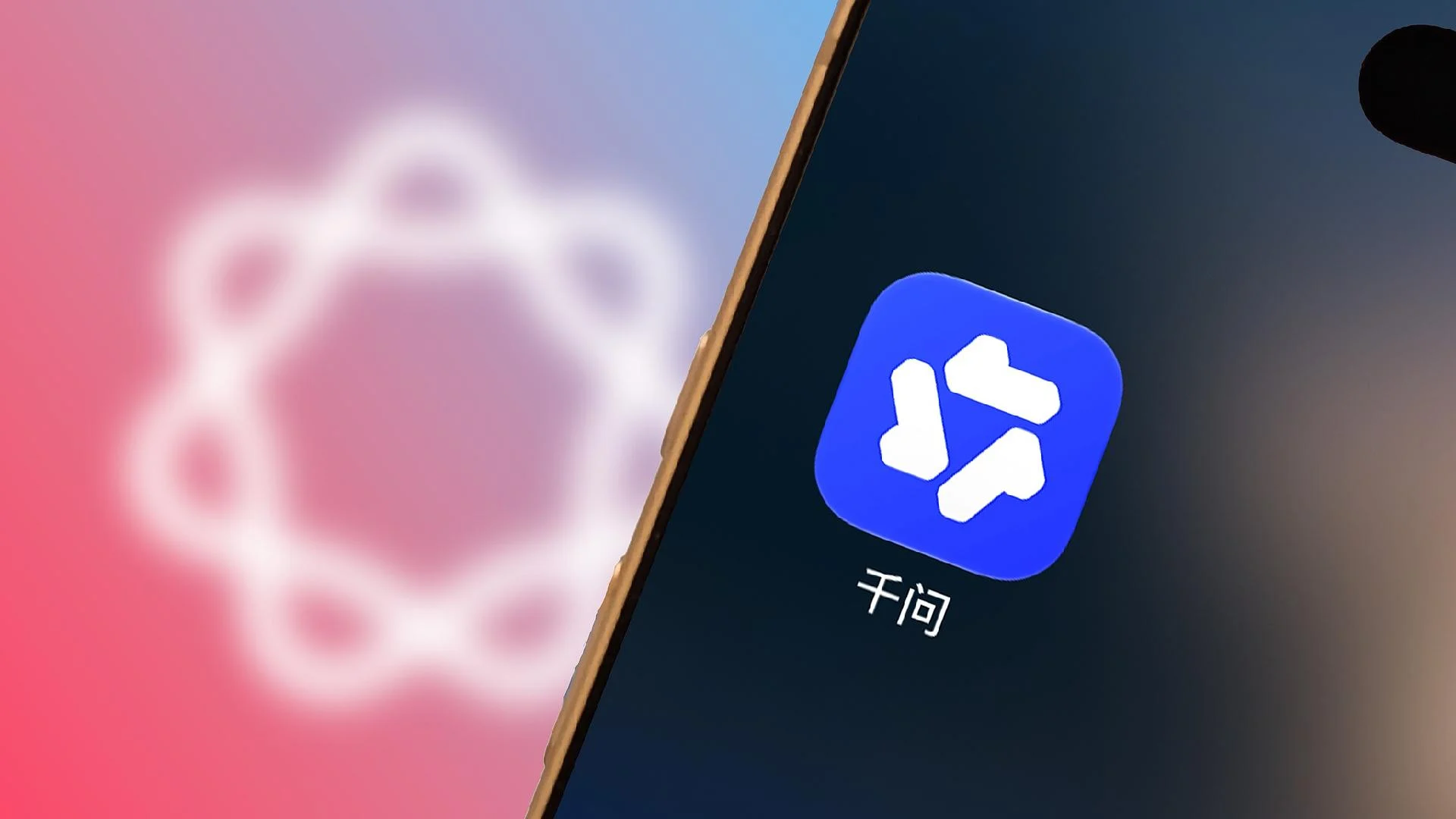
Alibaba’s Qwen AI Model Joins Apple Intelligence in a Landmark Partnership
In a significant development for the artificial intelligence landscape, Chinese tech giant Alibaba Group has announced a groundbreaking partnership with Apple. This collaboration will see Alibaba’s advanced Qwen AI model integrated into Apple Intelligence, the new AI system unveiled by Apple. This move marks a pivotal moment, especially for the Chinese market, as it represents the first instance of a major global consumer hardware manufacturer adopting a Chinese large language model as a primary system-level AI backbone within China.
The integration promises to bring enhanced AI capabilities to Chinese users, leveraging Qwen’s sophisticated understanding and generation of text and images. This partnership is set to redefine user experiences across Apple’s ecosystem, offering new ways to interact with devices through Siri, Writing Tools, and Visual Intelligence. The rollout is planned to begin with a testing phase in the latest iOS developer beta, with a wider release to Chinese users expected in December alongside the official iOS 27.3 update. This strategic alliance underscores the growing influence of Chinese AI technology on the global stage and highlights Apple’s commitment to providing localized and advanced AI features for its diverse user base.
Qwen’s Capabilities Integrated into Apple Intelligence
The core of this partnership lies in the integration of Alibaba’s Qwen AI model into the functionalities of Apple Intelligence. This means that Chinese users will soon be able to experience Qwen’s advanced natural language processing and image understanding capabilities directly within their Apple devices. The Qwen model is designed to process and generate human-like text and understand visual information, making it a powerful tool for a wide range of applications.
Within Apple Intelligence, Qwen’s integration will manifest in several key areas. Firstly, through Siri, Apple’s virtual assistant, users will be able to engage in more natural and context-aware conversations. Siri’s ability to understand complex queries and provide relevant responses will be significantly boosted by Qwen’s language comprehension skills. This could lead to more intuitive interactions, allowing users to ask questions, set reminders, or control their devices with greater ease and precision.
Secondly, the Writing Tools feature will benefit from Qwen’s generative capabilities. This could include features like text summarization, content creation, and grammar correction, all powered by Qwen’s advanced algorithms. Imagine drafting emails, composing social media posts, or even generating creative writing prompts with the assistance of an AI that understands nuance and style. The ability to generate coherent and contextually appropriate text will be a significant upgrade for users who rely on their devices for communication and content creation.
Thirdly, Visual Intelligence will be enhanced by Qwen’s image understanding capabilities. This could enable users to perform tasks such as identifying objects in photos, extracting text from images, or even generating descriptive captions. For example, a user might be able to point their camera at an object and have Qwen identify it and provide relevant information, or upload a document and have Qwen extract all the text for editing. This opens up new possibilities for how users interact with visual information on their devices.
The integration is not a one-size-fits-all approach. Apple has emphasized user control, stating that users can choose whether to enable the Qwen integration and what information they wish to share. Furthermore, Alibaba has assured that user requests and generated responses will not be used for model training, addressing potential privacy concerns. This user-centric approach ensures that the advanced AI capabilities are accessible and trustworthy.
The feature will be specifically available to users in China who own an Apple Intelligence-capable iPhone. This includes devices where the location and Apple Account country or region are both set to China. This targeted rollout ensures that the integration is optimized for the Chinese market and its specific user needs and regulatory requirements.
Eddie Wu, CEO of Alibaba Group, expressed enthusiasm for the partnership, stating that Qwen, built upon Alibaba’s extensive AI expertise, will seamlessly integrate into Apple’s ecosystem. He highlighted the collaborative effort to deliver novel AI-powered service experiences tailored for Chinese users. This collaboration signifies a mutual commitment to innovation and user satisfaction.
A Milestone for Domestic Large Models in China
The partnership between Alibaba and Apple is being hailed as a significant step forward for the commercial application of domestic large AI models in China. Historically, global technology giants have often developed and deployed their AI solutions independently, with limited integration of local AI models at a system level. This collaboration breaks that mold, demonstrating a willingness from a major international player like Apple to embrace and integrate cutting-edge technology developed within China.
Wang Xiaojie, an AI expert at Beijing University of Posts and Telecommunications, commented on the significance of this development. She pointed out that this is the first time a top global consumer hardware maker has chosen a Chinese large model as the primary AI backbone for its system within the Chinese market. This endorsement from Apple lends considerable credibility to the capabilities of Chinese AI development and signals a potential shift in the global AI landscape.
The commercial application of large AI models has been a key focus for China’s technology sector. The country has invested heavily in AI research and development, aiming to become a global leader in the field. Partnerships like this provide a crucial avenue for these domestic models to gain wider adoption and real-world testing, which in turn fuels further innovation and improvement.
This move also comes at a strategic time, following regulatory developments in China. In July, China’s cyberspace administration completed the filing process for seven on-device generative AI services for smartphones, including Apple Intelligence. This regulatory clearance indicates that Apple’s AI system, with its integrated Qwen component, meets the necessary standards for operation within the Chinese market. The successful filing and subsequent partnership suggest a cooperative environment for AI development and deployment.
The integration of Qwen into Apple Intelligence is not just about technical capability; it’s also about market access and user trust. By incorporating a well-regarded local AI model, Apple can better cater to the specific preferences and needs of Chinese consumers. This approach can foster greater user adoption and loyalty, as users may feel more comfortable and connected with technology that is perceived as being developed with their market in mind.
Furthermore, this partnership could inspire other global companies to explore similar collaborations with Chinese AI developers. It sets a precedent for how international technology firms can work with local AI expertise to create more relevant and effective products for specific markets. The success of this integration could pave the way for a more interconnected and collaborative global AI ecosystem.
Understanding Apple Intelligence and its AI System
Apple Intelligence represents Apple’s ambitious entry into the generative AI space, aiming to embed intelligent features across its product ecosystem. Unveiled at the Worldwide Developers Conference in 2024, it is designed to be a deeply integrated AI system that understands personal context and provides helpful, relevant assistance. Unlike standalone AI chatbots, Apple Intelligence is built to work seamlessly with users’ existing data and applications, offering a more personalized and private AI experience.
The system is characterized by its focus on privacy and on-device processing. Many of Apple Intelligence’s features are designed to run directly on the device, meaning that personal data does not need to be sent to the cloud for processing. This approach significantly enhances user privacy and security. For tasks that require more complex computation, Apple has developed “Private Cloud Compute,” a system that allows data to be processed on secure Apple servers without being stored or accessed by Apple or the cloud provider.
Apple Intelligence aims to enhance user interaction across various Apple platforms, including iOS, iPadOS, and macOS. Its capabilities span a wide range of functions, from improving Siri’s conversational abilities and understanding to offering advanced writing assistance and generating images. The system is designed to be proactive, anticipating user needs and offering suggestions before they are explicitly asked.
Key features of Apple Intelligence include:
- Smarter Siri: Siri will become more conversational, understanding context from previous interactions and the user’s screen. It will be able to perform a wider range of actions within apps and access information from the web when necessary.
- Writing Tools: This suite of features will help users compose, proofread, and summarize text across various applications. It includes tools like Proofread, Rewrite, and Summarize, allowing users to refine their writing and get the gist of long documents quickly.
- Image Generation: Apple Intelligence can create original images based on user descriptions, offering different styles like Animation, Illustration, and Sketch. This feature, called Image Playground, allows users to generate visuals for messages, presentations, and more.
- Contextual Awareness: The system is designed to understand the user’s current context, such as what is on their screen, what app they are using, and their personal information (with permission). This allows for more relevant and timely assistance.
- Personalization: Apple Intelligence learns from user behavior and preferences to provide increasingly tailored assistance. This personalization is handled on-device to maintain privacy.
The integration of Alibaba’s Qwen model into Apple Intelligence, particularly for the Chinese market, signifies a strategic decision to leverage local AI expertise. While Apple Intelligence has its own foundational AI models, incorporating Qwen allows for a deeper understanding of the Chinese language, culture, and user behavior. This localized approach is crucial for delivering a truly effective and resonant AI experience in a market as large and diverse as China.
The partnership highlights Apple’s strategy of balancing its global AI development with localized solutions. By working with companies like Alibaba, Apple can ensure that its AI offerings are not only technologically advanced but also culturally relevant and compliant with local regulations. This dual approach is essential for success in the competitive global technology market.
The Strategic Importance of the Alibaba-Apple Partnership
The collaboration between Alibaba and Apple is more than just a technological integration; it’s a strategic alliance with far-reaching implications for both companies and the broader AI industry. For Alibaba, this partnership provides a significant validation of its Qwen AI model and a massive platform for its deployment. For Apple, it offers a way to enhance its AI offerings in one of its most critical markets, ensuring compliance and cultural relevance.
Alibaba’s Qwen model has been developed with a focus on versatility and performance, aiming to compete with leading global AI models. By being integrated into Apple Intelligence, Qwen gains exposure to millions of users, providing invaluable real-world data and feedback that can drive further development and refinement. This exposure is particularly important in the competitive AI landscape, where continuous improvement is key.
For Apple, the Chinese market is a vital revenue stream. Offering a localized and enhanced AI experience through Apple Intelligence is crucial for maintaining its competitive edge against local tech giants that have a deep understanding of the Chinese consumer. The integration of Qwen allows Apple to tap into this local expertise, ensuring that its AI features resonate with Chinese users and comply with the country’s specific regulations regarding AI and data privacy.
This partnership also reflects a broader trend of globalization in AI development. As AI technology becomes more sophisticated, cross-border collaborations are becoming increasingly common. Companies are recognizing the value of combining their unique strengths and expertise to create more powerful and adaptable AI solutions. Alibaba’s deep understanding of the Chinese market and its AI capabilities, combined with Apple’s global reach and user-centric design philosophy, creates a potent synergy.
The regulatory environment in China plays a significant role in shaping technology deployments. Apple’s proactive approach in filing its AI services and subsequently partnering with a local AI provider like Alibaba demonstrates an understanding of and commitment to navigating these regulatory landscapes. This strategic alignment with Chinese regulations is essential for long-term success in the market.
From an economic perspective, this partnership could stimulate further investment and innovation in China’s AI sector. The success of Qwen within Apple Intelligence could encourage other Chinese AI companies to pursue similar international collaborations, fostering a more dynamic and competitive AI ecosystem. It also positions China as a key player in the global AI supply chain, not just as a consumer of technology but as a developer and provider of advanced AI solutions.
The implications extend to user experience. Chinese consumers will benefit from AI features that are not only powerful but also tailored to their linguistic and cultural context. This can lead to more intuitive and satisfying interactions with their devices, ultimately strengthening user loyalty to the Apple brand within China. The ability for users to opt-in and control data sharing further reinforces trust, a critical factor in the adoption of AI technologies.
Privacy and User Control in the New AI Integration
A central concern with any AI integration, especially one involving personal devices and data, is privacy. Apple has consistently emphasized its commitment to user privacy, and this partnership with Alibaba is no exception. The company has put in place measures to ensure that user data is handled responsibly and that users maintain control over their information.
As mentioned earlier, users will have the explicit choice to enable the Qwen integration within Apple Intelligence. This means that the advanced AI features powered by Qwen will not be active by default. Users will need to actively opt-in to use these capabilities, providing a clear layer of consent. This approach respects user autonomy and ensures that individuals are aware of and agree to the use of AI functionalities.
Furthermore, Apple and Alibaba have addressed concerns about data usage for model training. Alibaba has stated that it will not use user requests or the content generated by the Qwen model for training purposes. This is a critical assurance, as it means that personal conversations, queries, and generated content will not be used to further develop the AI model. This commitment helps to safeguard user privacy and prevent the misuse of personal information.
The architecture of Apple Intelligence itself plays a significant role in privacy. Many of the core AI processing tasks are designed to occur on the device itself. This on-device processing means that sensitive personal data, such as messages, emails, and calendar entries, can be analyzed without leaving the user’s iPhone or iPad. This minimizes the risk of data breaches and unauthorized access.
For tasks that require more computational power than a device can provide, Apple utilizes its Private Cloud Compute infrastructure. This system is designed to process data securely on remote servers without storing it or making it accessible to Apple or any third-party cloud provider. The data is anonymized and processed in a way that ensures it cannot be linked back to the individual user. This hybrid approach allows Apple to offer powerful AI features while upholding its stringent privacy standards.
The integration of Qwen is specifically targeted at enhancing features within the Chinese market. This means that the data processed for these specific features will be handled in accordance with both Apple’s global privacy policies and China’s specific data protection regulations. The careful consideration of these dual requirements is essential for a successful and compliant deployment.
Ultimately, the success of AI integration hinges on user trust. By prioritizing user control, ensuring transparency about data usage, and implementing robust privacy safeguards, Apple aims to build confidence in its AI offerings. The partnership with Alibaba, while bringing advanced capabilities, is being managed within this framework of privacy and user empowerment, ensuring that the integration of Qwen enhances the user experience without compromising personal data.
The Future of AI Integration and Global Collaboration
The partnership between Alibaba and Apple is a significant indicator of the future direction of AI development and deployment. It highlights a growing trend towards collaboration between major technology players and specialized AI developers, particularly across international borders. As AI technology continues to advance, such partnerships will likely become more common, driving innovation and expanding the reach of intelligent systems.
This collaboration demonstrates that the AI landscape is becoming increasingly globalized. While large tech companies like Apple invest heavily in their own AI research, they also recognize the value of integrating specialized models developed by other leading firms. This approach allows for a more rapid and effective deployment of advanced AI capabilities, tailored to specific markets and use cases.
The integration of Qwen into Apple Intelligence for the Chinese market also underscores the importance of localization in AI. As AI systems become more sophisticated, their effectiveness often depends on their ability to understand and adapt to local languages, cultural nuances, and user behaviors. Partnerships with local companies, like Alibaba in this case, provide the necessary expertise to achieve this level of localization.
Looking ahead, we can expect to see more instances of global tech giants collaborating with regional AI leaders. This could involve partnerships for language processing, image recognition, or even specialized AI applications in fields like healthcare or finance. Such collaborations can accelerate the development of AI solutions that are not only powerful but also culturally sensitive and contextually relevant.
Furthermore, this partnership sets a precedent for how regulatory bodies and technology companies can work together. Apple’s successful filing of its AI services with Chinese authorities, followed by this integration, suggests a pathway for other international companies seeking to deploy advanced AI in China. It highlights the importance of understanding and adhering to local regulations while fostering technological innovation.
The success of this integration will likely be closely watched by the industry. If Qwen proves to be a valuable and reliable component of Apple Intelligence for Chinese users, it could encourage other companies to explore similar collaborations. This could lead to a more diverse and competitive AI market, with a wider range of AI models and solutions available to consumers and businesses worldwide.
The ongoing evolution of AI is not just about developing more powerful algorithms; it’s also about how these technologies are integrated into our lives in a responsible, ethical, and user-friendly manner. Partnerships like the one between Alibaba and Apple are crucial in shaping this future, ensuring that AI development benefits from diverse expertise and caters to the needs of a global user base. The journey of AI is one of continuous learning and adaptation, and collaborations like this are key to navigating its complex path forward.
Conclusion
The partnership between Alibaba’s Qwen AI model and Apple Intelligence marks a significant milestone in the evolution of artificial intelligence and its integration into consumer technology. This collaboration not only brings advanced AI capabilities to Chinese users through Apple devices but also represents a landmark achievement for domestic AI development in China. By integrating Qwen, Apple is demonstrating a commitment to providing a localized, powerful, and contextually relevant AI experience for one of its most important markets.
The integration promises to enhance user interactions across Siri, Writing Tools, and Visual Intelligence, offering new levels of convenience and functionality. Crucially, the partnership emphasizes user privacy and control, with clear opt-in mechanisms and assurances that user data will not be used for model training. This approach is vital for building trust in AI technologies.
This strategic alliance between a global tech giant and a leading Chinese AI developer highlights the increasing globalization of AI and the importance of cross-border collaboration. It sets a precedent for future partnerships, potentially accelerating innovation and leading to more diverse and adaptable AI solutions worldwide. As AI continues to shape our digital lives, such collaborations will be instrumental in ensuring that these technologies are developed responsibly, ethically, and with the needs of a global user base in mind. The future of AI is collaborative, and this partnership is a clear testament to that vision.

Conversation
0 Comments