

Understanding the Challenges of Long-Duration Space Missions Through Simulated Environments
Embarking on journeys to distant celestial bodies like Mars presents humanity with unprecedented challenges. These missions are not just about the vast distances and the hostile environments of space; they also involve the complex interplay between technology, human psychology, and physiology. To prepare for these ambitious endeavors, space agencies conduct simulated missions on Earth. These analogs allow scientists to study the effects of isolation, confinement, and the unique demands of living and working in an off-world habitat. By recreating aspects of a future Mars mission, these simulations provide invaluable data to ensure the safety and success of future human explorers. This article will explore the structure and purpose of these simulated missions, drawing insights from recent endeavors.
The Need for Simulated Mars Missions
The prospect of sending humans to Mars is a long-held dream, but it is also an undertaking fraught with significant hurdles. A journey to Mars would involve months, if not years, of travel, followed by an extended stay on a planet with a thin atmosphere, extreme temperatures, and no breathable air. Astronauts would be millions of miles from Earth, with communication delays that could stretch to over twenty minutes each way. This isolation, coupled with the confinement of a spacecraft or habitat, can take a toll on mental and physical well-being.
To address these challenges, NASA and other space agencies utilize analog missions. These are controlled experiments designed to mimic the conditions of spaceflight without actually leaving Earth. They allow researchers to test equipment, study crew dynamics, and understand the physiological and psychological effects of long-duration space travel. The Crew Health and Performance Exploration Analog (CHAPEA) mission, for instance, is a prime example of such an initiative. These simulations are crucial for gathering the data needed to develop strategies for keeping astronauts healthy, productive, and connected during their missions.
Structure of a Simulated Mars Mission
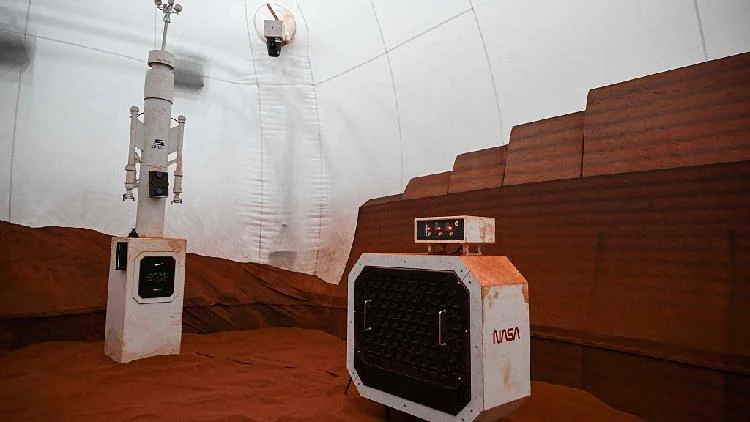
A simulated Mars mission, like NASA’s CHAPEA, is carefully designed to replicate key aspects of a real space mission. The core of the simulation involves a small crew living and working in a confined habitat for an extended period. This habitat is often a 3D-printed structure, designed to resemble a potential Martian base, providing a realistic living and working space.
The mission typically includes a diverse crew, often composed of individuals with different skill sets, such as a commander, medical officer, science officer, and flight engineer. This diversity mirrors the composition of actual space crews and allows for the study of team dynamics under pressure. During the mission, the crew engages in a variety of activities that mirror those they would perform on Mars. This can include conducting scientific experiments, growing crops in simulated Martian soil, performing maintenance on the habitat, and communicating with mission control.
A critical element of these simulations is the recreation of communication delays. By introducing artificial delays in messages sent to and from mission control, researchers can study how crews adapt to the challenges of communicating across vast distances. This aspect is vital for understanding the psychological impact of delayed communication and developing effective protocols for managing it. The duration of these missions is also carefully chosen to reflect the length of a potential Mars mission, often lasting a year or more.
Key Components and Activities
Within the structured environment of a simulated Mars mission, several key components and activities are essential for gathering meaningful data. These elements are designed to test various aspects of human performance and system reliability in a space-like context.
The Habitat
The habitat itself is a crucial component. In the case of NASA’s CHAPEA, the habitat was a 158-square-meter 3D-printed structure. This design choice reflects the ongoing research into using advanced manufacturing techniques for constructing extraterrestrial bases. The habitat is equipped with living quarters, a laboratory, a medical bay, and recreational areas, all designed to be functional and sustainable within the constraints of a simulated off-world environment. The layout and features of the habitat are studied to assess their impact on crew well-being and operational efficiency.
Crew Roles and Responsibilities
The crew members are assigned specific roles that align with the needs of a space mission. For example, a mission commander is responsible for overall leadership and decision-making. A science officer focuses on conducting research and experiments, while a medical officer monitors the health of the crew and manages any medical issues that arise. A flight engineer is typically tasked with maintaining the habitat’s systems and equipment. These roles are not just functional; they also create a dynamic for studying leadership, teamwork, and conflict resolution in an isolated setting.
Daily Operations and Experiments
The daily routine of the crew is highly structured. It includes scheduled work periods, exercise, meals, and downtime. Work periods are dedicated to tasks such as:
- Scientific Research: Conducting experiments related to Martian geology, biology, or atmospheric conditions. This might involve analyzing soil samples or monitoring simulated weather patterns.
- Food Production: Growing crops in controlled environments, such as hydroponic or aeroponic systems, to test the feasibility of in-situ food production for long-duration missions.
- Habitat Maintenance: Performing regular checks and repairs on life support systems, power generation, and other critical infrastructure within the habitat.
- EVA Simulations: While not actual Extravehicular Activities (EVAs), crews might simulate the planning and execution of spacewalks, including suit-up procedures and task checklists, within the confines of the habitat or a connected module.
Communication Protocols and Delays
The simulation of communication delays is a cornerstone of these missions. By introducing delays that mimic the time it takes for signals to travel between Earth and Mars, researchers can observe how crews adapt their communication strategies. This includes learning to be more concise, anticipating questions, and developing patience. The psychological impact of these delays, such as increased frustration or a sense of disconnect, is also closely monitored. This aspect is vital for developing effective communication guidelines for future Mars astronauts.
Psychological and Physiological Considerations
Living in isolation for an extended period, far from family and friends, and in a confined space, presents significant psychological and physiological challenges. Simulated missions are critical for understanding and mitigating these effects.
Psychological Impact
The psychological well-being of astronauts is paramount for mission success. Prolonged isolation can lead to feelings of loneliness, depression, anxiety, and irritability. The lack of privacy, the monotonous environment, and the absence of familiar social interactions can exacerbate these issues. Researchers monitor crew morale, interpersonal relationships, and cognitive function throughout the mission. Strategies such as providing opportunities for recreation, maintaining a structured routine, and facilitating virtual connections with loved ones are tested to support mental health. The ability of the crew to maintain positive relationships and resolve conflicts effectively is a key area of study.
Physiological Effects
The human body undergoes significant changes in microgravity and other spaceflight conditions. While simulated missions on Earth cannot fully replicate microgravity, they can study other physiological effects relevant to long-duration space travel. These include:
- Diet and Nutrition: The impact of a controlled, often pre-packaged, diet on crew health and performance is assessed. Research into growing fresh produce in space is also a key focus.
- Exercise Regimens: Astronauts on long missions need to maintain physical fitness to counteract muscle atrophy and bone density loss. Simulated missions test the effectiveness of various exercise protocols and equipment.
- Sleep Patterns: The disruption of circadian rhythms and the challenges of sleeping in a confined, artificial environment can affect sleep quality. Monitoring and improving sleep hygiene are important aspects of these studies.
- Radiation Exposure: While not directly simulated in terms of cosmic radiation, the protocols for minimizing exposure and the health effects of radiation are considered in the overall mission planning and crew health monitoring.
Lessons Learned and Future Implications
The data gathered from simulated Mars missions like CHAPEA provides critical insights that directly inform the planning and execution of future space exploration endeavors. These lessons are not limited to technological advancements but extend deeply into the human element of space travel.
Crew Performance and Team Dynamics
One of the most significant takeaways from these simulations is the understanding of how crews perform under prolonged stress and isolation. Studies reveal that effective communication, clear leadership, and strong interpersonal relationships are vital for maintaining crew cohesion and productivity. The ability of the crew to adapt to unexpected challenges, manage conflicts constructively, and support one another psychologically are key indicators of mission readiness. The CHAPEA mission, for instance, provided insights into how crews manage simulated interplanetary communications with inherent delays, highlighting the need for patience, careful planning, and enhanced independence among astronauts.
Habitat Design and Sustainability
The design of the habitat plays a crucial role in crew well-being and mission success. Research into 3D-printed habitats, as seen in CHAPEA, demonstrates the potential for creating more sustainable and adaptable living spaces on other planets. Lessons learned from the operational efficiency of these habitats, including their layout, resource management, and maintenance requirements, directly influence the design of future extraterrestrial bases. The ability to grow crops within the habitat also points towards greater self-sufficiency for future missions, reducing reliance on resupply missions from Earth.
Health Monitoring and Countermeasures
The physiological and psychological data collected is invaluable for developing effective health monitoring systems and countermeasures. Understanding how the human body and mind respond to long-duration confinement and the unique stressors of space travel allows scientists to design better exercise programs, nutritional plans, and mental health support strategies. The insights gained help in identifying potential risks early and developing protocols to mitigate them, ensuring astronauts remain healthy and capable throughout their missions.
Paving the Way for Mars
Ultimately, the purpose of these simulated missions is to pave the way for human exploration of Mars. The data gathered from CHAPEA and similar projects informs NASA’s broader goals, including the Artemis program aimed at returning astronauts to the Moon and eventually sending humans to Mars. As Vanessa Wyche, director of the Johnson Space Center, noted, the lessons learned from the CHAPEA crew will help pave the way for missions to the Moon and, “one day, Mars.” The success of these simulations builds confidence in our ability to overcome the immense challenges of interplanetary travel and brings the dream of human footprints on Mars closer to reality.
The Role of Analog Missions in Space Exploration
Analog missions serve as indispensable stepping stones in the complex journey of space exploration. They bridge the gap between theoretical planning and practical application, allowing scientists and engineers to test hypotheses and refine technologies in environments that closely mimic the conditions of space. These missions are not merely practice runs; they are critical research platforms that generate essential data for ensuring the safety, health, and success of future astronauts.
The insights gained from these simulated environments are multifaceted. They encompass the engineering of habitats and life support systems, the development of operational procedures, and, perhaps most importantly, the understanding of human factors. By studying how crews interact, cope with isolation, and perform under pressure, we gain a deeper appreciation for the psychological and physiological demands of long-duration spaceflight. This knowledge is crucial for selecting and training astronauts, as well as for designing missions that minimize risks and maximize crew well-being.
Furthermore, analog missions contribute to public engagement and inspire future generations. They offer tangible examples of the challenges and triumphs of space exploration, making the abstract goals of interplanetary travel more relatable. The success of missions like CHAPEA, where crews emerge after over a year in isolation, demonstrates humanity’s growing capability to undertake ambitious journeys beyond Earth. These endeavors underscore the dedication, ingenuity, and resilience required for space exploration and reinforce the vision of a future where humans venture further into the cosmos.
Conclusion
Simulated Mars missions, such as NASA’s CHAPEA, are vital components of our preparation for venturing beyond Earth. By recreating the isolation, confinement, and operational challenges of a Mars expedition, these analogs provide invaluable data on crew health, performance, and the effectiveness of various technologies and protocols. The structure of these missions, from the 3D-printed habitats to the simulated communication delays, is meticulously designed to yield insights that directly inform future space endeavors. The lessons learned about crew dynamics, psychological resilience, physiological adaptation, and sustainable living are critical for ensuring the safety and success of astronauts on long-duration missions. As we continue to push the boundaries of exploration, these simulated environments will remain indispensable tools, guiding us toward the ultimate goal of human exploration of Mars and beyond.


Conversation
0 Comments