

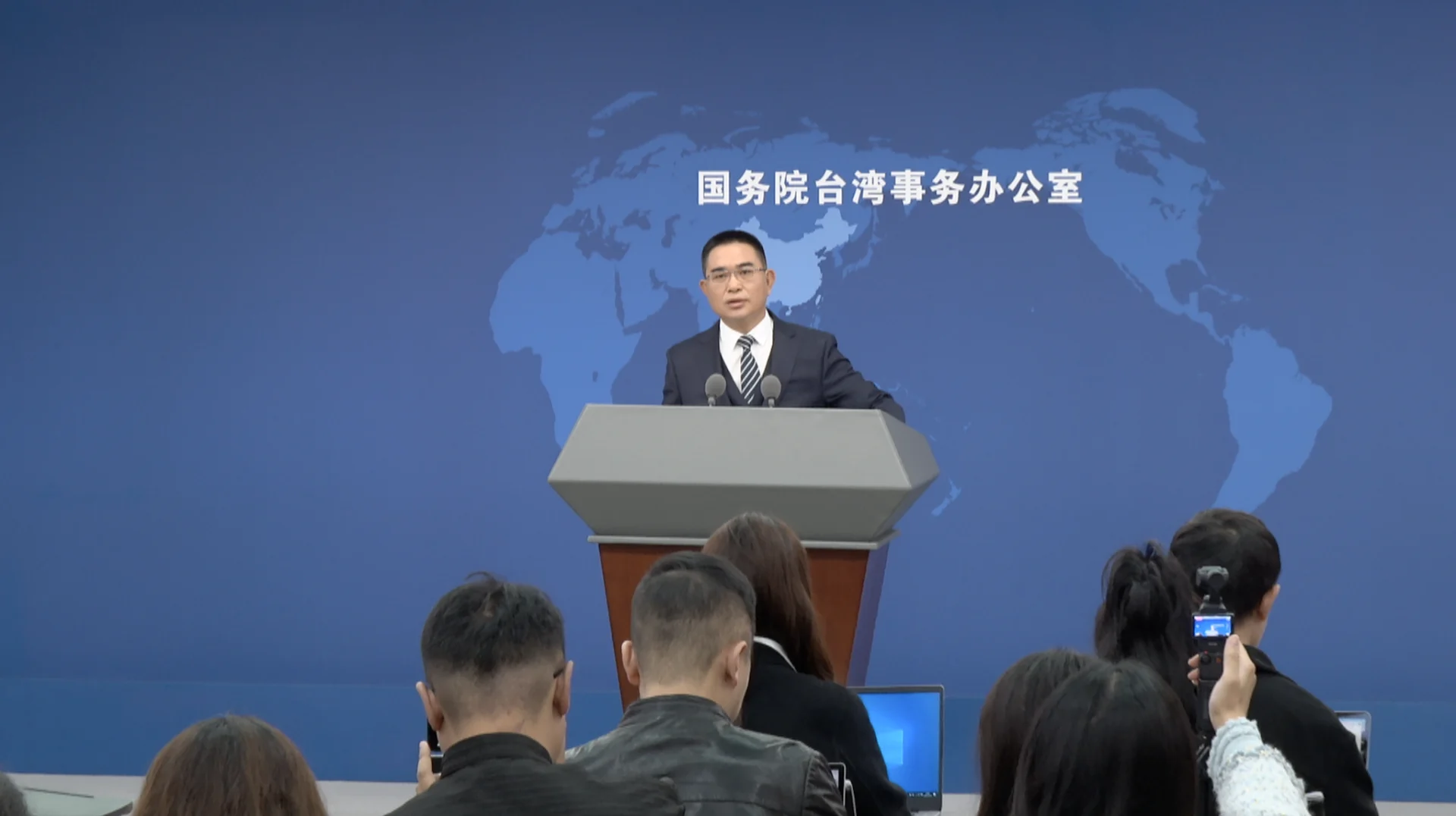
The complex relationship between China and Taiwan is a subject of ongoing global attention. At the heart of this dynamic is the question of Taiwan’s political status and its interactions with international powers, particularly the United States. Recent developments have highlighted the mainland Chinese perspective on these interactions, specifically concerning Taiwan’s defense budget and its engagement with foreign military personnel. This analysis will explore the mainland’s stance on Taiwan’s budget for U.S. military observers, examining the implications of such actions within the broader geopolitical context. Understanding this perspective is key to grasping the sensitivities and strategic considerations that shape cross-strait relations.
Mainland China’s Reaction to Taiwan’s Defense Budget
The Chinese mainland has expressed strong disapproval regarding Taiwan’s decision to allocate a significant budget for inviting U.S. military observers. Reports indicate that Taiwan’s Democratic Progressive Party (DPP) authorities have set aside over 80 million New Taiwan Dollars, which amounts to approximately 2.5 million U.S. dollars. This funding is designated for the observation of Taiwan’s “Han Kuang” military exercises, planned for the current year and the next.
From the mainland’s viewpoint, this move is seen as a provocative step that escalates tensions in the Taiwan Strait. The presence of U.S. military personnel observing these exercises is interpreted as a tacit endorsement of Taiwan’s military capabilities and its pursuit of greater international military engagement. This is particularly concerning for Beijing, which views Taiwan as a renegade province that must eventually be reunited with the mainland, by force if necessary. The mainland’s official stance is that any actions by Taiwan that suggest a move towards formal independence or that involve foreign military powers are unacceptable and will be met with firm opposition.
The specific amount allocated, while perhaps not enormous in absolute terms on the global stage, carries significant symbolic weight. It represents a tangible commitment by Taiwan to deepen its military ties with the United States, a country that Beijing views as a primary strategic competitor. The mainland’s criticism often centers on the idea that such expenditures are a misallocation of resources that could otherwise be used for the welfare of the Taiwanese people. Instead, they are seen as fueling a cycle of confrontation and undermining efforts towards peaceful reunification.
The mainland’s reaction is not merely rhetorical. It is often accompanied by increased military activities in the vicinity of Taiwan, such as air and naval patrols, which serve as a clear signal of Beijing’s displeasure and its readiness to respond to perceived threats. This creates a precarious situation where diplomatic and military signaling can easily be misinterpreted, leading to unintended escalation. The mainland’s consistent messaging is that it seeks peaceful reunification but will not shy away from using force to prevent Taiwan from declaring formal independence or from becoming a de facto military outpost for foreign powers.
The Significance of the “Han Kuang” Exercises
The “Han Kuang” exercises are Taiwan’s premier annual military drills, designed to test and improve its combat readiness and defensive capabilities. These exercises simulate various scenarios, including potential invasion attempts, and involve all branches of Taiwan’s armed forces. The inclusion of foreign observers, particularly from the United States, adds another layer of significance to these drills.
For Taiwan, inviting U.S. military observers is a way to demonstrate its commitment to self-defense and to signal its strategic alignment with the United States. It also provides an opportunity for U.S. military personnel to gain insights into Taiwan’s defense strategies, operational procedures, and the effectiveness of its military equipment. This exchange of information is invaluable for both sides, especially given the complex geopolitical environment in the Indo-Pacific region. The U.S. has a long-standing, though unofficial, commitment to Taiwan’s security under the Taiwan Relations Act, and observing these exercises helps the U.S. assess Taiwan’s defensive posture and its ability to resist potential aggression.
However, from the perspective of the Chinese mainland, the “Han Kuang” exercises themselves are viewed with suspicion. Beijing sees them as preparation for conflict and as a manifestation of Taiwan’s desire to resist reunification. When these exercises involve foreign military personnel, especially from the U.S., the mainland’s concerns are amplified. It is interpreted as a move that not only strengthens Taiwan’s defense capabilities but also deepens its security entanglement with the United States, potentially drawing the U.S. into a direct conflict in the event of hostilities.
The mainland’s criticism often highlights the perceived provocation inherent in these exercises. It argues that Taiwan’s actions are destabilizing and contribute to regional insecurity. Beijing’s narrative is that Taiwan’s ruling party, the DPP, is deliberately provoking the mainland by engaging in such activities, thereby jeopardizing peace and stability in the Taiwan Strait. The mainland consistently calls for dialogue and peaceful development of cross-strait relations, but it also makes clear that it will not tolerate any actions that it deems to be separatist or that challenge its sovereignty claims.
The budget allocated for U.S. military observers is thus a focal point for the mainland’s criticism because it represents a concrete step in Taiwan’s efforts to bolster its defense through international cooperation, particularly with the U.S. This cooperation is seen by Beijing as a direct challenge to its core interests and its long-term strategy for Taiwan.
Geopolitical Implications and Cross-Strait Relations
The mainland’s strong reaction to Taiwan’s budget for U.S. military observers is deeply rooted in the complex geopolitical landscape of the Indo-Pacific. The Taiwan Strait remains one of the most sensitive flashpoints in international relations, with the potential for conflict having significant global ramifications.
Beijing’s fundamental position is that Taiwan is an inalienable part of China and that the issue of Taiwan is an internal affair. Any external interference, particularly from the United States, is viewed as a violation of China’s sovereignty and an attempt to support Taiwan’s independence. The mainland’s rhetoric often emphasizes the “one China principle,” which asserts that there is only one sovereign state under the name China and that Taiwan is part of it.
The presence of U.S. military observers during Taiwan’s exercises is seen by Beijing as a de facto acknowledgment of Taiwan’s separate military and political status, which directly contradicts the “one China principle” as interpreted by Beijing. This is why the mainland’s response is often sharp and condemnatory. It serves as a warning to both Taiwan and the United States about the potential consequences of deepening their security ties.
For Taiwan, engaging with the U.S. military is a critical component of its security strategy. Given the overwhelming military superiority of the mainland, Taiwan relies heavily on its own defense capabilities, supplemented by potential U.S. support. The “Han Kuang” exercises, and the observation of these by U.S. personnel, are part of this broader effort to deter aggression and to ensure its survival as a self-governing entity. The DPP government, in particular, has been more assertive in seeking international support and strengthening its defense ties, which often draws strong criticism from Beijing.
The geopolitical implications extend beyond the immediate cross-strait relationship. The U.S. involvement in Taiwan’s defense is a key element of its broader strategy in the Indo-Pacific, aimed at maintaining regional stability and countering China’s growing influence. Any escalation in the Taiwan Strait could draw in regional powers and have a profound impact on global trade, supply chains, and international security.
Therefore, the mainland’s condemnation of Taiwan’s budget for U.S. military observers is not just about a specific financial allocation; it is a signal of Beijing’s unwavering resolve to prevent any actions that it perceives as undermining its sovereignty or its ultimate goal of reunification. It underscores the deep-seated mistrust and the high stakes involved in the cross-strait relationship, making any misstep potentially dangerous. The mainland’s consistent message is that while it prefers peaceful means, it will not rule out the use of force if its core interests are threatened.
The Mainland’s Perspective on Sovereignty and Intervention
The mainland’s strong stance on Taiwan’s defense budget and its engagement with the U.S. military is fundamentally driven by its unwavering assertion of sovereignty. Beijing views Taiwan not as a separate country, but as a province that has been temporarily separated and must be brought back under the central government’s control. This perspective shapes its interpretation of all actions taken by the Taiwanese authorities, especially those involving foreign military powers.
When Taiwan allocates funds to invite U.S. military observers, the mainland sees this as an act of defiance and a clear indication that Taiwan is seeking to solidify its de facto independence with external support. This is perceived as a direct challenge to China’s sovereignty and territorial integrity. The mainland’s official position is that any country that recognizes the “one China principle” should not engage in official military or security cooperation with Taiwan. The U.S. engagement, even in an observational capacity, is seen as crossing this line.
The mainland’s criticism often employs strong language, such as “condemnation” and “slamming,” to convey the seriousness with which it views these developments. This is not merely diplomatic posturing; it reflects a deeply held belief that Taiwan’s actions are illegitimate and that the mainland has the right to take measures to prevent what it considers separatism. The invitation of U.S. military observers is interpreted as a move that not only enhances Taiwan’s defense capabilities but also signals a deeper political alignment with the U.S., which Beijing views as an attempt to internationalize the Taiwan issue and to gain external backing for independence.
Furthermore, the mainland often frames such actions as a form of foreign intervention in what it considers an internal affair. The U.S. role in observing Taiwan’s military exercises is seen as a direct interference in China’s domestic matters. Beijing’s narrative is that the U.S. is using Taiwan as a pawn in its broader strategic competition with China, and that Taiwan’s authorities are being manipulated or are willingly participating in this game. This narrative aims to delegitimize Taiwan’s actions and to rally domestic and international support for Beijing’s position.
The mainland’s response to these perceived provocations is multifaceted. It includes diplomatic protests, strong public statements, and, importantly, increased military readiness and activities around Taiwan. These military demonstrations are intended to signal Beijing’s resolve and to deter further actions by Taiwan and its international partners that could be seen as challenging China’s sovereignty. The mainland’s objective is to make it clear that any attempt to alter the status quo through force or through actions that suggest formal independence will be met with a forceful response.
The budget for U.S. military observers, therefore, becomes a symbol of a larger struggle over sovereignty, international recognition, and the future of Taiwan. The mainland’s condemnation highlights its determination to maintain its claim over Taiwan and to resist any external forces that it believes are attempting to separate Taiwan from China.
Economic and Strategic Considerations
Beyond the political and military dimensions, the mainland’s reaction to Taiwan’s defense budget for U.S. military observers also involves significant economic and strategic considerations. Beijing views the stability of the Taiwan Strait as crucial for its own economic development and for the broader regional and global economy.
From an economic standpoint, the mainland sees Taiwan as an integral part of its economic sphere. The potential for conflict in the Taiwan Strait poses a severe threat to the robust trade and investment links that exist between the mainland and Taiwan. Any disruption to these flows, or to the vital shipping lanes that pass through the region, could have devastating consequences for both economies and for global supply chains, particularly in sectors like semiconductors where Taiwan plays a dominant role.
The mainland’s criticism of Taiwan’s defense spending, including the budget for U.S. observers, often carries an economic undertone. Beijing argues that such expenditures divert resources that could be used for economic development and improving the livelihoods of the Taiwanese people. Instead, these funds are seen as being channeled into activities that increase regional tensions and undermine economic stability. The mainland often promotes its vision of economic integration and shared prosperity across the Strait, suggesting that peaceful reunification would unlock even greater economic benefits for Taiwan.
Strategically, the mainland views the deepening military ties between Taiwan and the United States as a direct threat to its own security interests and its growing regional influence. The presence of U.S. military personnel observing Taiwan’s exercises is seen as a step towards greater U.S. military involvement in the region, which Beijing perceives as an attempt to contain China’s rise. The mainland’s strategic objective is to ensure its own security and to maintain its dominance in its perceived sphere of influence.
The mainland’s response to these perceived threats is not limited to rhetoric. It includes economic measures, such as trade policies and investment strategies, designed to increase its leverage over Taiwan and to encourage a more favorable political environment. Beijing also uses its growing economic power to influence international perceptions and to isolate Taiwan diplomatically.
The mainland’s condemnation of the budget for U.S. military observers is thus a signal that it is closely monitoring Taiwan’s defense activities and its international security partnerships. It is a warning that any actions that are perceived to significantly alter the military balance or to deepen Taiwan’s security dependence on foreign powers will be met with strong opposition, potentially including economic and military countermeasures. The mainland’s ultimate goal is to ensure that Taiwan’s defense posture and its international engagements do not pose a threat to Beijing’s strategic objectives or its claims of sovereignty.
International Law and the “One China Principle”
The mainland’s position on Taiwan, including its strong reactions to Taiwan’s defense budget and its engagement with foreign militaries, is heavily influenced by its interpretation of international law and the “one China principle.” Beijing asserts that the “one China principle” is a universally recognized norm in international relations and the political foundation for cross-strait relations.
According to Beijing, the “one China principle” means that there is only one sovereign state under the name China, and that the People’s Republic of China (PRC) is the sole legitimate government representing all of China, including Taiwan. This principle is often cited as the basis for diplomatic relations between China and other countries. Most nations, in establishing diplomatic ties with the PRC, have acknowledged or recognized this principle, though the specific wording and implications can vary.
From the mainland’s perspective, Taiwan is an integral part of China, and its status is not a matter of international dispute but an internal issue that China is determined to resolve. Therefore, any actions by Taiwan that suggest it is a separate sovereign entity, or that involve foreign powers in its defense in a way that implies recognition of its separate status, are seen as violations of the “one China principle” and international law as interpreted by Beijing.
The invitation of U.S. military observers to Taiwan’s exercises is viewed through this lens. Beijing argues that such engagement implies a level of official military cooperation that is inconsistent with the “one China principle.” It suggests that the U.S. is treating Taiwan as a separate military entity, which Beijing sees as undermining the PRC’s sovereignty and territorial integrity. The budget allocated for this purpose is seen as a concrete manifestation of Taiwan’s intent to pursue a path of de facto independence, with the backing of a major global power.
The mainland’s condemnation is thus an attempt to reinforce its interpretation of the “one China principle” and to pressure other countries, particularly the United States, to adhere to it. Beijing seeks to prevent any actions that could be construed as legitimizing Taiwan’s separate political status or its military independence. This includes discouraging foreign military personnel from engaging in activities that could be seen as supporting Taiwan’s defense in a way that challenges Beijing’s sovereignty claims.
While many countries acknowledge the PRC’s “one China principle,” they also maintain unofficial relations with Taiwan, including arms sales and, in some cases, military exchanges. This creates a complex diplomatic environment where interpretations of international law and the “one China principle” can differ significantly. The mainland’s strong reactions are a clear indication of its determination to enforce its own interpretation and to prevent any developments that it believes could lead to Taiwan’s permanent separation from China.
The Role of the Democratic Progressive Party (DPP)
The Democratic Progressive Party (DPP) plays a central role in the current cross-strait dynamic, and its policies are often the direct target of Beijing’s criticism. The DPP is Taiwan’s main opposition party and has historically advocated for Taiwan’s distinct identity and sovereignty, often diverging from Beijing’s preferred approach of closer integration.
The DPP government’s decision to allocate a budget for U.S. military observers to attend the “Han Kuang” exercises is consistent with its broader strategy of strengthening Taiwan’s defense capabilities and deepening its security ties with international partners, particularly the United States. This approach is driven by the belief that Taiwan must be prepared to defend itself against potential aggression from the mainland. The DPP views such engagements as essential for deterring an attack and for ensuring Taiwan’s security and democratic way of life.
Beijing, however, views the DPP’s policies as inherently separatist and provocative. The mainland’s official media and government spokespersons frequently criticize the DPP for its “anti-China” stance and for allegedly seeking to push Taiwan towards formal independence. The budget for U.S. military observers is seen as another example of the DPP government’s efforts to internationalize the Taiwan issue and to seek external support for its agenda.
The mainland’s narrative often portrays the DPP as being manipulated by external forces, particularly the United States, which it accuses of using Taiwan to contain China. This narrative aims to delegitimize the DPP government and to create divisions within Taiwan by suggesting that its policies are not in the best interest of the Taiwanese people and are instead leading to increased tensions and potential conflict.
The DPP, in turn, defends its policies as necessary measures for self-preservation and for maintaining Taiwan’s democratic freedoms. It argues that it is not seeking independence but rather seeking to preserve Taiwan’s existing status and its right to self-determination. The party emphasizes that its defense spending and international cooperation are defensive in nature and are aimed at deterring aggression, not provoking conflict.
The mainland’s strong condemnation of the DPP’s budget for U.S. military observers highlights the deep ideological and political chasm between Beijing and the DPP. It underscores the challenges in finding common ground for dialogue and peaceful resolution of cross-strait issues, as long as the DPP remains in power and continues to pursue policies that Beijing views as crossing its red lines. The mainland’s consistent message is that it will not tolerate any moves towards independence, and the DPP’s actions are seen as pushing in that direction.
Future Outlook and Potential Consequences
The ongoing tensions surrounding Taiwan’s defense budget and its engagement with foreign military powers have significant implications for the future outlook of cross-strait relations and regional stability. The mainland’s strong condemnation of Taiwan’s decision to fund U.S. military observers is indicative of a broader pattern of increasing assertiveness from Beijing and a hardening of its stance on Taiwan.
The mainland’s perspective is that time is on its side, and it is increasingly confident in its ability to achieve reunification, by force if necessary. This confidence is fueled by its growing economic and military power. As a result, Beijing is likely to continue its pressure campaign against Taiwan, employing a combination of diplomatic, economic, and military measures. This could include more frequent and larger-scale military exercises near Taiwan, increased diplomatic isolation of Taiwan, and economic coercion.
For Taiwan, the challenge is to maintain its security and its democratic way of life in the face of this mounting pressure. The DPP government is likely to continue its strategy of strengthening its defense capabilities and seeking international support, particularly from the United States. This approach, while necessary for deterrence, also risks further provoking Beijing and escalating tensions. The delicate balance that Taiwan must strike is between deterring aggression and avoiding actions that could be perceived as a direct challenge to China’s sovereignty, thereby triggering a forceful response.
The United States plays a critical role in this dynamic. While officially adhering to the “one China policy,” the U.S. has also increased its support for Taiwan’s self-defense capabilities. The mainland’s condemnation of Taiwan’s budget for U.S. military observers is also a message directed at Washington, urging it to exercise restraint and to avoid actions that could be seen as encouraging Taiwan’s independence. The U.S. faces the challenge of balancing its commitment to Taiwan’s security with its broader strategic interests in maintaining stability in the region and avoiding direct conflict with China.
The potential consequences of continued escalation are severe. A military conflict in the Taiwan Strait would have devastating economic and human costs, not only for China and Taiwan but also for the entire global community. It could disrupt global trade, trigger a major refugee crisis, and potentially draw in other regional powers. Therefore, finding a path towards de-escalation and dialogue remains a critical imperative.
However, the current trajectory suggests that tensions are likely to persist, if not intensify. The mainland’s unwavering commitment to reunification, coupled with Taiwan’s determination to maintain its autonomy and the U.S. strategic involvement, creates a complex and volatile situation. The budget for U.S. military observers is just one symptom of these deeper geopolitical fault lines. The future of cross-strait relations will depend on the ability of all parties involved to manage their differences, to avoid miscalculation, and to prioritize peace and stability over confrontation.
Conclusion
The mainland Chinese condemnation of Taiwan’s budget for U.S. military observers highlights the deep-seated political and strategic disagreements that define cross-strait relations. Beijing views such expenditures and engagements as provocative acts that challenge its sovereignty and territorial integrity, interpreting them as steps towards de facto independence supported by foreign powers. This perspective is rooted in the mainland’s unwavering adherence to the “one China principle” and its ultimate goal of reunification.
Taiwan, particularly under the DPP government, sees these actions as necessary measures to bolster its self-defense capabilities and to deter potential aggression from the mainland. Its engagement with the United States is a critical component of its security strategy in a complex geopolitical environment.
The ongoing tensions underscore the precarious balance in the Taiwan Strait. The mainland’s assertive stance, coupled with Taiwan’s efforts to strengthen its defenses and international partnerships, creates a volatile situation with significant implications for regional and global stability. The future trajectory of these relations will depend on the careful management of these complex dynamics, the avoidance of miscalculation, and a commitment to finding pathways that prioritize peace and stability.


Conversation
0 Comments