

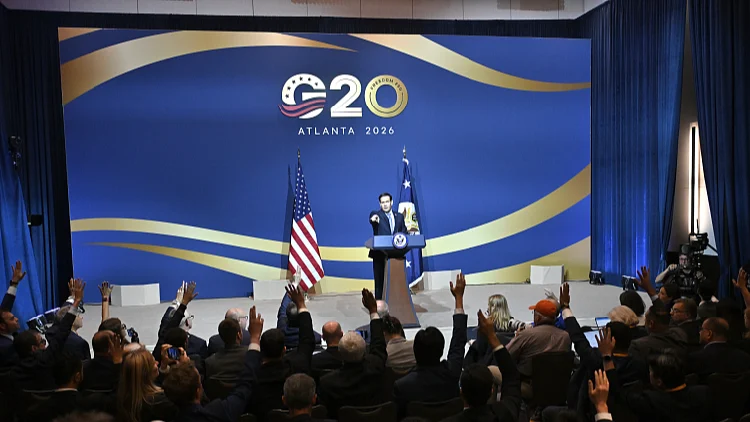
The G20, a forum for the world’s largest economies, aims to foster global economic cooperation. However, recent meetings have highlighted deep divisions among member nations, making consensus on critical global issues increasingly difficult. This analysis explores the challenges facing the G20, examining the factors contributing to its current state of division and the implications for international relations and global stability. The lack of a joint communique at the recent G20 Foreign Ministers’ meeting in Atlanta underscores these persistent challenges.
The G20’s Evolving Role and Challenges
The Group of 20 (G20) was established to address major issues in the global economy. Its members represent around 80% of the world’s GDP, two-thirds of the global population, and three-quarters of world trade. This broad representation gives the G20 significant influence on global economic governance. However, the group’s effectiveness is being tested by a complex web of geopolitical tensions, economic disparities, and differing national interests.
The G20’s mandate has expanded over the years to include not only economic issues but also broader global challenges such as climate change, development, and security. This expansion, while reflecting the interconnectedness of global issues, also increases the complexity of achieving consensus among diverse member states. The recent G20 Foreign Ministers’ meeting in Atlanta, which concluded without a joint communique, serves as a stark example of these difficulties. The failure to agree on a common statement indicates a significant divergence of views on pressing global matters.
Factors Contributing to Division
Several key factors are contributing to the growing divisions within the G20. These include escalating geopolitical conflicts, economic protectionism, and differing approaches to global governance.
Geopolitical Tensions and Conflicts
The ongoing Ukraine crisis and the US-Iran conflict have cast a long shadow over G20 deliberations. These conflicts not only create immediate humanitarian crises but also have far-reaching economic consequences, including disruptions to energy supplies and global trade. Member states are divided on how to address these conflicts, with some advocating for stronger sanctions and others calling for de-escalation and diplomatic solutions. The inability to find common ground on these issues directly impacts the G20’s ability to act cohesively on the global stage.
The US Secretary of State, Marco Rubio, highlighted freedom of navigation in key waterways like the Strait of Hormuz and the Black Sea as critical issues. However, the participants remained divided on how to address these concerns, reflecting broader disagreements on regional security and international law. This division makes it difficult to implement unified strategies for ensuring global stability and economic security.
Economic Protectionism and Trade Disputes
In recent years, a rise in economic protectionism and trade disputes has further strained relations among G20 members. Policies such as tariffs and trade barriers create friction and undermine the principles of free and open trade that the G20 has historically championed. These economic disagreements often spill over into political discussions, making it harder to achieve consensus on broader global issues. The mention of US tariff policies as a point of contention at the Atlanta meeting illustrates how economic disputes can hinder diplomatic progress.
Differing Approaches to Global Governance
Member states also hold differing views on the ideal model for global governance. Some nations advocate for a multilateral approach, emphasizing the importance of international institutions and cooperation. Others tend to favor more nationalistic approaches, prioritizing their own interests and seeking to reduce reliance on international bodies. This divergence in philosophy makes it challenging to forge common policies and agreements within the G20 framework. China’s Vice Foreign Minister Ma Zhaoxu, for instance, advocated for the Global Security Initiative, proposing a vision of common, comprehensive, cooperative, and sustainable security. This highlights differing perspectives on how to achieve global security and stability.
The Impact of Divisions on Global Stability
The divisions within the G20 have significant implications for global stability and economic prosperity. When a forum of this magnitude fails to reach consensus, it weakens its ability to address pressing global challenges effectively.
Weakened Global Economic Cooperation
The G20’s primary role is to foster global economic cooperation. When member states are deeply divided, it becomes difficult to coordinate policies on issues such as financial regulation, trade, and development. This can lead to a less stable global economic environment, characterized by increased uncertainty and reduced investment. The failure to agree on a joint communique means that coordinated efforts to address global economic challenges, such as supply chain disruptions and food security, are less likely.
Hindered Response to Global Crises
The G20 is expected to play a crucial role in coordinating international responses to global crises, whether they are economic downturns, pandemics, or humanitarian emergencies. Deep divisions among member states can paralyze the group’s ability to act decisively, leaving the international community less prepared to face these challenges. The ongoing geopolitical tensions and conflicts mentioned in the research data demonstrate how these divisions can prevent a unified and effective response to crises.
Erosion of Multilateralism
The G20’s struggles also reflect a broader trend of declining faith in multilateralism. When major economies cannot find common ground within such a prominent forum, it can embolden protectionist sentiments and undermine the principles of international cooperation. This erosion of multilateralism can lead to a more fragmented and less predictable international order, where global problems are harder to solve. The abrupt cancellation of the traditional group photo of foreign ministers, due to disagreements over the presence of certain representatives, is a symbolic representation of these deeper rifts.
China’s Role and Perspective
China, as a major player in the G20, has consistently advocated for a cooperative approach to global challenges. Chinese Vice Foreign Minister Ma Zhaoxu’s remarks at the meeting emphasized the need for the G20 to shoulder its responsibilities in safeguarding world peace and stability. He highlighted China’s Global Security Initiative as a framework for common, comprehensive, cooperative, and sustainable security, suggesting a different path forward for resolving international disputes.
China’s position underscores a desire for a more inclusive and cooperative global governance system. By promoting initiatives like the Global Security Initiative, China aims to offer alternative solutions to existing global security challenges, particularly in contrast to what it perceives as a lagging development agenda and rising geopolitical tensions. The call for concrete actions to maintain the stability of global industrial and supply chains also reflects China’s interest in a predictable and functional global economy.
The Path Forward for the G20
Rebuilding consensus within the G20 will require significant effort and a willingness from member states to bridge their differences. Several steps could help the group move forward.
Prioritizing Common Ground
Despite deep divisions, there are often areas where G20 members share common interests. Focusing on these areas, such as sustainable development, climate action, and global health, can help rebuild trust and foster cooperation. By identifying and working on shared objectives, the G20 can demonstrate its continued relevance and capacity to deliver results.
Enhancing Dialogue and Diplomacy
Open and honest dialogue is essential for overcoming disagreements. The G20 needs to create more effective platforms for diplomatic engagement, where member states can discuss their concerns and explore potential compromises. This includes fostering a more inclusive environment where all voices are heard and respected, even those with differing viewpoints. The decision not to invite South Africa, a former rotating presidency holder, sparked divisions, indicating the importance of inclusivity.
Strengthening Mechanisms for Conflict Resolution
The G20 could benefit from developing more robust mechanisms for conflict resolution and dispute management. This could involve establishing clearer protocols for addressing disagreements and facilitating mediation between member states. By proactively managing conflicts, the G20 can prevent them from escalating and derailing broader cooperation efforts.
Adapting to a Changing Global Landscape
The G20 must also adapt to the evolving global landscape. This means acknowledging new power dynamics, addressing emerging economic challenges, and incorporating the perspectives of a wider range of stakeholders. Flexibility and a willingness to reform will be crucial for the G20 to remain an effective forum in the 21st century.
The upcoming G20 Leaders’ Summit in Miami, hosted by US President Donald Trump, presents an opportunity to address these challenges. The invitation extended to Russian President Vladimir Putin, though not yet confirmed, indicates a potential willingness to engage even with adversaries, a crucial step in navigating complex geopolitical terrain.
Conclusion
The G20 faces a critical juncture. The deep divisions highlighted at the recent Foreign Ministers’ meeting in Atlanta underscore the challenges of achieving consensus in an increasingly complex world. While geopolitical tensions, economic protectionism, and differing governance philosophies create significant hurdles, the G20’s role in fostering global economic cooperation and stability remains vital. Moving forward, the group must prioritize common ground, enhance dialogue, strengthen conflict resolution mechanisms, and adapt to the changing global landscape. Only through concerted effort and a renewed commitment to multilateralism can the G20 effectively address the pressing issues of our time and fulfill its potential as a cornerstone of global governance.


Conversation
0 Comments