

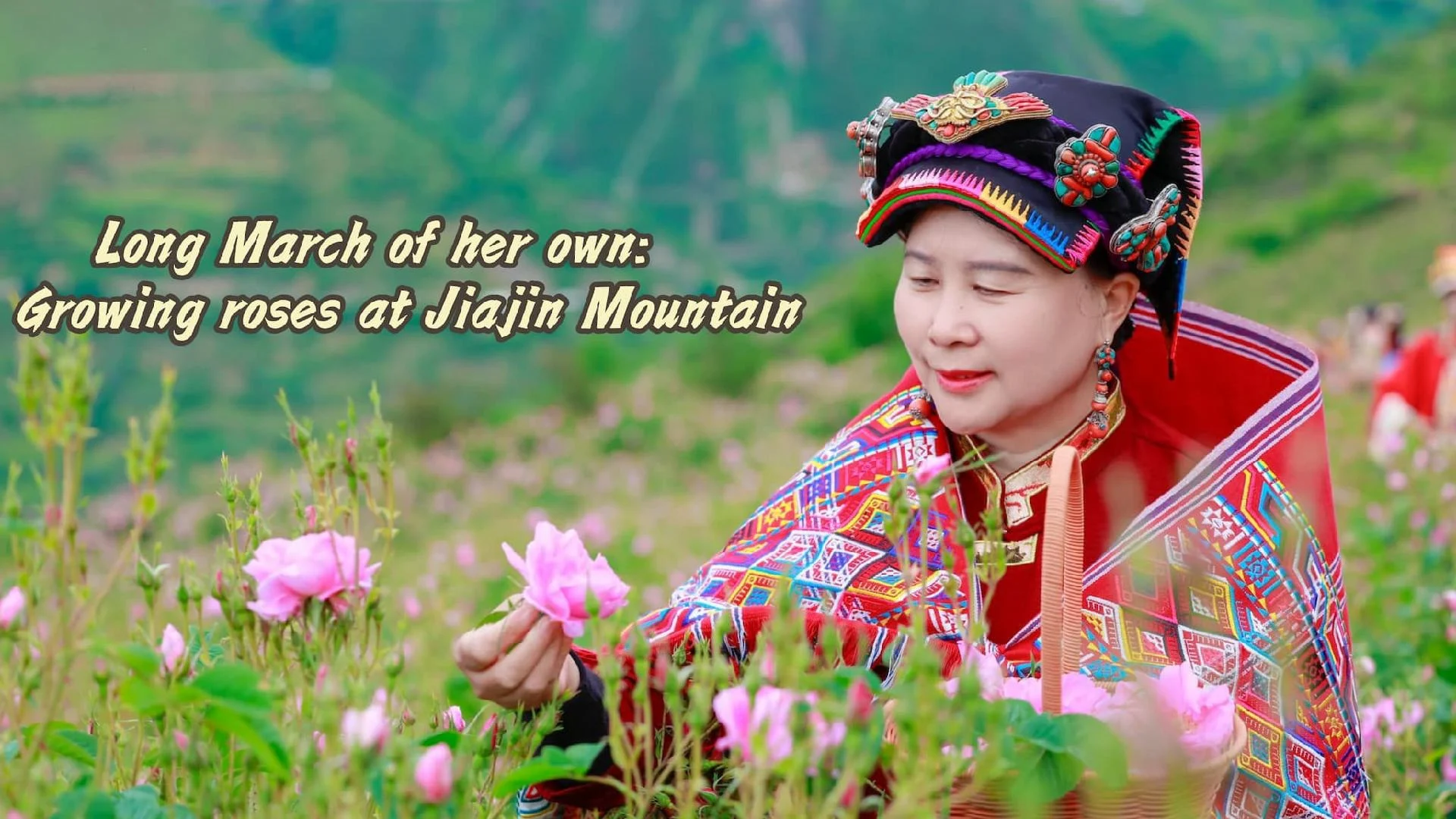
The story of Chen Wanghui, often called “Rose Sister,” is a powerful example of how one person’s vision and hard work can transform a community. Her journey, unfolding at the foot of Jiajin Mountain in China, mirrors the resilience and determination of the historical Long March. While the Red Army faced immense hardship crossing the treacherous mountain in 1935, Chen Wanghui has undertaken her own “Long March” by cultivating roses, bringing economic hope and prosperity to thousands of local villagers. This endeavor, rooted in the challenging yet beautiful landscape of Jiajin Mountain, highlights the potential for agricultural innovation to uplift rural areas and create sustainable livelihoods.
The area around Jiajin Mountain, once known for the arduous journey of the Long March, is now becoming a symbol of growth and renewal, thanks to Chen Wanghui’s dedication. Her initiative to grow roses has not only beautified the landscape but also created a significant source of income, demonstrating a modern approach to rural development. This analysis will explore the multifaceted aspects of Chen Wanghui’s rose cultivation project, examining its origins, its impact on the local economy and community, and the strategies employed to achieve its success. We will also consider the broader implications of such initiatives for rural revitalization and sustainable agriculture, drawing parallels between historical perseverance and contemporary entrepreneurial spirit.
The Genesis of a Rose Empire at Jiajin Mountain
Chen Wanghui’s story is deeply intertwined with the unique environment of Jiajin Mountain. The region, historically significant for the Long March, presents a challenging terrain and climate. However, it is precisely this setting that Chen Wanghui saw as an opportunity. Her vision was not just about growing flowers; it was about cultivating a future for her community. The initial steps of her project were likely fraught with uncertainty, as introducing a new, high-value crop like roses to a region accustomed to traditional agriculture would have required significant effort and persuasion.
The decision to focus on roses was strategic. Roses, with their diverse varieties and high market demand for ornamental purposes, essential oils, and even edible products, offered a promising avenue for economic development. Chen Wanghui’s personal journey, often described as her own “Long March,” signifies the immense personal dedication and perseverance required to overcome obstacles. This involved not only mastering the agricultural techniques for growing roses in a challenging environment but also building a supply chain, establishing market connections, and fostering a sense of collective effort among the villagers. Her leadership and unwavering commitment were the driving forces that transformed a nascent idea into a thriving enterprise.
Cultivating Hope: The Agricultural and Economic Impact
The introduction of large-scale rose cultivation at the foot of Jiajin Mountain has had a profound impact on the local economy. Before Chen Wanghui’s initiative, many villagers likely relied on subsistence farming or seasonal labor, with limited opportunities for consistent income. The rose project provided a new, viable source of livelihood, directly benefiting thousands of people. This economic upliftment is not merely about increased earnings; it represents a shift towards a more diversified and resilient local economy.
The agricultural practices employed are crucial to the success of the rose cultivation. Growing roses in a mountainous region requires careful attention to soil quality, water management, and protection against adverse weather conditions. Chen Wanghui and her team likely developed specialized techniques suited to the local environment, possibly incorporating elements of sustainable agriculture to ensure long-term viability. The cultivation of roses also extends beyond simple flower production. The development of related industries, such as the extraction of rose essential oils or the processing of rose petals for food and cosmetic products, can further enhance the economic value chain and create more employment opportunities. This multi-pronged approach maximizes the benefits derived from the rose crop, turning a single agricultural product into a comprehensive economic engine for the region.
Empowering the Community: Social Transformation Through Roses
Beyond the economic benefits, Chen Wanghui’s rose project has fostered significant social transformation within the community. By providing employment and income opportunities, the initiative has empowered individuals, particularly women, who often play a central role in agricultural labor. The success of the project has instilled a sense of pride and collective achievement, strengthening social cohesion. Villagers who might have previously considered migrating to urban centers for work now have the option to build a prosperous life in their hometown.
The “Rose Sister” moniker itself speaks to the nurturing and supportive role Chen Wanghui plays in the community. Her leadership extends beyond business management; it involves mentoring, training, and fostering a spirit of cooperation. This social empowerment is a critical component of sustainable development, ensuring that economic progress translates into improved quality of life and greater opportunities for all members of the community. The project likely involves training programs for villagers on rose cultivation, harvesting, and processing, equipping them with valuable skills and knowledge. This educational aspect further contributes to the long-term empowerment and self-sufficiency of the community, making the impact of the rose cultivation far-reaching and enduring.
Challenges and Innovations in Rose Cultivation
The journey of cultivating roses at Jiajin Mountain has undoubtedly been marked by challenges. The mountainous terrain, variable weather patterns, and potential for pests and diseases all pose significant hurdles. Adapting rose varieties to thrive in this specific environment would have required extensive research and experimentation. Furthermore, establishing a consistent market for the rose products, especially in the initial stages, would have demanded considerable effort in marketing, sales, and logistics.
To overcome these obstacles, innovation has been key. This could involve the development of specialized greenhouses or protective structures to shield the roses from harsh weather. Advanced irrigation techniques might be employed to ensure optimal water supply in a potentially water-scarce environment. For pest and disease management, a focus on integrated pest management (IPM) strategies, which minimize the use of harmful chemicals, would be crucial for maintaining the quality of the roses and ensuring environmental sustainability. The development of value-added products, such as rose essential oil, rose water, or rose-infused food items, represents another layer of innovation, allowing the project to capture more value from its produce and diversify its market reach. This continuous adaptation and innovation are vital for the long-term success and resilience of the rose cultivation enterprise.
The “Rose Sister” as a Symbol of Modern Rural Revitalization
Chen Wanghui’s story is more than just a tale of agricultural success; it is a powerful symbol of modern rural revitalization. In many parts of the world, rural areas face challenges such as depopulation, aging populations, and limited economic opportunities. Initiatives like the one at Jiajin Mountain demonstrate that with visionary leadership, strategic planning, and community involvement, rural areas can be transformed into vibrant economic hubs.
The success of the rose cultivation project highlights the potential of agriculture to drive economic growth and improve livelihoods. It underscores the importance of identifying niche markets and developing high-value products that can compete in the broader economy. Chen Wanghui’s dedication and entrepreneurial spirit serve as an inspiration, showing that even in challenging environments, significant progress can be achieved through perseverance and innovation. Her journey embodies a new model of rural development, one that is rooted in local resources and community empowerment, and that leverages modern techniques to create sustainable prosperity. This approach is crucial for ensuring that rural communities can thrive in the 21st century, offering attractive alternatives to urban migration and contributing to balanced national development.
Expanding the Bloom: Future Prospects and Sustainability
The future prospects for the rose cultivation project at Jiajin Mountain appear bright, but continued focus on sustainability is essential. As the project grows, maintaining the quality of the roses and the integrity of the brand will be paramount. This involves ongoing investment in research and development to improve cultivation techniques, explore new rose varieties, and enhance product quality. Expanding the range of value-added products, such as high-grade rose essential oils for the perfume and cosmetics industries, or developing unique rose-based food and beverage items, could further diversify revenue streams and increase profitability.
Ensuring the long-term sustainability of the project also means addressing environmental considerations. Implementing water conservation measures, promoting organic farming practices, and minimizing waste are crucial steps. Furthermore, fostering strong relationships with local communities and ensuring equitable distribution of benefits will be key to maintaining social sustainability. Chen Wanghui’s initiative has already demonstrated the power of collective action, and continued community engagement will be vital for its enduring success. By building on its current achievements and embracing future innovations, the rose cultivation at Jiajin Mountain can continue to bloom, bringing prosperity and hope to the region for years to come.
A Legacy of Resilience and Growth
Chen Wanghui’s endeavor at Jiajin Mountain is a testament to the power of human resilience and the potential for growth even in the most challenging circumstances. Her personal “Long March” of cultivating roses has not only transformed the economic landscape of her community but has also sown seeds of hope and empowerment. The project serves as a compelling case study in modern rural development, showcasing how strategic agricultural innovation, coupled with strong leadership and community involvement, can lead to profound positive change.
The story of “Rose Sister” is a reminder that progress often requires a long-term vision and unwavering dedication, much like the historical Long March. By transforming the challenging terrain of Jiajin Mountain into a thriving rose garden, Chen Wanghui has created a legacy of resilience and growth that benefits thousands. Her initiative offers valuable lessons for other rural communities seeking to revitalize their economies and improve the lives of their residents, proving that with determination and innovation, even the most formidable mountains can be climbed, and beautiful blooms can emerge from the most unexpected places.
Conclusion
The journey of Chen Wanghui, the “Rose Sister” of Jiajin Mountain, is a powerful narrative of transformation and hope. Her dedication to cultivating roses in a region historically known for the arduous Long March has not only brought economic prosperity to thousands but has also symbolized a new era of rural development. By overcoming environmental challenges and fostering community empowerment, her initiative demonstrates the profound impact one individual’s vision can have. The success of this rose cultivation project serves as an inspiring example of how agricultural innovation, coupled with strong leadership and a commitment to sustainability, can revitalize rural economies and create lasting positive change. The blooming roses at Jiajin Mountain are a vibrant testament to resilience, hard work, and the enduring power of cultivating a better future.


Conversation
0 Comments