

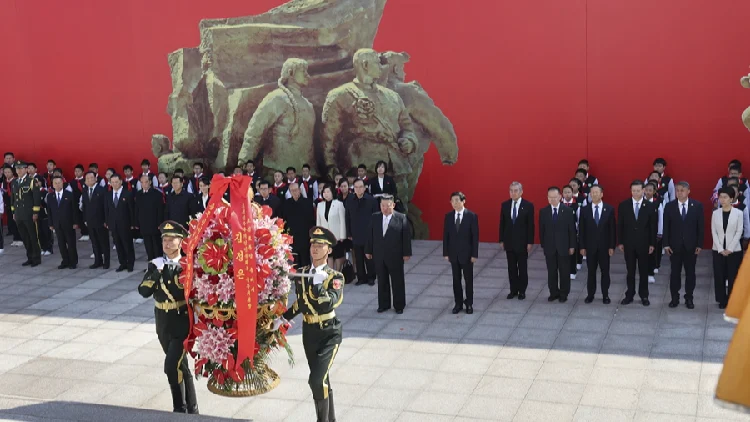
The relationship between China and North Korea is a complex and enduring one, marked by historical ties, shared borders, and strategic considerations. This relationship has seen periods of close alliance, particularly during the Korean War, and has continued to evolve through decades of geopolitical shifts. Understanding the dynamics of this partnership is key to grasping regional stability and international relations in East Asia. The recent visit of China’s top political advisor, Wang Huning, to Dandong, a border city, alongside North Korea’s leader Kim Jong Un, highlights the ongoing importance of this bilateral connection. This event, occurring on the anniversary of the Chinese People’s Volunteers’ entry into the Korean War, underscores the deep historical roots and the continued emphasis placed on their shared past and future cooperation.
This article will explore the multifaceted relationship between China and North Korea, examining its historical foundations, current state, and potential future trajectory. We will look at the significance of border cities like Dandong in facilitating this relationship, the role of high-level visits in strengthening ties, and the economic and political dimensions that shape their interactions. By analyzing these elements, we can gain a clearer picture of this critical international partnership.
The Historical Tapestry of Sino-North Korean Relations
The bond between China and North Korea is woven from threads of shared ideology, mutual defense pacts, and a history of mutual support. The Korean War (1950-1953) stands as a pivotal moment, where China’s intervention, through the People’s Volunteer Army, was instrumental in preventing a unified, US-aligned Korea. This act of solidarity, though costly, cemented a sense of shared sacrifice and mutual reliance that has echoed through subsequent decades. The war is remembered in both countries as a fight against foreign aggression, reinforcing a narrative of shared struggle and enduring friendship.
Following the war, both nations embarked on socialist development paths, albeit with differing outcomes. China’s “reform and opening up” policy in the late 1970s and 1980s led to significant economic transformation, while North Korea largely maintained its centrally planned economy and its policy of self-reliance, or Juche. Despite these divergent economic trajectories, political and military ties remained strong. The Sino-Soviet split saw North Korea often navigating a delicate balance between its two powerful communist neighbors, but its fundamental alignment with Beijing persisted.
The collapse of the Soviet Union in 1991 presented a significant challenge to North Korea, removing a major source of economic and military aid. China, however, stepped in to maintain a crucial lifeline, recognizing the strategic importance of a stable, friendly regime on its border. This period also saw the emergence of North Korea’s nuclear program, which has become a persistent source of tension and a major factor influencing Sino-North Korean relations, as well as broader international diplomacy. China has consistently advocated for denuclearization while also emphasizing the need for stability and dialogue, often finding itself in a unique position as North Korea’s primary diplomatic and economic partner, yet also a key player in international efforts to curb its nuclear ambitions.
Dandong: A Gateway City and Symbol of Connection
Dandong, a city in northeast China’s Liaoning Province, serves as a critical nexus for Sino-North Korean relations. Situated directly across the Yalu River from North Korea, it is the largest land port between the two countries. This geographical proximity has made Dandong a vital hub for trade, tourism, and cultural exchange, as well as a symbol of the enduring connection between the two nations. The Yalu River itself, a natural border, has historically been a conduit for both cooperation and conflict, but in recent times, it has primarily facilitated economic activity.
The city’s infrastructure, including the Sino-North Korean Yalu River Bridge, plays a crucial role in the flow of goods and people. This bridge, a testament to past cooperation, continues to be a vital artery for trade, even as newer infrastructure projects are considered. The economic activity in Dandong is heavily influenced by the state of Sino-North Korean relations, with trade volumes often fluctuating based on international sanctions and bilateral agreements. For North Korea, Dandong represents a crucial gateway to the outside world, providing access to Chinese markets and, indirectly, to global trade networks.
Beyond its economic significance, Dandong also holds symbolic importance. The Memorial Hall of the War to Resist US Aggression and Aid Korea, located in the city, is a site of remembrance for the shared sacrifices made during the Korean War. Visits to this memorial by high-ranking officials from both countries, such as the recent visit by Wang Huning and Kim Jong Un, serve to reaffirm the historical narrative of friendship and mutual support. These visits underscore the deep historical ties and the continued political significance of their shared past in shaping present-day relations. The city’s role as a border city is not just about geography; it is about the tangible representation of a relationship that is both deeply historical and actively managed.
High-Level Diplomacy: Reinforcing Bilateral Ties
High-level visits between Chinese and North Korean leaders are significant events that signal the state of their bilateral relationship and set the tone for future interactions. The recent visit of Wang Huning, a senior Chinese official, to Dandong with Kim Jong Un is a prime example of this diplomatic practice. Such meetings provide opportunities for leaders to engage in direct dialogue, reaffirm mutual commitments, and discuss pressing issues. These exchanges are crucial for maintaining communication channels, especially during times of regional tension or when navigating complex international challenges.
The presence of Wang Huning, a member of the Standing Committee of the Political Bureau of the CPC Central Committee and chairman of the National Committee of the Chinese People’s Political Consultative Conference, alongside Kim Jong Un, indicates the high level of importance China places on this engagement. Conveying greetings from Chinese President Xi Jinping further emphasizes the direct link between the top leadership of both countries. These gestures are not merely ceremonial; they are designed to reinforce the strategic partnership and the personal rapport between the leaders.
The discussions during these visits often focus on strengthening the traditional friendship, deepening political mutual trust, and advancing cooperation across various sectors. The emphasis on the “blood-sealed friendship” forged during the Korean War is a recurring theme, serving to remind both sides of their historical solidarity. Furthermore, these meetings aim to align their approaches on regional security, economic development, and international affairs. The consensus reached between Xi Jinping and Kim Jong Un in previous meetings, guiding their relations into a “new historical period,” is often reiterated, underscoring a commitment to continued collaboration.
The opening of new infrastructure, such as the China-DPRK Yalu River bridge, is frequently discussed as an opportunity to expand personnel exchanges and trade cooperation. This highlights the economic dimension of their relationship and the desire to leverage these connections for mutual benefit. Ultimately, these high-level diplomatic engagements are instrumental in managing the complexities of the Sino-North Korean relationship, ensuring a degree of stability and predictability in a region often characterized by geopolitical flux.
Economic Interdependence and Strategic Alignment
The economic relationship between China and North Korea is characterized by a significant degree of interdependence, albeit one that is heavily influenced by international sanctions and North Korea’s unique economic model. China remains North Korea’s largest trading partner, providing essential goods, energy, and raw materials. This economic lifeline is crucial for the survival and stability of the North Korean regime, making China’s economic policies a significant factor in Pyongyang’s domestic and foreign policy calculations.
Trade flows primarily through border cities like Dandong, where goods are exchanged, and economic activities are managed. Despite international sanctions aimed at curbing North Korea’s nuclear program, a certain level of trade continues, often through informal channels or with tacit approval, as China seeks to maintain stability on its border and prevent a collapse of the North Korean economy. This balancing act is a constant feature of China’s policy towards North Korea.
Beyond direct trade, China’s role as an investor and a source of development assistance, though limited by sanctions, is also important. The prospect of future economic cooperation, particularly in areas like infrastructure development and resource extraction, remains a key element of their strategic alignment. The mention of the new China-DPRK Yalu River bridge as an opportunity to expand trade and benefit both peoples points to a shared vision for economic development, contingent on the easing of international restrictions.
Strategically, China and North Korea share a common interest in maintaining regional stability and countering external pressures, particularly from the United States and its allies. While their approaches may differ on specific issues, such as the pace and methods of denuclearization, their fundamental alignment on maintaining a buffer zone and ensuring their respective security interests remains a cornerstone of their relationship. This strategic alignment is reinforced through regular high-level consultations and a shared understanding of the geopolitical landscape in Northeast Asia. The relationship, therefore, is not just about historical ties or economic exchange; it is a carefully managed partnership driven by shared strategic imperatives.
Challenges and Future Prospects
The Sino-North Korean relationship, while enduring, is not without its challenges. North Korea’s pursuit of nuclear weapons and ballistic missiles has consistently strained relations with China and led to the imposition of stringent international sanctions. China, while a staunch ally, has also supported these sanctions, reflecting its commitment to international non-proliferation norms and its desire to avoid being drawn into direct conflict or facing secondary sanctions itself. This creates a delicate balancing act for Beijing, which seeks to maintain stability on its border while also adhering to international obligations.
The economic impact of these sanctions on North Korea is significant, and China’s role in enforcing them, or in finding ways to mitigate their harshest effects, is a constant point of international scrutiny. The future trajectory of the relationship will largely depend on North Korea’s willingness to engage in meaningful denuclearization talks and China’s ability to navigate the complex geopolitical landscape.
Looking ahead, several factors will shape the future of Sino-North Korean relations. North Korea’s internal political and economic situation, its approach to denuclearization, and the broader geopolitical dynamics in Northeast Asia, including relations between China, the United States, South Korea, and Japan, will all play a role. China’s consistent emphasis on dialogue, stability, and the importance of the bilateral relationship suggests a continued commitment to maintaining ties, even amidst challenges.
The recent high-level visit to Dandong serves as a reminder that despite the complexities, the historical bonds and strategic interests between China and North Korea remain potent forces. As the region continues to evolve, the relationship between these two neighboring nations will undoubtedly remain a critical factor in regional security and international diplomacy. The ability of both countries to manage their differences and find common ground will be key to fostering a more stable and prosperous future for Northeast Asia.
Conclusion
The relationship between China and North Korea is a deeply rooted and strategically significant partnership, shaped by decades of shared history, ideological alignment, and mutual geopolitical interests. From the shared sacrifices of the Korean War to the ongoing economic interdependence, the bond between these two nations remains a defining feature of Northeast Asian dynamics. Border cities like Dandong serve as tangible symbols and vital conduits for this enduring connection, facilitating trade and cultural exchange while also hosting important diplomatic engagements.
High-level visits, such as the recent meeting between Wang Huning and Kim Jong Un in Dandong, underscore the continued importance of direct dialogue and reaffirmation of mutual commitments. These interactions are crucial for navigating the complexities of regional security, particularly concerning North Korea’s nuclear program, and for advancing economic cooperation. Despite the challenges posed by international sanctions and differing approaches to denuclearization, China’s role as North Korea’s primary ally and economic partner ensures that their relationship will continue to be a central element in regional stability. The future of this partnership will hinge on the ability of both nations to manage their differences, adapt to evolving geopolitical landscapes, and pursue common goals for peace and prosperity in Northeast Asia.


Conversation
0 Comments