

The global economy is in constant motion, with different regions and industries experiencing unique growth patterns. Understanding these shifts is key for businesses and policymakers alike. Recently, China’s industrial sector has shown remarkable resilience and growth, largely driven by its advanced manufacturing and electronics industries. This surge in industrial profits highlights a broader trend of technological advancement and economic development within the country.
In the first nine months of 2026, China’s major industrial firms saw their profits climb by an impressive 15.5% year on year, reaching a total of 6.03 trillion yuan (approximately $900 billion). This marks a continuation of double-digit growth that began earlier in the year. This robust performance is not a random occurrence but a direct result of strategic focus on high-tech sectors and innovation. The electronics industry, in particular, has been a significant contributor, with its profits doubling compared to the previous year. This sector alone accounted for 9.6% of the total increase in industrial profits, underscoring its importance to the national economy.
Beyond electronics, the broader high-tech manufacturing sector experienced an even more dramatic surge, with profits jumping 52% year on year. This growth significantly outpaced the overall industrial average, by 36.5%. This acceleration is fueled by increasing demand in critical areas like artificial intelligence (AI) computing power and the infrastructure required for data centers. These advanced sectors are not just growing; they are becoming a larger part of China’s economic engine. In the first three quarters of 2026, high-tech manufacturing represented 25.5% of the total profits from major industrial firms, a notable increase of 6.2% from the previous year. This shift indicates a move towards a more sophisticated and innovation-driven industrial structure, as noted by Yu Weining, a statistician with the National Bureau of Statistics. This trend is further supported by earlier data showing that China’s industrial sector as a whole gained momentum, with value-added industrial output increasing by 5.3% year on year during the same period.
The Driving Forces Behind Industrial Profit Growth
The impressive rise in China’s industrial profits is not a monolithic event but a result of specific sectors performing exceptionally well. The electronics industry and high-tech manufacturing are at the forefront, demonstrating strong growth and contributing significantly to the overall economic picture. Understanding the dynamics within these sectors provides a clearer view of China’s industrial advancement.
Electronics Industry: A Key Profit Generator
The electronics industry has emerged as a powerhouse in China’s industrial landscape. Its profits have not just grown; they have doubled year on year during the first nine months of 2026. This remarkable performance means the sector contributed a substantial 9.6% to the total increase in industrial profits. This growth is a testament to China’s expanding capabilities in producing sophisticated electronic components and finished goods, meeting both domestic and international demand. The sector’s success is often linked to advancements in supply chains, increased research and development, and a growing market for consumer electronics and technological components.
High-Tech Manufacturing: Leading the Innovation Charge
High-tech manufacturing has shown even more explosive growth, with profits soaring by 52% year on year. This sector’s performance is significantly higher than the general industrial average, highlighting its role as a primary engine for economic expansion. The demand for advanced technological solutions, particularly in areas like AI computing power and data center infrastructure, is a major driver. As businesses and governments worldwide invest more in digital transformation and AI capabilities, the demand for the specialized products and services offered by China’s high-tech manufacturers continues to rise. This sector’s increasing share of total industrial profits—now at 25.5%—signals a fundamental shift in the structure of China’s industrial economy towards higher value-added and innovation-intensive activities.
Factors Influencing Sectoral Performance
Several underlying factors contribute to the strong performance of these key sectors. Government support for technological innovation, investment in research and development, and the development of robust industrial ecosystems play a crucial role. Furthermore, the increasing global demand for advanced electronics and digital infrastructure creates a favorable market environment. The ability of Chinese manufacturers to scale production, improve quality, and innovate rapidly allows them to capture a significant share of this global market. The focus on developing “new quality productive forces” emphasizes innovation, green development, and advanced manufacturing, aligning perfectly with the growth seen in these sectors.
The Broader Economic Context and Future Outlook
The strong performance of the electronics and high-tech manufacturing sectors is occurring within a broader context of China’s economic development. While these sectors are leading the charge, the overall industrial output and profit growth paint a picture of a dynamic and evolving economy. The trend towards innovation-driven growth suggests a strategic shift away from traditional manufacturing towards more advanced and sustainable economic models.
Overall Industrial Output and Profit Trends
The National Bureau of Statistics (NBS) reported that industrial profits of major firms rose 15.5% year on year to 6.03 trillion yuan in the first nine months of 2026. This sustained double-digit growth indicates a healthy industrial sector. In September alone, industrial profits saw a 14.4% increase year on year, reinforcing the positive trend. This overall strength is underpinned by a 5.3% year-on-year increase in value-added industrial output during the first three quarters of 2026. This indicates that the industrial sector is not only profitable but also expanding its production capacity and output.
The Shift Towards Advanced and Innovation-Driven Structures
The data clearly points to a structural transformation within China’s industrial economy. As Yu Weining, an NBS statistician, noted, the advancement of high-end manufacturing and the faster formation of “new quality productive forces” are driving this shift. This means the economy is moving towards a model that relies more on technological innovation, efficiency, and high-value products rather than sheer volume. This transition is essential for long-term sustainable growth and competitiveness in the global market. It involves upgrading existing industries, fostering emerging technologies, and promoting green development.
Implications for Global Markets and Supply Chains
The robust growth in China’s high-tech manufacturing and electronics sectors has significant implications for global markets. It suggests that China will continue to be a dominant player in the production of advanced technological goods. This can lead to increased competition for manufacturers in other countries but also offers opportunities for collaboration and integration into global supply chains. Companies worldwide that rely on electronic components or advanced manufactured goods may find China to be an increasingly important partner. However, this also highlights the interconnectedness of global economies and the potential impact of geopolitical factors on supply chains. The focus on innovation within China could also lead to new technological standards and products that shape global markets.
Challenges and Opportunities Ahead
While the current trends are positive, China’s industrial sector faces ongoing challenges and opportunities. Maintaining this growth trajectory requires continuous investment in research and development, fostering a skilled workforce, and navigating complex international trade relations. The global demand for AI and data infrastructure is expected to grow, presenting a significant opportunity for high-tech manufacturers. However, geopolitical tensions, trade disputes, and the need for sustainable development practices are factors that could influence future growth. The ability of China’s industrial sector to adapt to these challenges and capitalize on opportunities will determine its long-term success. The commitment to developing “new quality productive forces” suggests a proactive approach to addressing these issues, aiming for a more resilient and innovative industrial future.
Understanding the Data: Key Metrics and Their Significance
The figures released by the National Bureau of Statistics (NBS) provide a detailed look into the performance of China’s industrial sector. Analyzing these metrics helps to understand the depth and breadth of the growth observed, particularly in key sectors like electronics and high-tech manufacturing.
Profit Growth Rate: A Measure of Financial Health
The 15.5% year-on-year increase in profits for major industrial firms during the first nine months of 2026 is a strong indicator of financial health. This rate signifies that companies are not only producing more but are also doing so profitably. A sustained double-digit growth rate suggests robust demand, efficient operations, and effective cost management. This metric is crucial for assessing the overall economic vitality of the industrial sector and its contribution to national GDP. The fact that this growth has been consistent since the beginning of the year further solidifies its significance.
Total Profit Value: The Scale of Economic Activity
The total profit of 6.03 trillion yuan (about $900 billion) represents the sheer scale of economic activity within China’s major industrial firms. This figure provides a tangible measure of the sector’s contribution to the national economy. It reflects the output of a vast number of enterprises engaged in diverse manufacturing activities. This substantial sum underscores the importance of the industrial sector as a pillar of China’s economic strength and its capacity to generate wealth.
Sector-Specific Profit Contributions: Identifying Growth Engines
The data highlights the disproportionate contribution of specific sectors to overall profit growth. The electronics industry’s profit doubling and its 9.6% contribution to the total profit increase are significant. Similarly, the 52% year-on-year profit surge in high-tech manufacturing is a standout performance. These figures pinpoint the sectors that are driving economic expansion and innovation. They indicate where investment and policy support are yielding the greatest returns and where future growth is likely to be concentrated.
Value-Added Industrial Output: Measuring Production Expansion
The 5.3% year-on-year increase in value-added industrial output during the first three quarters of 2026 complements the profit data. This metric measures the actual increase in the value of goods and services produced by the industrial sector. A rise in value-added output suggests that companies are expanding their production capabilities and efficiency. It confirms that the profit growth is backed by real increases in economic activity, rather than solely by price increases or financial maneuvers. This metric is a fundamental indicator of industrial sector health and growth.
Share of High-Tech Manufacturing in Total Profits: Structural Transformation
The increase in high-tech manufacturing’s share of total profits to 25.5% (up 6.2% from the previous year) is a key indicator of structural change. It shows that the economy is becoming more reliant on advanced, knowledge-intensive industries. This shift is often associated with higher productivity, greater innovation, and more sustainable growth patterns. It signifies a move away from lower-value, labor-intensive manufacturing towards sectors that require significant investment in research, development, and skilled labor. This trend is vital for China’s long-term economic competitiveness and its transition to a high-income economy.
The Role of Innovation and Technology in Industrial Advancement
The impressive performance of China’s industrial sector, particularly in electronics and high-tech manufacturing, is intrinsically linked to its focus on innovation and technological advancement. This commitment is not just about producing goods; it’s about developing cutting-edge technologies and integrating them into the industrial fabric.
Investment in Research and Development (R&D)
A key driver of growth in high-tech sectors is sustained investment in R&D. Companies and the government are channeling significant resources into developing new technologies, improving existing ones, and fostering a culture of innovation. This investment allows Chinese firms to move up the value chain, producing more sophisticated and higher-margin products. It also enables them to compete more effectively on the global stage, not just on price but on technological prowess. The rapid advancements in areas like AI, semiconductors, and new energy vehicles are direct results of this R&D focus.
Adoption of Advanced Manufacturing Techniques
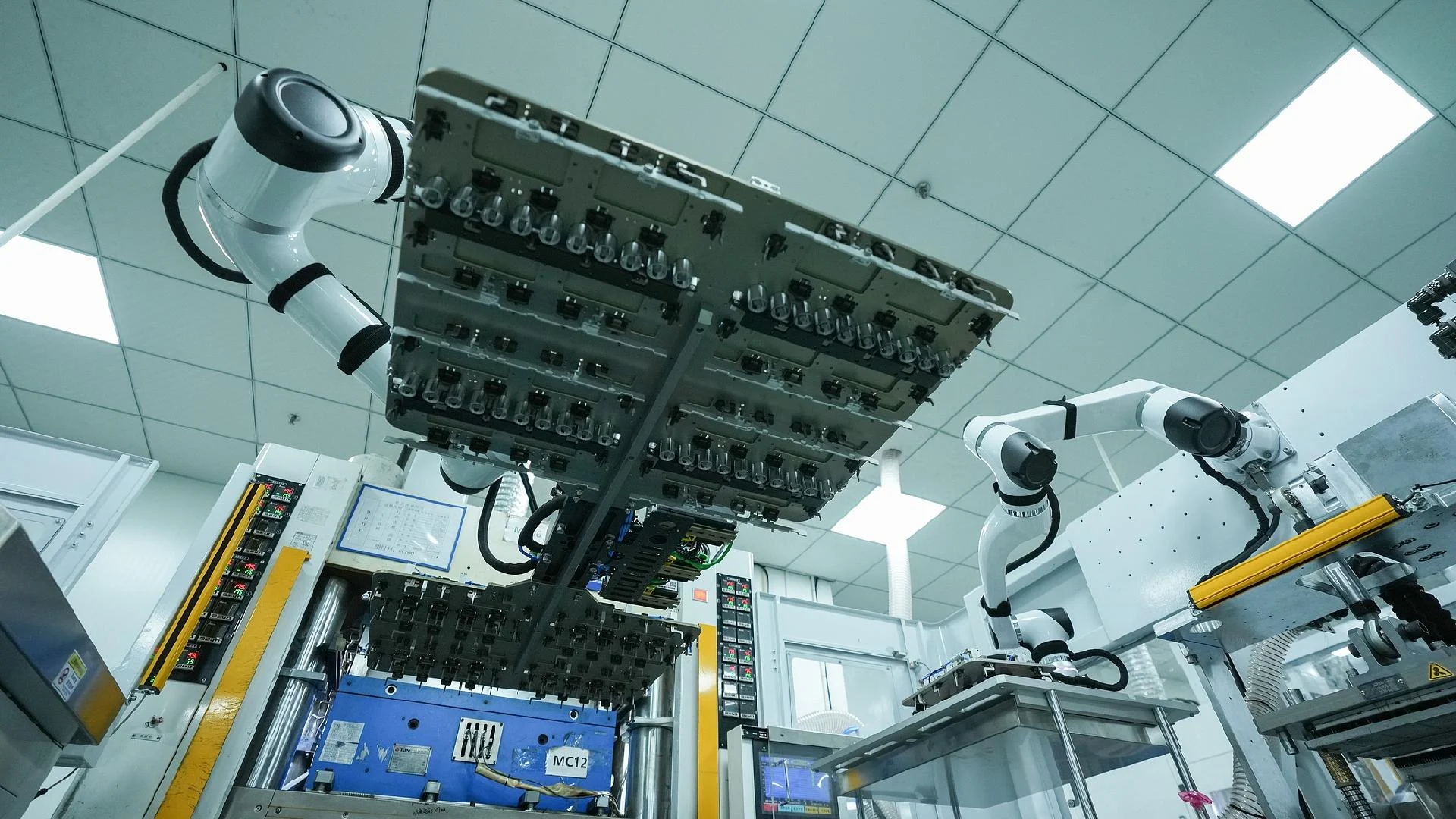
Beyond R&D, the adoption of advanced manufacturing techniques is crucial. This includes the use of automation, robotics, artificial intelligence in production processes, and the implementation of smart factory concepts. These technologies enhance efficiency, improve product quality, reduce waste, and increase production flexibility. The image of automated robotic arms performing precision packaging operations in a workshop exemplifies this shift towards highly automated and technologically advanced production environments. Such adoption is essential for maintaining competitiveness in a global market that increasingly demands precision and speed.
Development of “New Quality Productive Forces”
The concept of “new quality productive forces” is central to China’s strategy for industrial modernization. This refers to forces that are driven by technological innovation, characterized by high efficiency, and aligned with green development principles. It encompasses emerging industries like artificial intelligence, biotechnology, new energy, and advanced materials. The strong performance of the electronics and high-tech manufacturing sectors is a direct manifestation of these forces taking shape. This strategic focus aims to create a more dynamic, sustainable, and globally competitive industrial economy. It represents a forward-looking approach that prioritizes innovation and high-value output.
Impact on Global Technology Trends
China’s advancements in electronics and high-tech manufacturing have a ripple effect on global technology trends. As a major producer and innovator, its progress influences the direction of technological development worldwide. For instance, breakthroughs in AI computing power and data center infrastructure can accelerate the adoption of AI applications globally. Similarly, innovations in electronics manufacturing can lead to new generations of consumer devices and industrial equipment. This influence means that developments within China’s industrial sector are closely watched by international businesses, governments, and researchers. The country’s role in shaping global supply chains for critical technologies is undeniable.
The Strategic Importance of High-Tech Manufacturing and Electronics
The sustained growth and increasing profitability in China’s high-tech manufacturing and electronics sectors are not merely economic statistics; they represent a strategic imperative for the nation’s future development and global standing. These sectors are vital for economic diversification, national security, and technological leadership.
Economic Diversification and Value Addition
For decades, China’s economy was largely built on low-cost manufacturing. However, the current emphasis on high-tech sectors signifies a crucial shift towards economic diversification and increasing value addition. By moving into more sophisticated areas like AI, advanced semiconductors, and complex electronic systems, China aims to capture a larger share of the global value chain. This transition reduces reliance on lower-margin industries and creates higher-paying jobs, contributing to overall economic prosperity and stability. The growth in these sectors directly supports the nation’s goal of becoming a global leader in innovation and advanced manufacturing.
National Security and Technological Self-Reliance
In an increasingly complex geopolitical landscape, technological self-reliance is a paramount concern. Dominance in critical high-tech sectors, such as semiconductors, telecommunications equipment, and advanced computing, is directly linked to national security. By fostering domestic innovation and manufacturing capabilities in these areas, China seeks to reduce its dependence on foreign technologies and supply chains. This strategic objective is particularly evident in sectors like AI and advanced electronics, where technological leadership can have significant implications for defense, intelligence, and economic competitiveness. The growth in these industries strengthens the nation’s ability to pursue its strategic interests independently.
Global Competitiveness and Market Leadership
The robust performance in electronics and high-tech manufacturing positions China as a formidable competitor in the global market. Companies in these sectors are not only meeting domestic demand but are also increasingly exporting advanced products and technologies worldwide. This global reach enhances China’s economic influence and its role in shaping international standards and markets. Achieving leadership in these cutting-edge fields is a key component of China’s broader ambition to be a major global power. The continuous innovation and scaling of production in these sectors are essential for maintaining and expanding this competitive edge.
The Role of Government Policy and Support
Government policy plays a critical role in nurturing these strategic industries. Initiatives such as targeted investments, research grants, tax incentives, and preferential trade policies are instrumental in accelerating growth and innovation. The development of industrial parks, research institutions, and educational programs focused on STEM fields further supports the ecosystem required for high-tech manufacturing. This strategic support helps to overcome market barriers, de-risk investments, and ensure that the nation’s industrial development aligns with its long-term strategic goals. The focus on “new quality productive forces” is a prime example of this policy-driven approach.
Conclusion
The significant increase in China’s industrial profits, largely propelled by the electronics and high-tech manufacturing sectors, underscores a period of dynamic economic transformation. The double-digit growth observed in the first nine months of 2026, with profits reaching 6.03 trillion yuan, reflects a strategic shift towards innovation-driven development. The electronics industry’s profit doubling and the remarkable 52% surge in high-tech manufacturing profits highlight these sectors as key engines of economic expansion. This trend is supported by an overall increase in value-added industrial output and a growing share of high-tech manufacturing in total profits, indicating a move towards a more advanced and sophisticated industrial structure.
The commitment to research and development, the adoption of advanced manufacturing techniques, and the strategic focus on “new quality productive forces” are fundamental to this success. These advancements not only bolster China’s economic strength and global competitiveness but also contribute to its goals of technological self-reliance and national security. As these high-tech sectors continue to evolve, they are poised to play an even more significant role in shaping both the domestic economy and global technological trends. The ongoing development within China’s industrial sector presents a compelling case study in how strategic investment in technology and innovation can drive substantial economic growth and redefine a nation’s industrial landscape.



Conversation
0 Comments