

China’s Table Tennis Dominance: A Look at the Asian Championships
Table tennis, a sport demanding lightning reflexes, strategic thinking, and incredible precision, has seen China establish itself as a global powerhouse. The recent ITTF-ATTU Asian Championships showcased this dominance, particularly in the men’s team event. China’s victory in this prestigious tournament is not just a single win; it’s a continuation of a long-standing tradition of excellence. This analysis will explore the factors contributing to China’s sustained success, the strategies employed, and what this means for the future of the sport.
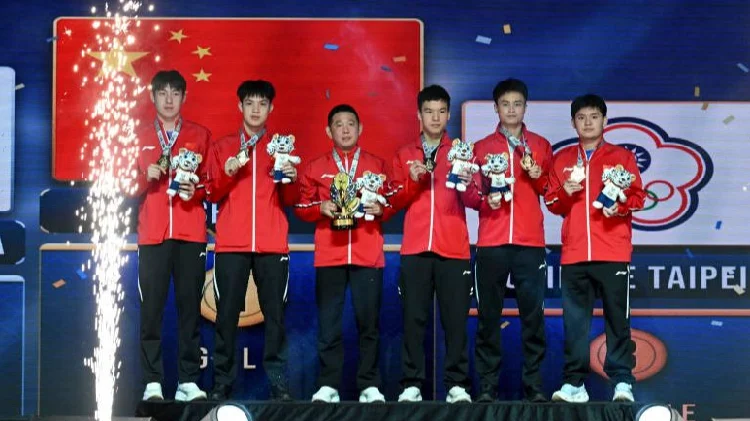
The recent 2026 ITTF-ATTU Asian Championships saw China’s men’s team secure their fourth consecutive title. This impressive streak highlights a consistent ability to perform at the highest level, even when introducing new talent. While established stars were absent, the younger generation stepped up, demonstrating the depth of skill within the Chinese table tennis program. This strategic infusion of youth is a key element in maintaining their competitive edge and preparing for future international events, such as the upcoming 2028 Los Angeles Olympics.
The Road to Victory: Semifinals and Finals
The path to the championship title is never easy, and the 2026 Asian Championships were no exception. In the men’s semifinals, China faced a strong challenge from Chinese Taipei, ultimately winning the match 3-1. This victory set them up for a final showdown against the Republic of Korea (ROK). Meanwhile, the ROK team had achieved a significant upset by defeating Japan, a team featuring top-ranked players like Sora Matsushima and Tomokazu Harimoto, also with a 3-1 scoreline. This demonstrated that while China is a dominant force, other nations are also developing formidable teams capable of challenging the established order.
The men’s team final was a display of China’s tactical prowess and individual skill. Zhou Qihao opened the match for China, securing a 3-1 win against the ROK’s defensive specialist, Kang Dong-soo. This gave China an early advantage and set a positive tone for the rest of the team. Lin Shidong then extended China’s lead by sweeping Park Gyu-hyeon with a decisive 3-0 victory. Lin’s performance showcased his ability to control the game and dominate his opponent. Finally, Xiang Peng sealed the championship title for China with a 3-1 win over Park Gang-hyeon, confirming their status as the top men’s team in Asia.
Beyond the Men’s Team: Women’s Competition and Doubles Success
While the men’s team captured headlines with their victory, the women’s competition also provided thrilling moments. In a closely contested final, Japan managed to rally from a 2-1 deficit to defeat China 3-2. This result, while a disappointment for China, underscores the growing strength of other nations in women’s table tennis and highlights the competitive nature of the sport across all categories. The decisive fifth match, won by Japan’s Honoka Hashimoto, was a testament to the high level of play and the intense pressure of championship finals.
China’s success was not limited to the team events. The nation also demonstrated its strength in the doubles competitions, with all six of its pairs advancing in their respective categories. In the mixed doubles, the pair of Huang Youzheng and Chen Yi defeated Thailand’s Thitaphat Preechayan and Kulapassr Vijitviriyagul 3-1, moving on to the quarterfinals. Yuan Licen and Wang Yidi also secured their spot in the last eight with a commanding 3-0 victory over Yiu Kwan To and Ng Wing Lam from Hong Kong, China. These performances in mixed doubles indicate a strong capability in mixed-gender partnerships and strategic coordination.
In the men’s doubles, Lin Shidong and Huang Youzheng, alongside Wen Ruibo and Yuan Licen, successfully advanced to the round of 16. Their progression through these early rounds suggests a solid foundation in doubles play, which often requires different strategies and communication compared to singles matches. Similarly, in the women’s doubles, Kuai Man and Wang Yidi, as well as the pair of Chen Yi and Jiang Yiyi, also reached the round of 16. This widespread success across various doubles categories further solidifies China’s overall dominance in table tennis.
The Pillars of Chinese Table Tennis Dominance
China’s consistent success in table tennis is not accidental. It is built upon several key pillars that have been cultivated over decades. These include a robust talent identification system, a highly structured and rigorous training environment, and a deep-seated culture that values the sport.
Talent Identification and Development
One of the most significant factors in China’s dominance is its extensive and highly effective talent identification system. From a young age, potential players are scouted across the country. This process often begins in schools and local sports clubs, where children showing exceptional hand-eye coordination, agility, and strategic thinking are identified. Once identified, these young talents are funneled into specialized sports schools and academies.
These institutions provide a structured pathway for development, offering intensive training under experienced coaches. The curriculum is designed not only to hone technical skills but also to build physical fitness, mental resilience, and tactical understanding. This system ensures a continuous pipeline of skilled players, preventing any significant drop-off in performance even as older generations retire or move on. The focus is on identifying raw talent and then meticulously shaping it into world-class athletes.
Rigorous Training Regimen
The training regimen for Chinese table tennis players is famously intense and demanding. Athletes spend countless hours on the practice table, perfecting their strokes, footwork, and serves. This dedication goes beyond mere repetition; it involves detailed analysis of opponents, strategic simulations, and constant refinement of techniques. Coaches employ advanced training methods, often utilizing video analysis and sports science to identify areas for improvement.
Physical conditioning is another critical component. Table tennis requires exceptional stamina, speed, and agility. Players engage in rigorous fitness programs designed to enhance their physical capabilities, ensuring they can maintain peak performance throughout long matches and tournaments. This holistic approach to training, encompassing technical, tactical, physical, and mental aspects, is what sets Chinese players apart.
Cultural Significance and Support
Table tennis holds a special place in Chinese culture. It is more than just a sport; it is a source of national pride and a symbol of international achievement. This cultural significance translates into strong public support and significant investment in the sport at all levels, from grassroots programs to elite national teams.
The government and sports federations provide substantial resources for training facilities, coaching development, and athlete support. This backing ensures that players have access to the best possible resources and opportunities to succeed. Furthermore, the high status of successful athletes within society inspires younger generations to pursue the sport with dedication and ambition. This cultural environment fosters a deep commitment to excellence and a strong desire to represent the nation on the world stage.
Strategic Approaches and Adaptability
China’s table tennis program is not static. It continuously evolves, adapting to changes in the game and the emergence of new strategies from international competitors. The coaching staff is known for its analytical approach, constantly studying opponents and developing counter-strategies.
Player Development Philosophy
The philosophy behind player development in China emphasizes versatility and adaptability. While players often specialize in certain strengths, they are also trained to be proficient in all aspects of the game. This includes developing a strong all-around game, capable of handling different playing styles, from aggressive attackers to defensive specialists.
The focus on developing a “complete” player means that Chinese athletes are well-equipped to face any opponent. They are trained to adjust their tactics mid-match, to exploit weaknesses, and to maintain composure under pressure. This adaptability is crucial in a sport where matches can turn on a single point.
Generational Transition and Future Planning
A key aspect of China’s sustained success is its proactive approach to generational transition. Instead of relying solely on established stars, the program actively identifies and nurtures emerging talent. This was evident in the 2026 Asian Championships, where a youthful squad represented China in the men’s team event.
This strategy serves multiple purposes. It provides valuable international experience to younger players, preparing them for future major tournaments. It also ensures that there is always a pool of ready-to-compete athletes, minimizing any potential dip in performance when senior players retire. This forward-thinking approach is critical for maintaining long-term dominance. The preparation for the 2028 Los Angeles Olympics, as mentioned, is a prime example of this long-term planning.
The Global Impact of Chinese Dominance
China’s supremacy in table tennis has a profound impact on the sport globally. On one hand, it sets an incredibly high standard, pushing other nations to improve and innovate. The level of competition China brings to the table forces other countries to invest more in their own programs, leading to a higher overall quality of play worldwide.
On the other hand, some might argue that such dominance can stifle competition, making it difficult for other nations to break through. However, the consistent presence of strong Chinese teams often inspires greater participation and interest in table tennis globally. The technical brilliance and sportsmanship displayed by Chinese athletes serve as a powerful example for aspiring players everywhere.
The success of the Chinese table tennis program is a model for sports development worldwide. It demonstrates the power of a systematic approach, combining talent identification, rigorous training, cultural support, and strategic foresight. As the sport continues to evolve, China’s commitment to excellence ensures that it will remain at the forefront, shaping the future of table tennis for years to come.
Conclusion
The recent ITTF-ATTU Asian Championships once again highlighted China’s formidable presence in the world of table tennis. The men’s team’s fourth consecutive title, achieved with a blend of seasoned strategy and emerging talent, is a testament to the enduring strength of their program. While the women’s team faced a tough challenge in their final, the overall success across various doubles events further underscores China’s deep talent pool and comprehensive approach to the sport.
China’s sustained dominance is not merely a result of individual skill but a product of a well-oiled system. This system encompasses meticulous talent scouting from a young age, an unyielding commitment to rigorous training, and a cultural environment that deeply values table tennis. Their strategic adaptability, evident in their proactive generational transitions and continuous refinement of tactics, ensures they remain at the pinnacle of the sport. As the global table tennis landscape continues to evolve, China’s dedication to excellence serves as both an inspiration and a benchmark for aspiring athletes and nations worldwide. The organization’s commitment to fostering talent and pushing the boundaries of the sport can be further explored on their official website.



Conversation
0 Comments