

China’s Wheelchair Basketball Dominance: A Look at the Asian Para Games Success
The world of adaptive sports is a testament to human resilience, skill, and unwavering determination. Among the most dynamic and competitive events is wheelchair basketball, a sport that demands incredible athleticism, strategic thinking, and teamwork. For years, the Chinese women’s wheelchair basketball team has stood at the pinnacle of this sport, particularly within the Asian region. Their consistent success at the Asian Para Games, including a remarkable streak of victories, highlights not only their individual talent but also the strength of their program. This analysis will explore the factors contributing to China’s dominance in women’s wheelchair basketball at the Asian Para Games, examining their performance, key players, and the broader implications of their sustained excellence.
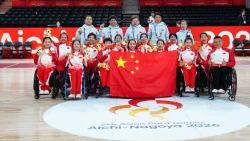
The recent victory at the Aichi-Nagoya Asian Para Games, where China’s women’s team secured their fourth consecutive title by defeating host nation Japan with a commanding score of 75-25, is a significant achievement. This dominant performance, a 50-point margin of victory, underscores their superiority in the sport. The game itself was a clear demonstration of China’s tactical execution and offensive efficiency. From the opening quarter, China established a strong lead, finishing it with a score of 16-4. This early advantage set the tone for the entire match, showcasing their ability to control the game’s tempo and dictate play.
Strategic Prowess and On-Court Execution
China’s success in wheelchair basketball is not merely a matter of individual skill; it is deeply rooted in strategic planning and flawless on-court execution. The team’s ability to maintain such a high level of performance across multiple tournaments speaks to a well-developed coaching philosophy and a deep understanding of the game. In the final against Japan, China’s shooting performance was particularly noteworthy. They converted an impressive 60% of their field goal attempts, demonstrating precision and effectiveness in their offensive plays. Furthermore, their discipline at the free-throw line was absolute, with a perfect 100% success rate. This combination of strong field goal shooting and perfect free-throw shooting is a hallmark of a well-drilled team that capitalizes on every scoring opportunity.
In contrast, the Japanese team struggled to find their rhythm, converting only 12 of their 57 field goal attempts. This stark difference in shooting efficiency highlights the defensive pressure applied by the Chinese team and their ability to disrupt the opponent’s offensive flow. The disparity in scoring further emphasizes China’s control over the game, allowing them to build and maintain a substantial lead throughout the match. Such a dominant performance in a final, especially against the host nation, requires not only superior skill but also immense mental fortitude and strategic adaptability.
Standout Performances: The Pillars of Victory
While wheelchair basketball is a team sport, individual brilliance often plays a pivotal role in securing victories, especially in high-stakes matches. In China’s decisive win over Japan, several players delivered exceptional performances that were instrumental to their success. Zhang Xuemei, in particular, was a force to be reckoned with on the court. Her individual statistics were remarkable, with a total of 26 points and 13 rebounds. To put this into perspective, Zhang Xuemei’s individual scoring output alone surpassed that of the entire Japanese team. This level of individual dominance is rare and speaks volumes about her skill, athleticism, and impact on the game. Her ability to score, rebound, and control the paint was a key factor in China’s overwhelming victory.
Beyond Zhang Xuemei’s stellar performance, other players also made significant contributions. Cheng Jingwen added a crucial 18 points to the team’s total, providing consistent offensive support and demonstrating her scoring prowess. Zuo Peixi chipped in with another 11 points, further solidifying China’s offensive advantage. The combined scoring efforts of these players, alongside the contributions of their teammates, created a multi-faceted offensive attack that Japan’s defense struggled to contain. The balanced scoring and the presence of multiple reliable offensive threats are indicators of a deep and talented roster, capable of executing various offensive strategies.
The Significance of Consecutive Titles
Securing a fourth consecutive Asian Para Games title in women’s wheelchair basketball is a monumental achievement that solidifies China’s position as a global powerhouse in the sport. This sustained period of dominance is not accidental; it is the result of a long-term commitment to developing talent, fostering a strong team culture, and implementing effective training and coaching methodologies. The ability to consistently perform at the highest level across multiple cycles of the Asian Para Games suggests a robust and sustainable program that can adapt to evolving competition and maintain its winning edge.
This streak of victories provides valuable insights into the development of adaptive sports in China. It indicates a strong infrastructure for identifying and nurturing athletes with disabilities, providing them with the necessary resources, training, and support to excel. The success of the women’s wheelchair basketball team can serve as an inspiration for other adaptive sports programs and athletes, demonstrating what can be achieved through dedication, strategic investment, and a focus on excellence. The consistent performance also highlights the team’s mental resilience, their ability to handle pressure, and their unwavering commitment to upholding their winning legacy.
Understanding Wheelchair Basketball: Rules and Gameplay
To fully appreciate the skill and strategy involved in wheelchair basketball, it’s important to understand some of the fundamental rules and gameplay elements. Unlike able-bodied basketball, players in wheelchair basketball propel themselves using their arms while simultaneously dribbling and shooting the ball. A key rule is the “two-push rule,” which states that a player cannot take more than two pushes of their wheelchair after receiving the ball or dribbling before they must dribble again or pass. Violating this rule results in a traveling violation.
Players are classified based on their functional ability, with points assigned to each player ranging from 1.0 (most significant impairment) to 4.5 (least significant impairment). A team on the court can have a maximum of 14 points, ensuring that teams with players who have more significant impairments are not disadvantaged. This classification system is crucial for maintaining fair competition and allowing athletes with diverse physical abilities to participate and compete effectively. The strategic deployment of players with different point values is a critical aspect of coaching and game planning.
The court dimensions and hoop height are the same as in standard basketball. However, the dynamics of the game are significantly altered by the wheelchair. Players use their chairs for defense, blocking shots, and positioning themselves for rebounds. The physicality of the sport is immense, with players often colliding and executing quick, agile movements to gain an advantage. The dribbling technique involves bouncing the ball while simultaneously pushing the wheelchair, requiring exceptional coordination. Passing is also a vital skill, with quick, accurate passes often being the key to breaking down an opponent’s defense.
The Role of Equipment in Wheelchair Basketball
The equipment used in wheelchair basketball is highly specialized and plays a critical role in player performance and safety. The wheelchairs themselves are not standard mobility devices; they are custom-designed sports wheelchairs built for speed, maneuverability, and stability. These chairs are typically lightweight, with a low center of gravity, and feature angled wheels that allow for quick turns and stability during aggressive play. The front of the chair is often reinforced to withstand impacts, and the back wheels are larger than the front casters to provide propulsion and stability.
Players often wear protective gear, such as gloves, to improve grip on the ball and prevent blisters from constant contact with the wheels and ball. Some players may also use specialized padding or straps to assist with seating and stability within the chair, depending on their individual needs and classification. The maintenance and customization of these wheelchairs are ongoing processes, as athletes fine-tune their equipment to optimize their performance. The cost of these specialized wheelchairs can be substantial, making access to proper equipment a significant factor in the development of athletes and teams.
Training and Development Pathways
The sustained success of China’s women’s wheelchair basketball team points to a well-established system for training and athlete development. This likely involves a multi-tiered approach, starting with grassroots identification programs that scout potential athletes from various regions. Once identified, these athletes would typically enter specialized training centers where they receive intensive coaching, physical conditioning, and tactical instruction. The coaching staff would play a crucial role in not only honing individual skills but also fostering team cohesion and strategic understanding.
A key aspect of developing elite wheelchair basketball players is the emphasis on physical conditioning. Athletes need to develop exceptional upper body strength, endurance, and core stability to effectively maneuver their chairs, dribble, pass, and shoot. Strength training, cardiovascular exercises, and sport-specific drills are likely integral components of their training regimen. Furthermore, mental conditioning is equally important, preparing athletes to handle the pressure of competition, maintain focus, and perform consistently under challenging circumstances. The development pathway also likely includes participation in domestic leagues and tournaments, providing athletes with valuable competitive experience before they reach the international stage.
The Impact of Coaching and Strategy
The coaching staff’s role in China’s wheelchair basketball program cannot be overstated. Elite coaches are responsible for developing game strategies, analyzing opponents, and making critical in-game adjustments. Their understanding of the classification system, player strengths and weaknesses, and tactical nuances of wheelchair basketball is paramount. The ability to design offensive plays that exploit opponent vulnerabilities and defensive schemes that neutralize their strengths is a hallmark of a successful coaching team.
In the context of the Asian Para Games final, the coaching staff would have meticulously prepared the team to face Japan. This would have involved studying Japan’s playing style, identifying their key players, and devising strategies to counter their strengths. The team’s dominant performance, particularly their offensive efficiency and defensive pressure, suggests that the coaching staff’s game plan was executed effectively. Furthermore, the ability to maintain such a high level of performance over four consecutive Games indicates a coaching philosophy that emphasizes continuous improvement, adaptation, and the development of a winning mentality.
Looking Ahead: Maintaining the Momentum
China’s consistent success in women’s wheelchair basketball at the Asian Para Games sets a high bar for future competitions. The challenge for the team will be to maintain this momentum and continue to innovate and adapt in a sport that is constantly evolving. As other nations continue to develop their own adaptive sports programs, the level of competition is likely to increase. China’s continued dominance will depend on its ability to nurture new talent, refine its training methodologies, and stay at the forefront of strategic and tactical developments in wheelchair basketball.
The team’s achievements also serve as a powerful advocacy tool for adaptive sports. Their visibility and success can inspire more individuals with disabilities to participate in sports, promoting physical activity, social inclusion, and personal empowerment. The ongoing development of the sport within China and across Asia will be crucial for its growth and for providing more opportunities for athletes to showcase their talents on the international stage. The dedication and skill displayed by China’s women’s wheelchair basketball team are a shining example of what can be achieved through passion, perseverance, and a commitment to excellence in adaptive sports.
Conclusion
The Chinese women’s wheelchair basketball team’s remarkable achievement of securing their fourth consecutive Asian Para Games title is a clear demonstration of their sustained excellence and dominance in the sport. Their commanding victory over Japan in the recent final was a testament to their superior skill, strategic execution, and outstanding individual performances. From their impressive shooting percentages to the standout contributions of players like Zhang Xuemei, Cheng Jingwen, and Zuo Peixi, every aspect of their game was finely tuned for success. This ongoing legacy is built upon a strong foundation of athlete development, expert coaching, and a deep understanding of the intricacies of wheelchair basketball. As the sport continues to grow and evolve, China’s team has set a benchmark for others to aspire to, inspiring athletes worldwide and showcasing the incredible potential within adaptive sports. Their continued success not only brings pride to their nation but also elevates the profile of wheelchair basketball on the global stage.



Conversation
0 Comments