

The Chongqing-Kunming High-Speed Railway: Connecting Southwest China
The landscape of Southwest China is undergoing a significant transformation, marked by the completion of the Chongqing-Kunming high-speed railway. This ambitious infrastructure project promises to dramatically reduce travel times and foster economic growth across the region. With track laying now complete, the railway is on the cusp of becoming a vital artery, linking major cities and opening up new opportunities for trade, tourism, and integrated development. This analysis will explore the key aspects of this groundbreaking railway, from its engineering marvels to its projected impact on the communities it serves.
Engineering a Modern Marvel Through Challenging Terrain
The Chongqing-Kunming high-speed railway is not just a feat of engineering; it is a testament to human ingenuity in overcoming formidable natural obstacles. Spanning approximately 700 kilometers, the line connects the bustling metropolis of Chongqing with the vibrant city of Kunming, traversing the provinces of Chongqing, Sichuan, Guizhou, and Yunnan. A significant portion of this route cuts through the Wumeng Mountains, an area renowned for its complex geological formations and rugged topography.
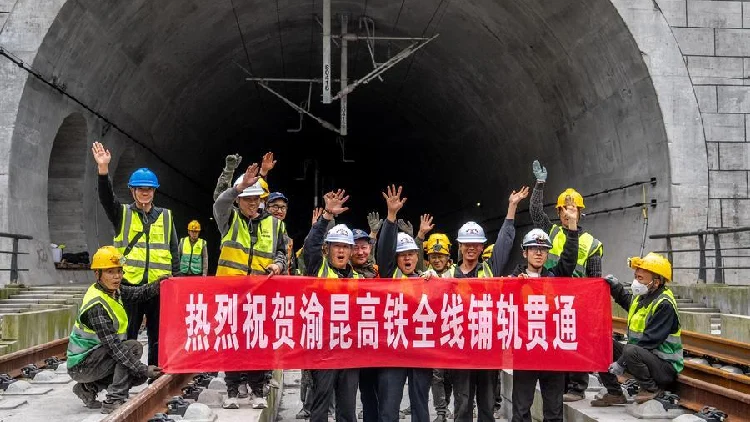
To navigate this challenging terrain, the railway boasts an impressive bridge-tunnel ratio of 87.4%. This means that a vast majority of the railway’s length is comprised of bridges and tunnels, a necessity to maintain the high-speed design and minimize environmental impact. Constructing these structures required advanced techniques and meticulous planning to ensure stability and safety. For instance, the Junlian Tunnel, where the final track laying occurred, sits on the border between Sichuan and Yunnan provinces, highlighting the cross-provincial nature of the engineering challenges. The completion of track laying at this significant tunnel marked a critical milestone, clearing a major hurdle for the railway’s operational readiness.
The high-speed design of the railway, with a projected speed of 350 km/h, means that every element of its construction, from the foundation to the track itself, must meet the highest standards of precision and durability. The sheer scale of the project, involving the laying of 500-meter steel rails, underscores the logistical and technical prowess required. This dedication to engineering excellence ensures that the railway will not only be efficient but also a safe and reliable mode of transportation for decades to come.
Reducing Travel Times and Boosting Connectivity
One of the most immediate and impactful benefits of the Chongqing-Kunming high-speed railway will be the drastic reduction in travel time between these two major cities. Currently, traveling between Chongqing and Kunming can be a lengthy affair, often taking many hours by conventional rail or road. Once the high-speed line is fully operational, this journey is expected to be slashed to around 2.5 hours. This significant time saving will transform how people travel, conduct business, and experience the region.
The railway is a core segment of China’s ambitious “Eight Vertical and Eight Horizontal” high-speed rail network, specifically forming part of the Beijing-Kunming corridor. This strategic positioning means that the Chongqing-Kunming line is not an isolated project but an integral part of a much larger national transportation strategy. It enhances connectivity not only between Chongqing and Kunming but also with other major cities across China, facilitating faster and more efficient travel nationwide.
The impact of this enhanced connectivity extends beyond mere speed. It will foster closer ties between the Chengdu-Chongqing economic circle and the central Yunnan urban cluster. These are significant economic regions, and improved transportation links will encourage greater collaboration, investment, and the free flow of goods and services. Businesses will find it easier to operate across these areas, leading to increased economic activity and job creation. For individuals, it means more opportunities for tourism, education, and personal connections.
The railway’s operational readiness is anticipated in the first half of 2027, with the Chongqing-Yibin section already having opened to traffic in 2024, demonstrating steady progress. This phased approach allows for testing and integration, ensuring a smooth transition to full operation. The anticipation for the railway’s completion is high, as it represents a leap forward in regional development and accessibility.
Economic and Social Implications for Southwest China
The Chongqing-Kunming high-speed railway is poised to be a powerful engine for economic and social development in Southwest China. By dramatically improving transportation infrastructure, the railway will unlock the region’s potential in several key areas.
Economic Growth and Trade
The reduction in travel time and improved logistics will significantly boost trade between Chongqing and Kunming, as well as the provinces they connect. Businesses will benefit from faster delivery of goods, reduced transportation costs, and easier access to new markets. This will encourage investment in manufacturing, agriculture, and other industries, leading to overall economic expansion. The railway will also facilitate the movement of skilled labor and expertise, further stimulating economic activity.
The integration of the Chengdu-Chongqing economic circle with central Yunnan will create a more cohesive and dynamic economic zone. This synergy can lead to specialized industries developing in different areas, leveraging local strengths and resources. For example, regions known for agriculture can more easily transport their produce to urban centers, while industrial hubs can receive raw materials and distribute finished goods more efficiently.
Tourism and Cultural Exchange
Southwest China is rich in natural beauty and cultural heritage. The Chongqing-Kunming high-speed railway will make these attractions more accessible to both domestic and international tourists. Visitors will be able to travel more easily between cities like Chongqing, known for its unique cityscape and spicy cuisine, and Kunming, the “City of Eternal Spring,” famous for its pleasant climate and ethnic diversity. This influx of tourism will create jobs in the hospitality sector, support local businesses, and promote cultural understanding.
The railway will also encourage more inter-regional travel, allowing residents of different provinces to explore each other’s attractions and cultures more readily. This can lead to a greater appreciation for the diversity of Southwest China and foster a stronger sense of regional identity.
Urban Development and Regional Integration
The railway’s stations will likely become hubs for further urban development, attracting new businesses, residential areas, and public services. This can lead to the revitalization of existing cities and the growth of new urban centers along the route. The improved connectivity will also help to reduce the economic disparities that may exist between different parts of Southwest China, promoting more balanced development.
The project aligns with China’s broader strategy of regional development, aiming to connect less developed areas with major economic centers and improve living standards. The Chongqing-Kunming high-speed railway is a significant step in this direction, promising to bring about positive and lasting changes for the millions of people living in the region.
The Future of High-Speed Rail in China
The Chongqing-Kunming high-speed railway is a prime example of China’s ongoing commitment to expanding and modernizing its high-speed rail network. This network is not just about transportation; it is a strategic investment in the nation’s economic future, its connectivity, and its ability to foster balanced development across diverse regions.
China’s high-speed rail system is already the most extensive in the world, and projects like the Chongqing-Kunming line demonstrate a continued drive for expansion and technological advancement. The challenges overcome in constructing this particular line, particularly in the mountainous terrain of Southwest China, showcase the evolving capabilities of Chinese engineering and construction firms. These experiences and innovations can be applied to future projects, both within China and internationally.
The “Eight Vertical and Eight Horizontal” network, of which the Chongqing-Kunming railway is a part, is designed to connect virtually all major cities in China. This ambitious plan aims to create a high-speed rail network that is unparalleled in its reach and efficiency. As more lines are completed and integrated, the entire country will become more accessible, facilitating faster business travel, tourism, and the movement of goods.
Beyond the economic benefits, high-speed rail also plays a role in environmental sustainability. By offering an efficient and often faster alternative to air and road travel, high-speed trains can help reduce carbon emissions and alleviate traffic congestion. As China continues to prioritize green development, the expansion of its high-speed rail network is a key component of its strategy to build a more sustainable transportation system.
The successful completion of track laying on the Chongqing-Kunming high-speed railway is a significant achievement. It represents not just the physical connection of two major cities but also the promise of a more prosperous, connected, and integrated Southwest China. As the world watches, this modern marvel of engineering is set to redefine travel and unlock new potential for a vast and diverse region.
Conclusion
The completion of track laying on the Chongqing-Kunming high-speed railway marks a pivotal moment for Southwest China. This engineering marvel, built through challenging mountainous terrain, is set to dramatically shorten travel times to around 2.5 hours between Chongqing and Kunming. As a key component of China’s national high-speed rail network, it promises to boost economic growth, enhance trade, and foster tourism by better connecting the Chengdu-Chongqing economic circle with central Yunnan. The railway’s projected operational readiness in the first half of 2027 signifies a new era of connectivity, driving regional integration and development. This project underscores China’s commitment to advancing its high-speed rail infrastructure, creating a more accessible, efficient, and sustainable transportation system for the future.


Conversation
0 Comments