

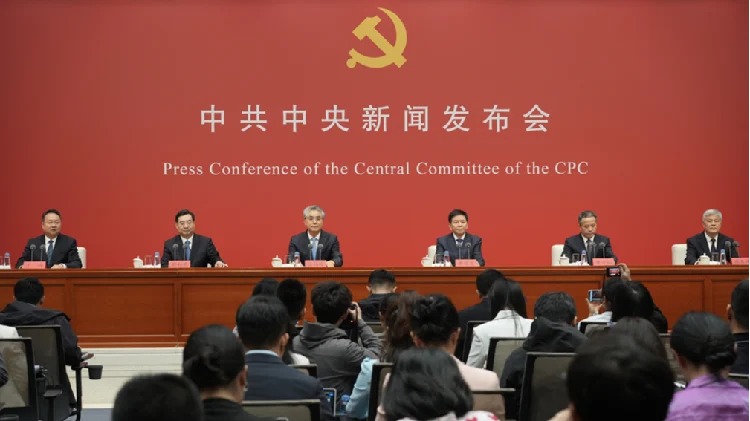
The Communist Party of China (CPC) is deeply committed to maintaining its integrity and effectiveness through a comprehensive approach to self-governance. This commitment was recently highlighted at a press conference following the fifth plenary session of the 20th CPC Central Committee. Officials discussed a pivotal resolution focused on persevering with full and rigorous Party self-governance, emphasizing the ongoing fight against corruption and the importance of strengthening the Party’s foundations. This initiative aims to ensure that the CPC remains a strong and capable force, adapting to the evolving global landscape and continuing its role in national development.
The Core of Rigorous Party Self-Governance
At the heart of the CPC’s strategy is the concept of “full and rigorous Party self-governance.” This isn’t a new idea, but rather a continuous process of self-improvement and adaptation. The recent resolution adopted at the fifth plenary session underscores the Party’s dedication to this principle. It outlines a clear path forward, focusing on several key areas. These include strengthening the Party spirit among its members, improving conduct and discipline, taking decisive action against corruption, governing the Party through established systems and regulations, and refining the oversight mechanisms for both the Party and the state.
The Party, with its vast membership exceeding 100 million, views its own building as a monumental and ongoing project. Since its founding in 1921, generations of Party members have worked to forge and temper the organization into what it is today. This sustained effort is seen as a demonstration of the strong vitality of Marxism. In a world experiencing profound changes, political parties globally face new issues and challenges. Many are looking to the CPC for insights and potential solutions, recognizing the valuable experience it has gained through periods of revolution, development, and reform. This experience offers lessons that progressive forces worldwide can consider.
Combating Corruption: A Persistent and Complex Battle
The fight against corruption remains a central pillar of the CPC’s self-governance efforts. Officials acknowledged that this battle is both grave and complex, with much work still to be done to eliminate the conditions that allow corruption to take root. The resolution from the fifth plenary session specifically calls for fortifying the cultural and ethical foundations that champion integrity and disdain corrupt practices. It also emphasizes enhancing coordinated efforts to ensure that officials have neither the audacity, the opportunity, nor the desire to engage in corruption.
Since 2012, discipline inspection and supervisory organs across China have been highly active. They have filed over 8.1 million cases and taken action against more than 7.9 million individuals. This includes 963 officials who were directly registered with and supervised by the CPC Central Committee. China’s anti-graft campaign has been extensive, reaching all levels of the Party and government. It has targeted both high-ranking officials, often referred to as “tigers,” and lower-level figures, known as “flies.” This broad approach has brought to justice some of the most senior figures, including former members of the Political Bureau and its Standing Committee, high-ranking military officials, and even retirees who had left their leadership positions years prior.
The commitment to winning the battle against corruption is unwavering. Officials stated that this is a fight that cannot be afforded to be lost and must never be lost. The CPC has identified four key areas of focus for its distinctive Chinese path to combating corruption, as outlined in the resolution:
Maintaining a Tough Stance Against Corruption
This involves consistently applying strict measures against any form of corrupt behavior, regardless of the position or seniority of the individual involved. It means ensuring that investigations are thorough and that consequences are applied fairly and decisively. The goal is to send a clear message that corruption will not be tolerated and that accountability is paramount.
Strengthening Checks and Oversight of Power
A critical aspect of preventing corruption is ensuring that power is exercised responsibly and transparently. This involves establishing robust systems of checks and balances, where different branches or levels of authority can monitor and scrutinize each other’s actions. Oversight mechanisms are designed to identify potential abuses of power early on and to hold those in authority accountable for their decisions and actions.
Fortifying Cultural-Ethical Foundations
Beyond legal and disciplinary measures, the CPC recognizes the importance of shaping a culture that inherently rejects corruption. This involves promoting values of integrity, honesty, and public service. By strengthening the ethical compass of Party members and officials, the aim is to cultivate a deep-seated aversion to corrupt practices, making them undesirable and socially unacceptable within the Party and society at large.
Enhancing Coordinated Efforts to Prevent Corruption
This area focuses on a multi-faceted approach to corruption prevention. It involves not only punishing those who are corrupt but also actively working to remove the conditions that enable corruption. This includes addressing systemic weaknesses, closing loopholes, and fostering an environment where opportunities for corruption are minimized. The ultimate aim is to eradicate the audacity, opportunity, and desire to commit corrupt acts.
The Purpose of Strict Discipline
Some may perceive strict discipline as a way to stifle initiative or limit the actions of officials. However, the CPC clarifies that this is not the intention. Instead, strict discipline serves to set clear directions, enforce rules, promote sound conduct, and guard against corruption. The ultimate goal is to foster a clean political environment that empowers officials to take initiative in their work with confidence and integrity. This approach ensures that officials can act decisively and effectively, knowing that they are operating within a framework of clear expectations and accountability.
The principle that everyone is equal before the rules is strongly emphasized. No one is granted special privileges, and no exceptions are made in the enforcement of regulations. This commitment to impartiality is fundamental to maintaining public trust and ensuring the legitimacy of the Party’s governance. Enforcement and oversight are integrated into every stage of the work undertaken by Party organizations, members, and officials. This ensures that institutional rules remain authoritative and effective at all times and at every level of the organization.
Focusing on Emerging Sectors
The CPC also recognizes the importance of strengthening its presence and governance in emerging sectors. As the economy and society evolve, new forms of employment and industries arise. The Society Work Department of the CPC Central Committee plays a key role in this aspect of Party building. Its work involves expanding the coverage of Party organizations within these new sectors. This includes strengthening Party building efforts and improving the services and management provided to individuals working in these evolving areas. By extending its reach and adapting its methods, the Party aims to ensure that its principles and governance extend to all parts of society, including the rapidly developing new economy.
Application Link
For those interested in understanding the organizational structure and application processes related to the CPC’s governance initiatives, direct application links are typically found on official government and Party websites. These platforms provide detailed information on policies, regulations, and opportunities for engagement.
This link leads to the official website of the Communist Party of China, which serves as a central hub for information regarding Party affairs, policies, and announcements. While direct application links for specific governance programs may vary and are often context-dependent, this portal is the primary source for official Party information.
Conclusion
The CPC’s commitment to full and rigorous self-governance, as underscored by the recent plenary session, represents a continuous effort to uphold the Party’s integrity, effectiveness, and connection with the people. The resolute fight against corruption, coupled with the strengthening of ethical foundations and robust oversight mechanisms, aims to ensure that the Party remains a strong and trusted leader. By adapting to new challenges and extending its governance to emerging sectors, the CPC seeks to maintain its vitality and its capacity to guide national development in an ever-changing world. This ongoing process of self-improvement is vital for the Party’s long-term success and its ability to meet the expectations of the nation.



Conversation
0 Comments