

Unearthing the Giant: The Discovery of Dianjunus rex and Its Significance
In the lush, biodiverse forests of China’s Yunnan Province, scientists have unearthed a remarkable new species of fungus, Dianjunus rex. This discovery is significant not only because it represents an entirely new family of fungi but also because this particular species boasts one of the largest fruiting bodies ever recorded. The finding, made by researchers from the Kunming Institute of Botany, underscores the vast, unexplored fungal diversity still hidden within our planet’s ecosystems. This article delves into the discovery of Dianjunus rex, its unique characteristics, its evolutionary history, and what this revelation tells us about the ongoing exploration of the fungal kingdom.
The Discovery in Yunnan’s Forests
The discovery of Dianjunus rex occurred during fieldwork in the rich forests of Yunnan Province, a region renowned for its exceptional biodiversity. This area is a hotspot for scientific research, particularly in the study of fungi, due to its varied climate and topography, which support a wide array of species. The research team from the Kunming Institute of Botany, part of the Chinese Academy of Sciences, was conducting surveys when they encountered this extraordinary specimen.
The fungus was found to grow from the roots of recently deceased trees and the surrounding soil. This habitat suggests a role as a decomposer, breaking down organic matter and returning nutrients to the soil, a vital function in any forest ecosystem. The sheer size of the fruiting body immediately set it apart from known species, prompting further investigation.
Naming the King of Fungi
The scientific name, Dianjunus rex, was chosen to reflect both its origin and its impressive stature. “Dian” is a historical reference to the ancient Dian kingdom, which was located in the region now known as Yunnan. The Latin word “rex,” meaning “king,” was incorporated to emphasize the fungus’s massive size, drawing a parallel to the formidable Tyrannosaurus rex. This naming convention highlights the species’ dominance in terms of physical scale within its fungal group.
The discovery was formally announced and detailed in the scientific journal Frontiers in Fungal Biology. This publication serves to introduce the new family and species to the scientific community, providing the necessary data and analysis for its classification and further study. The researchers’ work in Yunnan continues to reveal the hidden biological treasures of the region.
Characteristics of Dianjunus rex
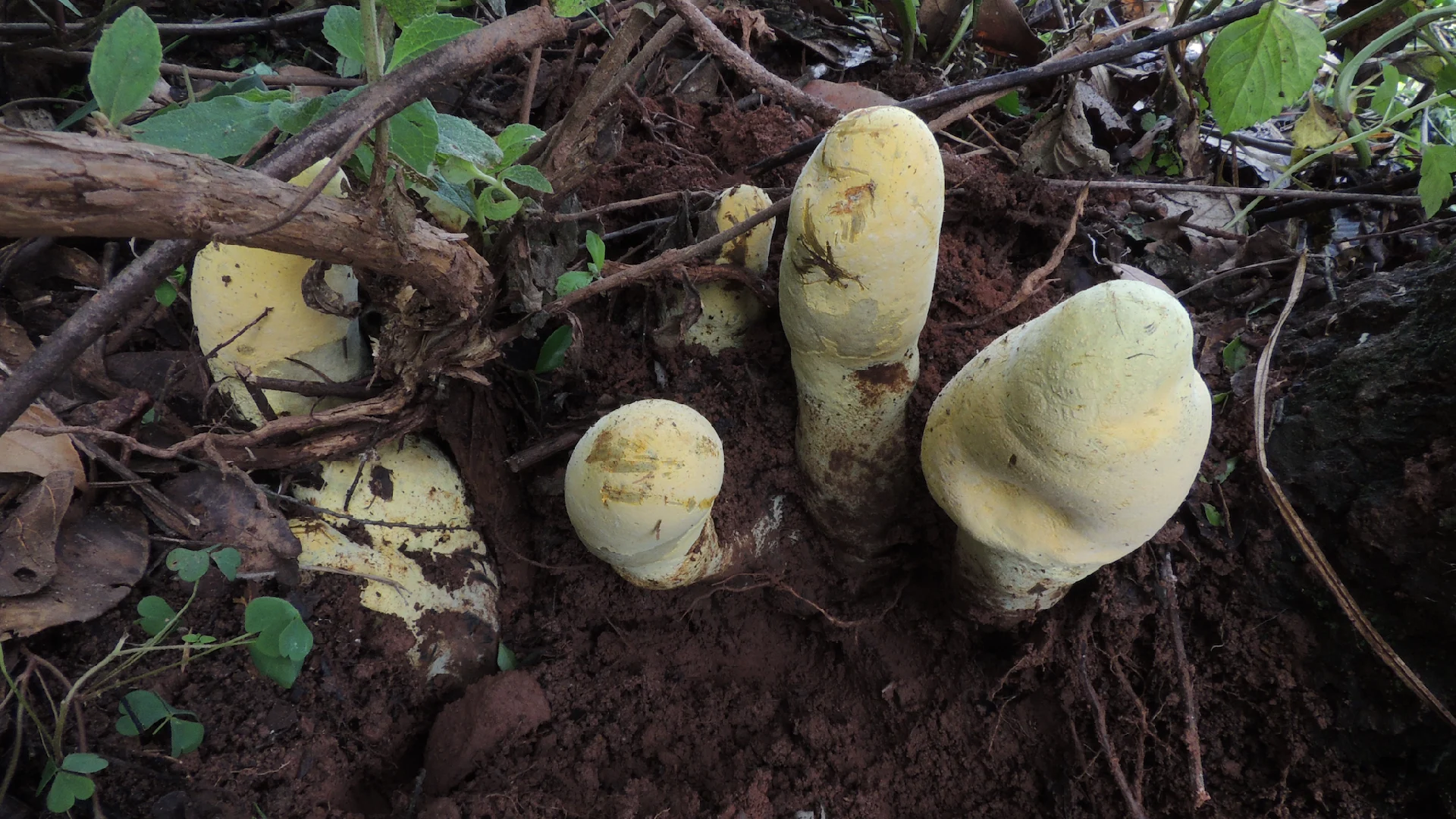
Dianjunus rex is distinguished by its exceptionally large fruiting bodies, which are fleshy reproductive structures. These structures, known as stromata, can reach heights of up to 50 centimeters, including their underground stalks. One particularly large specimen, noted for its two lobes, weighed an astonishing 2.2 kilograms, making it one of the largest known fungal fruiting bodies globally.
The Fruiting Body’s Appearance
When young, the stromata of Dianjunus rex are covered in a white, powdery, fibrous coating. As the fungus matures, this outer layer darkens to a dull yellow. The top of the fruiting body is blunt and rounded, often compared to the shape of a garlic bulb. As it develops further, finger-like branches emerge from its surface.
Internally, the flesh of the Dianjunus rex fruiting body is solid and spongy, with a color ranging from cream to yellow. Initial observations indicate that it possesses no strong smell and no noticeable taste, which are characteristics often studied when assessing the potential edibility or medicinal properties of fungi. The physical description provides a clear picture of this unique organism’s form.
Its Place in the Fungal Kingdom
Dianjunus rex belongs to the phylum Ascomycota, which is the largest phylum within the fungal kingdom. This phylum includes about two-thirds of all described fungal species, encompassing a vast array of organisms from yeasts to more complex molds and mushrooms. Finding such a large fruiting body within this phylum is particularly noteworthy, as many Ascomycetes are microscopic or produce relatively small reproductive structures. The discovery of Dianjunus rex expands our understanding of the morphological diversity possible within this dominant fungal group.
Evolutionary History and Ecological Significance
DNA analysis has provided fascinating insights into the evolutionary timeline of Dianjunus rex. The findings suggest that this fungal lineage first appeared approximately 65 million years ago. This timing is significant as it closely follows the mass extinction event that occurred at the end of the Cretaceous period, an event that wiped out roughly three-quarters of Earth’s plant and animal species, including the dinosaurs.
Adapting to a Post-Extinction World
The researchers hypothesize that the emergence of Dianjunus rex may not be a mere coincidence with the extinction event. Following the mass extinction, ecosystems worldwide were in a state of disarray, with many ecological niches left vacant. It is proposed that this fungal lineage may have evolved to occupy these newly available spaces as forests began to regrow. The ability of fungi to decompose dead organic matter and cycle nutrients would have been particularly advantageous in a world recovering from widespread devastation.
This evolutionary narrative suggests that Dianjunus rex and its ancestors played a crucial role in the ecological recovery of terrestrial environments. By efficiently breaking down the abundant dead plant material left after the extinction, they would have helped to rebuild soil fertility and pave the way for new plant life to establish itself. This highlights the often-underappreciated but essential role fungi play in ecosystem dynamics, especially during periods of significant environmental change.
Unexplored Diversity in Yunnan
The discovery of Dianjunus rex also serves as a powerful reminder of the immense fungal diversity that remains undiscovered, particularly in regions like Yunnan. While scientists have documented around 6,000 fungal species from Yunnan, current estimates suggest that the actual number could be as high as 104,000. This vast gap between documented and estimated species highlights the urgent need for continued exploration and research.
Yunnan’s unique geographical and climatic conditions create a fertile ground for a multitude of species, many of which may possess unique characteristics and ecological roles. The ongoing work by institutions like the Kunming Institute of Botany is critical for cataloging this biodiversity, understanding its ecological importance, and potentially uncovering new resources or insights into evolutionary processes. The discovery of a new family of fungi, represented by such a striking species, is a testament to the biological richness still waiting to be found.
The Importance of Fungal Discovery
The identification of new fungal species and families, like Dianjunus rex, is more than just an academic exercise. Fungi play indispensable roles in ecosystems, from decomposition and nutrient cycling to forming symbiotic relationships with plants (mycorrhizae) that are essential for their survival. They are also a source of vital compounds used in medicine, such as antibiotics and immunosuppressants, and are crucial in industrial processes like fermentation.
Expanding Our Knowledge Base
Each new discovery adds a piece to the complex puzzle of life on Earth. Understanding the full scope of fungal diversity helps scientists to better comprehend ecological interactions, evolutionary pathways, and the resilience of ecosystems. The unique adaptations of species like Dianjunus rex, such as its massive fruiting body and its potential role in post-extinction recovery, offer valuable lessons about life’s ability to adapt and thrive under challenging conditions.
Conservation Implications
Recognizing and cataloging fungal diversity is also crucial for conservation efforts. Many fungal species are threatened by habitat loss, climate change, and pollution. By identifying these species and understanding their ecological requirements, we can advocate for their protection and the preservation of the habitats they depend on. The discovery in Yunnan emphasizes that even in well-studied regions, significant biological discoveries are still possible, highlighting the need for ongoing biodiversity surveys and habitat protection.
The research conducted by the Kunming Institute of Botany, Chinese Academy of Sciences, on Dianjunus rex exemplifies the ongoing scientific endeavor to map and understand the fungal kingdom. Their work not only adds a new name to the catalog of life but also provides a deeper appreciation for the evolutionary history and ecological significance of fungi. As exploration continues, it is likely that many more remarkable discoveries await in the world’s diverse ecosystems.
Conclusion
The discovery of Dianjunus rex in Yunnan Province marks a significant moment in mycology. This new family of fungi, with its exceptionally large fruiting body, not only expands our understanding of fungal morphology but also offers compelling insights into evolutionary adaptation following major extinction events. The research highlights the immense, yet largely unexplored, fungal diversity present in regions like Yunnan, underscoring the importance of continued scientific exploration and conservation efforts. As scientists continue to unearth these hidden wonders, each discovery contributes to a more complete picture of life on Earth and the critical roles these organisms play in maintaining healthy ecosystems.



Conversation
0 Comments