

Understanding the Communique of the Fifth Plenary Session of the 20th CPC Central Committee
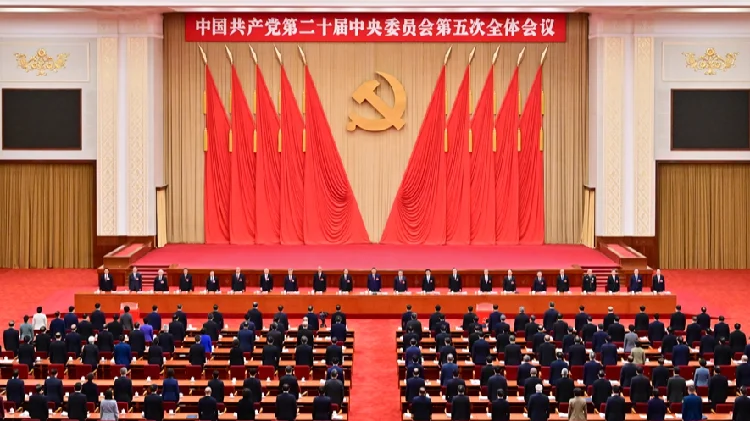
The Communique from the Fifth Plenary Session of the 20th Central Committee of the Communist Party of China (CPC), adopted on October 29, 2026, offers a detailed look into the Party’s strategic direction and its ongoing commitment to rigorous self-governance. This document, released after a four-day meeting in Beijing, outlines the achievements of the Political Bureau, reaffirms key ideological tenets, and sets forth plans for future Party building and national development. Understanding this communique is essential for grasping the CPC’s approach to governance, its long-term goals, and its methods for maintaining political and organizational strength.
The session, attended by 162 members and 117 alternate members of the Central Committee, along with officials and experts, focused on reviewing the work of the Political Bureau and deliberating on a resolution concerning “Persevering with Full and Rigorous Party Self-Governance.” General Secretary Xi Jinping delivered a significant address and provided explanations on the draft resolution, underscoring the importance of this theme. The communique highlights the Party’s progress in implementing the guiding principles from the 20th National Congress and its adherence to the general principle of pursuing progress while ensuring stability. It also touches upon economic development, socialist democracy, ecological conservation, national security, and international relations, framing these within the context of the Party’s overarching goals.
Affirming Past Work and Future Direction
The Fifth Plenary Session began by fully affirming the work of the Political Bureau since the previous session. This affirmation covered a broad spectrum of activities, demonstrating the Party’s multifaceted approach to governance. Key areas of progress highlighted include:
- Implementation of Party Congress Principles: The Political Bureau has diligently worked to implement the guiding principles established by the 20th National Congress and previous plenary sessions. This ensures that the Party’s strategic objectives are consistently pursued.
- Adherence to General Principles: A consistent focus on the general principle of “pursuing progress while ensuring stability” has guided the Party’s actions. This balanced approach aims to foster development without compromising security or social order.
- New Development Philosophy: The communique emphasizes the full and faithful application of the new development philosophy across all fronts. This philosophy likely prioritizes innovation, coordination, green development, openness, and shared benefits.
- Integrated Planning: The coordinated implementation of the “Five-Sphere Integrated Plan” and the “Four-Pronged Comprehensive Strategy” indicates a holistic approach to national development, addressing economic, political, cultural, social, and ecological dimensions.
- Balancing Domestic and International Imperatives: The Party has worked to balance domestic needs and development with international responsibilities and global dynamics. This includes managing foreign relations and participating in global governance.
- Ensuring Development and Security: A critical aspect of the Political Bureau’s work has been ensuring that economic development proceeds alongside robust national security measures. This dual focus is seen as vital for sustainable progress.
- High-Quality Economic Development: Tangible results have been achieved in promoting high-quality economic development, suggesting a shift from quantity-based growth to more sustainable and value-driven economic activities.
- Socialist Democracy and Rule of Law: Efforts to advance socialist democracy and the rule of law are noted, indicating a commitment to improving the legal framework and governance structures within the socialist system.
- Public Communication and Cultural Work: The communique mentions improvements in public communication and cultural work, highlighting the importance of shaping public opinion and promoting cultural development.
- People’s Wellbeing and Ecological Conservation: Ensuring the people’s wellbeing and promoting ecological conservation are presented as key achievements, reflecting a commitment to social welfare and environmental sustainability.
- National Security and Social Stability: Safeguarding national security and maintaining social stability have been paramount, ensuring a secure environment for development and daily life.
- Party Self-Governance: Further strengthening “full and rigorous Party self-governance” is a recurring theme, underscoring its centrality to the Party’s overall effectiveness.
- Modernizing Defense and Armed Forces: Progress in modernizing national defense and the armed forces is reported, reflecting China’s commitment to its military capabilities.
- Hong Kong, Macao, and Taiwan: Work related to Hong Kong, Macao, and Taiwan is mentioned, indicating ongoing efforts to manage these complex political and territorial issues.
- Major-Country Diplomacy: The pursuit of major-country diplomacy with Chinese characteristics signifies China’s active role on the global stage.
The communique also notes the successful conclusion of the 14th Five-Year Plan and a strong start to the 15th Five-Year Plan period, with new progress and results achieved. The launch of a study campaign on establishing and practicing the correct view of performance and the celebration of the 105th anniversary of the CPC are also highlighted as events that have fostered unity and collective effort.
The CPC’s Historical Journey and Self-Reform
The communique reflects on the Communist Party of China’s historical journey, attributing its success to several core principles and practices. The Party’s pursuit of the high ideal of communism, its dedication to the lasting greatness of the Chinese nation, and its commitment to seeking happiness for the Chinese people and national rejuvenation are identified as foundational. Throughout its history, the Party has consistently prioritized its self-governance, demonstrating a willingness to uphold truth and correct errors. This self-reliance, coupled with the support of the people, has enabled the Party to resolve its own problems and emerge as a strong leadership core.
The document specifically points to two key answers the CPC has found to the historical cycle of rise and fall: the people’s oversight over government and the Party’s self-reform. These are presented as unique discoveries of the CPC and significant contributions to the history of Marxist parties. The communique praises the great achievements made in exercising “full and rigorous Party self-governance” in the new era, particularly under the leadership of the Central Committee with Comrade Xi Jinping at its core.
The Party’s response to challenges such as weak Party leadership, lax self-supervision, and internal problems is described as demonstrating “tremendous political courage and a strong sense of responsibility.” The implementation of stringent measures has addressed these issues at the root, curbing unhealthy tendencies, remedying long-standing problems, and removing serious dangers. This process of “revolutionary tempering” has led to historic achievements and transformations, allowing the Party and the people to seize the “historic initiative in building a great party and a great country.”
Xi Jinping Thought on Party Building
A significant development highlighted in the communique is the formulation of “Xi Jinping Thought on Party Building.” This body of thought is presented as a response to major questions concerning the nature and methods of building a long-term governing Marxist party. It is described as enriching and developing Marxist theory on party building and representing a major achievement in theoretical innovation through the integration of Marxism with China’s specific realities and traditional culture.
This thought is also characterized as a crystallization of the practical experience and collective wisdom of the Party and the people. As an important component of “Xi Jinping Thought on Socialism with Chinese Characteristics for a New Era,” it provides fundamental guidance and a roadmap for advancing the “great new project of Party building in the new era.” The communique stresses that this thought is crucial for navigating the complexities of the current era and ensuring the Party’s continued strength and effectiveness.
Challenges and Opportunities in Party Self-Governance
The communique acknowledges that while favorable conditions exist for advancing full and rigorous Party self-governance, new circumstances and issues also present themselves. Profound changes globally, nationally, and within the Party itself have made the tasks of safeguarding China’s sovereignty, security, and development interests, promoting reform and development, and maintaining social harmony even more arduous. These challenges pose significant tests to the Party’s governance capacity, the quality of its membership, and its resilience against corruption and moral decline.
The “four tests” (governance, reform and opening up, the market economy, and external environment) and “four dangers” (enfeebled will, lack of capability, detachment from the masses, and corruption) confronting the Party are described as protracted, complicated, and serious. Therefore, the communique calls for a deep understanding of the significance of persevering with full and rigorous Party self-governance from a strategic perspective, focusing on consolidating the Party’s long-term governing position and achieving national rejuvenation.
The document urges Party members to build firm confidence, maintain resolve, and adopt higher standards and more concrete measures. This involves carrying forward the valuable experience of Party self-governance in the new era, addressing prominent problems in Party building, and consolidating the sound political situation achieved through self-supervision and self-governance.
Guiding Principles for Rigorous Party Self-Governance
The communique outlines several guiding principles for persevering with full and rigorous Party self-governance:
- Serving the Party’s Missions and Tasks: All efforts in Party building must align with the Party’s fundamental objectives and responsibilities.
- Strengthening the Party Politically: This is identified as the overarching principle, emphasizing the importance of political loyalty, discipline, and ideological unity.
- Exercising Rigorous Governance Across the Board: Strict governance must be applied to all aspects of the Party’s operations and to all Party members.
- Adopting a Problem-Oriented Approach: The Party must proactively identify and address existing problems and challenges.
- Upholding Fundamental Principles and Breaking New Ground: This involves adhering to core Marxist principles while also innovating and adapting to new circumstances.
- Adhering to a Top-Down Approach: Leadership from the central Party authorities is crucial for guiding and implementing self-governance initiatives.
- Running the Party According to Regulations: The Party must operate within a clear framework of rules, regulations, and institutional arrangements.
These principles are intended to guide the Party in its continuous efforts to improve its governance, maintain its purity, and strengthen its connection with the people.
Systematic Plans for Party Self-Governance
Building upon the guiding principles, the communique details systematic plans for advancing full and rigorous Party self-governance. These plans focus on several key areas:
- Strengthening the Party Spirit of Communists: This is considered a fundamental task. Efforts will be made to enhance Party consciousness, raise awareness of Party membership and its vanguard nature, and foster a lifelong commitment to cultivating stronger Party spirit. This includes strengthening ideals and convictions, loyalty to the Party, affection for the people, seeking truth from facts, building moral character, and preserving honesty and integrity. Measures will involve education on loyalty, building cohesion with the Party’s latest theories, nurturing spirit with traditions, tempering spirit in practice, and improving appraisal.
- Strictly Practicing Democratic Centralism: As the Party’s fundamental organizational principle, democratic centralism is crucial for rigorous self-governance. The plan is to improve and implement institutions of democratic centralism, balancing intraparty democracy with correct centralism. This aims to leverage the strengths of democratic centralism in political, organizational, institutional, and working aspects. Specific measures include upholding the Party Central Committee’s centralized, unified leadership, improving intraparty democracy, strictly implementing deliberation rules, and regulating leadership team performance.
- Cultivating High-Caliber Officials: Strict management of officials is key. The Party’s organizational line for the new era will be implemented, applying stringent standards to the education, cultivation, selection, appointment, management, and oversight of officials. The goal is to build a corps of officials with firm political commitment, outstanding competence, excellent conduct, and strict discipline. This involves sound appointment guidelines, targeted selection measures, inspiring officials to act on the correct view of performance, enhancing their capabilities, improving training for young officials, and strengthening management and oversight.
- Building a Well-Knit Organizational System: Party organizations at all levels are central to rigorous self-governance. Plans focus on systematically advancing their development to strengthen political and organizational functions, ensuring the implementation of Party lines, principles, policies, and decisions. This includes giving play to the exemplary role of central Party and state organs, bolstering local Party committees, improving primary-level organizations, promoting Party building in emerging sectors, building a strong contingent of Party members, and refining cross-level alignment mechanisms.
- Improving Conduct and Tightening Discipline: These are seen as effective measures for advancing self-governance. Efforts will focus on enhancing Party spirit, improving conduct, and tightening discipline, integrating these with anti-corruption measures. Drawing on past experience, the aim is to ensure steady improvements in conduct, supervise and govern the Party with strict discipline, and foster a positive image. This involves following the mass line, implementing the central leadership’s eight-point decision on improving work conduct, ensuring consistent efforts, enforcing discipline more rigorously, and using discipline as a guide, restraint, guarantee, and incentive.
- Taking Firm and Coordinated Action Against Corruption: The communique reiterates that the Party does not tolerate corruption. A distinctive Chinese path of anti-corruption will be followed, strengthening the Party Central Committee’s leadership. This involves addressing both symptoms and root causes, adopting a holistic approach that combines severe punishment, targeted remedy, and effective prevention. The fight against corruption will be carried through to the end, alongside strengthening checks on power, fortifying cultural-ethical foundations for integrity, and enhancing coordinated prevention efforts.
- Running the Party with Systems and Regulations: Strengthening Party regulations and institutions is a long-term strategy. The Party Constitution will be upheld as the fundamental code of conduct. Institutional reforms related to Party building will be deepened, integrating law-based governance of the country with regulation-based self-governance of the Party. Measures will focus on improving the framework of Party regulations, ensuring their enforcement, and eliminating hidden rules.
- Refining Party and State Oversight Systems: This involves ensuring that Party committees exercise general oversight, improving the dual leadership system for discipline inspection and supervision, and enhancing collaboration between intraparty oversight and other oversight mechanisms. The role of inspections as a powerful tool of comprehensive oversight will be leveraged.
- Ensuring All Responsibilities are Fulfilled: Persevering with rigorous Party self-governance is a common political responsibility. A robust, unified system will be established where all sides perform their respective responsibilities in collaboration. Performance assessment mechanisms will be improved to hold accountable those who fail to effectively carry out Party self-supervision and self-governance, leading to serious problems.
Advancing the Agenda and Convening the 21st National Congress
The communique concludes by emphasizing the importance of studying and implementing the guiding principles from the plenary session. This is framed as a major political task for the entire Party. The session also addressed the immediate agenda, focusing on steadily advancing work at the turn of the year. This includes fulfilling economic and social development goals for the current year and securing a good start for the 15th Five-Year Plan period.
Key economic strategies mentioned are adhering to the principle of pursuing progress while ensuring stability, fully applying the new development philosophy, fostering a new development pattern, making proper use of macro policies, tapping domestic demand, deepening reform and opening up, and pursuing innovation-driven economic growth.
In terms of security and social welfare, the Party will press ahead with initiatives to ensure inclusive public services, meet essential needs, and provide a cushion for those most in need. Efforts will also focus on workplace safety, disaster prevention and relief, food and drug safety, and social stability.
A significant announcement is the decision to convene the 21st National Congress of the Party in Beijing in the second half of 2027. This congress is described as a highly important meeting and an event of great political significance, occurring at a critical stage for realizing socialist modernization and advancing toward the Second Centenary Goal. The entire Party is called upon to unite and lead the Chinese people in forging ahead to achieve basic socialist modernization and continue to break new ground in building a great country and advancing national rejuvenation through Chinese modernization. Concrete actions will be taken to set the stage for this crucial congress.
The communique also reports on personnel matters, including the election of Zhang Shengmin as a member of the Political Bureau and the filling of vacant seats on the Central Committee by alternate members. Furthermore, it details the deliberation and adoption of reports on grave violations of discipline and law involving numerous officials from both Party and military ranks, confirming their expulsion from the Party and removal from positions.
Finally, the communique calls upon all Party members to rally closely around the Party Central Committee with Comrade Xi Jinping at its core. They are urged to fully implement Xi Jinping Thought on Socialism with Chinese Characteristics for a New Era, forge ahead with dedication, persevere with full and rigorous Party self-governance, and continually break new ground in strengthening the Party. The ultimate goal is to unite and lead the Chinese people of all ethnic groups in a tireless effort to build China into a great modern socialist country in all respects and advance national rejuvenation on all fronts through Chinese modernization.
The Communique of the Fifth Plenary Session of the 20th CPC Central Committee serves as a comprehensive statement of the Party’s current priorities, its historical perspective, and its strategic roadmap for the future. It underscores the paramount importance of Party self-governance as the foundation for achieving national goals and maintaining its leadership role. The detailed plans and guiding principles outlined reflect a commitment to continuous improvement and adaptation in the face of evolving domestic and international landscapes.


Conversation
0 Comments