

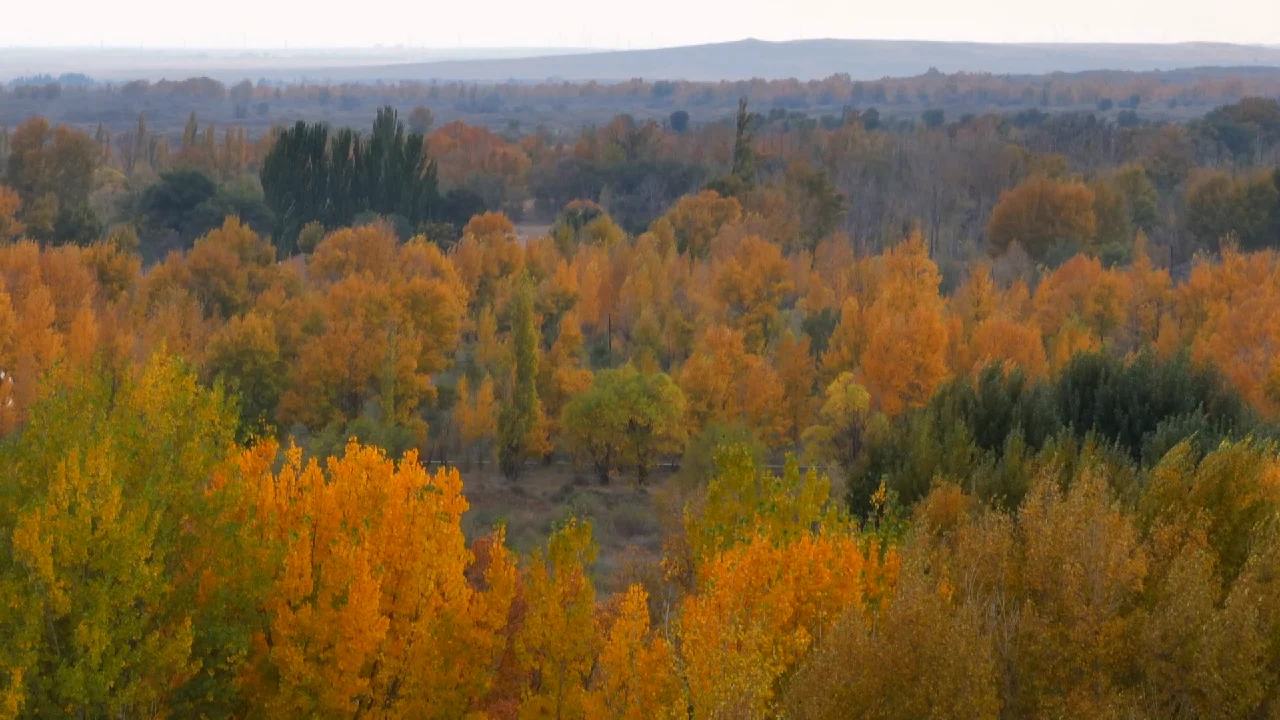
The world is a vast tapestry of natural wonders, each offering a unique spectacle. Among these, the transformation of landscapes by the changing seasons stands out. Autumn, in particular, brings a burst of color that can dramatically alter the appearance of even the most arid regions. This phenomenon is beautifully illustrated in northwest China, where the edge of a desert becomes a canvas for nature’s artistry.
The Haba Lake Ecotourism Area, situated in Yanchi County within the Ningxia Hui Autonomous Region, provides a stunning example of this autumnal transformation. Located on the southern fringe of the Mu Us Desert, this area is a fascinating meeting point where sandy terrains give way to forests, lakes, and grasslands. It’s a place where the starkness of the desert landscape is softened by the vibrant life that thrives in its proximity.
Each year, as October arrives, the small-leaved poplar trees in this region undergo a remarkable change. Their leaves, which are green for most of the year, turn brilliant shades of gold. This striking transformation creates a vivid contrast against the backdrop of the remaining greenery and the clear blue waters of the lakes. These trees, affectionately known by locals as “little desert poplars” because of their golden autumn foliage, are strategically positioned along scenic roads and the shores of the lakes. They form breathtaking golden corridors that draw the eye and invite exploration.
When sunlight filters through the canopy of these golden leaves, it illuminates the landscape in a magical way. The winding roads, the still waters, and the colorful woodlands merge to create a distinctive and unforgettable autumn scene. This spectacle, unfolding on the very edge of the desert, showcases the resilience and beauty of nature, proving that even in seemingly harsh environments, vibrant life and stunning aesthetics can flourish. This article will explore the elements that contribute to this unique autumnal display, the ecological significance of such transitional zones, and the ways in which these natural transformations can be appreciated and preserved.
The Unique Geography of the Mu Us Desert Edge
The Mu Us Desert, located in the Ordos Plateau of Inner Mongolia and extending into Ningxia and Shaanxi provinces, is one of China’s largest deserts. It is characterized by its vast sandy areas, but also by significant portions of shrubland, grassland, and even some scattered oases. Unlike some of the more barren deserts, the Mu Us Desert has a complex ecosystem that supports a variety of plant and animal life, particularly in its transitional zones.
The Haba Lake Ecotourism Area is a prime example of such a transitional zone. It sits at the southern edge of this desert, where the arid conditions begin to yield to more temperate influences. This geographical position is critical to understanding the unique landscape. The proximity to the desert means that the soil is often sandy and water can be scarce, influencing the types of vegetation that can survive. However, the presence of lakes, such as Haba Lake, and the more moderate climate of the Ningxia region provide the necessary moisture and conditions for trees and grasses to grow.
This delicate balance between desert and more hospitable environments creates a unique microclimate. The sandy soil can retain heat, leading to warmer days, while the presence of water bodies helps to moderate temperatures, especially in the evenings. The vegetation that thrives here is often hardy and adapted to periods of drought, but it also responds dramatically to the availability of water and the changing seasons. The small-leaved poplar trees, scientifically known as Populus cathayana or similar species adapted to arid conditions, are particularly well-suited to this environment. They have deep root systems to access water and can tolerate the sandy soil. Their ability to produce brilliant golden foliage in autumn is a spectacular display of their adaptation and the region’s natural beauty.
The landscape is not just about the trees. The grasslands surrounding the poplar groves also change color, often turning golden or russet hues in autumn. The lakes, fed by underground springs or seasonal rainfall, reflect the vibrant colors of the sky and the surrounding foliage, adding another layer of visual appeal. This interplay of sand, water, trees, and grasslands, all under the expansive desert sky, creates a visual richness that is both surprising and captivating. The geological history of the region, including ancient riverbeds and wind-eroded formations, also contributes to the varied terrain, making the edge of the Mu Us Desert a place of diverse natural beauty.
The Autumnal Transformation: A Spectacle of Color
The most striking aspect of the Haba Lake Ecotourism Area is its dramatic transformation during autumn. While the region might appear somewhat subdued during the hotter summer months or the starker winter, October brings a breathtaking display of color. The small-leaved poplar trees are the stars of this show. As the temperatures begin to drop and the days shorten, these trees undergo a physiological change. Their chlorophyll, the pigment responsible for their green color, begins to break down. This process reveals other pigments that have been present in the leaves all along, primarily carotenoids, which are yellow and orange.
The intensity of the color can vary depending on the specific species of poplar, the weather conditions throughout the year, and the soil composition. However, in this particular region, the poplars are known for their exceptionally vibrant golden hues. The sunlight plays a crucial role in enhancing this spectacle. When the sun shines through the golden leaves, it creates a warm, luminous glow that bathes the entire landscape. This effect is particularly pronounced in the early morning and late afternoon, when the sunlight is at a lower angle, casting long shadows and intensifying the colors.
The “golden corridors” mentioned in the description are formed by rows of these poplar trees lining the roads and the lake shores. As visitors drive or walk through these areas, they are enveloped in a sea of gold. The reflections of these golden trees in the tranquil waters of Haba Lake double the visual impact, creating a mirror image that is almost as stunning as the trees themselves. This doubling effect is amplified when the sky is clear and blue, providing a perfect contrast to the warm tones of the foliage.
Beyond the poplars, other elements of the landscape also contribute to the autumnal palette. The grasses in the surrounding areas often turn shades of yellow, brown, and red, adding texture and depth to the scenery. Some shrubs and other deciduous plants may also display their own variations of autumn colors, though the poplars remain the dominant feature. The contrast between the golden trees, the blue water, the sandy earth, and the clear autumn sky is what makes this landscape so unique and visually arresting. It’s a testament to the beauty that can be found in the transition between different ecological zones and the power of seasonal change.
Ecological Significance of Transitional Zones
Transitional zones, also known as ecotones, are areas where two or more distinct ecosystems meet. These zones are incredibly important from an ecological perspective. They often exhibit a higher degree of biodiversity than the individual ecosystems they connect, a phenomenon known as the “edge effect.” This increased biodiversity is due to the presence of species from both adjacent ecosystems, as well as species that are unique to the ecotone itself.
The southern edge of the Mu Us Desert, where Haba Lake is located, is a classic example of an ecotone. It bridges the arid desert environment with the more mesic (moderately moist) conditions found further south. This creates a habitat that can support a wider range of plant and animal life than either the pure desert or the more typical grassland or forest environments. The hardy desert plants, such as certain types of shrubs and grasses adapted to dry conditions, can coexist with species that require more moisture, like the poplar trees and aquatic plants found around the lake.
The small-leaved poplars play a vital role in this transitional ecosystem. Their roots help to stabilize the sandy soil, preventing erosion by wind and water. This stabilization is crucial in a desert-edge environment where sand can easily shift. The trees also provide shade and shelter for smaller plants and animals, creating microhabitats that can support life during the hottest parts of the day or during dry spells. In autumn, their shedding leaves contribute organic matter to the soil, enriching it and supporting the growth of other plants and microorganisms.
The presence of water, in the form of Haba Lake, is another critical factor. Lakes in arid or semi-arid regions are often biodiversity hotspots, attracting a variety of birds, insects, and mammals that come to drink or feed. The aquatic and semi-aquatic vegetation that grows around the lake further enhances the habitat. This creates a complex web of life where different species depend on each other for survival. For instance, insects that feed on the poplar leaves might be prey for birds, while the seeds from the grasses might be food for rodents.
Understanding the ecological significance of these transitional zones is crucial for conservation efforts. They are often fragile environments that can be easily disrupted by human activities or climate change. Protecting these areas means preserving not only the unique beauty of places like Haba Lake but also the rich biodiversity they support and the vital ecological services they provide, such as soil stabilization and water regulation. The autumnal display is a visible manifestation of the health and vitality of this complex ecosystem.
Tourism and Conservation: Balancing Access and Preservation
The stunning autumnal scenery at Haba Lake Ecotourism Area has naturally attracted tourism. The “golden corridors” and the reflections in the lake offer picturesque views that draw visitors, particularly during the peak autumn season. This influx of tourists can bring economic benefits to the local communities through increased spending on accommodation, food, and local crafts. It also raises awareness about the natural beauty of the region, potentially fostering a greater appreciation for its conservation.
However, tourism, especially in ecologically sensitive areas, presents a significant challenge: balancing visitor access with the need for preservation. Increased foot traffic, vehicle use, and the development of tourist infrastructure can all have negative impacts on the environment. Soil compaction, habitat disturbance, pollution, and the introduction of invasive species are potential risks. For a fragile ecosystem like the desert edge, these impacts can be particularly severe and long-lasting.
To address these challenges, effective conservation strategies are essential. This often involves careful planning and management of tourist activities. Designated pathways and viewing areas can help to concentrate visitor impact in specific locations, protecting more sensitive habitats from disturbance. Limiting the number of visitors during peak seasons or at certain times of the day can also help to reduce pressure on the environment. Educational programs for tourists can raise awareness about the ecological importance of the area and encourage responsible behavior, such as not littering, staying on marked trails, and refraining from disturbing wildlife.
The local government and tourism authorities play a crucial role in implementing these strategies. This might involve investing in sustainable tourism infrastructure, such as eco-friendly accommodation and waste management systems. It could also include developing regulations for tour operators and visitors to ensure that activities are conducted in an environmentally responsible manner. The use of technology, such as remote sensing and monitoring systems, can help to track environmental changes and assess the impact of tourism.
Furthermore, engaging local communities in conservation efforts is vital. When local residents have a stake in protecting the environment, they are more likely to become stewards of the land. This can involve creating employment opportunities in ecotourism that are directly linked to conservation, such as guiding tours, maintaining trails, or participating in ecological restoration projects. The success of Haba Lake as an ecotourism destination will ultimately depend on its ability to maintain its natural beauty and ecological integrity while providing enjoyable experiences for visitors. The vibrant autumn colors are a powerful asset, but they are also a reminder of the delicate balance that must be maintained.
Experiencing the Golden Autumn: Tips for Visitors
For those planning to witness the breathtaking golden autumn transformation at the Haba Lake Ecotourism Area, a little preparation can go a long way in ensuring a memorable and responsible visit. The primary draw is the spectacular display of golden poplar leaves, which typically peaks in October. However, the exact timing can vary slightly each year depending on weather patterns, so it’s advisable to check local forecasts or tourism advisories closer to your intended travel dates.
When planning your trip, consider the best times of day to visit for photography and optimal viewing. Early mornings and late afternoons offer the most dramatic lighting, with the golden hour sunlight casting a warm glow on the landscape and creating beautiful reflections in the water. Midday sun can be harsh and may wash out some of the subtler colors. Visiting on weekdays rather than weekends can also help to avoid larger crowds, allowing for a more peaceful and immersive experience.
Accommodation options in the vicinity of Yanchi County and the Haba Lake area range from local guesthouses to more established hotels. Booking in advance is highly recommended, especially during the peak autumn season, as availability can be limited. When choosing accommodation, consider options that emphasize sustainability and environmental responsibility.
Getting to the Haba Lake Ecotourism Area typically involves traveling to Yinchuan, the capital of Ningxia Hui Autonomous Region, and then taking a combination of public transport or private car to Yanchi County. From Yanchi, local transport can take you to the ecotourism area. Renting a car can offer more flexibility for exploring the scenic roads and stopping at various viewpoints.
When exploring the area, remember that you are in a natural environment. Dress in layers, as autumn weather can be unpredictable, with temperatures potentially dropping significantly after sunset. Comfortable walking shoes are essential if you plan to explore on foot. Always carry water and snacks, and be prepared for varying road conditions.
Crucially, practice responsible tourism. Stick to marked trails to avoid disturbing vegetation and wildlife. Do not litter; pack out everything you pack in. Avoid feeding or disturbing any animals you encounter. Respect the local culture and environment. By being mindful of your impact, you can help preserve the beauty of this unique desert-edge landscape for future generations to enjoy. The golden poplars are a fleeting, yet powerful, reminder of nature’s artistry, and experiencing them firsthand is a privilege that comes with the responsibility of care.
The Future of Desert-Edge Landscapes
The Haba Lake Ecotourism Area represents a dynamic intersection of natural beauty, ecological significance, and human interaction. As climate change continues to influence weather patterns globally, the delicate balance of desert-edge ecosystems like this one faces new challenges. Shifts in rainfall, temperature fluctuations, and increased frequency of extreme weather events could all impact the health of the poplar forests and the surrounding grasslands and wetlands.
The long-term sustainability of this landscape hinges on continued efforts in both conservation and adaptive management. This includes ongoing research into the specific ecological needs of the local flora and fauna, particularly in response to changing environmental conditions. Understanding how the poplar trees, for example, might be affected by prolonged droughts or altered temperature cycles is crucial for developing effective conservation strategies.
Furthermore, the model of ecotourism employed here will need to evolve. As awareness of environmental issues grows, there is an increasing demand for truly sustainable tourism practices. This means not only minimizing negative impacts but also actively contributing to the conservation and restoration of the environment. This could involve supporting local initiatives for reforestation, water conservation, or wildlife protection.
The economic viability of the region is also closely tied to its natural assets. Diversifying local economies beyond solely relying on tourism can help to build resilience. This might include supporting sustainable agriculture practices that are adapted to the local climate or developing other forms of eco-friendly enterprise.
The story of the golden autumn at Haba Lake is more than just a beautiful visual spectacle; it is a microcosm of the broader challenges and opportunities facing natural landscapes around the world. It highlights the importance of preserving transitional zones, the potential for nature-based tourism to support conservation, and the need for careful management in the face of environmental change. By continuing to appreciate and protect these unique environments, we ensure that such natural wonders can be experienced for generations to come, offering not just beauty but also valuable lessons about our planet’s intricate ecosystems.
Conclusion
The Haba Lake Ecotourism Area in northwest China offers a compelling testament to nature’s ability to create breathtaking beauty in unexpected places. The annual transformation of its small-leaved poplar trees into a sea of gold, set against the backdrop of the Mu Us Desert’s edge, is a spectacle that draws visitors from afar. This vibrant display is not merely an aesthetic phenomenon; it is a visible manifestation of a complex and ecologically significant transitional zone where desert meets more temperate environments.
The unique geography of this region supports a diverse array of life, with the hardy poplar trees playing a crucial role in stabilizing the sandy soil and providing essential habitats. The interplay of sand, water, and vegetation creates a rich tapestry of color and life, particularly during the autumn months. This delicate ecosystem, however, is also vulnerable.
The rise of ecotourism presents both opportunities and challenges. While it can bring economic benefits and raise awareness, it also necessitates careful management to prevent environmental degradation. Balancing visitor access with the imperative of conservation is key to ensuring the long-term health of the landscape. Through responsible tourism practices, ongoing ecological research, and community engagement, the Haba Lake area can continue to thrive as both a natural wonder and a sustainable destination. The golden autumn serves as a powerful reminder of the beauty and fragility of our planet’s diverse ecosystems, urging us to protect these precious landscapes for the future.



Conversation
0 Comments