

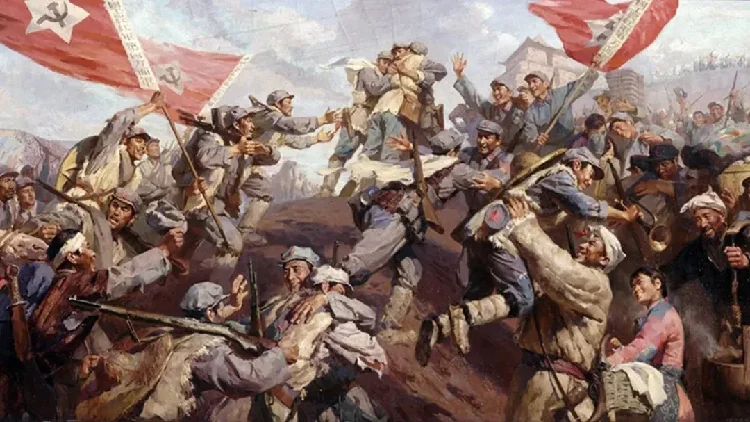
The Long March, a pivotal event in modern Chinese history, represents more than just a military retreat. It embodies a spirit of resilience, determination, and the unwavering pursuit of a better future. Over 90 years ago, the Chinese Red Army undertook this arduous journey, facing immense challenges like treacherous mountains, vast grasslands, and enemy blockades. Their survival and eventual success in this monumental undertaking have become a symbol of overcoming adversity. Today, China is embarking on a new era, facing contemporary challenges and opportunities that echo the spirit of the Long March. This new journey involves advancements in technology, manufacturing, and innovation, pushing the boundaries of what was once thought impossible. The determination to conquer obstacles, forge new paths, and move forward with confidence remains a constant theme.
This article will explore the enduring legacy of the Long March and how its spirit continues to guide China’s progress in the 21st century. We will examine the historical context of the Long March, its key achievements, and the values it instilled. Furthermore, we will analyze how these values are being applied to China’s current development, focusing on technological innovation, economic growth, and societal advancement. By understanding the past, we can better appreciate the trajectory of China’s future.
The Historical Significance of the Long March
The Long March was not a single event but a series of marches undertaken by various Communist armies of China between 1934 and 1936. The most famous of these was the march of the First Red Army, led by figures like Mao Zedong, Zhou Enlai, and Zhu De. This segment of the Long March covered approximately 12,500 kilometers (7,800 miles) across some of the most challenging terrain in China. The Red Army was fleeing from the Nationalist Party’s (Kuomintang) encirclement campaigns.
The journey was fraught with peril. Soldiers had to cross treacherous mountain ranges, including the snow-capped peaks of the Greater Khingan Range, and navigate vast, unforgiving grasslands where survival was a daily struggle. They faced constant attacks from Nationalist forces, as well as disease, starvation, and exhaustion. The Zunyi Conference, held during the Long March, was a critical turning point where Mao Zedong’s leadership was solidified, setting a new direction for the Communist Party.
Despite the immense losses, the Long March achieved several key objectives. It preserved the core leadership of the Communist Party, allowing it to regroup and continue its struggle. It also served as a powerful propaganda tool, spreading the Communist message to new regions and garnering support from the rural population. The resilience and sacrifice displayed by the Red Army soldiers became legendary, inspiring future generations and cementing the Long March as a foundational event in the history of the People’s Republic of China. The sheer scale of the undertaking and the spirit of perseverance demonstrated by those who participated have made it an enduring symbol of national strength and determination.
Echoes of the Long March in Modern China
The spirit of the Long March, characterized by perseverance, innovation, and a commitment to overcoming challenges, is deeply embedded in China’s modern development narrative. While the physical journey of the Red Army is a historical event, the metaphorical “new Long March” refers to the nation’s ongoing efforts to achieve its development goals and improve the lives of its citizens. This modern journey is marked by different, yet equally significant, challenges and opportunities, particularly in the realms of technology, economy, and global engagement.
One of the most striking parallels is the focus on overcoming seemingly insurmountable obstacles. Just as the Red Army navigated treacherous terrains, modern China is tackling complex issues such as poverty alleviation, environmental protection, and technological self-reliance. The drive to innovate and find solutions, even in the face of limited resources or external pressures, mirrors the resourcefulness displayed during the historical Long March. This can be seen in China’s rapid advancements in areas like artificial intelligence, renewable energy, and space exploration, where ambitious goals are pursued with a similar tenacity.
The concept of forging new paths is also central to China’s contemporary ambitions. The development of new economic zones, infrastructure projects like high-speed rail networks and advanced port facilities, and the Belt and Road Initiative all represent efforts to create new avenues for growth and connectivity. These initiatives, much like the Long March’s expansion into new territories, aim to open up possibilities and connect China with the rest of the world in novel ways. The construction of the Huajiang Grand Canyon Bridge, for instance, dramatically reduces travel time, symbolizing the overcoming of geographical barriers that once hindered progress, much like the Red Army’s efforts to cross rivers and mountains.
Furthermore, the Long March instilled a sense of collective purpose and national unity. This spirit is reflected in China’s current emphasis on national rejuvenation and the pursuit of shared goals. The dedication to achieving technological breakthroughs, such as in the field of humanoid robotics, or developing large-scale infrastructure like the Pinglu Canal, showcases a unified national effort towards progress. These projects require immense coordination, resources, and a shared vision, echoing the collective spirit that sustained the Red Army through its arduous journey. The success of these endeavors is seen not just as economic or technological achievements, but as validations of the enduring spirit of the Long March.
Technological Advancements and the New Journey
China’s contemporary journey is heavily defined by its rapid technological advancements, which are often framed as a continuation of the Long March’s spirit of innovation and overcoming limitations. In the historical Long March, the Red Army had to improvise and adapt with limited resources, demonstrating remarkable ingenuity to survive and achieve their objectives. Today’s China faces a different set of challenges, but the underlying principle of pushing boundaries and achieving the seemingly impossible remains.
The development of advanced manufacturing is a prime example. China has moved from being a global manufacturing hub for low-cost goods to a leader in sophisticated industries. This transition involves mastering complex production processes, investing heavily in research and development, and fostering a skilled workforce. Companies are not just producing goods; they are designing and engineering them, competing on quality and innovation. This requires a long-term vision and a willingness to invest in future technologies, much like the strategic planning that guided the Red Army through its campaigns.
Artificial intelligence (AI) is another frontier where China is making significant strides. The country is investing heavily in AI research, developing applications in various sectors, from healthcare and finance to transportation and public safety. The ambition is not merely to adopt AI but to lead in its development and application, creating intelligent systems that can solve complex problems and improve efficiency. This pursuit of AI leadership reflects a determination to be at the forefront of technological progress, mirroring the Red Army’s determination to break through enemy lines and secure their objectives. The opening ceremony of the 2nd World Humanoid Robot Games, showcasing advanced robotics, is a testament to this forward-looking approach.
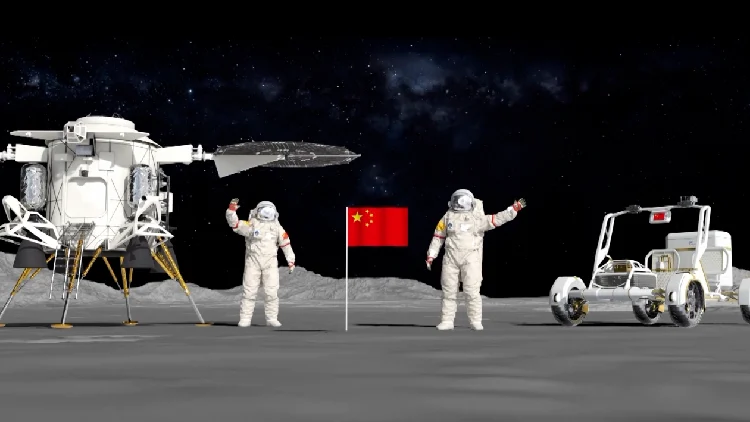
Space exploration is also a key area of focus. China’s ambitious space program, including its lunar and Mars missions, demonstrates a commitment to scientific exploration and technological prowess. These missions require immense technical expertise, international collaboration, and a long-term strategic vision. Successfully landing a rover on Mars or building a space station are feats that require overcoming significant engineering and scientific hurdles, embodying the spirit of tackling monumental tasks with dedication and skill.
The development of the Pinglu Canal, the world’s largest capacity canal, exemplifies China’s ability to undertake massive infrastructure projects that integrate advanced engineering and logistical planning. This canal, opened in September 2026, can accommodate 5,000-tonne vessels, significantly enhancing China’s inland waterway transportation capabilities. Such projects require not only engineering expertise but also a deep understanding of environmental impact, resource management, and economic benefits, showcasing a comprehensive approach to development that builds upon the foundational spirit of the Long March.
Infrastructure Development: Connecting the Nation
The Long March traversed vast and often undeveloped territories, highlighting the importance of connectivity and overcoming geographical barriers. Modern China’s infrastructure development continues this theme, focusing on building a highly interconnected nation that can facilitate economic growth and improve the quality of life for its citizens. The scale and ambition of these projects are often compared to the historical Long March, representing a new era of overcoming physical limitations.
High-speed rail networks are a prime example of this transformation. China has built the world’s largest high-speed rail system, connecting major cities and regions with unprecedented speed and efficiency. These networks not only facilitate travel and commerce but also symbolize the nation’s ability to undertake complex engineering projects on a massive scale. The development of these railways has shrunk distances, making it easier for people to move, goods to be transported, and businesses to operate across the country. This mirrors the Red Army’s need to traverse difficult terrains to connect different fronts and consolidate their efforts.
The expansion and modernization of ports and shipping networks are also crucial. China’s ports are vital hubs for international trade, and their development has been central to the country’s economic rise. Investments in advanced port technology, expanded capacity, and efficient logistics systems ensure that China remains a key player in global supply chains. These maritime arteries are the modern equivalent of the pathways the Red Army sought to secure and control, enabling the flow of resources and goods that are essential for national development.
The construction of bridges, like the Huajiang Grand Canyon Bridge, is another area where China is pushing engineering boundaries. This bridge significantly reduces travel time across the Huajiang Grand Canyon, an area that was once a major obstacle. Such projects not only improve transportation but also open up new economic opportunities for the regions they serve. They represent a tangible manifestation of overcoming natural barriers, a core theme of the Long March.
The Pinglu Canal, mentioned earlier, is another monumental infrastructure achievement. Its opening in September 2026 marked a significant milestone in China’s waterway development. Capable of handling large vessels, it enhances inland transportation capacity and connects different regions, facilitating trade and economic activity. This project underscores China’s commitment to developing comprehensive transportation systems that can support its growing economy and connect its vast territory. These infrastructure projects collectively represent a modern “Long March” of construction and connectivity, aimed at building a stronger, more integrated nation.
Economic Growth and Global Engagement
The Long March was not only a military campaign but also a political and economic undertaking that laid the groundwork for China’s future development. The spirit of self-reliance and strategic planning that characterized the Long March continues to inform China’s economic policies and its approach to global engagement. The nation’s economic transformation over the past few decades has been remarkable, lifting millions out of poverty and establishing China as a major global economic power.
China’s economic strategy has often involved setting ambitious goals and pursuing them with unwavering determination. The focus on industrial upgrading, technological innovation, and expanding domestic consumption are all part of a long-term vision for sustainable growth. This mirrors the strategic objectives of the Long March, which aimed not just to survive but to establish a foundation for future revolutionary success. The emphasis on developing new economic drivers, such as the digital economy and green technologies, reflects a forward-looking approach to economic development.
Global engagement is another key aspect of China’s modern journey. Initiatives like the Belt and Road Initiative aim to foster economic cooperation and connectivity on a global scale. This project, involving massive investments in infrastructure and trade links across continents, is often seen as a modern-day echo of the Long March’s expansive reach and ambition. It seeks to create new pathways for trade and development, much like the Red Army sought to establish new bases and expand its influence.
However, China’s global engagement also involves navigating complex geopolitical landscapes and international relations. The country’s rise has brought both opportunities and challenges, requiring a delicate balance of assertiveness and cooperation. The determination to secure its interests while contributing to global stability and development is a hallmark of its current foreign policy. This approach requires strategic thinking and adaptability, qualities that were essential for survival and success during the Long March.
The economic achievements of China are not just about growth figures; they are about improving the lives of its people. Poverty reduction has been a major success story, with hundreds of millions lifted out of extreme poverty. This focus on improving living standards and ensuring a better future for its citizens is a direct continuation of the ideals that motivated the Long March. The ongoing efforts to achieve common prosperity and address regional disparities are part of this broader commitment to building a more equitable society.
The Enduring Spirit of Resilience and Determination
The Long March stands as a powerful testament to human resilience and unwavering determination. The soldiers who embarked on this perilous journey faced unimaginable hardships, yet they persevered, driven by a shared vision and an unyielding commitment to their cause. This spirit of resilience is not confined to historical accounts; it continues to be a defining characteristic of China’s approach to development and its engagement with the world.
In contemporary China, this spirit is evident in the nation’s ability to overcome obstacles and adapt to changing circumstances. Whether it is responding to economic downturns, environmental challenges, or global uncertainties, China has consistently demonstrated a capacity for strategic planning and determined execution. The focus on long-term goals, rather than short-term gains, reflects a deep-seated commitment to building a sustainable and prosperous future.
The narrative of the Long March serves as a constant reminder of the importance of perseverance. It teaches that even in the face of overwhelming odds, a clear objective and unwavering resolve can lead to success. This lesson is particularly relevant in today’s complex and rapidly changing world, where challenges are often multifaceted and solutions require sustained effort.
Furthermore, the Long March fostered a sense of collective identity and shared purpose. The experience of enduring hardship together created strong bonds among the participants, reinforcing the idea that collective action is essential for achieving significant goals. This emphasis on unity and cooperation remains a cornerstone of China’s development strategy, encouraging citizens and institutions to work together towards common objectives.
As China continues its journey of modernization and global engagement, the spirit of the Long March serves as an enduring source of inspiration. It reminds the nation of its capacity to overcome challenges, innovate, and strive for a better future. The historical echoes of this epic journey resonate in the country’s ambitious projects, its technological advancements, and its unwavering commitment to progress, underscoring the timeless relevance of resilience and determination in shaping the destiny of a nation.
Conclusion
The Long March, a monumental feat of endurance and strategic brilliance, remains a powerful symbol in China’s historical narrative. Its legacy extends far beyond the military campaigns of the 1930s, embodying a spirit of resilience, determination, and the relentless pursuit of progress. This spirit has been instrumental in shaping modern China, guiding its development and inspiring its people to overcome challenges and forge new paths.
Today, China is engaged in a new “Long March,” a journey characterized by technological innovation, economic growth, and expanding global influence. The challenges are different, but the underlying principles of perseverance, adaptability, and collective effort are the same. From pioneering advancements in artificial intelligence and space exploration to building transformative infrastructure like high-speed rail and massive canals, China continues to demonstrate its capacity to achieve ambitious goals.
The enduring spirit of the Long March serves as a constant reminder that progress is often achieved through struggle and unwavering commitment. It underscores the importance of a long-term vision and the collective will to overcome obstacles. As China navigates the complexities of the 21st century, the lessons learned from this historic journey continue to provide a foundation for its ongoing development and its aspirations for the future. The echoes of the Long March are not just in history books; they are in the very fabric of China’s present and its vision for tomorrow.


Conversation
0 Comments