

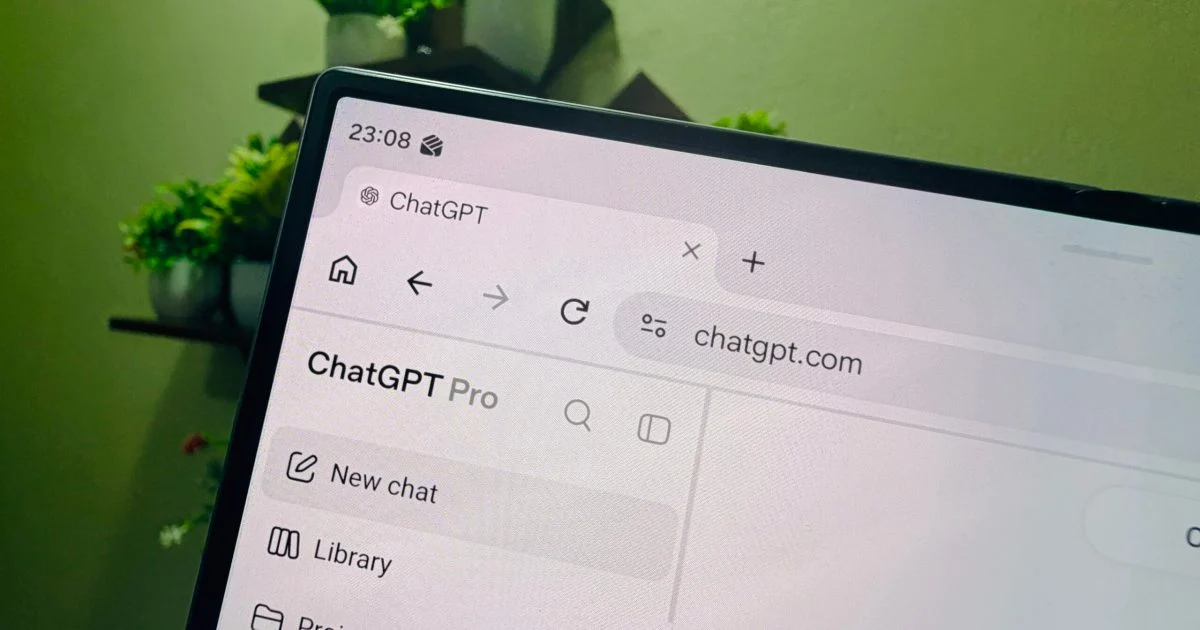
OpenAI Unifies ChatGPT: Merging Chat and Work for a Seamless AI Experience
The way we interact with artificial intelligence is constantly evolving, and OpenAI is at the forefront of this transformation. Recently, the company announced a significant update to its popular ChatGPT platform: the merging of its “Chat” and “Work” functionalities into a single, unified experience. This move aims to streamline user interaction, making it easier and more efficient to move between casual conversation, complex problem-solving, and creative project development. For users, this means a more intuitive interface where the lines between asking a question and getting a task done blur into a single, cohesive workflow.
This integration is more than just a cosmetic change; it represents a fundamental shift in how users can leverage AI. Previously, users might have found themselves switching between different tabs or modes within ChatGPT to handle distinct types of requests. The “Chat” tab was typically for general inquiries, brainstorming, and quick answers, while the “Work” tab was designed for more involved tasks like in-depth research, content creation, and even website building. By bringing these capabilities together, OpenAI is simplifying the user journey and unlocking new potentials for productivity and creativity. This article will explore the implications of this merger, examining how it changes the ChatGPT experience, what it means for different user types, and the broader impact on the AI landscape.
The Evolution of ChatGPT: From Chatbot to Work Assistant
ChatGPT’s journey began as a powerful conversational AI, capable of understanding and generating human-like text. Its ability to answer questions, explain concepts, and engage in dialogue quickly made it a widely adopted tool for information seeking and creative exploration. However, as users became more accustomed to its capabilities, they started pushing its boundaries, seeking to use it for more complex, project-oriented tasks. This led to the development of features and modes specifically designed for “work,” such as generating presentations, drafting code, or conducting detailed research.
The introduction of separate “Chat” and “Work” tabs was a response to this evolving user demand. It allowed OpenAI to tailor the interface and underlying functionalities for different types of interactions. The “Chat” tab remained focused on immediate, conversational responses, while the “Work” tab offered tools and features geared towards more sustained, task-based activities. This separation, while functional, could sometimes lead to a fragmented user experience. Users might need to remember which tab to use for a particular task, or they might find themselves copying and pasting information between the two modes.
The decision to merge these functionalities into a single experience is a logical next step in ChatGPT’s development. It reflects a growing understanding that the distinction between casual conversation and productive work is not always clear cut. Often, a simple question can lead to a complex project, or a work-related task might require some initial brainstorming and clarification. By unifying these aspects, OpenAI is creating a more fluid and adaptable AI assistant that can seamlessly transition between different modes of operation based on the user’s needs. This unified approach promises to make ChatGPT an even more indispensable tool for a wide range of users, from students and writers to developers and business professionals.
Streamlining the User Experience: What the Merger Means
The most immediate and noticeable impact of merging the Chat and Work tabs will be on the user interface and overall workflow. Instead of navigating between distinct sections, users will now have a single, integrated environment where they can initiate conversations, ask questions, and delegate tasks. This consolidation is designed to reduce friction and cognitive load, allowing users to focus more on their objectives and less on managing the tool itself.
Imagine a scenario where a user is brainstorming ideas for a new marketing campaign. In the previous setup, they might start by chatting with ChatGPT to generate initial concepts. If they then decide to develop a presentation based on those ideas, they would need to switch to the “Work” tab, potentially re-explaining their project or copying over the brainstormed content. With the merged experience, the user can continue the conversation seamlessly. They can ask ChatGPT to not only generate ideas but also to start building slides, research competitor strategies, or even draft initial copy for advertisements, all within the same interaction thread.
This unified approach also simplifies project management. Users will be able to bring files into the conversation and have ChatGPT work on them directly, without needing to switch contexts. This could involve uploading a document for summarization, a spreadsheet for analysis, or an image for editing suggestions. Furthermore, the ability to keep an eye on the progress of different projects within a single interface means less jumping between tabs and a clearer overview of ongoing work. This is particularly beneficial for users juggling multiple tasks or complex, multi-stage projects. The goal is to make ChatGPT feel less like a collection of separate tools and more like a single, intelligent assistant capable of handling a diverse range of requests.
Enhanced Capabilities: Files, Plugins, and Deeper Integration
The merger of Chat and Work is not just about interface changes; it also unlocks enhanced capabilities and deeper integration with other tools and data. The ability to bring files directly into the conversation is a significant advancement. This allows ChatGPT to act upon specific documents, datasets, or media provided by the user, moving beyond its general knowledge base to perform highly personalized tasks. For instance, a user could upload a draft of a report and ask ChatGPT to proofread it, suggest improvements, or even generate a summary. A business analyst could upload a CSV file and ask for data visualization or trend analysis.
Plugins, which have already expanded ChatGPT’s functionality, will likely play an even more integrated role in this unified environment. With a single interface, accessing and utilizing various plugins for specific tasks, such as booking flights, ordering groceries, or accessing specialized databases, becomes more straightforward. This means users can leverage the power of third-party applications directly within their AI conversations, creating a more powerful and versatile digital workspace.
The implications for content creation are particularly noteworthy. Users can now more easily ask ChatGPT to research a topic, outline an article, draft sections, and then refine the content based on feedback, all within the same continuous interaction. This iterative process, from initial idea to polished output, is significantly accelerated. For developers, the integration of coding assistance tools within this broader work environment means they can ask questions, get code snippets, debug issues, and even generate entire scripts or functions more fluidly. The combined experience aims to make ChatGPT a more potent and versatile tool for anyone looking to create, analyze, or build.
Codex and Usage Limits: What Developers Need to Know
For developers and users who rely on OpenAI’s Codex for programming tasks, the company has clarified that Codex will remain accessible, particularly within the desktop application. However, a significant change is coming to how usage limits are managed for subscribers. Starting in December, ChatGPT and Codex will share a unified usage allowance for Plus, Pro, and Business subscribers. This means that the amount of processing power and computational resources used for both conversational AI tasks and coding generation will count towards a single pool.
OpenAI suggests that for most users, this change will not be drastically noticeable. However, it implies that users who heavily utilize both ChatGPT for extensive conversations or content generation and Codex for complex coding projects might need to monitor their usage more closely. Depending on their specific patterns of use, some individuals might find their limits reset more frequently. This shared allowance is a move towards a more integrated resource management system for OpenAI’s suite of AI tools.
It’s important to note that regular “Instant” chats, which are typically simpler and less resource-intensive, will not count towards this shared allowance. This distinction suggests that OpenAI is trying to balance the demands of advanced AI tasks with the accessibility of basic conversational features. Developers who depend on Codex for their daily work should familiarize themselves with their subscription’s usage tiers and potentially adjust their workflows to stay within the new shared limits. This unified approach to resource allocation reflects the broader trend of integrating different AI functionalities into a cohesive platform.
Broader Implications for the AI Landscape
The move by OpenAI to merge its Chat and Work functionalities into a single ChatGPT experience is indicative of a larger trend in the artificial intelligence industry. Companies are increasingly focused on creating AI assistants that are not just specialized tools but comprehensive platforms capable of handling a wide array of user needs. This integration aims to make AI more accessible, intuitive, and powerful for everyday use.
Competitors have also been making similar strategic moves. For example, Anthropic, another major player in the AI space, recently merged its “Chat” and “Cowork” functions within its Claude platform. This suggests a consensus among leading AI developers that a unified interface is the future for advanced AI assistants. By consolidating features, companies can offer a more cohesive user experience, reduce the learning curve for new users, and unlock synergistic benefits between different AI capabilities.
This trend towards integration also has implications for how AI is perceived and adopted. When AI tools become more seamless and versatile, they are more likely to be integrated into daily workflows across various professions and personal tasks. This can lead to increased productivity, new forms of creativity, and a deeper reliance on AI as a collaborative partner. As AI models become more sophisticated, the ability to manage complex projects, process diverse data types, and interact naturally with users will become paramount. OpenAI’s decision to unify ChatGPT is a significant step in this direction, signaling a future where AI is an indispensable and seamlessly integrated part of our digital lives. The company’s website, openai.com, provides further details on their ongoing research and product developments.
Impact on Different User Groups
The unified ChatGPT experience will likely benefit a wide range of users in different ways. For students, the ability to seamlessly transition from asking for explanations of complex topics to requesting help with research papers or coding assignments will be invaluable. They can use ChatGPT to understand concepts, brainstorm essay ideas, get help structuring their arguments, and even receive feedback on their writing, all within a single, continuous interaction.
Professionals in creative fields, such as writers, marketers, and designers, will find the integrated workflow particularly advantageous. They can use ChatGPT to generate initial content ideas, draft marketing copy, create presentation outlines, and even get suggestions for visual elements. The ability to bring in files and work on projects iteratively without switching contexts will significantly speed up their creative processes. For example, a marketer could ask ChatGPT to analyze customer feedback data from an uploaded spreadsheet and then use the insights to draft a new campaign strategy, all in one session.
Developers and programmers will also see a boost in efficiency. While Codex remains a distinct tool, its integration into the broader ChatGPT workflow means that coding tasks can be more easily combined with documentation, problem-solving, and research. A developer might ask ChatGPT to explain a programming concept, then use Codex to generate a code snippet, and finally ask ChatGPT to help document that code or explain potential errors. This holistic approach to development tasks can lead to faster problem resolution and more robust code.
Small business owners and entrepreneurs can leverage the unified platform for a variety of tasks, from drafting business plans and creating marketing materials to analyzing sales data and managing customer inquiries. The simplified interface and enhanced capabilities mean that even those without extensive technical expertise can utilize advanced AI tools to grow their businesses. The overall goal is to make powerful AI capabilities accessible and practical for everyone, regardless of their technical background or specific needs.
Future Outlook and Potential Developments
The unification of Chat and Work within ChatGPT is likely just the beginning of a more integrated and intelligent AI future. As AI models continue to advance, we can expect further refinements and expansions of these capabilities. One potential area of development could be even more sophisticated project management features, allowing users to delegate complex, multi-step projects with greater autonomy. This might involve AI agents that can break down large tasks into smaller, manageable steps, coordinate with other AI tools or even human collaborators, and report back on progress with detailed insights.
Another area for growth could be enhanced personalization and context awareness. As ChatGPT becomes more integrated into a user’s workflow, it could develop a deeper understanding of their individual preferences, working styles, and ongoing projects. This could lead to more proactive assistance, where the AI anticipates user needs and offers relevant suggestions or solutions before being explicitly asked. Imagine an AI that learns your writing style and can help you draft emails or reports that sound authentically like you, or an AI that understands your project deadlines and proactively reminds you of upcoming tasks.
The integration of multimodal capabilities—the ability to understand and generate not just text but also images, audio, and video—is another frontier. While some of these capabilities are already emerging, a unified platform could allow for seamless interaction across different media types. Users might be able to describe an image they want to create, have ChatGPT generate it, and then ask it to write a descriptive caption or even a short video script based on that image, all within the same conversation. The ongoing evolution of AI promises to make these tools even more powerful and indispensable in our daily lives.
Conclusion
OpenAI’s decision to merge the Chat and Work functionalities into a single ChatGPT experience marks a significant step forward in the evolution of artificial intelligence assistants. By creating a unified interface, the company is simplifying user workflows, enhancing productivity, and unlocking new possibilities for creativity and problem-solving. This integration streamlines the process of moving between conversational interactions and complex task execution, making ChatGPT a more intuitive and powerful tool for a diverse user base.
The enhanced capabilities, including the ability to directly incorporate files and leverage plugins within a single environment, further solidify ChatGPT’s position as a versatile digital assistant. While changes to usage limits for Codex subscribers require attention, the overall direction points towards a more cohesive and integrated AI ecosystem. As the AI landscape continues to evolve, this move by OpenAI, mirroring similar strategies by competitors, signals a clear trend towards unified AI platforms that aim to be indispensable partners in both our personal and professional lives. The future of AI interaction is increasingly about seamless integration and expanded capabilities, and the unified ChatGPT experience is a compelling glimpse into that future.

Conversation
0 Comments