

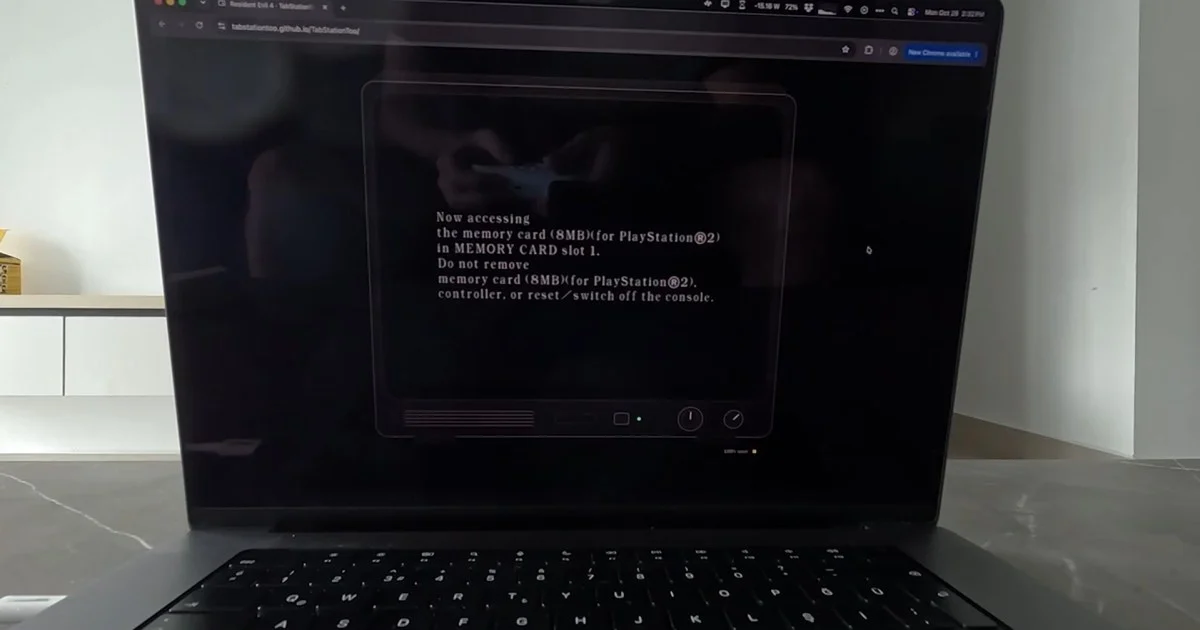
The idea of playing classic PlayStation 2 games on your computer without needing to install complex software might sound like science fiction. Yet, thanks to the innovative work of developers using advanced AI tools, this is becoming a reality. A project called TabStationToo has successfully brought a PlayStation 2 emulator, PCSX2, into a web browser. This means you can potentially run beloved PS2 titles like Grand Theft Auto: San Andreas directly in a browser tab, a significant step in making emulation more accessible.
This breakthrough was largely powered by Claude, an AI assistant that helped the developers translate the intricate code of the PCSX2 emulator into a format that web browsers can understand and execute. The process involved creating WebAssembly modules and adapting the emulator’s graphics renderer to work with WebGPU, a modern web standard for graphics. While still in its experimental stages, TabStationToo demonstrates the growing potential of AI in software development and opens up new avenues for experiencing retro gaming.
This development is not just about convenience; it represents a leap in how we can interact with older gaming systems. By moving emulation to the browser, it removes barriers like the need for powerful hardware or complicated installation steps. This article will explore how this PS2 browser emulator was created, how well it performs, and what it means for the future of retro gaming accessibility.
The Genesis of TabStationToo: AI-Assisted Browser Emulation
The creation of TabStationToo is a testament to the collaborative power of human ingenuity and artificial intelligence. Two developers, identified by their Reddit usernames u/yousriii and u/aegyptiacus11, embarked on a project to bring the established open-source PlayStation 2 emulator, PCSX2, into the digital space of a web browser. Their primary tool in this ambitious endeavor was Claude, an advanced AI language model.
The core challenge was to take the existing PCSX2 emulator, which is designed to run on desktop operating systems, and adapt it for execution within a web browser environment. This is no small feat, as browsers have specific limitations and use different technologies for running code and rendering graphics compared to native desktop applications. The developers leveraged Claude to help overcome these technical hurdles.
How Claude Facilitated the Development
PCSX2 works by translating the complex instructions of the PS2’s original processor into code that a computer’s CPU can understand and run. This process is known as emulation. To make this work in a browser, the developers needed to create versions of these translations that could be executed by WebAssembly. WebAssembly is a low-level binary format that web browsers can run at near-native speeds, making it ideal for performance-intensive tasks like emulation.
According to the developers, Claude played a significant role in writing these WebAssembly replacements. It assisted in adapting the emulator’s graphics rendering pipeline to use WebGPU. WebGPU is a modern web API that provides access to the computer’s graphics processing unit (GPU) for high-performance graphics and computation, which is essential for rendering complex 3D graphics from PS2 games. The AI’s ability to generate code and suggest solutions was instrumental in bridging the gap between the desktop emulator and the browser environment.
The developers also implemented automated testing to ensure the accuracy of the changes made. These tests compare the output of the browser-based emulator against the original PCSX2 to catch any errors or regressions introduced during the adaptation process. This rigorous testing, combined with Claude’s coding assistance, allowed them to build upon the extensive work already done by the PCSX2 community over more than two decades.
Building on Decades of Work
It’s important to acknowledge that TabStationToo doesn’t start from scratch. It builds upon the foundation laid by the PCSX2 project, which has been a labor of love for countless developers and contributors for over 20 years. PCSX2 is one of the most accurate and well-known PS2 emulators available for desktop computers. The TabStationToo team explicitly credits the PCSX2 community for their foundational work.
The PCSX2 emulator itself has a rich history and has been instrumental in preserving the legacy of the PlayStation 2, a console that boasted a vast library of groundbreaking games. The advancements made in PCSX2 over the years, such as its instruction set translation and graphics rendering techniques, are what made the browser adaptation possible. The developers essentially took this mature and robust emulator and found ways to make it compatible with the web.
Furthermore, the PCSX2 project has also influenced other emulation efforts. For instance, it underpins PS2SX2, a project that allows PS2 games to be played on jailbroken PlayStation 5 consoles. This highlights the ongoing relevance and adaptability of the PCSX2 codebase and the broader impact of its development community.
Performance and Gameplay Experience
The most pressing question for any emulator is how well it performs. For TabStationToo, the initial results are promising, though still experimental. The developers have reported near full-speed performance in many games on their testing machines, which include a high-end M1 Max Mac and a Linux system equipped with a Ryzen 7 7840U processor. This suggests that the WebAssembly and WebGPU implementations are efficient enough to handle the demands of PS2 emulation.
During testing by Digital Trends, games like Final Fantasy XII and Burnout were played on a GMKtec M8 mini PC. Both titles ran flawlessly, indicating that the emulator can deliver a smooth and enjoyable experience for certain games on capable hardware. This is a significant achievement, as the PlayStation 2 was known for its powerful Emotion Engine processor, which presented unique emulation challenges.

However, the developers also acknowledge that performance can vary. Heavier scenes in games, which often involve complex graphics or numerous on-screen elements, can still cause slowdowns. This is a common characteristic of emulation, where the performance is heavily dependent on the power of the host machine and the specific demands of the software being emulated.
Factors Influencing Performance
Several factors contribute to the performance of TabStationToo:
- Host Machine Hardware: The processing power (CPU), graphics capabilities (GPU), and available RAM of the computer running the browser are critical. More powerful hardware will naturally yield better performance.
- Game Complexity: Different PS2 games have varying graphical and processing requirements. Games that pushed the PS2 hardware to its limits will be more challenging to emulate at full speed.
- Web Browser and GPU Drivers: The efficiency of the web browser (Chrome or Edge are recommended) and the up-to-date status of the computer’s GPU drivers can also impact performance. WebGPU is a relatively new technology, and its implementation can vary.
- Emulator Optimizations: While Claude assisted in the initial porting, ongoing optimizations by the developers are crucial for improving frame rates and reducing stuttering.
The developers are actively working on improving performance and expanding compatibility. Their goal is to make the emulator as smooth and accessible as possible for a wide range of users and games.
Tested Games and Future Potential
The games tested so far, such as Grand Theft Auto: San Andreas, Final Fantasy XII, and Burnout, represent a diverse range of genres and graphical demands. The success with these titles suggests that TabStationToo has the potential to run a significant portion of the PS2 library. However, it’s important to manage expectations. Not every game will run perfectly, and some may remain unplayable due to specific hardware emulation requirements or bugs.
The project’s open-source nature means that the community can contribute to its development, further improving performance and fixing issues. As WebAssembly and WebGPU technologies mature and browser support becomes more widespread, the capabilities of browser-based emulators like TabStationToo are likely to increase. This could pave the way for emulating even more demanding consoles in the future, all within the convenience of a web browser.
What You Need to Play PS2 Games in Your Browser
TabStationToo offers a free and open-source solution for playing PlayStation 2 games, but it does require users to provide certain components themselves. This approach aligns with legal and ethical considerations surrounding game emulation, as it avoids distributing copyrighted material.
To get started with TabStationToo, you will need two main things:
- A PlayStation 2 BIOS File: The BIOS (Basic Input/Output System) is essential firmware that the PS2 console uses to boot up and manage its hardware. Emulators need a copy of this BIOS to function correctly. Crucially, users must legally obtain this BIOS file by dumping it from their own physical PlayStation 2 console. Distributing or downloading BIOS files from unauthorized sources is illegal.
- Game Disc Images: You will also need digital copies of the PS2 games you wish to play. These are typically in formats like ISO, BIN, or IMG. Similar to the BIOS, these game images should be created from physical game discs that you legally own.
The project emphasizes that these necessary files (BIOS and game images) remain on your computer and are not uploaded or stored by the TabStationToo service. This ensures user privacy and adherence to copyright laws.
Supported Platforms and Controls
Currently, TabStationToo is designed to run on desktop web browsers. The developers recommend using Google Chrome or Microsoft Edge for the best experience. Support for mobile devices like smartphones and tablets is not yet available, likely due to the increased performance demands and different input methods required.
For controls, the project supports both keyboard and gamepad input. This means you can use your computer’s keyboard or connect a compatible USB or Bluetooth gamepad to play your games. This flexibility allows users to choose their preferred input method.
Memory card saves and save states are also supported. Memory card saves function like they would on a real PS2, allowing you to save your game progress within the game itself. Save states, on the other hand, are a feature of emulators that allow you to instantly save and load your game at any point, regardless of the game’s internal saving system. This can be incredibly useful for overcoming difficult sections or simply for convenience.
Getting Started and Recommendations
If you’re interested in trying out TabStationToo, here’s a general guideline:
- Obtain Legal BIOS and Game Files: Ensure you have legally acquired your PS2 BIOS file and ISO images of games you own.
- Access TabStationToo: Navigate to the project’s website or repository (details would typically be found via the Reddit thread mentioned in the research).
- Configure the Emulator: Follow any on-screen instructions to load your BIOS file and select your game.
- Set Up Controls: Configure your keyboard or gamepad settings within the emulator.
- Play: Launch your game and enjoy.
It’s advisable to start with one game on your setup before assuming your entire collection will run just as smoothly. Performance can vary significantly between titles, and testing individual games is the best way to gauge compatibility and identify potential issues. The experimental nature of the project means that users should be prepared for occasional bugs or performance hiccups.
The Role of AI in Modern Software Development
The success of TabStationToo highlights a broader trend: the increasing integration of Artificial Intelligence, particularly large language models like Claude, into the software development lifecycle. AI is no longer just a theoretical concept; it’s becoming a practical tool that can assist developers in various stages of creating and refining software.
AI tools can help with:
- Code Generation: Generating boilerplate code, writing functions based on descriptions, or even suggesting entire code structures.
- Debugging and Error Detection: Identifying potential bugs, explaining error messages, and suggesting fixes.
- Code Translation and Porting: As seen with TabStationToo, AI can assist in translating code between different programming languages or adapting it for new environments, like moving from a desktop application to a web browser.
- Documentation: Generating documentation for code, explaining complex algorithms, or summarizing existing codebases.
- Testing: Assisting in writing automated tests or analyzing test results.
- Learning and Exploration: Helping developers understand new technologies or explore different approaches to solving a problem.
The developers of TabStationToo explicitly stated that Claude “did most of the programming” while they focused on directing the work and testing the outcomes. This indicates a shift towards a more collaborative model between human developers and AI assistants, where AI handles much of the repetitive or complex coding tasks, freeing up humans to focus on higher-level design, architecture, and problem-solving.
Implications for the Future of Gaming and Technology
The implications of AI-assisted development extend far beyond emulation. In game development, AI can accelerate the creation of game assets, write dialogue, design levels, and even help balance game mechanics. This could lead to faster development cycles, more ambitious game projects, and potentially lower development costs.
For accessibility, AI-powered tools can help create more inclusive software. For example, AI could assist in developing assistive technologies for gamers with disabilities or help translate complex technical information into more understandable formats.
The ability to bring complex applications like emulators to new platforms, such as web browsers, through AI assistance democratizes access to technology. It lowers the barrier to entry for both developers and users, allowing more people to experience and contribute to technological advancements.
However, it’s also important to consider the ethical and practical aspects. Reliance on AI for coding raises questions about intellectual property, the potential for AI-generated code to contain subtle errors, and the need for human oversight to ensure quality and security. The developers of TabStationToo recognized this by emphasizing their role in directing the work and rigorously testing the results.
The Future of Emulation and Accessibility
TabStationToo represents a significant milestone in the ongoing quest to make classic gaming experiences more accessible. By leveraging AI and modern web technologies, it pushes the boundaries of what’s possible with browser-based emulation. The project demonstrates that even complex software, like a PlayStation 2 emulator, can be adapted for the web, opening up possibilities for a vast library of games to be played without dedicated installations.
The success of this project has several key implications for the future of emulation and accessibility:
- Increased Accessibility: As emulation moves to the browser, it becomes accessible to a wider audience. Users won’t need powerful gaming PCs or complex setup procedures. All they might need is a modern web browser and an internet connection. This is particularly beneficial for individuals who may not have the technical expertise or financial resources for dedicated gaming hardware.
- Preservation of Gaming History: Emulators play a crucial role in preserving video game history. By making games playable on modern hardware, they ensure that these cultural artifacts can be experienced by future generations. Browser-based emulation further enhances this by making preservation efforts more widely available.
- Innovation in Development Tools: The use of AI like Claude in the development process signals a new era of software creation. AI can act as a powerful co-pilot for developers, accelerating development and enabling the creation of more sophisticated applications. This could lead to more innovative projects in emulation and beyond.
- Evolution of Web Technologies: The project’s reliance on WebAssembly and WebGPU highlights the growing power and capability of web browsers. These technologies are enabling the web to handle increasingly demanding applications, blurring the lines between desktop and web software.
While TabStationToo is still experimental, its achievements are undeniable. It showcases the potential for browser-based emulation to become a mainstream way to enjoy retro games. As the technology matures and AI continues to evolve as a development tool, we can expect to see even more ambitious projects that bring classic gaming experiences to our fingertips, all through the simple interface of a web browser. The journey of TabStationToo is a compelling example of how innovation, AI, and community effort can unlock new ways to experience the games we love.
Conclusion
The development of TabStationToo, a PlayStation 2 emulator running in a web browser with the assistance of AI like Claude, marks a significant advancement in the accessibility of retro gaming. This project has successfully translated the complex PCSX2 emulator into WebAssembly and adapted its graphics for WebGPU, allowing users to play PS2 games directly within their browser. While performance can vary and users must provide their own legally obtained BIOS and game files, the ability to run titles like Grand Theft Auto: San Andreas and Final Fantasy XII without desktop installations is a remarkable achievement.
This endeavor not only highlights the power of AI in modern software development, acting as a coding assistant to overcome technical hurdles, but also underscores the ongoing evolution of web technologies. By building on decades of work by the PCSX2 community and embracing new web standards, TabStationToo paves the way for a future where classic gaming experiences are more readily available than ever before. It demonstrates a clear path toward greater accessibility in emulation, ensuring that the rich history of video games can be preserved and enjoyed by a wider audience.



Conversation
0 Comments