

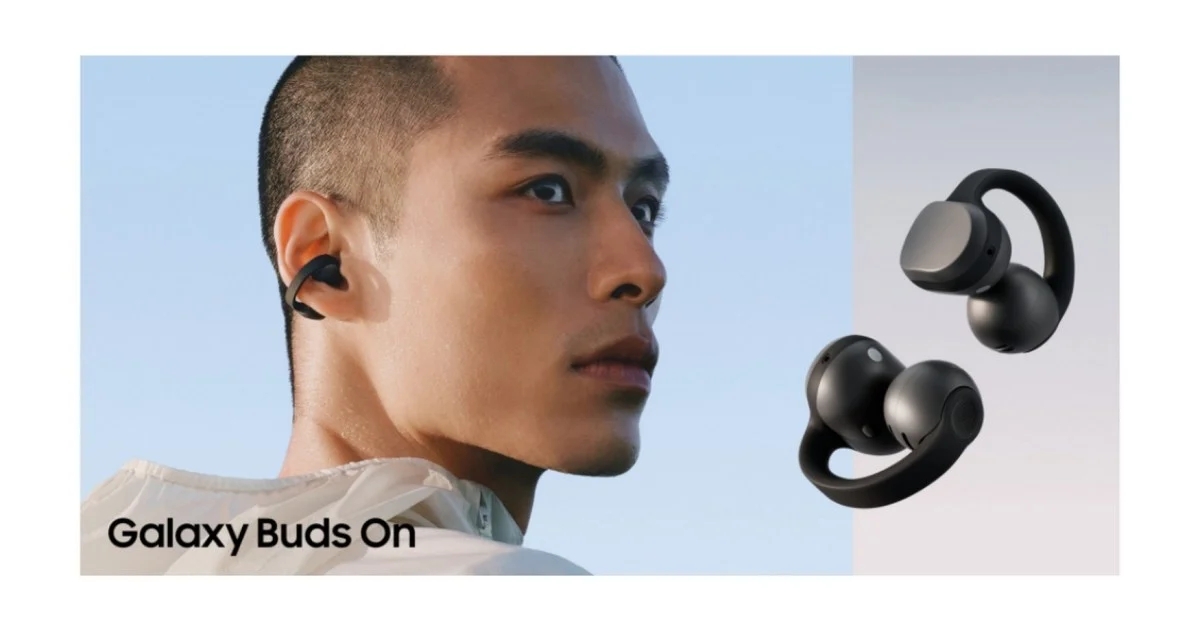
Samsung Galaxy Buds On: An Open-Ear Alternative for Aware Listening
Samsung has introduced a new contender in the crowded earbud market with the Galaxy Buds On. These aren’t your typical earbuds that seal off your ear canals. Instead, they are designed to offer an open-ear listening experience, allowing users to stay aware of their surroundings while enjoying audio. This approach targets a specific need for individuals who find traditional earbuds uncomfortable or require situational awareness during activities like running, commuting, or working in shared spaces. However, this innovative design comes at a premium price, positioning the Galaxy Buds On as a distinct choice with a unique set of trade-offs.
The Galaxy Buds On are priced at $229, making them a significant investment. This cost is notably close to Samsung’s flagship Galaxy Buds 4 Pro, which retail for $250. Given this proximity in price, it’s important to understand what the Buds On offer and where they differ from more conventional, noise-isolating earbuds. While they may lack active noise cancellation and offer a less robust bass response compared to their pricier counterparts, their core appeal lies in their ability to keep users connected to their environment. This analysis will explore the design, features, and intended use cases of the Samsung Galaxy Buds On, helping potential buyers understand if this open-ear approach is the right fit for their audio needs.
Design and Comfort: A Focus on Open Listening
Samsung has invested considerable effort into the design of the Galaxy Buds On, aiming to create a comfortable and secure fit for an open-ear experience. The company states that it analyzed over 119 million ear data points to refine the design, a testament to their commitment to user comfort. Each earbud is remarkably lightweight, weighing just 6.65 grams, which should contribute to a barely-there feel during extended wear. This is a critical factor for earbuds designed for active use or for those who experience discomfort with in-ear designs.
The earbuds feature an 11.3mm TwinBoost speaker, which aims to deliver quality sound without obstructing the ear canal. Open-ear designs often face challenges with sound leakage and bass performance. Samsung is attempting to mitigate sound leakage with its Audio Leakage Reduction technology. This system works by emitting reversed sound waves to cancel out some of the outgoing audio, aiming to keep your listening more private. While this technology is promising, its effectiveness can vary depending on ambient noise levels and the volume at which the earbuds are used.
The fit of the Galaxy Buds On is achieved through a clip-on mechanism. This design allows the earbuds to rest on the outer ear, leaving the ear canal open. This is a key differentiator from traditional earbuds that insert into the ear canal. For many users, this can be a significant comfort improvement, especially for those who find silicone tips irritating or who experience pressure from in-ear designs. The clip-on style also means that the earbuds are less likely to cause fatigue associated with prolonged insertion.
Audio Features and Sound Quality
While the Galaxy Buds On prioritize awareness, they still aim to deliver a satisfying audio experience. The 11.3mm TwinBoost speaker is designed to provide clear sound for music, podcasts, and calls. However, it’s important to manage expectations regarding bass response. Open-ear designs inherently struggle to produce the deep, resonant bass that in-ear or over-ear headphones can achieve because they do not create a seal within the ear. Samsung acknowledges this limitation, and while the Buds On will offer audio, they are unlikely to satisfy audiophiles seeking powerful low-end frequencies.
The Audio Leakage Reduction technology is a notable feature for an open-ear design. By using reversed sound waves, Samsung attempts to minimize the amount of sound that escapes the earbuds. This is important for maintaining some level of privacy and reducing disturbance to those around the wearer. The effectiveness of this technology will likely depend on the volume settings and the surrounding environment. At higher volumes, some sound leakage is almost inevitable with any open-ear device.
An experimental feature mentioned is automatic volume adjustment based on surrounding noise. This function, requiring compatible Galaxy software, aims to intelligently raise or lower the earbud volume to compensate for ambient sounds. For instance, if you are in a noisy environment like a busy street, the earbuds would automatically increase the volume to ensure your audio remains audible. Conversely, in a quieter setting, the volume would decrease to prevent unnecessary loudness and potential distraction. This feature, if well-implemented, could significantly enhance the user experience by providing a more consistent listening volume without manual adjustments.
The earbuds are powered by Qualcomm’s Snapdragon S7 Gen 1 Sound Platform. This indicates that they are built on modern audio processing technology, which can contribute to better sound quality, power efficiency, and connectivity. This platform likely supports advanced Bluetooth codecs and features that enhance the overall audio performance and reliability of the Galaxy Buds On.
Battery Life and Durability
The Samsung Galaxy Buds On offer impressive battery life, designed to keep up with a full day of use. Users can expect up to 9.5 hours of continuous playback on a single charge. This is a substantial amount of listening time, making them suitable for long commutes, workdays, or extended outdoor activities. When the earbuds’ battery runs low, the charging case provides additional power. With the charging case, the total playback time extends to an impressive 38 hours. This means users can go for several days without needing to find a power outlet, as long as they can recharge the case periodically.
In terms of durability, the Galaxy Buds On are rated with IP54 dust and splash resistance. This rating indicates that they offer a good level of protection against dust ingress and can withstand splashes of water. This makes them suitable for use in various conditions, including light rain or during workouts where sweat might be a concern. However, the IP54 rating means they are not waterproof and should not be submerged in water. This level of protection is generally sufficient for everyday use and light outdoor activities, providing peace of mind for users who don’t want to worry about minor environmental exposure.
The inclusion of a charging case is standard for true wireless earbuds, and it serves a dual purpose: recharging the earbuds and providing a protective storage solution. The case is likely compact and portable, designed to fit easily into a pocket or bag. The ability to extend the total listening time to 38 hours with the case is a significant advantage, reducing the frequency of charging and ensuring that the earbuds are ready when needed.
Smart Features and Connectivity
The Samsung Galaxy Buds On are equipped with advanced features designed to enhance usability, particularly for users within the Samsung ecosystem. The earbuds feature three microphones and a voice pickup sensor. This setup is crucial for clear voice calls, as it helps to isolate the user’s voice from background noise. By focusing on the voice pickup, the earbuds aim to ensure that calls are clear and intelligible, even in less-than-ideal environments.
For compatible Galaxy devices, users can interact with Gemini Live using voice commands. Gemini Live is Samsung’s AI assistant, and its integration with the earbuds allows for hands-free control and information access. This could include asking questions, setting reminders, or controlling smart home devices, all through voice commands directed at the earbuds. This feature adds a layer of convenience, allowing users to stay engaged with their tasks without needing to pull out their phone.
The earbuds also support quick voice memos, enabling users to record short audio notes on the go. This can be incredibly useful for capturing ideas, to-do lists, or important information that comes to mind unexpectedly. The ability to do this hands-free and without accessing a phone streamlines the process of note-taking.
Furthermore, head gestures can be used to answer or reject calls on compatible Galaxy devices. This intuitive control method allows users to manage incoming calls with simple head movements, adding another layer of convenience and reducing the need for physical interaction with their phone or earbuds. For example, a nod might answer a call, while shaking the head could reject it.
It’s important to note that some of these advanced features require newer versions of Samsung’s One UI software. This means that users with older Galaxy devices or those who do not update their software regularly might not have access to the full range of smart features. This dependency on software updates highlights Samsung’s strategy of integrating its hardware and software for a more cohesive user experience within its own product ecosystem.
Use Cases and Target Audience
The Samsung Galaxy Buds On are designed with specific use cases in mind, catering to individuals who prioritize situational awareness and comfort over deep immersion or active noise cancellation. The primary appeal lies in their open-ear design, which allows users to hear their surroundings clearly. This makes them an excellent choice for:
- Runners and Cyclists: Athletes who train outdoors often need to be aware of traffic, other people, and potential hazards. The Galaxy Buds On allow them to listen to music or podcasts while maintaining a clear perception of their environment, enhancing safety.
- Commuters: Individuals who use public transportation or walk through busy urban areas can benefit from staying aware of announcements, traffic sounds, and potential dangers. The open-ear design ensures they don’t miss important auditory cues.
- Office Workers or Students in Shared Spaces: For those who work or study in environments where they need to be accessible to colleagues or classmates, or simply want to avoid feeling completely isolated, these earbuds offer a way to enjoy audio without shutting out the world.
- Individuals Experiencing Ear Discomfort: Some people find traditional earbuds uncomfortable due to the pressure they exert on the ear canal or irritation from silicone tips. The clip-on, open-ear design of the Galaxy Buds On can provide a much more comfortable listening experience for these users.
- Those Who Prefer Ambient Sound: Some users simply prefer not to have their ears completely sealed off, enjoying the ability to hear ambient sounds alongside their audio. This can create a more natural and less intrusive listening experience.
The target audience is therefore quite specific. It’s not for the audiophile seeking the most immersive sound or the traveler looking to block out airplane noise. Instead, it’s for the active individual, the aware commuter, or the comfort-seeker who wants to integrate audio into their daily life without compromising their connection to the world around them. The premium price point suggests that Samsung is targeting consumers who value this specific functionality and are willing to pay for a well-designed, feature-rich solution from a reputable brand.
Comparison to Traditional Earbuds
The Samsung Galaxy Buds On represent a departure from the standard earbud design, and understanding these differences is key to appreciating their value. Traditional earbuds, whether true wireless like the Galaxy Buds 4 Pro or wired models, typically feature an in-ear design. This design aims to create a seal within the ear canal, which offers several advantages:
- Passive Noise Isolation: The seal naturally blocks out a significant amount of ambient noise, allowing the listener to focus on their audio.
- Enhanced Bass Response: The sealed environment allows for better resonance of low frequencies, resulting in richer and deeper bass.
- Better Sound Quality for Some: For many, the isolation and bass response contribute to a more immersive and detailed listening experience.
However, this design also comes with drawbacks:
- Discomfort: Some users find in-ear earbuds uncomfortable for extended periods, experiencing pressure, ear fatigue, or irritation.
- Lack of Situational Awareness: The complete isolation can be a safety concern for outdoor activities or in environments where hearing surroundings is important.
- Hygiene Concerns: The insertion into the ear canal can sometimes lead to hygiene issues if not cleaned properly.
The Galaxy Buds On address these drawbacks directly:
- Comfort: The clip-on design rests on the outer ear, avoiding insertion into the ear canal, which can be more comfortable for many.
- Situational Awareness: The open-ear design allows ambient sounds to be heard clearly, enhancing safety and connection to the environment.
- Reduced Ear Canal Issues: By not entering the ear canal, they may alleviate some common discomforts associated with traditional earbuds.
The trade-offs for the Buds On are evident, particularly concerning sound quality and noise isolation. They do not offer active noise cancellation, a feature increasingly common in premium earbuds, which uses microphones to actively counteract external noise. This means that in loud environments, the audio from the Buds On might be drowned out more easily than from noise-canceling earbuds. Furthermore, as mentioned, the bass response is likely to be less impactful due to the open design.
The price also places them in a competitive space. At $229, they are priced very close to flagship earbuds that offer active noise cancellation, superior bass, and often higher water resistance ratings. This means that potential buyers must weigh the benefit of open-ear listening against the features they might be sacrificing compared to other high-end options. The decision hinges on whether the unique advantages of the Galaxy Buds On align with the user’s specific needs and priorities.
Technical Specifications and Performance
The Samsung Galaxy Buds On are built with modern audio technology to deliver their unique listening experience. At their core is Qualcomm’s Snapdragon S7 Gen 1 Sound Platform. This platform is designed to provide efficient audio processing, reliable connectivity, and support for advanced audio features. It’s a sign that Samsung is using a robust chipset to power the earbuds, aiming for good performance in sound quality, power management, and Bluetooth stability.
Key Technical Specifications:
- Speaker: 11.3mm TwinBoost speaker
- Weight: 6.65 grams per earbud
- Battery Life (Earbuds): Up to 9.5 hours of playback
- Total Battery Life (with case): Up to 38 hours
- Durability Rating: IP54 dust and splash resistance
- Connectivity: Bluetooth (specific version not detailed, but expected to be modern)
- Microphones: Three microphones plus a voice pickup sensor for calls
- Chipset: Qualcomm Snapdragon S7 Gen 1 Sound Platform
- Special Features: Audio Leakage Reduction, Automatic Volume Adjustment (experimental), Gemini Live integration, head gesture controls (on compatible devices)
The 9.5-hour battery life for the earbuds alone is quite impressive for a true wireless form factor, especially for an open-ear design which might require more power to drive the speakers without a seal. Extending this to 38 hours with the charging case provides ample power for multiple days of use, reducing the need for frequent charging. This is a significant advantage for users who are often on the go and may not have easy access to power outlets.
The IP54 rating offers a decent level of protection. It means the earbuds are protected against dust that could interfere with their operation and can withstand water splashes from any direction. This makes them suitable for workouts where sweat is a factor, or for use in light rain. However, they are not designed for submersion, so users should avoid exposing them to heavy rain or water activities.
The integration with Qualcomm’s platform suggests that the earbuds will likely support modern Bluetooth features, such as low latency for video and gaming, and potentially higher quality audio codecs. The specific codecs supported would influence the fidelity of the audio streamed from a source device.
The experimental automatic volume adjustment feature, while promising, highlights that some functionalities might evolve over time with software updates. This is common for smart audio devices, where firmware updates can introduce new features or improve existing ones. Users who own compatible Galaxy devices will be able to explore these advanced capabilities as they become available and refined.
Price and Value Proposition
The Samsung Galaxy Buds On enter the market with a price tag of $229. This positions them as a premium audio accessory, directly competing with other high-end earbuds. The value proposition of the Galaxy Buds On is centered around their unique open-ear design and the benefits it offers, rather than competing directly on features like active noise cancellation or bass depth.
Key aspects of their value proposition include:
- Situational Awareness: For users who need to stay aware of their surroundings, this is the primary selling point. Runners, cyclists, and commuters who prioritize safety will find significant value in this feature.
- Comfort: For individuals who find traditional earbuds uncomfortable, the Galaxy Buds On offer a potentially more pleasant long-term listening experience.
- Samsung Ecosystem Integration: For owners of Samsung Galaxy devices, features like Gemini Live integration and head gesture controls offer a seamless and convenient user experience.
- Extended Battery Life: The long playback times for both the earbuds and the charging case provide excellent endurance for daily use.
However, the high price also invites comparison with other premium earbuds that offer different sets of features. For $250, one can purchase the Samsung Galaxy Buds 4 Pro, which include active noise cancellation, a more robust sound profile, and potentially higher water resistance. Other brands also offer noise-canceling earbuds in a similar price range, which might be more appealing to users who prioritize immersive audio and the ability to block out external noise.
The value of the Galaxy Buds On is therefore highly subjective and dependent on individual needs. If situational awareness and comfort are paramount, and the user is willing to accept a less powerful bass response and the absence of active noise cancellation, then the $229 price might be justified. If, however, the priority is on the most immersive audio experience or the ability to silence the outside world, then other options in the market might offer better value for money. Samsung is betting that there is a significant enough market segment that prioritizes the open-ear experience enough to warrant this premium price.
Conclusion: A Niche Product for Specific Needs
The Samsung Galaxy Buds On represent a deliberate choice by Samsung to cater to a specific segment of the audio market. At $229, they are not an impulse purchase, and their value is intrinsically tied to their unique open-ear design. This design prioritizes situational awareness and comfort, making them a compelling option for runners, cyclists, commuters, and individuals who find traditional earbuds uncomfortable. The ability to listen to music, podcasts, or take calls while remaining fully aware of one’s surroundings is their defining characteristic and primary selling point.
While they may not satisfy audiophiles seeking deep bass or those who desire complete noise isolation, the Galaxy Buds On excel in their intended use cases. The impressive battery life, decent IP54 durability rating, and integration with the Samsung ecosystem further bolster their appeal to a targeted audience. Features like Audio Leakage Reduction and experimental automatic volume adjustment demonstrate Samsung’s effort to overcome some of the inherent challenges of open-ear audio.
Ultimately, the decision to purchase the Samsung Galaxy Buds On hinges on a clear understanding of one’s own listening habits and priorities. If the need for ambient awareness and a comfortable, non-intrusive fit outweighs the desire for powerful bass and active noise cancellation, then the Galaxy Buds On offer a well-executed solution. They are a testament to the evolving landscape of personal audio, where specialized designs cater to increasingly diverse user needs, even if they come at a premium price.



Conversation
0 Comments