

The Future is Now: Exploring Satellite Internet, 6G, and Embodied Intelligence
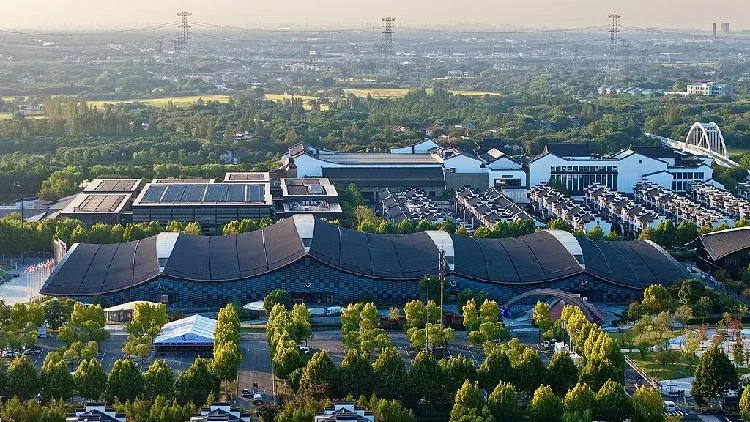
The world of technology is advancing at an unprecedented pace, with innovations constantly reshaping how we live, work, and connect. From the vastness of space to the intricate workings of robotics, new frontiers are being explored and integrated into our daily lives. Events like the “Light of the Internet” Expo serve as crucial platforms to showcase these advancements, offering a glimpse into a future powered by intelligent connectivity and smart solutions. This year’s expo, held in Wuzhen, China, highlighted groundbreaking technologies such as satellite internet, the next generation of mobile communication known as 6G, and the increasingly sophisticated field of embodied intelligence. These technologies promise to revolutionize communication, industry, and human-machine interaction, paving the way for a more connected and intelligent world.
Satellite Internet: Bridging the Global Connectivity Gap
Satellite internet has emerged as a transformative technology, offering a solution to the persistent challenge of providing reliable internet access to remote and underserved areas. Unlike traditional terrestrial internet services that rely on physical cables, satellite internet uses a network of satellites orbiting Earth to transmit data. This allows for internet connectivity in locations where laying fiber optic cables or establishing cellular towers would be impractical or prohibitively expensive. The “Light of the Internet” Expo featured significant advancements in this field, demonstrating how satellite technology is becoming more accessible and powerful.
How Satellite Internet Works
The fundamental principle behind satellite internet involves a user terminal, typically a dish antenna, that communicates with a satellite in space. This satellite then relays the data to a ground station, which is connected to the broader internet infrastructure. The process is reversed for sending data from the internet back to the user. While historically associated with slower speeds and higher latency, modern satellite internet systems have made substantial improvements. New constellations of low Earth orbit (LEO) satellites, for instance, are significantly reducing latency by being much closer to the planet. This makes satellite internet a more viable option for a wider range of applications, including real-time communication and streaming services.
Applications and Impact
The implications of widespread satellite internet are far-reaching. In rural communities, it can unlock educational opportunities, enable remote work, and improve access to healthcare services through telemedicine. For businesses, it can provide a reliable backup connection or a primary service in areas lacking terrestrial infrastructure. Furthermore, satellite internet plays a critical role in disaster response, allowing communication to be re-established quickly in the aftermath of natural calamities when ground-based networks are damaged. The expo showcased how these systems are becoming more robust and efficient, pushing the boundaries of global connectivity. The ability to connect virtually any point on Earth is no longer a distant dream but a rapidly approaching reality, thanks to continuous innovation in satellite technology.
The Dawn of 6G: The Next Frontier in Mobile Communication
While 5G technology is still being rolled out and optimized globally, the telecommunications industry is already looking ahead to the sixth generation of mobile communication, or 6G. This next evolutionary step promises to be more than just an incremental improvement over 5G; it is envisioned as a paradigm shift that will integrate the physical, digital, and biological worlds. The Wuzhen expo provided a platform for discussions and demonstrations hinting at the capabilities of 6G, which is expected to offer speeds and functionalities far beyond current mobile networks.
Beyond Speed: The Vision for 6G
The primary characteristic often associated with new generations of mobile technology is increased speed, and 6G is no exception. However, the vision for 6G extends much further. It aims to achieve terabit-per-second (Tbps) speeds, which are thousands of times faster than current 5G networks. This would enable near-instantaneous data transfer, making applications like holographic communication and truly immersive virtual and augmented reality experiences feasible. Beyond speed, 6G is expected to offer ultra-low latency, measured in microseconds, which is critical for real-time control systems and advanced robotics.
Key Technologies and Potential Applications
Achieving 6G will require significant technological advancements. Researchers are exploring the use of higher frequency bands, such as terahertz (THz) waves, which can carry vast amounts of data. New antenna technologies, advanced artificial intelligence (AI) for network management, and a more integrated approach to space-air-ground communication are also key areas of development. The potential applications of 6G are vast and transformative. It could enable the widespread adoption of the Internet of Everything (IoE), where billions of devices are interconnected and communicating seamlessly. This could lead to truly smart cities with optimized traffic flow and energy management, highly personalized healthcare delivered remotely, and advanced industrial automation. The expo’s focus on emerging technologies underscores the rapid progress being made towards realizing this ambitious future.
Embodied Intelligence: Robots That Learn and Interact
Embodied intelligence refers to the concept of artificial intelligence that is integrated into physical bodies, allowing robots to perceive, reason, and act within the real world. This field is rapidly advancing, moving beyond simple automation to create robots that can learn, adapt, and interact with humans and their environment in more sophisticated ways. The “Light of the Internet” Expo showcased over 100 embodied intelligent robots designed for a variety of practical applications, highlighting the growing synergy between AI and robotics.
From Automation to Interaction
Historically, robots were primarily used for repetitive tasks in controlled industrial settings. Embodied intelligence represents a significant leap forward, enabling robots to perform tasks in dynamic and unpredictable environments. This requires robots to possess advanced sensory capabilities, sophisticated decision-making algorithms, and the ability to learn from experience. Robots at the expo demonstrated capabilities ranging from complex manufacturing processes to delicate healthcare assistance. They are being designed to understand human commands, recognize objects, navigate complex spaces, and even exhibit forms of social interaction.
Real-World Applications Across Sectors
The applications of embodied intelligence are diverse and expanding across numerous sectors. In industrial manufacturing, intelligent robots can work alongside humans, performing tasks that require precision, strength, or endurance, while also adapting to changing production needs. In healthcare and elderly care, robots are being developed to assist with patient monitoring, physical therapy, and providing companionship, offering support and improving quality of life. The entertainment and education sectors are also benefiting, with robots designed to engage audiences, provide interactive learning experiences, and even perform. The expo’s emphasis on real-world scenarios underscores the practical impact of embodied intelligence, demonstrating how these advanced machines are becoming integral to both production and daily life, offering solutions that were once the stuff of science fiction.
The Convergence of Technologies: A Smarter Future
The technologies showcased at the “Light of the Internet” Expo—satellite internet, 6G, and embodied intelligence—are not developing in isolation. Instead, they are converging to create a synergistic ecosystem that promises to accelerate innovation and unlock new possibilities. The theme of “Intelligent Connectivity, Smart Future” perfectly encapsulates this convergence, where enhanced communication networks enable more sophisticated AI-driven physical systems.
Enabling Seamless Connectivity and Intelligence
Satellite internet provides the global reach, ensuring that connectivity is available everywhere. 6G promises to deliver the ultra-high speed, low latency, and massive capacity needed to support the vast number of devices and data flows generated by intelligent systems. Embodied intelligence, powered by AI and advanced robotics, represents the physical manifestation of this connectivity, allowing for intelligent actions and interactions in the real world. Together, these technologies form a powerful trifecta that can drive advancements in areas like autonomous systems, smart cities, and personalized services.
The Role of AI and Data
Artificial intelligence is the common thread weaving through these advancements. AI algorithms are essential for managing complex 6G networks, processing the massive amounts of data generated by satellite internet services, and enabling robots to learn and make intelligent decisions. As these technologies mature, the volume of data generated will explode, requiring even more sophisticated AI to analyze, interpret, and act upon it. The expo highlighted the continuous cycle of innovation where better connectivity enables more data, which in turn fuels more advanced AI, leading to even more sophisticated applications and devices.
Making Technology Accessible: The Public Experience
A significant aspect of the “Light of the Internet” Expo was its focus on making digital and intelligent technologies accessible to the public. Recognizing that these advancements are meant to benefit society as a whole, organizers created more exhibitions and activities designed for general visitors, with a particular emphasis on engaging young people. This approach is crucial for fostering digital literacy, inspiring future innovators, and ensuring that the benefits of technological progress are widely shared.
Interactive Demonstrations and Hands-On Experiences
The expo provided opportunities for attendees to not only see but also interact with cutting-edge technologies. This hands-on approach is invaluable for demystifying complex concepts and illustrating the practical applications of innovations like embodied intelligence and advanced communication systems. For younger visitors, these experiences can spark curiosity and encourage them to pursue careers in science, technology, engineering, and mathematics (STEM) fields. By allowing people to directly engage with these technologies, the expo helps to build understanding and excitement about the future.
Bridging the Digital Divide
Beyond public engagement, efforts to make technology accessible also address the digital divide. While satellite internet aims to connect the unconnected, ensuring that people have the skills and understanding to utilize these technologies is equally important. Educational initiatives and public outreach programs, often highlighted at such expos, play a vital role in empowering individuals and communities to benefit from the digital revolution. The goal is to ensure that no one is left behind as the world becomes increasingly connected and intelligent.
Conclusion: A Glimpse into an Intelligent Tomorrow
The 2026 “Light of the Internet” Expo served as a powerful testament to the rapid advancements shaping our world. Satellite internet, 6G, and embodied intelligence are no longer concepts confined to research labs; they are tangible technologies poised to redefine connectivity, communication, and human-machine interaction. The expo demonstrated a future where the internet reaches every corner of the globe, where communication is instantaneous and immersive, and where intelligent robots assist us in countless aspects of our lives. By showcasing these innovations and emphasizing public accessibility, the event not only highlighted technological progress but also underscored the importance of inclusive development. As these technologies continue to evolve and converge, they promise to usher in an era of unprecedented intelligence and connectivity, transforming our society in profound and exciting ways.



Conversation
0 Comments