

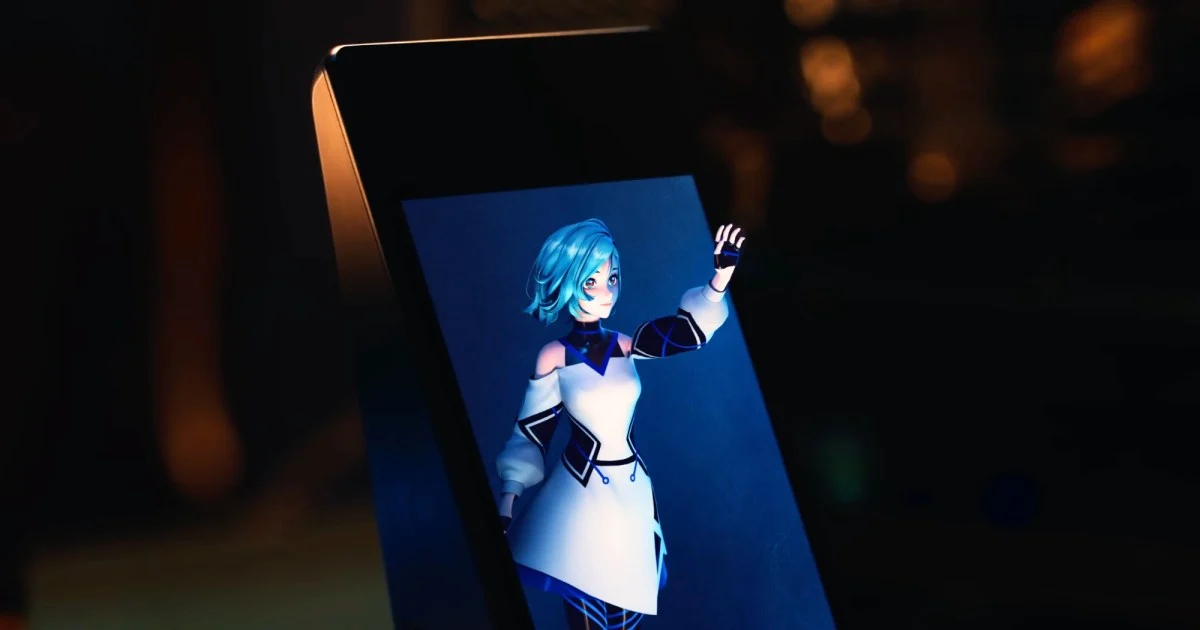
Sony’s ELF-MN1: A New Era for Personal 3D Displays
For years, the dream of experiencing three-dimensional content without cumbersome glasses felt like a futuristic luxury, confined to specialized studios or high-end theaters. The technology existed, but it was often too large, too expensive, or too complex for everyday use. Now, Sony is bringing this captivating technology down to desk size with its new ELF-MN1 display, a compact 6-inch screen designed to bring digital characters and avatars to life right before your eyes, no special eyewear required. This innovative device promises to transform how we interact with digital content, making it more immersive and personal than ever before.
The ELF-MN1 represents a significant step forward in making glasses-free 3D accessible. Its small form factor means it can easily fit into most workspaces, sitting comfortably beside a keyboard or monitor. This accessibility is key to its potential impact, moving 3D technology from a niche professional tool to a consumer-friendly gadget. The implications for gaming, virtual meetings, and even personal entertainment are substantial, offering a glimpse into a future where digital interactions feel more tangible and present.
How the ELF-MN1 Achieves Glasses-Free 3D
The magic behind the ELF-MN1’s glasses-free 3D lies in its sophisticated eye-tracking technology. The display is equipped with sensors that constantly monitor the user’s eye movements. By tracking where you’re looking, the screen can redraw the image in real time, presenting a slightly different perspective to each eye. This mimics how our brains naturally perceive depth, creating a convincing three-dimensional effect without any external devices.
This real-time adjustment is crucial. As your eyes move, the display adapts instantly, ensuring that the 3D illusion remains stable and convincing. An integrated infrared (IR) sensor plays a vital role in maintaining this tracking accuracy, even in dimly lit environments. This ensures a consistent and immersive viewing experience, regardless of ambient lighting conditions. The technology works best within a specific range, typically between 12 to 31 inches (about 1 to 2.5 feet) from the screen. It’s important to note that the optimal 3D experience is designed for a single viewer, as the system is calibrated to track one set of eyes.
Beyond eye tracking, image sharpness is another critical component of the ELF-MN1’s impressive display capabilities. Boasting 403 pixels per inch, it is Sony’s sharpest spatial display to date. This high pixel density contributes to a clear and detailed image, reducing the visual artifacts that can sometimes plague 3D displays. Sony has also focused on suppressing crosstalk, a common issue where ghost-like double images appear, detracting from the 3D effect. By minimizing crosstalk, the ELF-MN1 delivers a cleaner, more believable stereoscopic image.
System Requirements and Availability
To fully experience the capabilities of the ELF-MN1, users will need compatible hardware. For mobile users, a recent smartphone such as an iPhone 15 or a Galaxy S23, or any model newer than these, is recommended. These devices provide the necessary processing power and connectivity. For desktop users, a mid-range PC equipped with a USB-C port that supports DisplayPort Alt Mode is required. This ensures that the display can receive both power and video signal efficiently.
The ELF-MN1 is set to launch in Japan on December 11, 2026. While pricing details are still being finalized, the expected cost is around 54,000 yen, which translates to approximately $340 USD. Sony will be offering demo units at its Sony Stores in Ginza and Nagoya starting from November 20, allowing potential customers to experience the technology firsthand before its official release. The availability in other regions, such as the United States, has not yet been confirmed, but the device’s unique capabilities suggest it would be a highly sought-after product for consumers interested in cutting-edge display technology.
One of the most exciting applications highlighted for the ELF-MN1 is its integration with Gugenka’s HoloModel service, which features digital anime figures. This partnership allows users to bring their favorite anime characters to life on their desk, creating a truly unique and engaging experience for fans. The prospect of having a three-dimensional avatar or character interacting with your workspace is a compelling vision for the future of personal digital interaction.
The Evolution of 3D Display Technology
The journey to the ELF-MN1 has been a long and winding one, marked by numerous attempts to bring glasses-free 3D to the mainstream. Early iterations of 3D technology often relied on passive polarization or active shutter glasses, which, while effective, were inconvenient and limited the viewing experience. The development of autostereoscopic displays, which create the illusion of depth without glasses, represented a significant leap forward. These displays use various methods, such as lenticular lenses or parallax barriers, to direct different images to each eye.
Sony’s previous ventures into spatial reality displays, such as the larger professional-grade monitors, demonstrated the potential of this technology but were often out of reach for the average consumer due to their size and cost. The ELF-MN1 builds upon this foundation, refining the technology and scaling it down for a more personal and accessible application. The focus on eye-tracking, combined with high-resolution panels and advanced image processing, represents the current state-of-the-art in glasses-free 3D.
The challenges in developing this technology have been considerable. Achieving a wide viewing angle, high image quality, and a convincing sense of depth simultaneously requires complex engineering. Issues like eye strain, limited viewing distance, and the “sweet spot” effect, where the 3D illusion only works from a very specific vantage point, have plagued earlier attempts. Sony’s efforts with the ELF-MN1 appear to address many of these limitations, particularly through its advanced eye-tracking system and high pixel density.
Potential Applications and Use Cases
The implications of the ELF-MN1 extend far beyond simply watching 3D movies. Its ability to render realistic 3D models in real time opens up a vast array of potential applications across various industries and personal uses.
Gaming: Imagine playing your favorite games with characters and environments popping out of the screen, adding a new layer of immersion. While current gaming consoles and PCs are not yet optimized for this specific display, future game development could certainly incorporate support for such devices, offering a unique gaming experience. The ELF-MN1 could be particularly compelling for strategy games or simulations where spatial awareness is key.
Virtual and Augmented Reality: While not a VR headset, the ELF-MN1 can serve as a bridge to more immersive digital experiences. It can display 3D models created in VR/AR software, allowing designers, architects, or hobbyists to visualize their creations in a tangible way without needing to put on a headset. This could be invaluable for collaborative design reviews or for showcasing projects.
Communication and Collaboration: In a professional setting, the ELF-MN1 could revolutionize remote collaboration. Imagine virtual meetings where participants appear as 3D avatars, or where shared 3D models can be manipulated and discussed in real time. This could foster a greater sense of presence and understanding, bridging the gap between physical and virtual interactions. For instance, engineers could review 3D prototypes together, pointing out specific details as if they were in the same room.
Education and Training: The ability to visualize complex structures in 3D can significantly aid learning. Medical students could examine detailed anatomical models, engineering students could explore intricate machinery, and history students could view 3D reconstructions of ancient artifacts. This hands-on, visual approach can enhance comprehension and retention of complex subjects.
Digital Art and Entertainment: As demonstrated with the HoloModel integration, the ELF-MN1 is poised to become a platform for digital artists and animators. It offers a new medium for creating and displaying 3D art, bringing characters and scenes to life on a personal scale. This could also extend to interactive storytelling or personalized digital companions.
Personalization and Avatars: The idea of having a personalized 3D avatar displayed on your desk is a compelling prospect for social media users and virtual world inhabitants. It offers a unique way to express identity and engage with online communities. This could also extend to virtual pets or digital assistants that feel more present and interactive.
The Future of Personal Displays
The Sony ELF-MN1 is more than just a new gadget; it represents a potential shift in how we interact with digital information. By making glasses-free 3D technology accessible and personal, Sony is paving the way for a future where digital content is more immersive, engaging, and tangible. The device’s success will likely depend on several factors, including its final price point, the availability of compelling content, and broader industry adoption of compatible standards.
However, the underlying technology is undeniably impressive. The combination of advanced eye-tracking, high-resolution displays, and sophisticated image processing addresses many of the historical barriers to glasses-free 3D. If the ELF-MN1 proves successful, it could inspire further innovation in personal display technology, leading to even more advanced and integrated 3D experiences in the years to come.
The move towards more spatial and interactive displays is a logical progression in the evolution of personal computing and entertainment. As our digital lives become increasingly intertwined with our physical reality, devices like the ELF-MN1 offer a way to bridge that gap, making our digital interactions feel more natural and present. The potential for this technology to enhance creativity, communication, and entertainment is immense, and the ELF-MN1 is an exciting early step in that direction.
Addressing Potential Challenges and Considerations
While the ELF-MN1 presents a compelling vision, it’s important to acknowledge potential challenges and considerations that might influence its adoption and long-term success.
Content Availability: The most significant factor for any new display technology is the availability of content designed to take advantage of its unique features. While Sony’s partnership with Gugenka for anime figures is a promising start, a broader ecosystem of games, applications, and media specifically created for glasses-free 3D will be crucial for widespread appeal. Developers will need to see a clear market and accessible tools to invest in creating such content.
Single-Viewer Limitation: The current design, which optimizes the 3D experience for a single viewer due to its eye-tracking system, might limit its utility in shared viewing scenarios. For families or collaborative work environments where multiple people need to see the same 3D image clearly, this could be a drawback. Future iterations might explore multi-user tracking or alternative display methods to address this.
Ergonomics and Viewing Fatigue: While glasses-free 3D technology has improved significantly, some users may still experience eye strain or discomfort during prolonged use. The optimal viewing distance and angle are critical for a comfortable experience. Sony’s focus on sharpness and reduced crosstalk is a positive step, but individual user sensitivity will vary. User feedback and further ergonomic studies will be important as the technology matures.
Cost and Accessibility: Although the projected price of around $340 USD is more accessible than previous professional 3D displays, it still represents a significant investment for many consumers. For the technology to truly become mainstream, further cost reductions will likely be necessary. This often comes with increased production volume and technological advancements that lower manufacturing expenses.
Integration with Existing Ecosystems: The requirement for specific hardware, such as newer smartphones or PCs with DisplayPort Alt Mode, means that not all users will be able to immediately adopt the ELF-MN1. Seamless integration with a wider range of devices and operating systems would broaden its market reach. Sony’s commitment to providing clear compatibility guidelines is a good starting point.
Durability and Longevity: As with any new electronic device, the durability and long-term reliability of the ELF-MN1 will be a factor for consumers. The quality of the display panel, the eye-tracking sensors, and the overall construction will determine how well the device holds up to daily use over time.
Despite these potential hurdles, the ELF-MN1 represents a bold step forward. Sony’s track record in display technology and its willingness to invest in innovative consumer electronics suggest that these challenges are being considered. The company’s official website, www.sony.com, will likely provide further details and updates on product availability and specifications as they become available.
Conclusion
The Sony ELF-MN1 marks a significant milestone in the pursuit of accessible, glasses-free 3D technology. By shrinking its advanced spatial reality display into a compact, user-friendly form factor, Sony is bringing a previously niche technology into the realm of personal computing and entertainment. The ELF-MN1’s sophisticated eye-tracking system, high-resolution screen, and focus on image clarity promise to deliver a captivating 3D experience without the need for special glasses or headsets.
While challenges related to content availability, single-viewer optimization, and cost remain, the potential applications for the ELF-MN1 are vast, spanning gaming, communication, education, and digital art. As this technology evolves, it has the power to fundamentally change how we interact with digital content, making it more immersive, engaging, and lifelike. The ELF-MN1 is not just a display; it’s a glimpse into a future where the lines between the digital and physical worlds become increasingly blurred, offering a more tangible and present experience for users worldwide.


Conversation
0 Comments