

Bringing Classic Gaming to the Browser: An Analysis of TabStationToo and the Future of Emulation
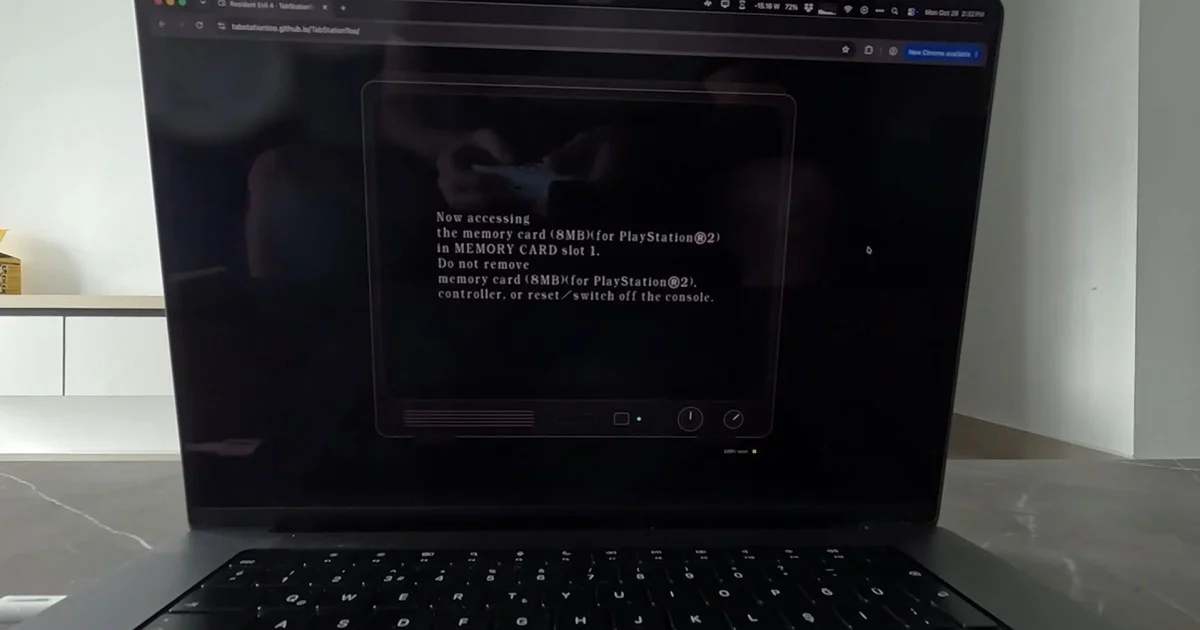
The dream of playing beloved PlayStation 2 (PS2) games directly in a web browser has taken a significant leap forward with the development of TabStationToo. This innovative project, powered in part by the AI assistant Claude, demonstrates the growing potential for advanced emulation to become more accessible than ever before. By translating the complex architecture of the PS2 into a format that web browsers can understand and execute, TabStationToo opens up new avenues for experiencing classic gaming titles without the need for dedicated hardware or complex software installations. This analysis will explore how TabStationToo works, the role of AI in its creation, the current state of its performance, and what this development signifies for the future of gaming emulation.
The Genesis of TabStationToo: A Collaborative Effort
TabStationToo is the brainchild of two developers, u/yousriii and u/aegyptiacus11, who embarked on a mission to bring the open-source PS2 emulator, PCSX2, into the browser environment. Their journey highlights a fascinating synergy between human direction and artificial intelligence. According to their reports, Claude played a substantial role in the programming aspects of the project, with the developers guiding its efforts and rigorously testing the outputs. This collaborative approach, where AI assists in complex coding tasks, is a burgeoning trend in software development.
The project’s foundation is built upon the extensive work of the PCSX2 team and its contributors, who have spent over two decades refining the emulator. PCSX2’s core functionality involves translating PS2 instructions into code that a computer’s processor can readily execute. The challenge for TabStationToo was to adapt this process for the web. This required creating replacements that could generate WebAssembly, a low-level binary code format that web browsers are designed to run. Claude’s assistance was instrumental in writing these crucial WebAssembly replacements and in adapting PCSX2’s rendering engine to utilize WebGPU, a modern web standard for graphics processing. To ensure accuracy and stability, the developers implemented automated tests that compare the browser emulator’s output against the desktop version of PCSX2, catching errors and regressions swiftly after code modifications. This meticulous testing process is vital for any emulation project, especially one pushing the boundaries of web technology.
How Claude Facilitated Browser Emulation
The technical hurdles in bringing a powerful console emulator like PCSX2 to a web browser are considerable. Unlike a native desktop application that has direct access to system resources, a browser environment is more constrained. This is where the AI’s contribution becomes particularly noteworthy. The core of PCSX2’s emulation relies on translating the PS2’s unique instruction set into something a modern PC can understand. This process is computationally intensive and requires deep knowledge of both the original hardware and the target platform.
Claude’s role in generating WebAssembly was key. WebAssembly (Wasm) is a binary instruction format designed as a portable compilation target for programming languages, enabling deployment on the web for web applications. It allows code written in languages like C++ (which PCSX2 is largely based on) to be compiled into a format that browsers can execute at near-native speeds. The developers directed Claude to create the necessary Wasm modules that would handle the complex instruction decoding and execution specific to the PS2’s Emotion Engine and Graphics Synthesizer. This involved understanding the intricacies of the PS2’s architecture and mapping them to Wasm instructions.
Furthermore, rendering graphics in a browser requires utilizing web-specific APIs. PCSX2’s original renderer was designed for desktop graphics APIs like DirectX or OpenGL. To make it work in a browser, it needed to be adapted to WebGPU. WebGPU is a new web API that provides modern, low-level access to the GPU, offering better performance and more control than older web graphics technologies like WebGL. Claude’s assistance in modifying PCSX2’s renderer to interface with WebGPU was critical for achieving playable frame rates and visual fidelity within the browser tab. This adaptation ensures that the graphical output of the PS2 games can be efficiently processed and displayed by the user’s web browser. The developers’ use of automated tests to compare the output of the browser emulator against the established PCSX2 emulator is a testament to their rigorous approach, ensuring that the AI-generated code functions as intended and maintains compatibility with the original emulator’s behavior.
Performance and Game Compatibility: What to Expect
The performance of TabStationToo is a critical aspect for any emulation project aiming for practical use. While still in its experimental stages, the results observed so far are promising. The developers have reported near full-speed performance in many games on their testing machines, which include high-end hardware like an M1 Max Mac and a Linux system equipped with a Ryzen 7 7840U processor. This suggests that the WebAssembly and WebGPU implementations are efficient enough to handle the demands of PS2 emulation.
During testing by Digital Trends, games like Final Fantasy XII and Burnout were played on a GMKtec M8 mini PC, and both ran flawlessly. This indicates that even on less powerful, compact hardware, the emulator can deliver a smooth experience for certain titles. However, it’s important to note that emulation performance can vary significantly depending on the game’s complexity, the specific hardware being used, and the efficiency of the emulator itself. Heavier scenes in games, which often involve more complex graphics, physics, or AI calculations, can still cause slowdowns.
The developers acknowledge that broader testing across the PS2’s extensive game library is still needed. The PS2 had a vast and diverse catalog, with games ranging from simple 2D adventures to graphically demanding 3D epics. While TabStationToo has shown impressive results with titles like Grand Theft Auto: San Andreas and Final Fantasy XII, it’s essential for users to manage their expectations. Not every game will run perfectly, and some titles might remain unplayable or suffer from significant performance issues. The project builds upon the legacy of PCSX2, which itself has a compatibility list that details how well different games perform. Users of TabStationToo will likely find similar variations in performance. The developers’ advice to try one game on their setup before assuming the rest of their collection will run smoothly is sound. This approach allows users to gauge the emulator’s capabilities on their specific hardware and for their chosen games.
Requirements for Running TabStationToo
For users interested in trying out TabStationToo, the requirements are relatively straightforward, emphasizing the project’s goal of accessibility. The TabStationToo project itself is free and open-source, meaning its code is publicly available and can be modified or distributed by anyone. This open nature encourages community involvement and further development.
To get started, users will need two key components: a BIOS file dumped from their own PlayStation 2 console and disc images of the games they own. The project stresses that these files should be legally obtained and that users should only use BIOS files and game images from hardware they legitimately own. This is a standard requirement for most emulators, as console manufacturers protect their intellectual property, and emulators need these proprietary files to boot and run games correctly. The developers state that these sensitive files remain on the user’s computer and are not uploaded or shared, which is crucial for user privacy and legal compliance.
Currently, TabStationToo is best experienced on desktop browsers, specifically Chrome or Edge. Support for mobile devices is not yet available, which is understandable given the demanding nature of emulation and the varying capabilities of mobile hardware and browsers. However, the project does offer support for both keyboard and gamepad controls, allowing for flexible input methods depending on user preference. For those who enjoy longer gaming sessions, the emulator supports memory card saves, which function like traditional saves in console gaming, and save states. Save states are a feature common in emulators that allow users to save the exact state of the game at any moment, enabling quick loading and recovery. This combination of features aims to provide a robust and user-friendly emulation experience within the browser.
The Broader Implications for Gaming Emulation
The success of TabStationToo, with AI assistance, has significant implications for the future of gaming emulation and how we interact with classic games. Firstly, it democratizes access to older gaming libraries. By bringing powerful emulation to the browser, it removes the barrier of entry associated with downloading and installing complex desktop software. Anyone with a modern web browser and a reasonably capable computer can potentially play PS2 games without needing to be a tech expert. This accessibility can reintroduce a generation of gamers to titles they may have missed or allow older gamers to revisit cherished memories.
Secondly, the project showcases the evolving role of artificial intelligence in software development. Claude’s ability to assist in writing complex code, adapting existing applications for new environments, and generating specific functionalities like WebAssembly modules and graphics API integrations is a powerful demonstration of AI’s potential. As AI models become more sophisticated, we can expect them to play an even larger role in accelerating development cycles, tackling challenging technical problems, and even enabling entirely new types of applications that were previously too complex or time-consuming to create. This partnership between human developers and AI could lead to faster innovation across the software landscape.
Thirdly, TabStationToo pushes the boundaries of what is possible within the web platform. WebAssembly and WebGPU are relatively new technologies, and their successful application in a demanding field like console emulation is a strong indicator of the web’s growing capabilities. As these web standards mature and browser engines become more optimized, we might see more complex applications, including high-fidelity games and sophisticated emulators, running directly in the browser. This could reduce the reliance on native applications for many tasks, leading to a more unified and accessible digital experience. The project also builds on the legacy of PCSX2, which is itself a testament to the dedication of open-source communities. The fact that TabStationToo is open-source means it can continue to evolve, with contributions from both human developers and potentially future AI tools, ensuring that the legacy of the PS2 and other classic consoles can be preserved and enjoyed for years to come.
The Future of Browser-Based Emulation
The development of TabStationToo is more than just a technical achievement; it represents a potential paradigm shift in how we access and play classic video games. As web technologies continue to advance, the browser is transforming from a simple document viewer into a powerful application platform capable of running sophisticated software. The integration of WebAssembly and WebGPU has been pivotal in this evolution, allowing for near-native performance for computationally intensive tasks like emulation.
Looking ahead, we can anticipate further advancements in browser-based emulation. Projects like TabStationToo pave the way for other emulators of different consoles to make the leap to the web. Imagine playing Nintendo 64, GameCube, or even original PlayStation games directly in your browser, without any downloads or installations. This would dramatically lower the barrier to entry for retro gaming enthusiasts and introduce these classic experiences to a wider audience. The ongoing development of WebGPU, in particular, holds immense promise for delivering high-fidelity graphics within the browser, making the visual experience of emulated games more authentic.
Moreover, the role of AI in this space is likely to expand. Beyond assisting in the initial development, AI could be used to optimize emulator performance dynamically, adapt emulators to new hardware architectures more efficiently, or even help in the creation of new features and improvements. The collaborative model demonstrated by TabStationToo, where human developers guide AI tools to achieve complex goals, is likely to become a standard approach in software engineering. This synergy could lead to faster development cycles and the creation of more robust and feature-rich emulators than ever before.
The legal and ethical considerations surrounding emulation, such as the ownership of BIOS files and game ROMs, will continue to be important discussions. However, as projects like TabStationToo emphasize the use of legally obtained assets, they contribute to a more responsible approach to emulation. The ultimate goal is to preserve gaming history and make it accessible, and browser-based emulation, powered by innovative technologies and AI, seems poised to play a significant role in achieving that objective. The journey from a desktop emulator to a browser tab is a testament to human ingenuity and technological progress, offering a glimpse into a future where the entire history of video games is just a click away.
Conclusion
TabStationToo stands as a remarkable achievement in the field of video game emulation, demonstrating that even complex systems like the PlayStation 2 can be brought to life within a web browser. The project’s success, notably aided by the AI assistant Claude, highlights the power of combining human direction with artificial intelligence to overcome significant technical challenges. By translating PS2 instructions into WebAssembly and adapting its graphics engine for WebGPU, TabStationToo offers a glimpse into a future where classic gaming is more accessible than ever, requiring no complex installations or dedicated hardware.
While the project is still experimental and performance can vary by game and hardware, the flawless execution of titles like Final Fantasy XII and Burnout on various systems is highly encouraging. The requirements for running TabStationToo—a user-owned BIOS and game images—underscore a commitment to legal and ethical emulation practices. This development not only democratizes access to a beloved gaming library but also showcases the expanding capabilities of web technologies and the transformative potential of AI in software development. As browser capabilities grow and AI tools become more advanced, we can expect further innovations in browser-based emulation, potentially making the vast history of video games readily available to a global audience.


Conversation
0 Comments