

The Long March stands as a monumental event in modern Chinese history, a testament to resilience, strategic brilliance, and unwavering determination. This epic journey, undertaken by the Red Army of the Communist Party of China (CPC), was not merely a military retreat but a transformative odyssey that shaped the nation’s future. Spanning thousands of miles across treacherous terrain and facing relentless opposition, the Long March became a symbol of endurance and a foundational narrative for the CPC. Its legacy continues to inspire, offering profound lessons in leadership, perseverance, and the power of a unified vision.
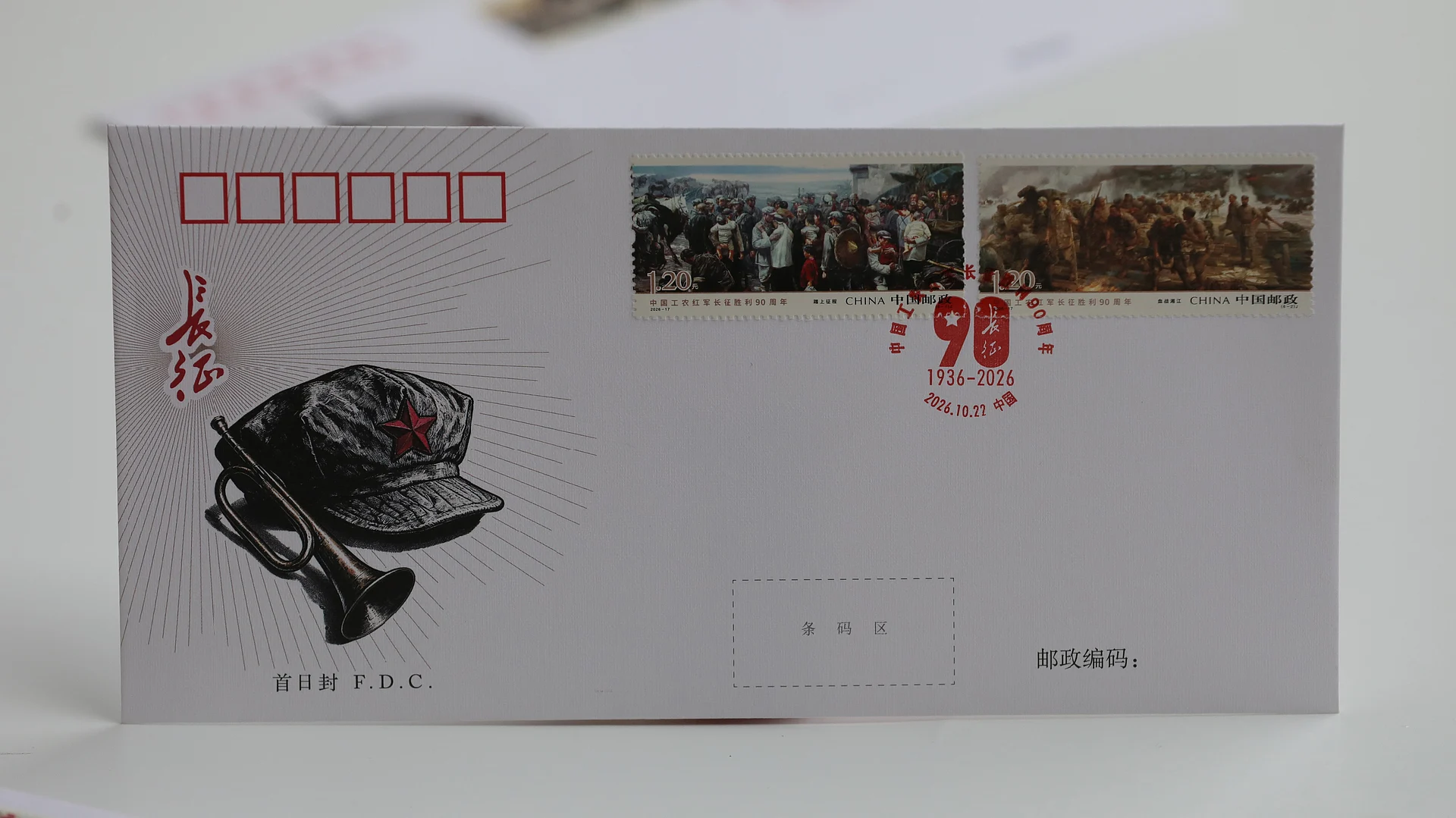
The significance of the Long March is underscored by its commemoration through various means, including the issuance of commemorative stamps. In October 2026, China Post released a set of six stamps to mark the 90th anniversary of the Long March victory. These stamps visually represent key moments of the arduous journey: the departure of the Red Army, the fierce Battle of the Xiangjiang River, the pivotal Zunyi Meeting, the strategic capture of Lazikou Pass, the triumphant reunion of Red Army forces, and the enduring spirit of the Long March itself. This act of issuing stamps highlights the event’s enduring importance in the national consciousness and its role in preserving historical memory for future generations.
This article will delve into the historical context, key events, and lasting impact of the Long March. We will explore the strategic decisions, the immense hardships faced by the Red Army, and the pivotal moments that defined this extraordinary undertaking. By examining the Long March through its historical narrative and its symbolic representation, we can gain a deeper understanding of its profound influence on China’s development and its continuing relevance today.
The Genesis of the Long March: A Strategic Necessity
The Long March was not a planned expedition from its inception but rather a response to dire circumstances. In the early 1930s, the Communist Party of China (CPC) established a revolutionary base in the Jiangxi Province, known as the Central Soviet Area. From this stronghold, the CPC sought to expand its influence and challenge the ruling Kuomintang (KMT) party, led by Chiang Kai-shek. However, the KMT launched a series of increasingly aggressive “encirclement and suppression” campaigns aimed at eradicating the communist presence.
These campaigns, particularly the fifth one initiated in 1933, were characterized by a strategy of fortified blockades and systematic attrition. The KMT forces, with superior numbers and resources, gradually tightened their grip around the Central Soviet Area. The CPC’s military leadership, initially adhering to conventional warfare tactics, found themselves outmaneuvered and suffering heavy losses. The blockade choked off supplies and reinforcements, pushing the Red Army into a precarious position. By the autumn of 1934, it became clear that holding the Central Soviet Area was no longer feasible. The continued presence there risked the complete annihilation of the Red Army and the Communist Party itself.
The decision to embark on the Long March was therefore a strategic imperative for survival. It was a calculated risk, a move to break free from the KMT’s tightening noose and preserve the core of the Red Army and the CPC leadership. The objective was to escape the immediate threat, regroup, and find a new base from which to continue the revolution. This forced retreat, initiated in October 1934, marked the beginning of an arduous and legendary journey that would redefine the course of Chinese history. The initial phase of the Long March involved breaking through multiple lines of KMT fortifications, a task that required immense courage and sacrifice from the tens of thousands of soldiers who participated.
The Arduous Journey: Key Stages and Challenges
The Long March was not a single, continuous movement but a complex series of campaigns and strategic maneuvers undertaken by various Red Army factions over several years. The most famous and significant part of the Long March is the retreat of the First Front Army from the Central Soviet Area in Jiangxi. This initial phase, beginning in October 1934, saw the Red Army break through KMT blockades and march westward and northward. The journey was fraught with peril, traversing some of the most challenging landscapes in China, including rugged mountains, vast grasslands, and swift rivers.
One of the earliest and most devastating battles was the Battle of the Xiangjiang River in November and December 1934. The Red Army attempted to cross this major river in Guangxi Province, but faced intense KMT resistance. The crossing became a brutal ordeal, with heavy casualties inflicted upon the Red Army. This battle underscored the severity of the KMT’s pursuit and the immense cost of the Long March. It also led to significant internal criticism of the CPC’s military leadership at the time, highlighting the need for a change in strategy.
This criticism culminated in the Zunyi Meeting in January 1935. Held in the city of Zunyi in Guizhou Province, this meeting was a critical turning point in the Long March and the history of the CPC. It led to a major shift in leadership, with Mao Zedong consolidating his influence and establishing his strategic direction for the party and the Red Army. The meeting recognized the failures of previous military tactics and embraced a more flexible, guerrilla-style approach to warfare. This ideological and strategic reorientation was crucial for the Red Army’s survival and eventual success.
Following the Zunyi Meeting, the Red Army continued its westward movement, facing new geographical and military challenges. The crossing of the treacherous Jinsha River, a tributary of the Yangtze, was a remarkable feat of engineering and bravery, as the army used small boats to ferry its troops and equipment across the powerful currents. Another significant obstacle was the Lading Pass (Lazikou Pass) in Gansu Province. This narrow mountain pass, flanked by steep cliffs, was heavily defended by KMT forces. The capture of Lazikou in September 1935 was a hard-won victory that opened a crucial route northwards, allowing the Red Army to escape further encirclement.
The Long March was not undertaken by a single unified force. Different Red Army factions embarked on their own marches from various base areas. The First, Second, and Fourth Front Armies eventually converged in northwestern China, primarily in Shaanxi Province, by October 1936. This convergence marked the official end of the Long March, a journey that had covered an estimated 12,500 kilometers (about 7,800 miles) over more than a year. The soldiers who completed the march had endured unimaginable hardships, including starvation, disease, and constant combat, with only a fraction of the initial numbers surviving.
The Spirit of the Long March: Enduring Legacy and Symbolism
The Long March is far more than a historical event; it is a potent symbol and a source of enduring inspiration for China. The sheer scale of the undertaking, the immense suffering endured, and the ultimate survival and regrouping of the Red Army forged a narrative of resilience, determination, and revolutionary spirit. This narrative has been deeply ingrained in Chinese national identity and political discourse. The “Long March spirit” is often invoked to describe perseverance in the face of adversity, collective effort towards a common goal, and unwavering commitment to ideals.
The hardships faced by the Red Army were extreme. Soldiers battled not only enemy forces but also hunger, cold, disease, and exhaustion. They crossed snow-capped mountains, navigated treacherous grasslands where food was scarce, and endured relentless pursuit. The high mortality rate, with estimates suggesting that only about 10% of those who started the Long March from the Central Soviet Area completed it, speaks volumes about the sacrifices made. These sacrifices are remembered as the foundation upon which the People’s Republic of China was eventually built.
The Long March also played a crucial role in solidifying the leadership of Mao Zedong and the ideological direction of the CPC. The Zunyi Meeting, a pivotal moment during the march, marked Mao’s ascent to preeminent leadership. His strategic thinking and revolutionary theories, often referred to as Mao Zedong Thought, were tested and proven during the Long March, providing a framework for future revolutionary activities and governance. The event cemented the idea that the CPC could overcome seemingly insurmountable challenges through correct leadership and strategic adaptation.
Internationally, the Long March gained recognition through accounts by foreign observers. American journalist Edgar Snow’s book “Red Star Over China,” published in 1937, introduced the story of the Long March and the Chinese revolution to a global audience. Snow’s firsthand accounts and interviews with CPC leaders provided an early, sympathetic portrayal of the communists’ struggle. Later, American journalist Harrison Salisbury retraced the Long March route and described it as “a great human epic,” further cementing its place in global historical consciousness as a remarkable feat of human endurance and political will.
The commemorative stamps issued in 2026 serve as a modern testament to the enduring legacy of the Long March. By depicting key moments and themes, these stamps ensure that the story is kept alive for contemporary generations. They represent a national effort to honor the past, remember the sacrifices, and draw strength from the spirit of the Long March as China continues to navigate its future challenges and aspirations. The narrative of the Long March continues to be a powerful symbol of national unity, resilience, and the pursuit of a common destiny.
The Long March in Numbers and Facts
The Long March is often described with awe-inspiring figures that highlight its immense scale and the challenges overcome. While exact numbers can vary depending on the historical accounts and the specific Red Army factions considered, certain figures provide a tangible sense of the endeavor.
- Duration: The main phase of the Long March, undertaken by the First Front Army, lasted from October 1934 to October 1936, spanning approximately one year. However, other Red Army groups began their marches earlier and concluded later, with some campaigns continuing into 1937.
- Distance: The most commonly cited distance for the Long March is around 12,500 kilometers (approximately 7,800 miles). This figure represents the cumulative distance covered by the various Red Army forces as they moved across China. Some estimates place the distance even higher, reaching up to 25,000 kilometers for certain routes.
- Number of Participants: The initial number of Red Army soldiers who set out from the Central Soviet Area in Jiangxi in 1934 is estimated to be around 86,000. By the time the First Front Army reached its destination in Shaanxi in 1935, only about 7,000 to 8,000 soldiers remained.
- Survivors: The survival rate was incredibly low. Of the initial 86,000 soldiers from the Central Soviet Area, only about 8,000 survived the main Long March. When considering all the different Red Army factions and their respective marches, the total number of participants was much higher, but the overall attrition rate remained devastatingly high.
- Key Battles and Events: The Long March was punctuated by numerous battles and critical junctures. Some of the most significant include:
- Battle of the Xiangjiang River (November-December 1934): A devastating crossing that resulted in tens of thousands of casualties.
- Zunyi Meeting (January 1935): A crucial political conference that led to a shift in leadership and strategy.
- Crossing the Jinsha River (April-May 1935): A difficult river crossing that allowed the Red Army to evade KMT forces.
- Battle of Lazikou Pass (September 1935): A hard-fought victory that secured a vital mountain pass.
- Reaching Northern Shaanxi (October 1936): The convergence of the main Red Army forces, marking the end of the Long March.
- Commemorative Stamps: In 2026, China Post issued a set of six commemorative stamps to mark the 90th anniversary of the Long March victory. These stamps feature themes such as the departure of the Red Army, the Battle of the Xiangjiang River, the Zunyi Meeting, the battle at Lazikou Pass, the victorious reunion of Red Army forces, and the Long March spirit.
- Face Value of Stamps: The set of six commemorative stamps has a combined face value of 7.8 yuan (approximately $1.2 USD at the time of issuance).
- Planned Issuance: China Post planned to issue 4.3 million sets of these commemorative stamps.
- Availability: The stamps were made available for six months through designated postal outlets across China and online sales channels.
These facts and figures underscore the monumental nature of the Long March, highlighting the immense sacrifices made by the Red Army and the profound impact of this event on China’s modern history.
The Long March and its Impact on Chinese Society and Politics
The Long March was not merely a military campaign; it was a transformative event that profoundly shaped the political landscape and societal consciousness of China. Its impact reverberated through the decades, influencing the trajectory of the Communist Party and the nation as a whole.
Political Consolidation and Ideological Foundation:
The Long March was instrumental in consolidating the leadership of Mao Zedong within the Communist Party. The strategic and military challenges faced during the march exposed the limitations of previous leadership and tactics. The Zunyi Meeting, a critical turning point, saw Mao’s influence grow, leading to his eventual dominance in party decision-making. His theories and strategies, developed and refined during the arduous journey, became the guiding ideology for the CPC. The “Long March spirit” became synonymous with revolutionary perseverance, self-reliance, and the ability to overcome any obstacle, providing a powerful ideological foundation for the party’s future endeavors.
National Narrative and Identity:
The Long March became a central element of the national narrative in the People’s Republic of China. It is presented as a heroic saga of sacrifice, resilience, and the triumph of the people’s will against overwhelming odds. This narrative has been crucial in fostering a sense of national unity and pride, particularly among generations who did not directly experience the events. The story of the Long March serves as a constant reminder of the struggles endured to achieve the current state of the nation and inspires continued dedication to national goals.
Military Strategy and Doctrine:
The experiences of the Long March significantly influenced Chinese military thinking. The necessity of adapting to diverse terrains, evading superior forces, and employing guerrilla tactics became ingrained in military doctrine. The emphasis shifted from conventional warfare to strategies that prioritized mobility, surprise, and the mobilization of popular support. The ability to survive and regroup under extreme pressure demonstrated the effectiveness of flexible and adaptive military planning, a lesson that continued to inform China’s defense strategies.
Social Mobilization and Propaganda:
The Long March provided fertile ground for propaganda and the mobilization of social support. The heroic tales of the soldiers’ endurance and sacrifice were widely disseminated, creating a powerful image of the Red Army as the vanguard of the people’s revolution. This imagery was used to inspire loyalty, recruit new members, and garner support from the rural population. The Long March narrative became a potent tool for shaping public opinion and reinforcing the legitimacy of the CPC’s rule.
Economic and Social Development:
While the Long March itself was a period of immense hardship and destruction, the establishment of new base areas in the northwest, such as Yan’an, allowed the CPC to experiment with new forms of governance and economic organization. These experiences, though limited in scope, provided valuable lessons for post-1949 development policies. The emphasis on self-reliance and resourcefulness, honed during the Long March, influenced later campaigns aimed at economic reconstruction and development.
International Perception:
The Long March also played a role in shaping international perceptions of the CPC. Accounts by foreign journalists like Edgar Snow brought the story of the communist struggle to a global audience, presenting a more complex picture than often portrayed by opposing factions. While not always sympathetic, these accounts acknowledged the scale of the communist movement and the determination of its leaders and followers. The Long March became a symbol of the Chinese revolution’s tenacity on the world stage.
In essence, the Long March was a crucible that forged the modern Chinese Communist Party and its enduring legacy. It provided the political leadership, ideological framework, military doctrine, and national narrative that have guided China for decades. The spirit of the Long March continues to be invoked as a source of strength and inspiration, underscoring its profound and lasting impact on China’s society and political system.
The Long March in Contemporary China: Memory and Relevance
Even decades after its conclusion, the Long March remains a potent symbol and a subject of continued relevance in contemporary China. Its legacy is actively preserved through various means, influencing national identity, political discourse, and cultural expression. The commemoration of significant anniversaries, such as the 90th anniversary in 2026 marked by the issuance of commemorative stamps, demonstrates the enduring importance placed on this historical event.
Historical Education and National Identity:
The Long March is a cornerstone of historical education in China. Textbooks, museums, and official narratives consistently highlight its significance as a foundational event for the People’s Republic of China. Students learn about the hardships, the heroism, and the strategic importance of the march, instilling a sense of national pride and a connection to the revolutionary past. This narrative helps to shape a collective identity rooted in shared struggle and achievement.
Political Symbolism and Inspiration:
The “Long March spirit” continues to be invoked by political leaders to inspire citizens and cadres. It is used to encourage perseverance in the face of challenges, promote unity, and emphasize the importance of dedication to national goals. During times of economic reform, social change, or international pressure, references to the Long March serve as a reminder of the nation’s capacity to overcome adversity. It reinforces the idea that the current leadership is heir to a tradition of resilience and determination.
Cultural Representation:
The Long March has been extensively depicted in various forms of Chinese art and media. Films, television series, novels, and operas have brought the story to life for new generations. These cultural representations often emphasize the heroism of the Red Army soldiers, the strategic brilliance of the leaders, and the profound sacrifices made. While these portrayals can sometimes be idealized, they play a crucial role in keeping the memory of the Long March alive and accessible to the public. The issuance of commemorative stamps is another form of cultural representation, offering a tangible and accessible way to remember the event.
Tourism and Heritage Sites:
Many locations along the Long March route have become historical sites and tourist destinations. These sites, including the Zunyi Meeting site and various battlegrounds, attract visitors who wish to retrace the steps of the Red Army and connect with the history firsthand. This form of heritage tourism not only preserves the physical remnants of the march but also serves as an educational tool, offering a more immersive experience of the historical events.
Relevance in Modern Challenges:
In an era of rapid technological advancement and global interconnectedness, the Long March’s lessons of adaptability, resourcefulness, and collective effort remain relevant. As China navigates complex domestic and international challenges, the narrative of the Long March serves as a source of inspiration for innovation and problem-solving. It reminds the nation of its capacity to achieve great things through sustained effort and a unified vision, even when faced with daunting obstacles. The spirit of overcoming limitations, whether geographical or technological, continues to resonate.
The Long March is not just a historical artifact; it is a living legacy that continues to inform and inspire China. Its memory is actively cultivated, ensuring that its lessons of resilience, sacrifice, and revolutionary spirit remain a guiding force in the nation’s ongoing journey.
Conclusion
The Long March stands as an unparalleled epic in modern Chinese history, a testament to the extraordinary resilience, strategic foresight, and unwavering determination of the Red Army and the Communist Party of China. What began as a desperate strategic retreat from overwhelming KMT encirclement evolved into a transformative odyssey that not only ensured the survival of the CPC but also fundamentally reshaped the nation’s political landscape and forged a powerful national narrative. The arduous journey, spanning thousands of miles across treacherous terrains and marked by immense hardship and sacrifice, became a potent symbol of perseverance against all odds.
The Long March was a crucible that solidified leadership, refined revolutionary ideology, and cemented the “Long March spirit”—a spirit characterized by resilience, self-reliance, and unwavering commitment to a cause. This spirit continues to resonate deeply within China, serving as a source of inspiration for national unity, political resolve, and the pursuit of ambitious goals. The commemoration of its anniversaries, through events like the issuance of commemorative stamps, ensures that the memory of this monumental undertaking remains vivid, connecting contemporary generations to the sacrifices and triumphs of the past.
From its origins as a military necessity to its enduring legacy as a symbol of national identity and revolutionary spirit, the Long March’s impact is undeniable. It continues to inform China’s political discourse, cultural expressions, and even its approach to overcoming modern challenges. The story of the Long March is a powerful reminder of the human capacity for endurance and the profound impact that collective will and strategic vision can have in shaping the destiny of a nation.



Conversation
0 Comments